Anubis
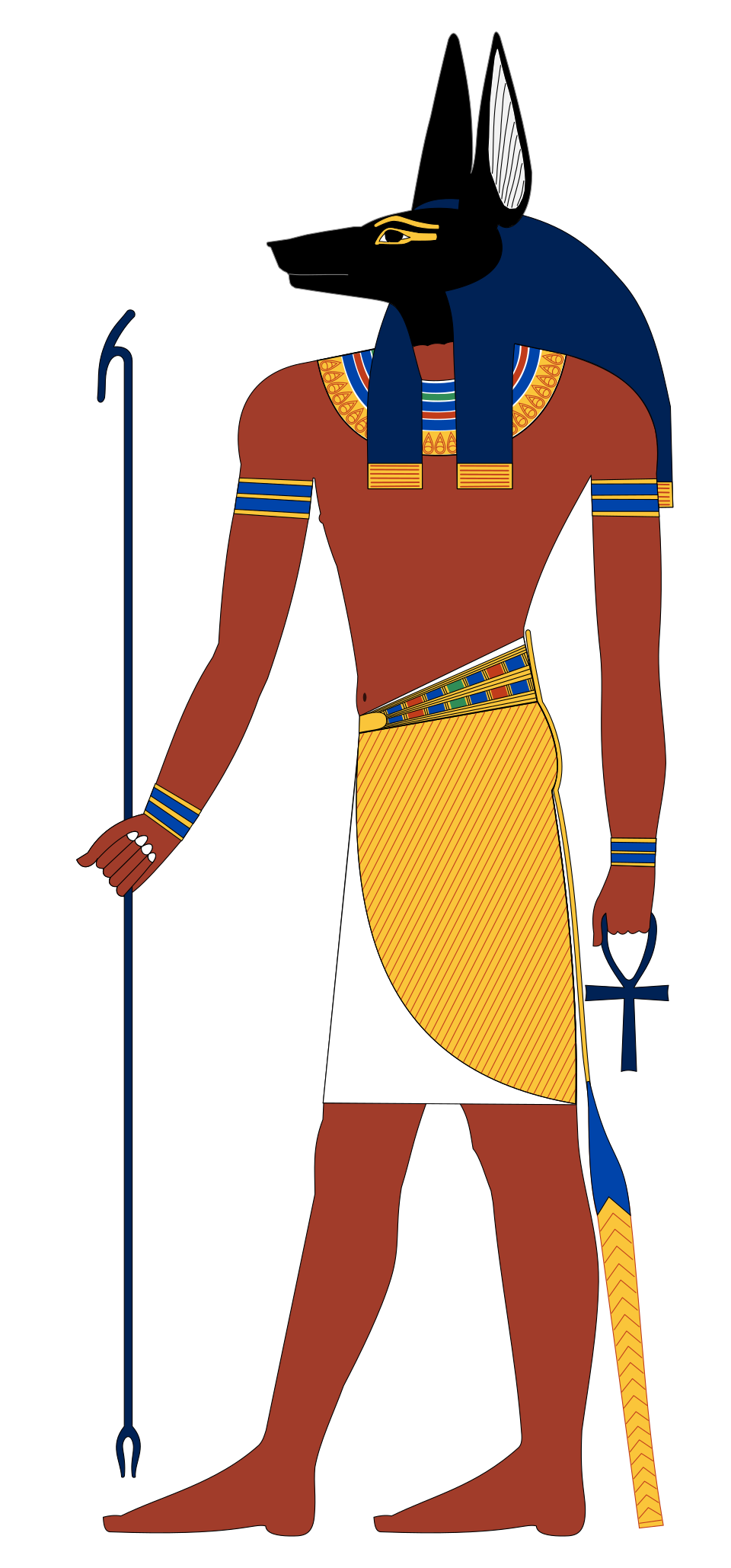

Anubis is the protector of the gates to the Underworld, Osiris replaced him as the god of the dead. He looks like a man with the head of a Pharaoh Hound, called Tesem.
Anubis’s Purpose
Anubis, as the god of death and the afterlife, was closely associated with mummification and burial rites. Egyptian jackals had an association with the dead, as well. They were often found digging up buried bodies and eating them, which may be why Anubis was depicted as part jackal. The priests who mummified the pharaohs wore costumes to make them appear like Tesem (Pharaoh hound).
The Egyptian people believed that Anubis helped decide the fate of the dead in the afterlife. The heart of the dead was weighed against the feather of truth (representing the goddess Ma’at), to see if the deceased was worthy of entering the afterlife. If the person had lived an evil life, his or her heart would be heavy with evil, and he or she would be eaten by Ammit (the Devourer). If a person was kind and good, the heart would be light, he or she could continue on to the afterlife safe and sound to meet Osiris.
Anubis, in the Book of the Dead. Is shown giving equality through research of weighing the human heart to a feather. Any honesty will make the feather heavier than the heart on the scale.
In Greece and Rome
In later times, during the Ptolemaic period, as their functions were similar, Anubis came to be identified as the Greek god Hermes, becoming Hermanubis. The centre of this cult was in uten-ha/Sa-ka/ Cynopolis, a place whose Greek name simply means “city of dogs”. In Book XI of “The Golden Ass” by Apuleius, we find evidence that the worship of this god was maintained in Rome at least up to the 2nd century. Indeed, it was revealed that Hermanubis also appeared in the alchemical and hermetical literature of the Middle Ages and the Renaissance.
Although the Greeks and Romans typically scorned Egypt’s animal-headed gods as bizarre and primitive (they mockingly called Anubis the “Barker”), Anubis was sometimes associated with Sirius in heaven, and Cerberus in the underworld.
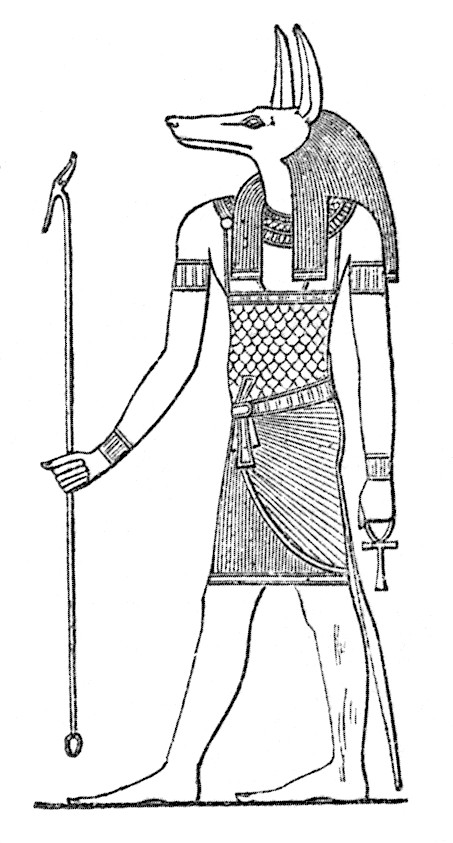
Where this page comes from
The article above is adapted from “Anubis” on Simple English Wikipedia, by its contributors. We removed reference markers, navigation boxes and tables, expanded measurement templates into readable numbers, and kept the prose otherwise intact.
Both sources are published under CC BY-SA 4.0, so this page is published under the same licence. You may share and adapt it, including commercially, as long as you credit the original and keep the same licence.
Worksheets, answer keys and printable layouts elsewhere on K5Print are our own work and are not covered by this licence.