Butterfly
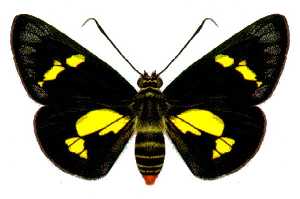

Scientific name
- Scientific name
- Papilionoidea
- Kingdom
- Animalia
- Phylum
- Arthropoda
- Class
- Insecta
- Order
- Lepidoptera
How to say it in other languages
- Chinese
- 真蝶總科,凤蝶总科
- Japanese
- アゲハチョウ上科
- Spanish
- papilionoideas
Facts from Wikipedia’s “Butterfly” page and Wikispecies (CC BY-SA 4.0).
A butterfly is a (usually) day-flying insect of the order Lepidoptera. They are grouped together in the suborder Rhopalocera. Butterflies are related to moths, from which they evolved about 56 million years ago. The earliest discovered fossil moth was 200 million years ago.
The life of butterflies is closely connected to flowering plants. Their larvae (caterpillars) feed on plants, and their adults feed on flowers. They lay their eggs on the plants their caterpillars feed on. Butterflies have a long history of co-evolution with flowering plants. Many of the details of plant anatomy are related to their pollinators, and vice versa. The other notable features of butterflies are their extraordinary range of colours and patterns, and their wings. These are discussed below.
Angiosperms (flowering plants) evolved in the Lower Cretaceous, but did not become common until the Upper Cretaceous. Butterflies were the last major group of insects to appear on the planet. They evolved from moths in the latest Cretaceous or the earliest Cainozoic. The earliest known butterfly fossils date to the mid Eocene epoch, between 40 and 50 million years ago.
Like moths, butterflies have four wings covered with tiny scales. The front and back wings are usually zipped together, so that the insect looks as if it has only two wings. When a butterfly is not flying, its wings are usually folded over its back. The wings are patterned and are often brightly coloured. There are many different kinds of butterflies. The males and females of each kind are often slightly different from each other. Butterfly watching is a popular hobby. Some people also keep collections of dead butterflies that they have caught, but they find out that the colour fades.
Like all insects with complete metamorphosis, a butterfly’s life goes through four distinct stages. It begins as an egg, which hatches into a larva (a caterpillar). After some time, the larva turns into a chrysalis. While it is in the chrysalis stage, it changes to become an adult butterfly. These changes are only beginning to be understood. To complete the cycle, adults mate and the females lay eggs.
Butterflies are any of the species belonging to the superfamilies Papilionoidea and Hedyloidea. Butterflies, along with the moths and the skippers, make up the insect order Lepidoptera. Butterflies are nearly worldwide in their distribution.
Predators
The main predators of butterflies are birds, just as the main predators of the crepuscular moths are bats. Also monkeys and tree-dwelling reptiles are predators, and some insects and spiders. All reptiles have good colour vision, so that butterfly coloration is seen by them.
Defences
The extraordinary colours and patterns on the wings and body can only be understood in terms of their function. Some of the most obvious functions of colour are:
- Camouflage: enabling the insect to remain hidden from view
- Signalling to other animals
- Warning colouration: signalling to other animals not to attack. Caterpillars may have stored poisons from their food plants.
- Mimicry: taking advantage of another species’ warning coloration
- Sexual selection: finding a mate
- Other kinds of signalling:
- Diversion
- Startle defence: unexpected flashes of colour or eyespots
The details vary from group to group, and from species to species. The caterpillars also have colours with similar functions. The poisonous substances which make some butterflies noxious to eat are got from the plants eaten by their caterpillars.
Body
Like most insects, butterflies have three main body parts. These parts are the head, the thorax, and the abdomen. The body is protected by the exoskeleton. The body is made up of sections, known as segments. In between the segments there are flexible areas that allow the butterfly to move. All three parts of the body are covered in very small scales. The scales give the butterfly its colour.
Wings and flight
Butterflies have a very characteristic flying style. They usually do not fly in straight lines. Their style is well described by the children’s version of their name: ‘flutter-by’. The way they fly presumably makes them harder for birds to catch.
Some species are capable of strong, long flights (see monarch butterfly migration) and others never leave the woods they were born in. They can survive bird pecks on the wings. Late in the season damage to their wings can often be seen, though they continue flying quite well.
When they are alive, it is often difficult to see they have four wings. The wings on each side are linked by a row of little hooks. So in practice they fly as if they had one large wing on each side.
Head
The head is the first part of the body. It has the eyes, mouth parts, and antennae.
The eyes of a butterfly are large. Like other adult insects, the eye is made up of many small lenses or “optical units”. These are compound eyes. Butterflies do not see as many colours as humans, but they can see ultraviolet light.
The mouth of an adult butterfly does not have jaws. It has a kind of mouth that sucks liquids. This mouth is made of two hollow tubes. The tubes are locked together in the middle. When the butterfly is not drinking, the tubes are coiled up. It can uncoil them when it wants to drink. Like all insects, the adult phase is about reproduction. The main eating phase is done by the larvae, which usually eat plant food.
The antennae of a butterfly are used for smell and balance. The antenna in most butterflies is clubbed at the end. In some butterflies (like the skippers), there is a hook at the end of the antenna, instead of a club.
Thorax
The thorax is the second part of the body. It is made up of three segments. The legs and wings are connected to the thorax.
The legs of a butterfly are made for walking, holding onto things, and tasting. There are three pairs of legs. There are four main parts of the leg. They are the trochanter, the femur, the tibia, and the foot. At the end of each foot, there is a pair of claws. Butterflies in the family Nymphalidae have very short front legs. They keep there front legs close to their bodies. This makes it look like they only have two pairs of legs. In some species, there is a movable body part on the tibia that is used to clean the antennae.
A butterfly has two pairs of wings. Each wing has hollow tubes called veins. The colors and patterns of butterflies are made by tiny scales. The scales overlap each other. They are connected to the wing. If a butterfly is handled, the tiny scales may rub off.
Abdomen
The abdomen is the third part of the body. It is made up of ten segments. The abdomen is much softer than the head and the thorax. At the end of the abdomen are the reproductive organs. In the male, there is a pair of claspers. They are used to hold on to the female during mating. In the female, there is a tube to lay eggs (the ovipositor).
Life cycle
Butterflies go through complete metamorphosis. This means that there are four parts in a butterfly’s life. The first part is the egg. The second part is the caterpillar (sometimes called the larva). The third part is the chrysalis (sometimes called the pupa). The fourth part is the adult (sometimes called the imago).
Egg
A female butterfly will lay her eggs on or near the food plant of the caterpillar (the food plant is the plant that the caterpillar feeds on). The female will choose a place to lay her eggs using smell, taste, touch, and sight. Most species will lay just one egg on the food plant. Others will lay groups of five to over 100 eggs on the food plant. Most species will lay their eggs on the leaves of the food plant. Others will lay them on the flowers, stems, bark, or fruit of the food plant.
The eggs come in many different shapes and colours. They may be round or oval, and flattened. In some species, the egg shell is ribbed. The most common colours in butterfly eggs are yellow and green. The eggs will turn dark just before hatching. Also, some butterflies take a day to come out of eggs, while others could take months.
Caterpillar
Butterfly caterpillars can vary in size, colour, and shape. They may have spines, bristles, or soft body extensions. All caterpillars have 13 body segments. The first three segments make up the thorax. The thorax has three pairs of legs. These legs are called true legs. The other 10 segments make up the abdomen. The abdomen has five pairs of soft legs called prolegs. The prolegs have tiny hooks at the end of each of the foot. They are used to hold on to things. The hooks are called crochets.
A caterpillar’s skin does not grow. As the caterpillar grows inside its skin, the skin becomes too tight. In order for the caterpillar to grow bigger, it sheds its too-tight skin. After the old skin is shed, there is a new, larger skin. This is known as moulting. A caterpillar will moult four to five times before turning into a pupa. Each stage between moults is called an instar.
All caterpillars can make silk. The silk is made from the salivary glands. Silk starts out as a liquid in the salivary glands. The caterpillar draws out the silk into a small thread. The silk hardens as soon as it is exposed to the air. Caterpillars use silk to make nests or cocoons.
Most caterpillars feed on leaves of plants or trees. Most species of caterpillars will feed only on a small number of certain kinds of plants. If the caterpillar’s food plant is not found, it may starve to death.
Some species of caterpillars (in the family Lycaenidae) are tended by ants. The caterpillars have special glands that make a sweet liquid called honeydew. The ants like the honeydew. In return for the honeydew, the ants protect the caterpillars from predators. The caterpillars also have special body parts that make sounds. The caterpillar will make sounds with the body parts and “call” the ants when the caterpillar is being attacked by predators. The ants hear the sounds and come to protect the caterpillar.
Caterpillars in the subfamily Miletinae eat insects in the order Hemiptera. This includes aphids, mealybugs, leafhoppers and treehoppers. p356
Caterpillars in the family Papilionidae have a special organ. This organ is called an osmeterium. It is a bad-smelling gland that is shaped like a snake’s tongue. It is kept behind the inside of the head. When a predator tries to eat the caterpillar, the caterpillar releases the osmeterium. This usually scares the predators away. p161
Pupa
The pupa (plural, pupae) is formed after the last moult. The caterpillar will find a special place to pupate (pupate means to turn into a pupa). The digestive tract is emptied. The caterpillar sheds its skin. The pupa is now exposed. The caterpillar’s tissues are broken down and rebuilt into the butterfly’s tissues.
The pupa cannot move. It is attached to an object by tiny hooks on the end of the abdomen. These hooks make up what is called the cremaster. There are many tiny holes on the pupa. They allow respiratory gases to move in and out of the pupa.
Many pupae are easy for predators to attack. Some caterpillars (in the family Hesperiidae and the subfamilies Parnassiinae and Satyrinae) make shelters out of silk and leaves to protect themselves when they become pupae. These shelters are called cocoons. Most butterfly pupae do not have cocoons to protect themselves. Instead, the pupae have brown or green colours to camouflage themselves among leaves and branches. Pupae that do not have cocoons are called chrysalids or chrysalises.
Survival
Some butterflies may be in trouble because of habitat loss. Because of the destruction of forests and grasslands, some types of butterflies have nowhere to feed and lay eggs. To help, some people plant a butterfly garden with flowers having lots of nectar for butterflies to feed on. Some people also keep plants that butterflies lay eggs on, and enjoy watching the caterpillars hatch out and feed on the plant. Chemical sprays that are used to keep pests away from garden plants, also kill butterflies.
Fossils
The earliest Lepidoptera fossils date to the Triassic-Jurassic boundary, about 200million years ago. Butterflies evolved from moths. The oldest known butterfly is Protocoeliades kristenseni from the Palaeocene of Denmark, about 55million years ago. It belongs to the family Hesperiidae (skippers). Molecular clock estimates suggest that butterflies originated sometime in the mid-Cretaceous, but only significantly diversified during the Cenozoic. Genetic data suggest they originated in North-America 102.5–100.0million years ago from a nocturnal moth ancestor that fed on legumes. Only about 17million years ago did they colonize Europe. The oldest American butterfly is from the later Eocene from the Florissant Formation fossil beds, about 34million years old.
Some colourful butterflies
File:Yellow Jezebel ( UN ).jpg|Yellow jezebel File:Blue Pansy I IMG 6486.jpg|Blue pansy File:Callophrys Rubi Oulu 2007 05 27.JPG|Green hairstreak File:Gulf Fritillary Butterfly on a Lantana 18 crop 2.jpg|Gulf fritillary File:DirkvdM sara longwing-crop.jpg|Sara longwing File:Yamfly - Arunachal Pradesh.jpg|Yamfly File:Nymphalis Antiopa Oulu 2007 06 10.JPG|Camberwell beauty File:Common Blue Bottle I IMG 8918.jpg|Common bluebottle File:Common Mime - Papilio clytia (dissimilis form) on Jatropha panduraefolia in Kolkata Iws IMG 0217.jpg|Common mime File:Pale Grass Blue I IMG 6722.jpg|Pale grass blue File:Common Four-ring (Ypthima huebneri) in Kolkata Iws IMG 0303.jpg|Common four-ring File:Tit Butterfly I2 IMG 3272.jpg|Western blue sapphire File:Female Black Swallowtail Megan McCarty08.jpg|Black swallowtail File:Diaethria eluina.jpg|Diaethria eluina File:Common Grass Yellow.jpg|Common grass yellow File:B cool - Malay Lacewing (by).jpg|Malay lacewing File:Tagpfauenaugen1.jpg|Inachis io File:Parnassius phoebus.jpg|Parnassius phoebus File:Red Helen (Papilio helenus) at Samsing, Duars, WB W IMG 6219.jpg|Papilio helenus File:Schwalbenschwanz papilio machaon.jpg |Papilio machaon
Monarch butterfly gallery
File:Monarch Butterfly Pink Zinnia 1800px.jpg|A monarch butterfly, with closed wings, feeding on nectar from a garden flower File:Monarch Butterfly Danaus plexippus Laying Egg 2600px.jpg|A female butterfly laying eggs on “Swan plant”. File:Monarch Butterfly Danaus plexippus Vertical Caterpillar 2000px.jpg|The caterpillar of a monarch butterfly File:Monarch Butterfly Cocoon 3.jpg|The chrysalis of a monarch butterfly
Written for younger readers
Butterfly, in simpler words
This version comes from Wikijunior, a set of books written for children aged 8 to 11. It is shorter and uses plainer language than the article above.
From Wikijunior: Bugs
Butterflies are common insects that have a worm-like body and highly colorful wings. The body and wings are covered with tiny scales that are best seen through a microscope. If you catch a butterfly by the wings some of the scales will peel off on your fingers. Butterflies are common in the garden. They can often be seen visiting flowers during day time.
Moths look similar to butterflies and they are closely related. Moths are nocturnal in nature, though, with stocky bodies. Most moths have dusky colors.
Butterflies are very common throughout the world. In cooler climates they are especially common during spring and summer. You can find them in your own neighborhood or garden. Anywhere that there are many plants and flowers you can find butterflies. Some people grow gardens for the purpose of attracting butterflies. These are called “butterfly gardens.” Butterfly larvae are called caterpillars. Each butterfly species eats specific types of plants. These plants are called “hosts.” The caterpillar of the monarch butterfly feeds on the milkweed plant.
Caterpillars eat their own egg shells as soon as they hatch in most cases. The larvae (caterpillars) feed on tender shoots and leaves. In most species larvae eat more than their own body weight. Caterpillar mouths are suited for cutting and chewing and have strong mandibles.
The pupae are dormant and do not feed.
All adult butterflies feed on liquid food. Adults have long tubular mouths which remain coiled under the head. These mouth parts can be extended while feeding. Butterflies feed on nectar and plant saps. A few feed on sap from fruits or fermented saps. In some species, the adults do not feed at all.
Hairy caterpillars have spiny bristles. These bristles bother predators by lodging in the skin or mucous membranes. Some of these bristles also contain venom that can cause irritation.
Some caterpillars eat food that contains toxins. They store these toxins in their bodies even after they become adult butterflies. This makes animals that eat them sick. Bad tasting butterflies are often brightly colored.
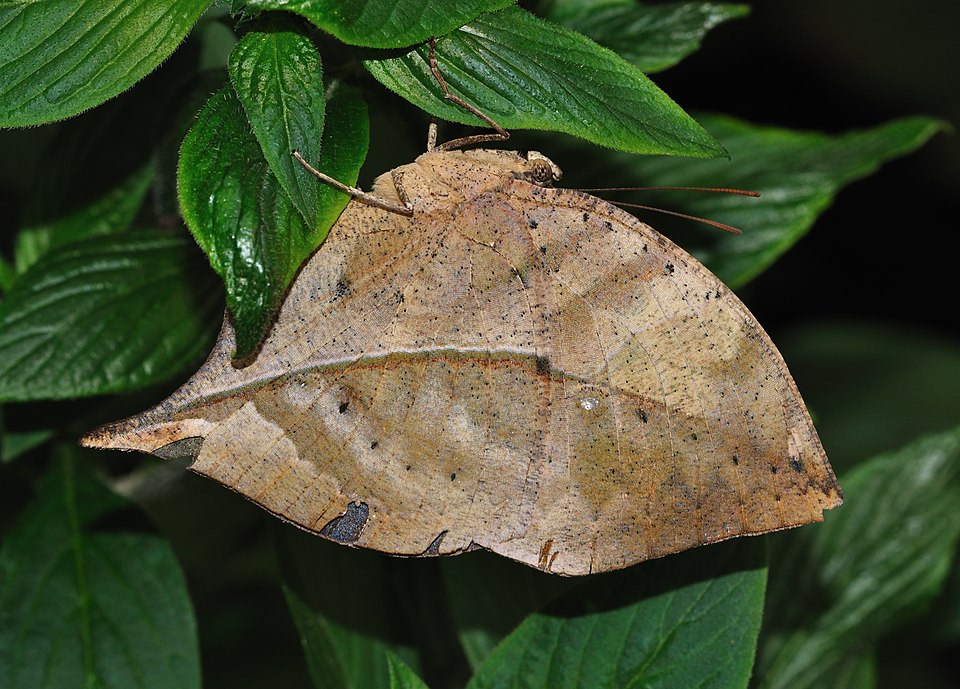
Caterpillars and some butterflies use camouflage to avoid detection. They can be the same color as the plants where they live, or look like sticks or other common objects. The pattern on a butterfly’s wings sometimes looks like the face of a much larger animal. This is thought to frighten off some predators.
A butterfly goes through four stages during its life. It starts life as an egg. It then becomes a larva and then a pupa, and finally an adult. During the larval stage, a butterfly is called a caterpillar. During its pupal stage it is called a chrysalis, and during the adult stage it is called an imago, which is the butterfly. Butterflies go through complete metamorphosis, which means that the adult form is very different from the juvenile form.
Butterflies sense the air for scents, wind and nectar using their antennae. The antennae are very sensitive.
A butterfly tastes with its feet (called tarsi.) It picks which plant to lay eggs on based on the taste it senses when it lands on the plant.
Butterflies have four independent wings. This allows them to be nimble fliers.
Many butterflies migrate over long distances. One famous migration is the Monarch butterfly’s which goes from Mexico to southern Canada. Butterflies navigate using the sun as a compass.
Butterflies are pollinators. They add beauty to gardens.
Caterpillars of many butterfly species are major pests of crop plants.
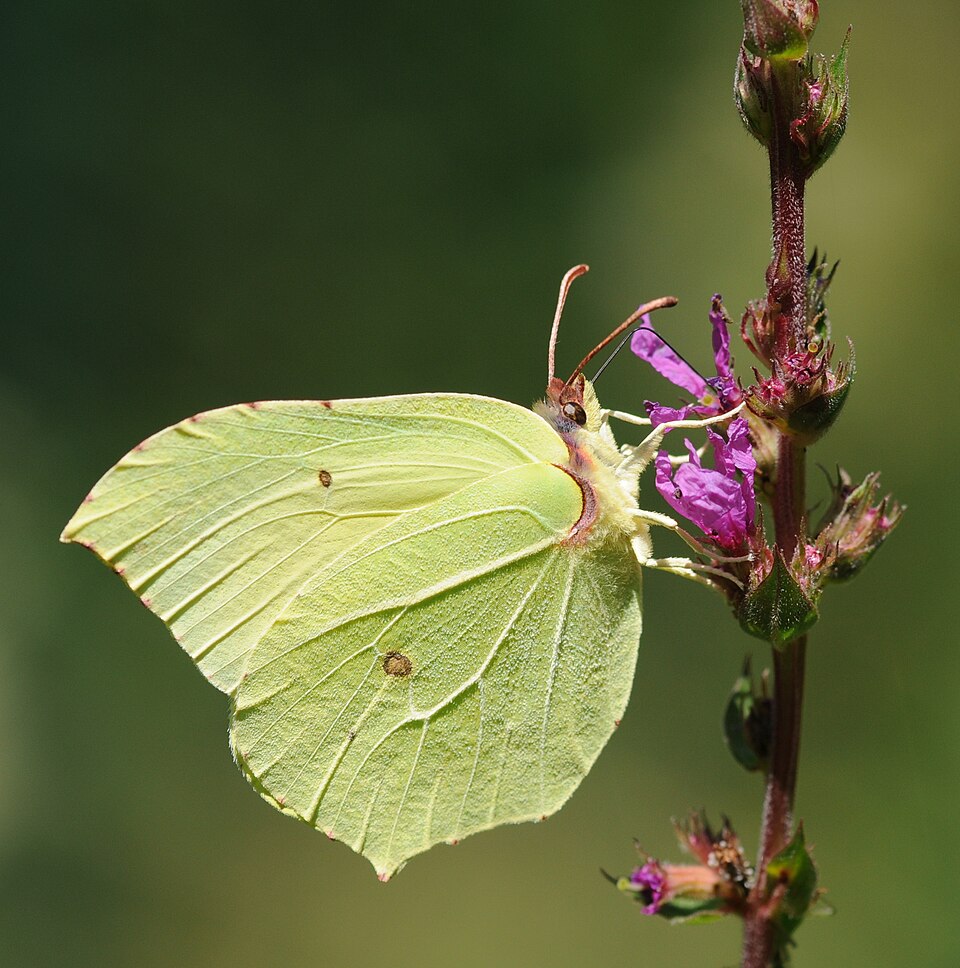
Where this page comes from
The article above is adapted from “Butterfly” on Simple English Wikipedia, by its contributors. We removed reference markers, navigation boxes and tables, expanded measurement templates into readable numbers, and kept the prose otherwise intact. The simpler version is adapted from Wikijunior on Wikibooks.
Both sources are published under CC BY-SA 4.0, so this page is published under the same licence. You may share and adapt it, including commercially, as long as you credit the original and keep the same licence.
Worksheets, answer keys and printable layouts elsewhere on K5Print are our own work and are not covered by this licence.