Catfish

Fast facts
- Phylum
- Chordata
Scientific name
- Scientific name
- Siluriformes
How to say it in other languages
- Chinese
- 鲇形目
- Dutch
- Meervalachtigen
- French
- Poisson-chat
- German
- Welsartige
- Italian
- Pesce gatto
- Japanese
- ナマズ目
- Portuguese
- Bagre
Facts from Wikipedia’s “Catfish” page and Wikispecies (CC BY-SA 4.0).
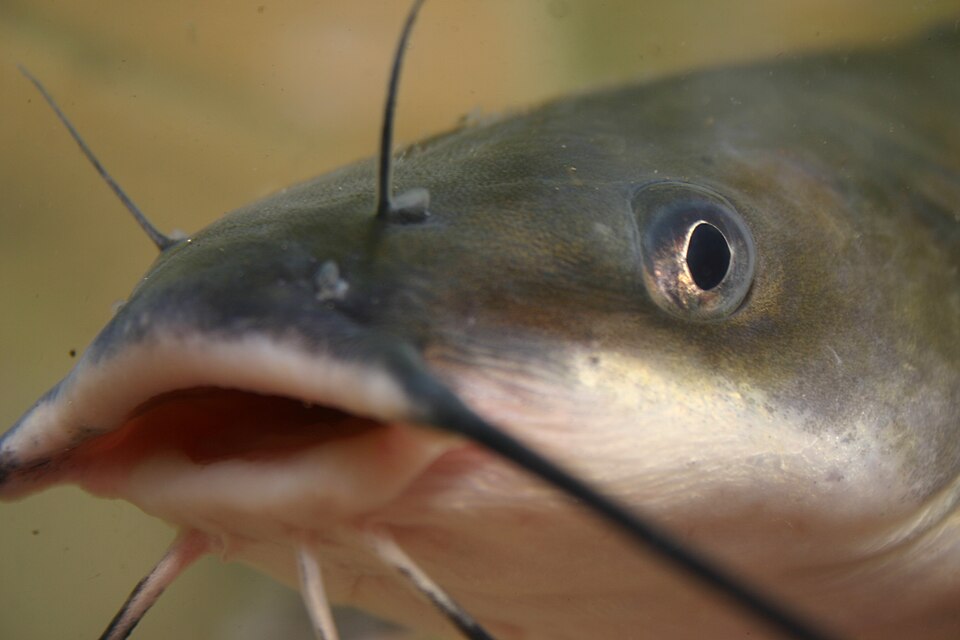
Catfish are an order of teleost fish, the Siluriformes. There are about 40 families in the order.
They are called catfish because their barbels look like the whiskers of a cat. They are very diverse. The heaviest is the Mekong giant catfish, up to 350 kg (770 lb). The longest is the wels catfish, up to 4 m (13 ft). There are also detrivores in the group. There are some tiny parasitic catfish called candiru. Some catfish are grown for food, in fish farms. Some catfish can be kept in aquaria.
Special lifestyles
Most catfish do not harm people, but some of them can cause problems. It is said that the candiru can enter the human urethra, where they stay as parasites. In normal life they are parasites on fish gills.
The Malapteruridae are a family of electric catfish. Several species of the family can produce an electric shock of up to 350 volts using electroplaques of an electric organ.
Wels catfish
The wels catfish (Silurus glanis) is a large catfish.
Corydoras
Corydoras is a genus of popular aquarium fishes.
Widemouth blindcat
The widemouth blindcat (Satan eurystomus) is another species of catfish.
Madtoms
Madtoms are catfish comprising the genus Noturus.
Channel catfish
The channel catfish (Ictalurus punctatus) is a North American freshwater catfish.
As invasive species
Species of the genus Ictalurus have been introduced into European waters in the hope of obtaining a sporting and food resource. Walking catfish have also been introduced in the freshwater areas of Florida.
Where this page comes from
The article above is adapted from “Catfish” on Simple English Wikipedia, by its contributors. We removed reference markers, navigation boxes and tables, expanded measurement templates into readable numbers, and kept the prose otherwise intact.
Both sources are published under CC BY-SA 4.0, so this page is published under the same licence. You may share and adapt it, including commercially, as long as you credit the original and keep the same licence.
Worksheets, answer keys and printable layouts elsewhere on K5Print are our own work and are not covered by this licence.