Cyprinidae

Scientific name
- Scientific name
- Cyprinidae
How to say it in other languages
- Chinese
- 鲤科
- French
- Cyprinidés
- German
- Karpfenfische
- Japanese
- コイ科
- Korean
- 잉어과
- Russian
- Карповые
Facts from Wikipedia’s “Cyprinidae” page and Wikispecies (CC BY-SA 4.0).
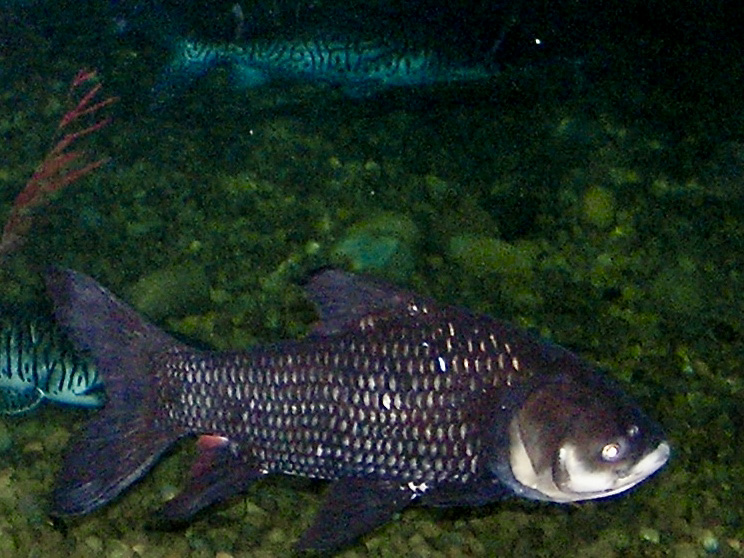
Cyprinidae are a family of freshwater fish. They are in the class Actinopterygii, and include more than 3000 different species. They have a maximum length of over 2.5 metres (8 feet 2 inches) but most types of cyprinidae are smaller than 5cm (2 inches).
Description
Cyprinids don’t have a stomach, so they depend on their pharyngeal teeth to eat food. The largest of the family is the giant barb (Catlocarpio siamensis), but there are other large species like the golden mahseer and mangar. All species are oviparous and most do not keep an eye on their eggs.
Acheilognathinae
- Acanthorhodeus (Khanka spiny bitterling)
- Acheilognathus (bitterlings)
- Rhodeus (bitterlings)
- Tanakia (bitterlings)
Alburninae
- Alburnoides
- Alburnus (bleaks and shemayas)
- Aspiolucius (pike asp)
- Metzia
Barbinae
- Acrossocheilus
- Anchicyclocheilus
- Aulopyge (Dalmatian barbelgudgeon)
- Balantiocheilos
- Barbus (typical barbels and barbs)
- Carasobarbus
- Clypeobarbus
- Dawkinsia
- Desmopuntius
- Diptychus
- Haludaria
- †Hsianwenia
- Kalimantania
- Luciobarbus
- Mesopotamichthys
- Neobarynotus
- Oliotius
- Oreichthys
- Pethia
- Puntigrus
- Puntius (spotted barbs)
- Sahyadria
- Schizopyge (snowtrouts)
- Schizothorax (snowtrouts)
- Sinocyclocheilus (golden-line fish)
- Striuntius
- Systomus
Cultrinae
- Anabarilius
- Chanodichthys
- Culter (culters)
- Cultrichthys
- Hainania
- Hemiculter (sharpbellies)
- Ischikauia
- Megalobrama
- Parabramis (white Amur bream)
- Paralaubuca
- Pseudohemiculter
- Pseudolaubuca
- Sinibrama
- Toxabramis
Cyprininae
- Barboides
- Barbonymus (tinfoil barbs)
- Capoeta (khramulyas)
- Carassioides
- Carassius (Crucian carps and goldfish)
- Cyprinus (carps)
- Eechathalakenda
- Gymnocypris
- Paracapoeta
Danioninae
- Amblypharyngodon (carplets)
- Aspidoparia
- Barilius
- Betadevario
- Boraras (rasboras)
- Cabdio
- Chelaethiops
- Chela
- Danio (danios)
- Danionella
- Devario
- Esomus (flying barbs)
- Engraulicypris
- Fangfangia
- Horadandia
- Inlecypris
- Laubuka
- Leptocypris
- Luciosoma
- Malayochela
- Microdevario
- Microrasbora
- Nematabramis
- Neobola
- Opsaridium
- Opsarius
- Paedocypris
- Pectenocypris
- Raiamas
- Rasbora
- Rasboroides
- Rasbosoma (dwarf scissortail rasbora)
- Rastrineobola (silver cyprinid)
- Salmostoma (razorbelly minnows)
- Securicula
- Sundadanio
- Trigonopoma
- Trigonostigma
Leuciscinae
- Abramis (common bream)
- Acanthobrama (bleaks)
- Achondrostoma
- Anaecypris
- Acrocheilus (chiselmouth)
- Agosia (longfin dace)
- Algansea (Mexican chubs)
- Aztecula (Aztec chub)
- Ballerus (breams)
- Blicca (silver bream)
- Campostoma (stonerollers)
- Chondrostoma (typical nases)
- Chrosomus (typical daces)
- Clinostomus (redside daces)
- Codoma (ornate shiner)
- Coreoleuciscus (Korean splendid dace)
- Couesius (lake chub)
- Cyprinella (satinfin shiners)
- Delminichthys
- Dionda (desert minnows)
- Eremichthys (desert dace)
- Ericymba (longjaw minnows)
- Erimystax (slender chubs)
- †Evarra (Mexican daces)
- Exoglossum (cutlips minnows)
- Gila (western chubs)
- Hemitremia (flame chub)
- Hesperoleucus (California roach)
- Hybognathus (silvery minnows)
- Hybopsis (bigeye chubs)
- Iberochondrostoma
- Iberocypris
- Iotichthys (least chub)
- Kottelatia
- Ladigesocypris
- Lavinia (hitch)
- Lepidomeda (spinedaces)
- Leucalburnus
- Leucaspius (moderlieschen)
- Leuciscus (Eurasian daces)
- Leucos
- Luxilus (highscale shiners)
- Lythrurus (finescale shiners)
- Macrhybopsis (blacktail chubs)
- Margariscus (pearl daces)
- Meda (pikedace)
- Moapa (moapa dace)
- Mylocheilus (peamouth)
- Mylopharodon (hardhead)
- Nocomis (hornyhead chubs)
- Notemigonus (golden shiner)
- Notropis (eastern shiners)
- Opsopoeodus (pugnose minnow)
- Oregonichthys (Oregon chubs)
- Orthodon (Sacramento blackfish)
- Pachychilon
- Parachondrostoma
- Pararhinichthys (cheat minnow)
- Pelasgus
- Pelecus (sabre carp)
- Petroleuciscus (Ponto-Caspian chubs and daces)
- Phenacobius (suckermouth minnows)
- Phoxinellus
- Phoxinus (Eurasian minnows and daces)
- Pimephales (bluntnose minnows)
- Plagopterus (woundfin)
- Platygobio (flathead chub)
- Pogonichthys (splittails)
- Protochondrostoma (South European nase)
- Pseudochondrostoma
- Pseudophoxinus
- Pteronotropis (flagfin shiners)
- Ptychocheilus (pikeminnows)
- Relictus (relict dace)
- Rhinichthys (riffle daces, loach minnows) (including Tiaroga)
- Rhynchocypris (Eurasian minnows)
- Richardsonius (redside shiners)
- Rutilus (roaches)
- Sarmarutilus
- Scardinius (rudds)
- Semotilus (creek chubs)
- Siphateles
- Squalius (European chubs)
- †Stypodon (stumptooth minnow)
- Tampichthys
- Telestes
- Tribolodon
- Tropidophoxinellus
- Vimba (Vimbas)
- Yuriria
Squaliobarbinae
- Ctenopharyngodon (grass carp)
- Mylopharyngodon
- Squaliobarbus
Xenocyprinae
- Distoechodon
- Hypophthalmichthys (bighead carps)
- Plagiognathops
- Pseudobrama
- Xenocypris
Usage in aquariums
Cyprinids are used in aquariums. There are various examples – the goldfish, Bala shark, rasboras, koi, and others. Aquarists also use White Cloud Mountain minnows and zebrafish.
These fishes are very popular.
Where this page comes from
The article above is adapted from “Cyprinidae” on Simple English Wikipedia, by its contributors. We removed reference markers, navigation boxes and tables, expanded measurement templates into readable numbers, and kept the prose otherwise intact.
Both sources are published under CC BY-SA 4.0, so this page is published under the same licence. You may share and adapt it, including commercially, as long as you credit the original and keep the same licence.
Worksheets, answer keys and printable layouts elsewhere on K5Print are our own work and are not covered by this licence.