Digestive System
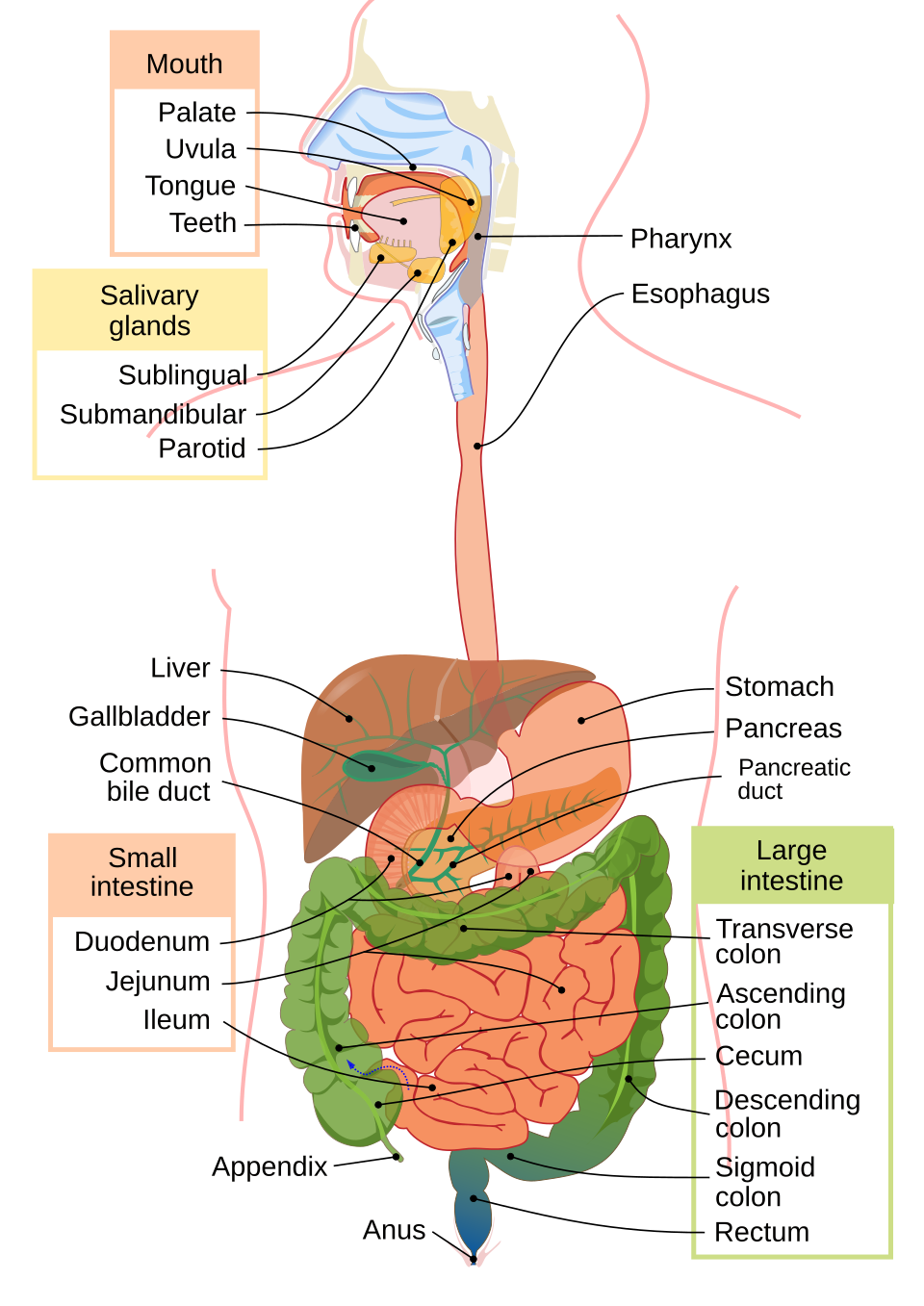

The digestive system is a part of the body that digests food. It is called the gastrointestinal system. It breaks down food into simple chemicals which can be absorbed into the blood stream. It also produces waste, which be expelled by passing gas, pooping, or passing urine (peeing).
From the blood stream, nutrients go to the liver, which is a kind of chemical factory for the body. The liver adjusts the nutrients so that the mix is what the body needs.
In the stomach, gastric acid is introduced. This is dilute hydrochloric acid. It is very reactive and has a pH level of 1.5 to 3.5. The stomach has a layer of mucus to protect itself from the acid.
The digestive system also gets rid of waste material. The gastrointestinal system starts at the lips and ends at the anus. Animals like worms, insects, mammals, birds, fish, and people all have digestive systems. Passing gas (farting or burping) during digesting is normal.
The digestive system is not just the gut, but also many other organs which help digest food. For example, digestive enzymes are needed to break down carbohydrates and meat into substances which can be absorbed. The absorbed food then goes to the rest of the body to feed it and enable it to repair itself.
The parts of the human digestive system are the same in most, if not all animals:
- Mouth
- Pharynx
- Oesophagus
- Stomach
- Intestines
- Small intestine
- Duodenum
- Jejunum
- Ileum
- Large intestine
- Cecum
- Colon
- Rectum
- Anus
Other organs that are part of the gastrointestinal system but are not part of the gut are:
- Liver and gall bladder
- Pancreas
- Salivary glands, lips, teeth, tongue, epiglottis, thyroid, and parathyroids Food does not go through these organs. But they help the gut digest the food. They also have other work. For example, the pancreas, thyroid, liver, and parathyroids are also endocrine glands that make hormones like insulin.
There are many diseases that affect the gastrointestinal system. Doctors who study the gastrointestinal tract are called gastroenterologists. They also study why people pass faeces (poo) excessively.
Written for younger readers
Digestive System, in simpler words
This version comes from Wikijunior, a set of books written for children aged 8 to 11. It is shorter and uses plainer language than the article above.
From Wikijunior: Biology
NOTOC
The digestive system is how food is processed by our bodies. Food comes in through our mouth, which is broken down in our stomach. From there, the body takes the food in through the intestines, where all the nutrients are absorbed. Then the waste goes out through the anus.
The digestive system is made up of many organs. Here are some of the organs and their functions:
Where this page comes from
The article above is adapted from “Digestive System” on Simple English Wikipedia, by its contributors. We removed reference markers, navigation boxes and tables, expanded measurement templates into readable numbers, and kept the prose otherwise intact. The simpler version is adapted from Wikijunior on Wikibooks.
Both sources are published under CC BY-SA 4.0, so this page is published under the same licence. You may share and adapt it, including commercially, as long as you credit the original and keep the same licence.
Worksheets, answer keys and printable layouts elsewhere on K5Print are our own work and are not covered by this licence.