Dog

Fast facts
- Conservation status
- DOM
- Genus
- Canis
- Species
- familiaris
Scientific name
- Scientific name
- Canis familiaris
How to say it in other languages
- Arabic
- كلب
- Chinese
- 狗/犬
- Dutch
- Hond
- French
- Chien
- German
- Hund
- Hindi
- कुत्ता
- Italian
- Cane
- Japanese
- イヌ
- Korean
- 개
- Portuguese
- Cão
- Russian
- Собака
- Spanish
- Perro
Facts from Wikipedia’s “Dog” page and Wikispecies (CC BY-SA 4.0).
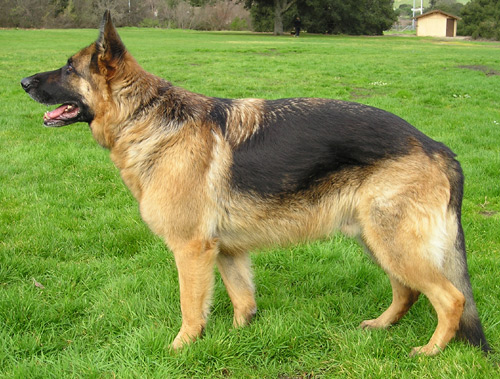
Dogs are mammals, usually to be kept as pets, or work on farms or for the police. Some dogs are trained to be rescue dogs and join teams such as mountain rescue.
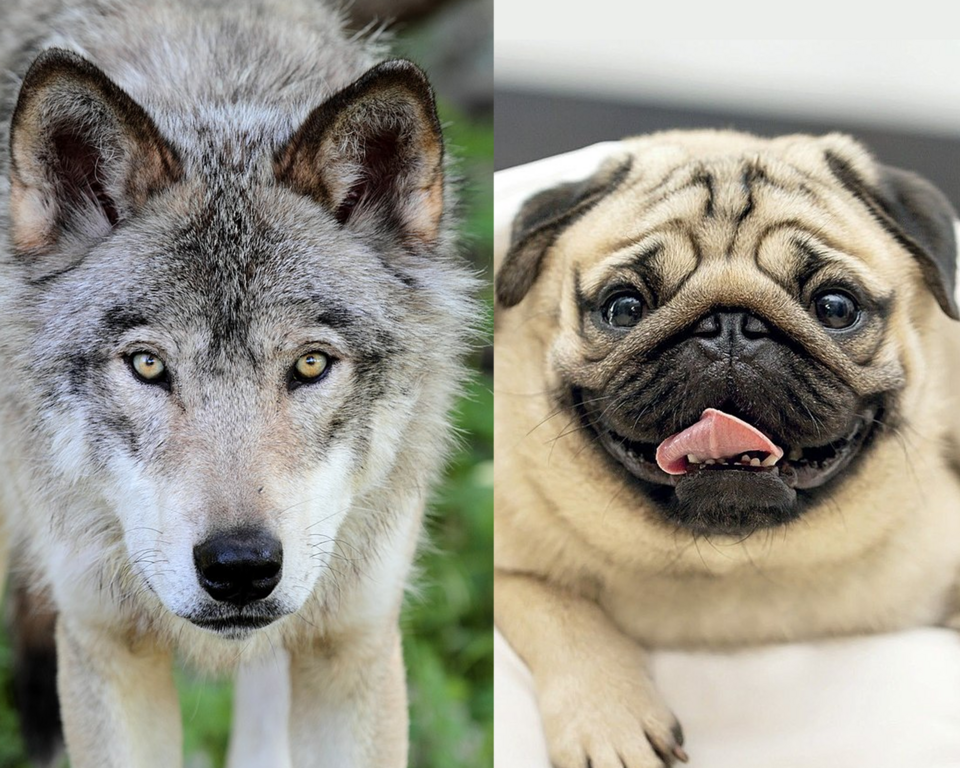
Dogs have been bred by humans from ancestral wolves. They were the first animals to live with humans. There was a lot of different types among wolves in the Late Pleistocene.
Today, some dogs are used as pets, and others are used to help humans do their work. They are popular pets because they are usually playful, friendly, loyal, and listen to humans. Thirty million dogs in the United States have been registered as pets. Dogs eat both meat and vegetables, which are often mixed together and sold in stores as dog food. Dogs often have jobs including police dogs, army dogs, assistance dogs, fire dogs, messenger dogs, hunting dogs, herding dogs, or rescue dogs. A baby dog is called a pup or puppy.
Dogs are sometimes known as “human’s best friend” because they are kept as pets, are usually loyal, and like being around humans.
Appearance and behaviour
Dogs can smell and hear better than humans but cannot see in full color. Due to the structure of their eyes, dogs can see better in low light than humans. They also have a larger field of vision.
Like wolves, wild dogs travel in groups called packs. A dog in a group helps and cares for others.
Lifespan of dogs
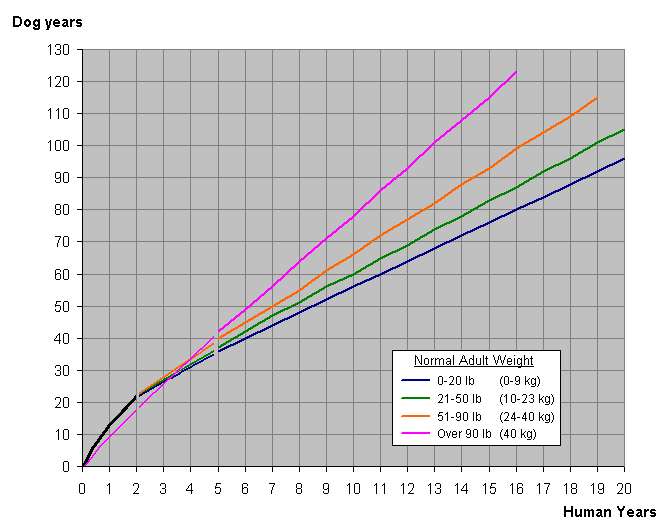
Different dog breeds have different lifespans. In general, smaller dogs live longer than bigger ones. The size and the breed of the dog change how long the dog lives on average. Breeds such as the Dachshund usually live for fifteen years, Chihuahuas can reach the age of twenty. On the other hand, the Great Dane has an average lifespan of six to eight years; some Great Danes have lived for as long as ten years. An American Bulldog lives for around 15 years. Bigger dogs will have smaller lives than smaller dogs because of the pressure on its heart to move around.
Size and skeleton
Dogs come in a wide range of sizes, from very large breeds like the Great Dane weighing 50-79 kg and measuring 71-81 cm, to very small breeds like the Chihuahua weighing 0.5-3 kg and measuring 13-20 cm. There are variations in the skeletal structure among different types of dogs. The dog’s skeleton is well-suited for running, with neck and back vertebrae having extensions for back muscles, ribs providing space for the heart and lungs, and flexible shoulders. Selective breeding over time has led to larger skeletons in breeds like smaller skeletons in breeds like terriers. Most dogs have 26 vertebrae in their tails, but some naturally have as few as three. The dog’s skull has consistent components across breeds but varies in shape.
Senses
Dogs have senses like sight, hearing, smell, taste, touch, and sensing Earth’s magnetic fields. Studies show they may detect small changes in magnetism and prefer to poop facing north or south when the magnetic field is calm.
Dogs see mainly yellows, blues, and grays. They cannot see red and green because they have fewer color-detecting cells than humans. Their eyes are less sharp than humans’, seeing details up to eight times worse.
Smell is their strongest sense. Dogs have 40 times more smell receptors than humans—up to 300 million in breeds like bloodhounds. They hear sounds four times farther than humans (up to 400 meters).
Whiskers help dogs sense vibrations, air movements, and nearby objects in the dark. They also help guide food to the mouth.
Dogs and humans
Dogs are often called “man’s best friend” because they fit in with human life. Dogs can serve people in many ways. For example, there are guard dogs, hunting dogs, herding dogs, guide dogs for blind people, and police dogs. There are also dogs that are trained to smell for diseases in the human body or to find bombs or illegal drugs. These dogs sometimes help police in airports or other areas. Sniffer dogs (usually beagles) are sometimes trained for this job. Dogs have even been sent by Russians into outer space, a few years before any human being. The first dog sent up was named Laika, but she died within a few hours.
There is much more variety in dogs than in cats. This is mainly because humans have selected and bred dogs for specific jobs and functions.
File:Sheep at watering place in Bulgaria.jpg|Dog herding sheep File:SVVP Klikatá, pes scházející schody.jpg|A guide dog File:Treibjagd0001.JPG|Many dogs are used for hunting File:Agents de sécurité au défilé avec les chiens.jpg|Guard dogs in Cameroon
Dog breeds
There are over 450 recognized dog breeds, according to the American Kennel Club. Dogs started to become more diverse during the Victorian era when humans began controlling which dogs were bred. Most breeds come from a small number of original dogs from the last 200 years. Since then, dogs have changed quickly in appearance and have been selectively bred by people. These breeds have unique features like body size, skull shape, tail type, fur texture, and color. Humans have bred dogs for specific traits to help with tasks such as guarding, herding, hunting, retrieving, and scent detection. Dogs also show different behaviors like being very social, boldness, and aggression. Today, dogs are found all over the world.
Health
Dogs can get many different diseases. Some are born with these problems (birth defect) and others get sick as they get older. Neoplasia is the most common cause of death for dogs. There are other common causes of death for dogs like heart and renal failure.
Photo gallery
File:A Golden Retriever-9 (Barras).JPG|Golden Retriever File:Betty the Boxer.jpg|Boxer File:Dob-3ans.jpg|Dobermann File:2 yr old Dalmatian.jpg|Dalmatian File:Briard 2 jaar.JPG|Briard File:Scottish terrier .jpg|Scottish Terrier File:Cachorro de Bichon Maltes.JPG|Maltese File:Kurzhaardackel.jpg|Dachshund File:Adult Black Pug.jpg|Pug File:Chihuahua1 bvdb.jpg|Chihuahua
Where this page comes from
The article above is adapted from “Dog” on Simple English Wikipedia, by its contributors. We removed reference markers, navigation boxes and tables, expanded measurement templates into readable numbers, and kept the prose otherwise intact.
Both sources are published under CC BY-SA 4.0, so this page is published under the same licence. You may share and adapt it, including commercially, as long as you credit the original and keep the same licence.
Worksheets, answer keys and printable layouts elsewhere on K5Print are our own work and are not covered by this licence.