Emu

Fast facts
- Phylum
- Chordata
- Genus
- Dromaius
Scientific name
- Scientific name
- Dromaius novaehollandiae
- Kingdom
- Animalia
- Phylum
- Chordata
- Class
- Reptilia
- Order
- Casuariiformes
- Family
- Casuariidae
- Genus
- Dromaius
- Species
- Dromaius novaehollandiae
How to say it in other languages
- Arabic
- الامو
- Chinese
- 鸸鹋
- Dutch
- Emoe
- French
- Émeu d’Australie
- German
- Emu
- Italian
- Emù
- Japanese
- エミュー
- Korean
- 에뮤
- Portuguese
- Emu
- Russian
- Страус эму
- Spanish
- Emú
Facts from Wikipedia’s “Emu” page and Wikispecies (CC BY-SA 4.0).
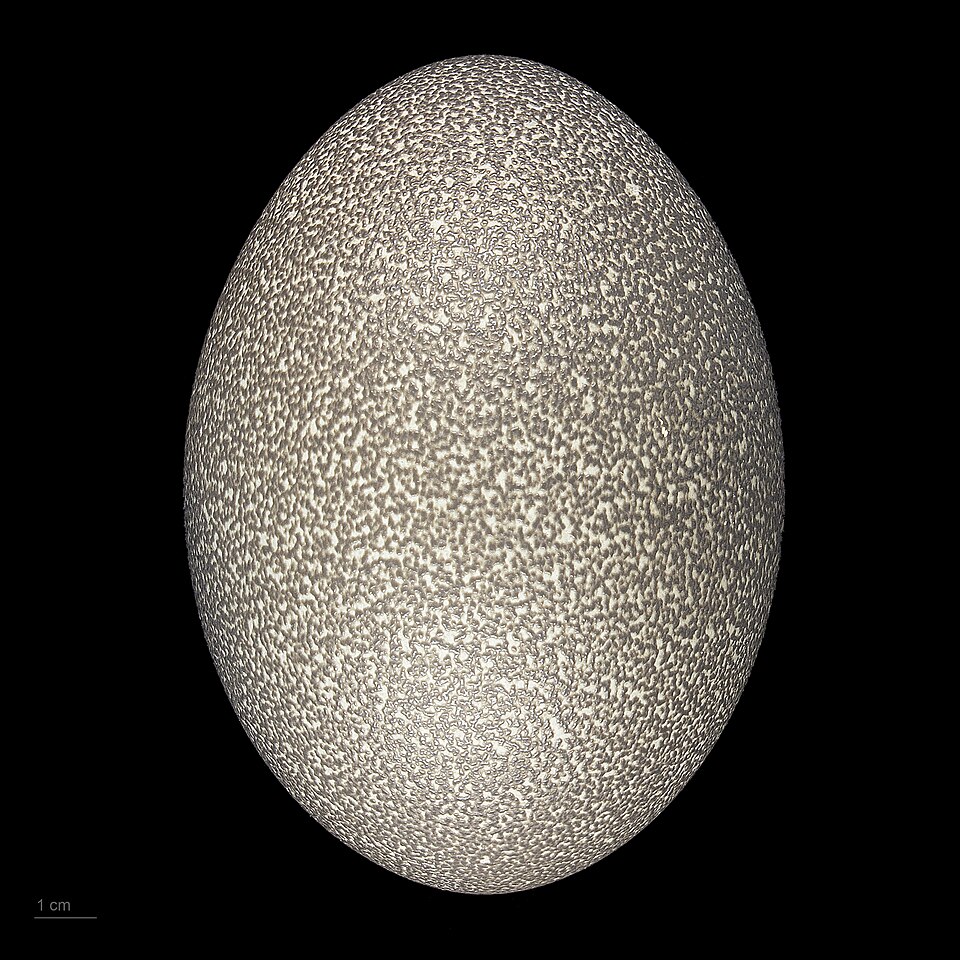
The emu (Dromaius novaehollandiae) is a large flightless bird. It is native to Australia.
It is also the second tallest bird in the world, after its ratite relative, the ostrich. The emu is also related to the cassowary which is slightly smaller but heavier.
Other emus
There were also two species of dwarf emu, Dromaius minor, one living on King Island in Tasmania and the other on Kangaroo Island. They are examples of island dwarfism. The group on King Island became extinct in 1805, that on Kangaroo Island in 1827, and that in Tasmania in 1865.
Description
The emu is the second tallest bird in the world, only the ostrich is taller. The largest individuals can reach up to 150 to 190 cm (59 to 75 in) in height.
Emus are the fourth or fifth heaviest living bird after the two species of ostrich and two larger species of cassowary. They weigh slightly more on average than an emperor penguin. The soft-feathered, brown birds reach up to 20m (27ft) in height. Their feathers are in a double layer which helps keep the emu cool. They have bare skin on the sides of the face and their neck. They can weigh up to 55 kg (120 lb). They have two large legs, with three toes on each foot. Their wings are very short, about 20 cm (7.9 in), and are hidden under their feathers. They can live up to 10–20 years.
The emu is common over most of mainland Australia. It avoids very thick forests and very dry areas. Emus can travel great distances at a fast trot. If necessary they can run at up to 50 km/h (31 mph) for some distance at a time. They may travel long distances to find food. One emu was found to have travelled 990 km (615 mi).
Diet
They feed on a variety of plants (seeds, flowers, new growth) and insects.
Breeding
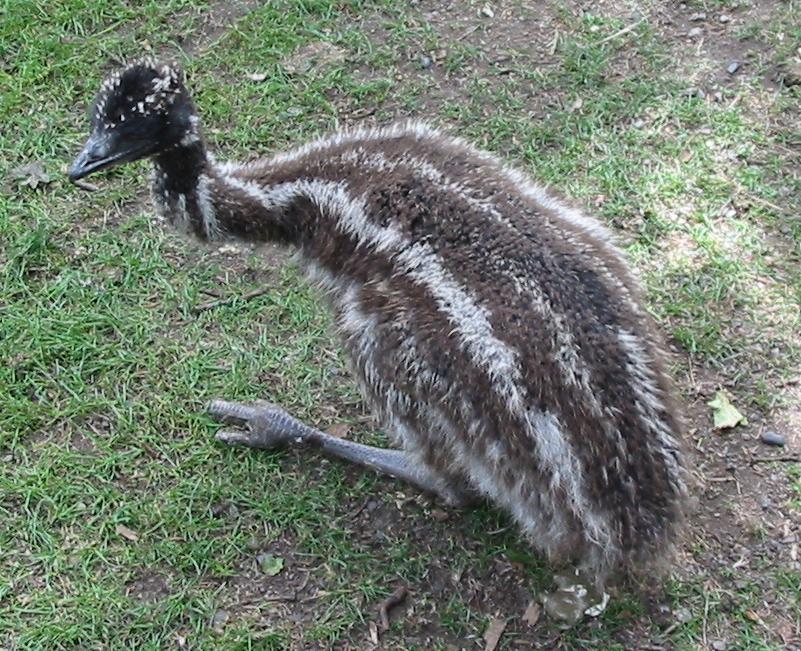
Emus are solitary birds. However, the young chicks stay with the father until they are 18 months of age. The breeding season is between February and July, when the female can lay between 5-15 eggs in a ground nest built by the male. The male then sits on the eggs for 8 weeks until hatching. The baby chicks have very clear stripes on the feathers which act as camouflage.
On the east coast of Australia, emus were once common but have become uncommon with increased human population. On the other hand, the development of farms and the supply of water for stock have increased the range of the Emu in arid (dry) regions. Emus are farmed for their meat, oil and leather. The first emu farms began in Western Australia during the 1970s.
The history of the name
The first written description of the emu was under the name of the New Holland Cassowary in Arthur Phillip’s Voyage to Botany Bay, published in 1788. The species was named by ornithologist (bird expert) John Latham, who worked on Phillip’s book. He provided the first descriptions of and names for many Australian bird species. Its scientific name, Dromaius novaehollandiae, is from the Latin words, meaning “fast-footed New Hollander”. The history of the name, emu, is not certain, but is thought to have come from an Arabic word for large bird. This word was later used by Portuguese explorers to describe the related Cassowary in New Guinea.
Where this page comes from
The article above is adapted from “Emu” on Simple English Wikipedia, by its contributors. We removed reference markers, navigation boxes and tables, expanded measurement templates into readable numbers, and kept the prose otherwise intact.
Both sources are published under CC BY-SA 4.0, so this page is published under the same licence. You may share and adapt it, including commercially, as long as you credit the original and keep the same licence.
Worksheets, answer keys and printable layouts elsewhere on K5Print are our own work and are not covered by this licence.