Fungi

Scientific name
- Scientific name
- Fungi
How to say it in other languages
- Arabic
- فطر
- Chinese
- 真菌界
- Dutch
- Schimmels
- French
- Champignons
- German
- Pilze
- Hindi
- फफूंद
- Italian
- Funghi
- Japanese
- 菌界
- Korean
- 균계
- Portuguese
- Fungos
- Russian
- Грибы
- Spanish
- Fungi
Facts from Wikipedia’s “Fungus” page and Wikispecies (CC BY-SA 4.0).
A fungus (plural: fungi) is a type of living organism that includes yeasts, molds, mushrooms and others. Fungi are a category of organism as large and varied as the animals or plants. Fungi, animals and plants are each Kingdoms of life.
Historically people thought fungi were most like plants, even calling fungi a type of plant. However fungi are not plants. Fungi are more closely related to animals than to plants.
The study of fungi is known as mycology from “myco-” meaning fungi and “-ology” meaning “study of”.
Origin in evolution
Fungi evolved around 1 billion years ago. Fossils from the Devonian period show evidence of fungi likely having an even older history.
There are fungi fossils and ancient fungi found trapped in amber but compared to material like bone fungi fossils are rare due to their rapid decay
Fungi are all eukaryotes. This means their cells have nuclei, unlike bacteria which do not have nuclei and so are called prokaryotes.
The Typical Fungi Cell
In addition to a cell nucleus that contain the DNA, fungal cells have ribosomes to turn the DNA genes into protein, mitochondria that produce energy for the cell, and other organelles. Fungi cell walls are mainly composed chitin. Meanwhile, plant cell walls are cellulose found in cell walls of plants.
Fungi do not have any chlorophyll and so cannot capture energy from sunlight like plants do. This is one way fungi are more similar to animals, which also lack chlorophyll.
How fungi eat
Most fungi are saprophytic. These fungi digest and absorb dead organic matter around them. Fungi can absorb the food molecules through their cell walls. p107
However there are many very different other ways some fungi get nutrients and live. Some are parasites, some are pathogens, some are predatory, some cooperate with other living things in symbiosis and some fungi have more than one lifestyle.
Pleurotus fungi, also called “oyster mushrooms”, are an example of fungi that both eat dead matter and are also predatory. They can capture nematodes with their hyphae.
Some fungi can instead live by growing around or into the roots of trees or other plants. When they do this they can be called mycorrhiza where the “myco” indicates fungi and “rhiza” refers to plant roots. Most trees contain mycorrhizal roots, and so do many crop plants. This benefits both the fungus and the plant, which makes it a symbiotic relationship.
Besides mycorhizza, there are other cases of symbiosis where a fungus shares resources with other organisms and all benefit. Lichen is an example where fungi and an algae or cyanobacteria live together and help each other survive. In this partnership the algal cells live within the fungal tissue. The outcome is a new mat-like life-form which clings to rock and various surfaces. Approximately 20% of all fungi lives as lichen symbiosis.
In other cases fungi can be parasitic, taking resources from other living things and giving nothing or very little back. Still other fungi can be pathogens that cause disease in other living things and eventually kill them. Once it is dead then many of these pathogenic fungi switch to eating the dead matter, becoming saprophytes. Many fungi can switch how they get their nutrients. They often switch lifestyles to survive better.
Multicellular fungi and unicellular fungi
Fungi can exist as one cell (unicellular) or many cells (multicellular) as organisms.
Multicellular fungi
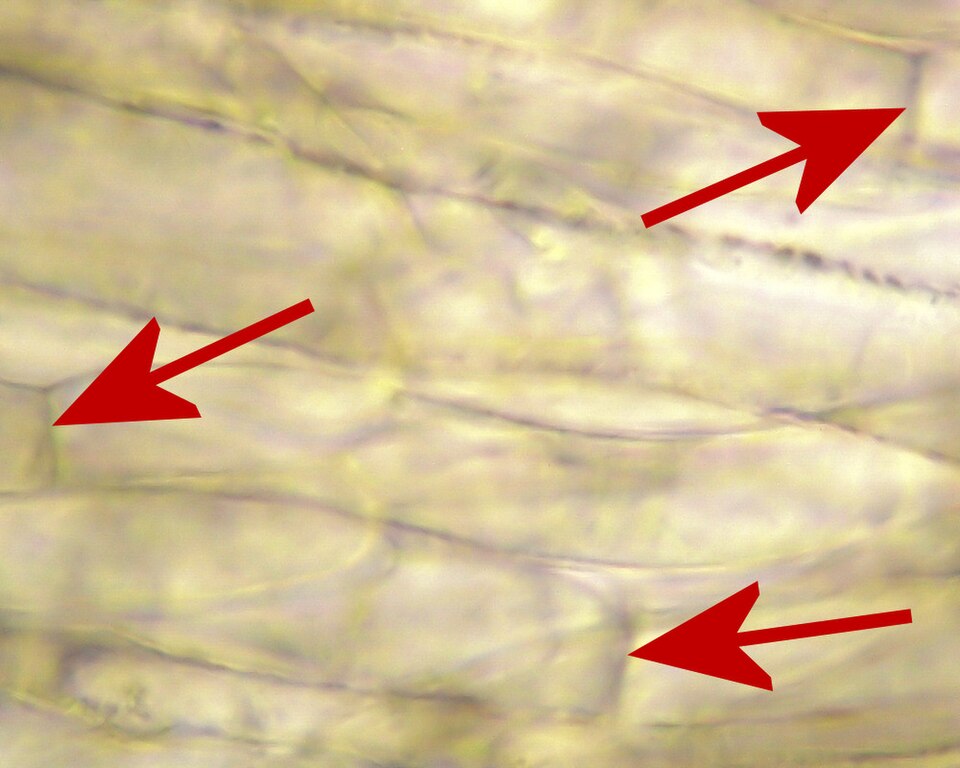
Fungi with more than one cell can have thin thread-like cells called hyphae (singular: hypha) that absorb nutrients and anchor the fungus in place.
Hyphae are not roots but can resemble threads or tiny roots through which the fungus uses to extract nutrients. Each hypha consists of a long cell enclosed within a tube-shaped cell wall that grows from the end. Hyphae generally form syncytia so that their cell walls (septa) are mostly incomplete and have gaps. This means the cell nuclei are not separated from each other, as in typical cells. Specific details may differ among species.
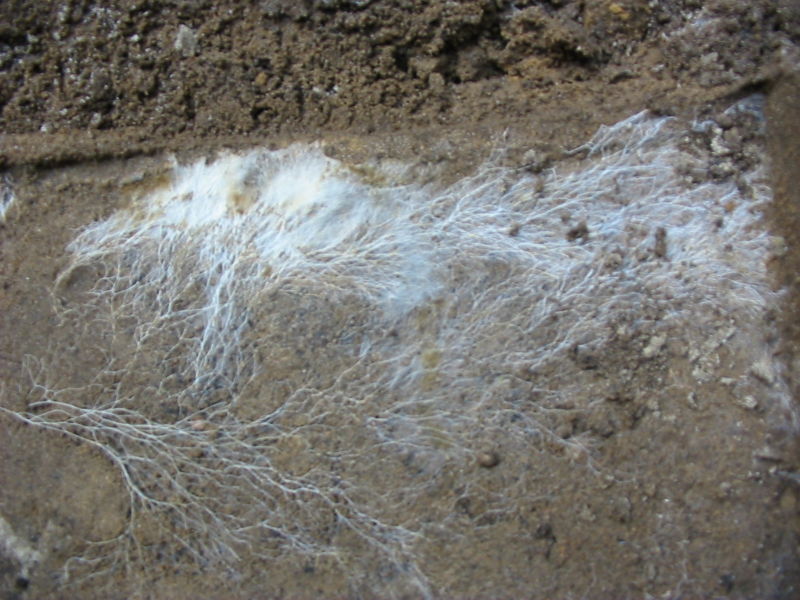
The mycelium consists of a mat of hyphae, The mycelium is also defined as all the “vegetative” or non-reproductive parts of a fungus. The mycelium of a fungus may be found growing underground, through a rotting log or over dead leaves, inside the body of an insect, among many other places.
Unicellular fungi
Yeasts and moulds are among the unicellular fungi.
Yeast is an example of a single-celled fungus that reproduces either sexually or asexually. Asexual reproduction occurs by simple budding (binary fission).
More about how different fungi reproduce
Different fungi reproduce sexually and asexually. Some are able to reproduce in only one way or the other, while other fungi reproduce both ways.
In general, the production of spores is key. Spores can travel to new places by air or water and develop into new fungi.
Some fungi give rise to mushrooms, also called sporocarps as part of reproduction. Mushrooms are multicellular bodies produced from fungus’s hyphae that exist to produce and release spores so that they may eventually develop into new fungi. Mushrooms are sometimes called fungal “fruiting bodies” because mushrooms are only part of a fungus and exist for fungal reproduction, which is similar to how fruit are only part of a plant and exist for plant reproduction. This comparison is also made because fungi and their mushrooms were historically incorrectly thought of as plants.
Other fungi use a sporangium to produce spores through mitosis, or sexual spores through meiosis.
Mushroom Types
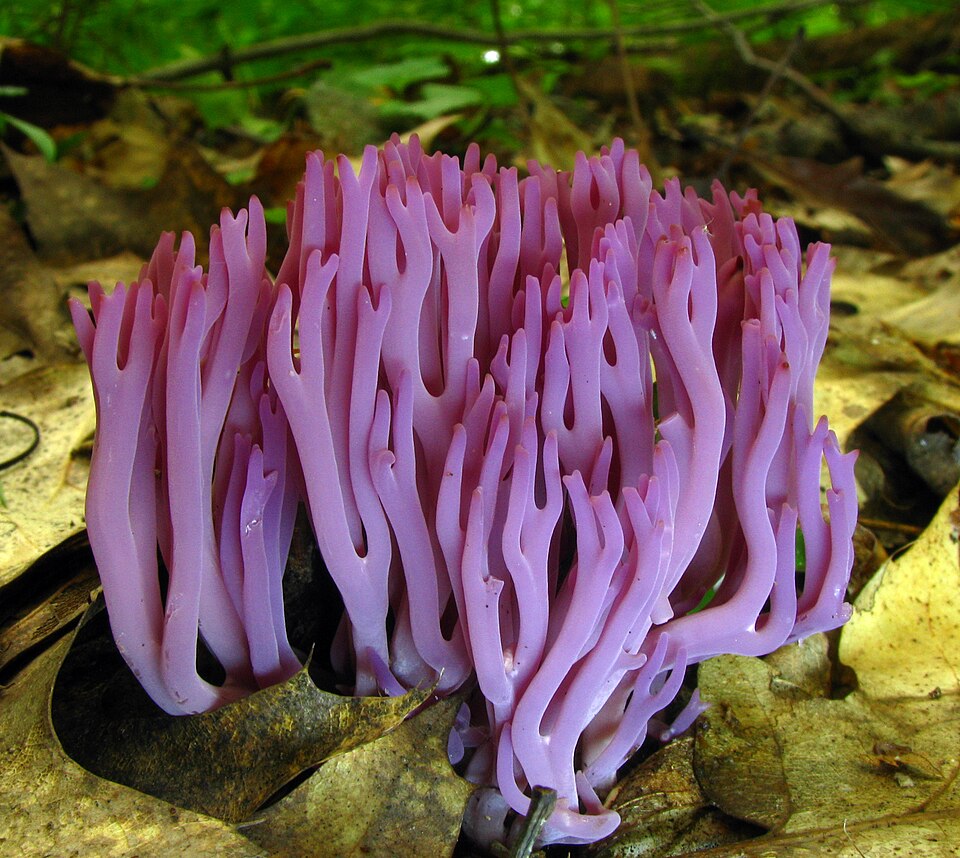
Mushrooms can take many different shapes, depending on the fungi species that produces the mushrooms. They can range from the classic “cap and stem” shape found in Amanita, Boletus and many other groups of fungi, all the way to the unique branching shape of coral fungi.
In some cases the cap of a mushroom has gills, in other cases it may have “teeth” as in hedgehog mushrooms (genus Hydnum) or pores as in Boletus or Leccinum.
Other mushrooms are simply shaped, like cups. These are the Ascomycota, which include the highly sought-after morel mushrooms.
Some mushrooms even grow entirely underground, as in truffle fungi.
Many fungi species are defined based mostly on genetics but are still able to be recognized and identified based on their shape, color, odor, smell and habitat.
Contrary to popular belief, unless someone is allergic, it is safe to handle all mushrooms. Even the most poisonous fungus must be eaten to begin to do harm. Someone studying mushrooms of fungi can pick up and examine any mushroom but should not attempt to eat any mushroom.
Edible fungi
Edible fungi are widely consumed as human food. Some are grown in mushroom farms and others are foraged in woods, fields and anywhere else fungi produce mushrooms. Not all fungi produce edible mushrooms. Some fungi species produce toxic mushrooms. People learn to forage from older family members in cultures with mushroom foraging traditions, from amateur mycological and mushroom hunting societies, from studying many guidebooks and in formal classes.
Fermentation and other food production
Certain types of cheese require a fungal species. Examples include Blue cheese and Camembert cheese, which owe their unique flavor and texture to the cheese.
Yeasts are widely used in the production of beer, certain breads and more fermented foods.
Antibiotics
Certain fungi (for example, penicillin) have served as a source of antibiotics. These antibiotics are naturally produced by many fungi as a defense mechanism against bacteria.
Psychoactive fungi
Some fungi produce psychotropic (mind-altering) substances. These psychedelic mushrooms are often referred as magic mushrooms because of their ability to induce hallucinations. Like any drug, their effect are temporary typically lasting for 4 to 6 hours. Many countries have prohibited them.
The effects of psilocybin containing fungi were first known to be used by indigenous peoples, most famously the Mazatec people of Mexico who invented social and medicinal uses of psilocybin. Some people today use these fungi recreationally due to their psychedelic properties.
Scientists today continue to investigate ways to use “magic mushrooms” as medical applications. Treating anxiety, depression, post-traumatic stress disorder are common ways psilocybin are studied as medicine.
Rare and environmentally-threatened fungi
Many factors, from habitat destruction to pressures from pollution to climate change may cause some fungi to become more rare or even go extinct.
Invasive fungi species
Just like animals, plants or any other type of life, there are some fungi that spread from where they are native to places where they are invasive species. A fungi can become an invasive species anywhere they are not native to and are potentially causing harm in the ecosystem including out-competing native species or directly harming native species by eating them or changing their habitat too much.
Fungi can become invasive because of being transported to areas where they are not native deliberately or accidentally by people. When people grow fungi species that are not native to their area outdoors, there can be a chance for that non-native fungi to begin to spread. If they spread too much it can become impossible to control and then the fungi is invasive. The risk for becoming invasive is not the same for all non-native fungi species. Some are much more likely to become harmful or to spread so fast they begin disrupting native species. Fungi that can cause disease such as the fungi that can cause white nose syndrome in bats are more likely to do harm if they spread to an area where they are not native.
Fungi like golden oyster mushrooms (Pleurotus citrinopileatus) are native in Europe and Asia but have begun rapidly spreading in North America, where they are not native. Although golden oyster mushrooms do not cause disease and are also edible, that they are spreading so quickly in an area where they are not native means they have been called an invasive species.
When trees are planted either for landscaping or farming for wood or paper, the fungi in the soil that associate with the roots of those trees can be spread, too. Sometimes this is done intentionally if the trees are being grown to be harvested and the fungi have been found to help those trees grow faster and stay healthier. If those fungi species are not native and begin to spread, however, then they can become invasive species. This has been seen happening with death cap fungi (Amanita phalloides) spreading to areas where it is not native from the roots of planted trees, replacing some native fungi and becoming invasive.
Poisonous fungi
Some fungi are poisonous to people or to other animals. Sometimes the poison helps the fungus by keeping insects from eating the mushrooms, other times the poison is not made by the fungus to be a poison but does cause harm if eaten by people or other animals. A mushroom that is poisonous for one type of animal to eat may be safe for another animal. No known fungus is unsafe to touch unless a person is allergic to it. All known poisonous fungi must be eaten or put into the body some other way to do harm.
Reactions to eating poisonous mushrooms and cause a range of reactions in people, including stomach cramps, hallucinations, severe organ failure, and death.
Though not all mushrooms of fungi in the genus Amanita are poisonous, the destroying angel (Amanita virosa, Amanita bisporigera, Amanita ocreata) and the death cap (Amanita phalloides), are the most common cause of deadly mushroom poisoning.
Some fungi are poisonous when eaten raw or under-cooked but are edible if well-cooked. Morel mushrooms (genus Morchella) are edible and widely eaten cooked but have toxins in them that are broken down by heat, so can poison people if eaten raw or under-cooked.
As it is difficult to accurately identify a safe mushroom without experience or training, it is often advised to assume that a wild mushroom could be poisonous and to not consume it.
Written for younger readers
Fungi, in simpler words
This version comes from Wikijunior, a set of books written for children aged 8 to 11. It is shorter and uses plainer language than the article above.
From Wikijunior: Biology
NOTOC
Fungi are mostly made of many cells. Fungi made of single cells are called yeasts. They are also part of a group of living things called ‘Eukaryotes’, just like animals and plants. We’re closer to mushrooms and yeasts than you think!
Lots of people, when they see fungi, think of mushrooms, however there are lots of different types of fungi, not just mushrooms and toadstools.
Fungi are very important because they break down waste. The leaves on the bottom of a forest would get higher and higher if fungi were not there to eat it.
Fungi are also important producers of food for humans. Also, yeasts are used to make wine, beer, and bread. Some fungi are bad for our food, however, such as mould.
Where this page comes from
The article above is adapted from “Fungi” on Simple English Wikipedia, by its contributors. We removed reference markers, navigation boxes and tables, expanded measurement templates into readable numbers, and kept the prose otherwise intact. The simpler version is adapted from Wikijunior on Wikibooks.
Both sources are published under CC BY-SA 4.0, so this page is published under the same licence. You may share and adapt it, including commercially, as long as you credit the original and keep the same licence.
Worksheets, answer keys and printable layouts elsewhere on K5Print are our own work and are not covered by this licence.