Grasshopper

Fast facts
- Phylum
- Arthropoda
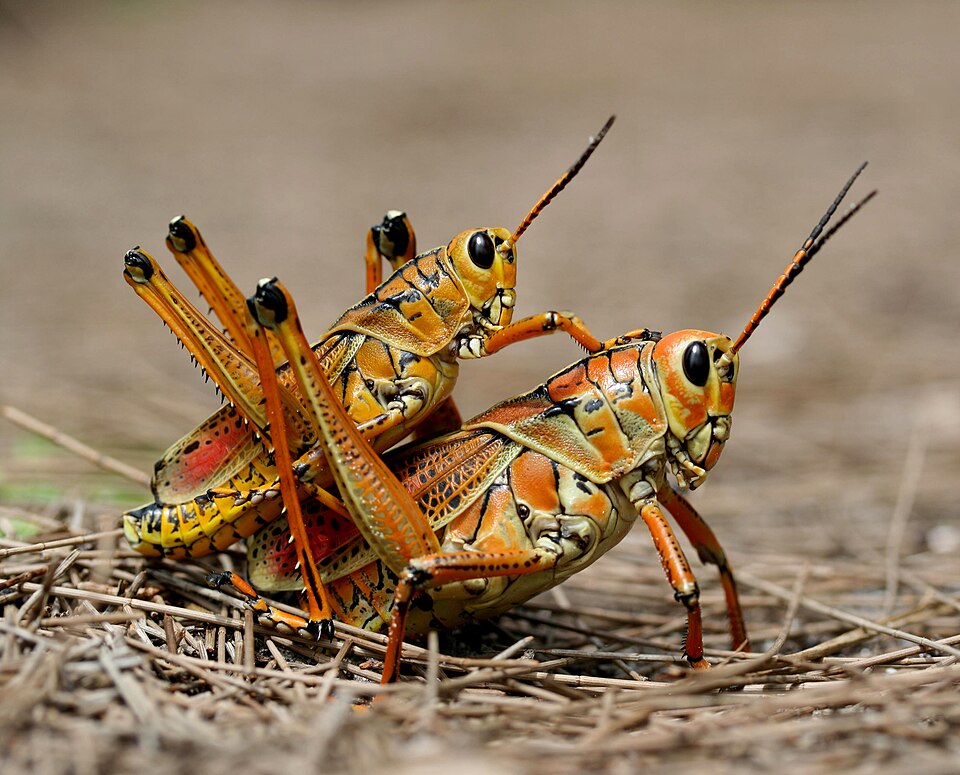
Grasshoppers are insects with long, powerful back legs which they use for jumping. They generally live in dry habitats, such as fields, gardens and meadows, with lots of grass. They are in the suborder Caelifera, which includes locusts. There are 11,000 species, of which 10,000 are in the family Acrididae.
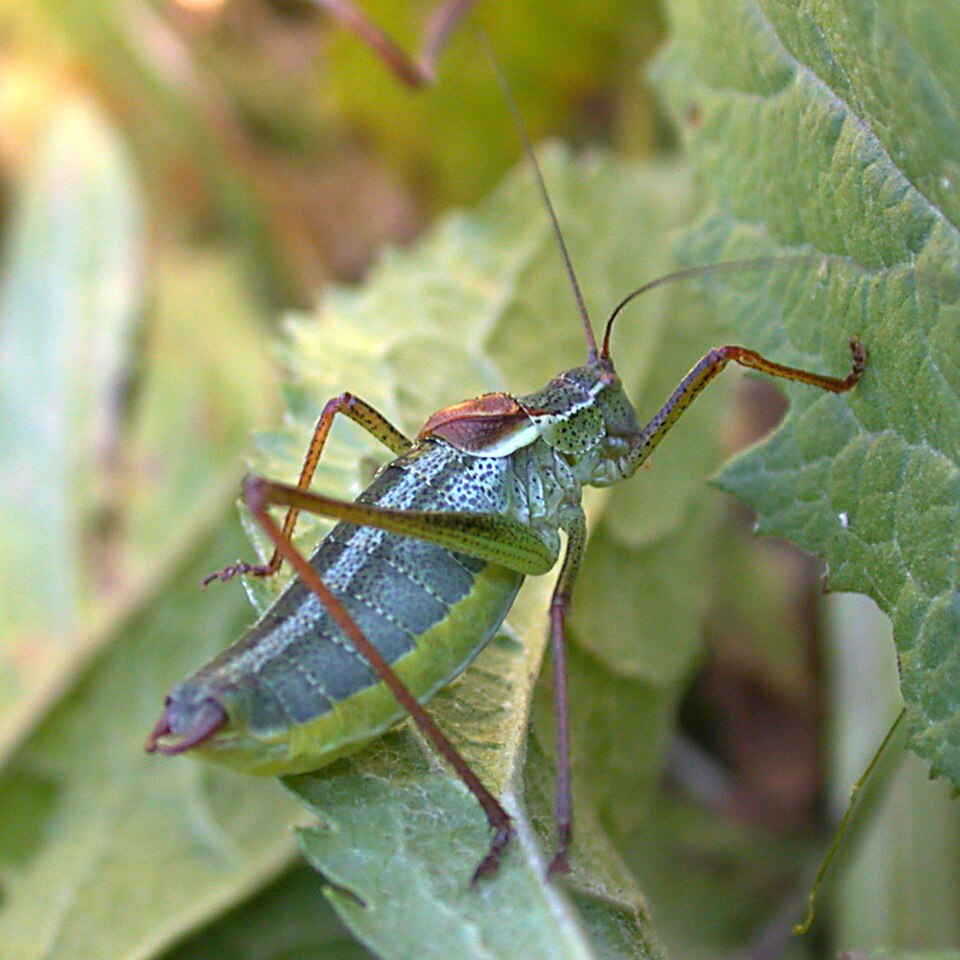
To distinguish grasshoppers from bush-crickets or katydids, they are sometimes referred to as the short-horned grasshopper. Species which change colour and behaviour at high population densities are called locusts.
Grasshoppers prefer to eat grasses, leaves and cereal crops, but many grasshoppers are omnivorous. Many grasshoppers eat from several host plants in one day, while others stay on one host plant. One of the 8000 species of grasshopper eats only a single species of plant.
As food
Grasshoppers make good food for some. As an example, in southern Mexico, chapulines (grasshoppers of the genus Sphenarium) are often eaten. They are high in protein, minerals and vitamins.
They are usually collected at dusk, using lamps or electric lighting, in sweep nets. Sometimes they are placed in water for 24 hours, after which they can be boiled or eaten raw, sun-dried, fried, flavoured with spices, such as garlic, onions, chilli, drenched in lime, and used in soup or as a filling for various dishes. They are abundant in Central and Southern Mexican food and street markets.
Written for younger readers
Grasshopper, in simpler words
This version comes from Wikijunior, a set of books written for children aged 8 to 11. It is shorter and uses plainer language than the article above.
From Wikijunior: Bugs
Grasshoppers have their rear legs adapted for jumping. These legs have large muscles in them to propel the grasshopper forwards. Grasshoppers have antennae that are almost always shorter than the body. This lets you tell them apart from their cousins the Crickets and Katydids. Grasshoppers are usually green or brown. This helps to camouflage them among the habitat where they live. Most adult grasshoppers have two pairs of wings. Some grasshoppers have their wings in bright colors. When they jump they show their wings and the sudden bright flash of color may distract predators. They are known for the sound they make by rubbing their wings with their rear legs. Grasshoppers have no ears as we do, rather they hear with an organ called the tympanum in the first segment of their abdomen.
Grasshoppers live in all climates except the very cold ones. They live in grassy areas, forests or anywhere there are leaves that they can feed on.
Grasshoppers are herbivores and eat only plants. Some grasshoppers eat only a certain type of plant. They eat plants like leaves and grasses.
When grasshoppers are picked up they release a brown liquid. Some scientists think that this is done to protect it from other small insects like ants. Grasshoppers are hunted by beetles, mantises, birds, mice, cats, dogs, snakes, and spiders. Grasshoppers try to hide or jump and fly away when they are near their enemies.
After they leave their eggs, newborn grasshoppers look much like adults. They simply grow bigger — if something doesn’t kill it first. They will grow bigger by shedding their old skin as it gets tighter, in a process called moulting. As evidenced by the diagram on the right, grasshoppers have 6 stages, or instars, in its short life. Few young grasshoppers reach adulthood.
Grasshoppers can destroy entire crops of cotton, corn and other grains. This makes them not well liked by the farmers who are planting these crops. Some grasshoppers can form swarms of many billions. These are the locusts, and a swarm of locusts can devastate
Some people eat them as food; they are very nutritious.
Where this page comes from
The article above is adapted from “Grasshopper” on Simple English Wikipedia, by its contributors. We removed reference markers, navigation boxes and tables, expanded measurement templates into readable numbers, and kept the prose otherwise intact. The simpler version is adapted from Wikijunior on Wikibooks.
Both sources are published under CC BY-SA 4.0, so this page is published under the same licence. You may share and adapt it, including commercially, as long as you credit the original and keep the same licence.
Worksheets, answer keys and printable layouts elsewhere on K5Print are our own work and are not covered by this licence.