Horse

Scientific name
- Scientific name
- Equus ferus
- Kingdom
- Animalia
- Phylum
- Chordata
- Class
- Mammalia
- Order
- Perissodactyla
- Family
- Equidae
- Genus
- Equus
How to say it in other languages
- German
- Wildpferd
- Portuguese
- Tarpan
- Spanish
- Tarpán
Facts from Wikipedia’s “Horse” page and Wikispecies (CC BY-SA 4.0).
Horses are a group of animals of the family Equidae. They are herbivores, which means they eat grass and other plants, especially alfalfa. Some plants are dangerous for them, like ragwort, lemongrass (oil grass) and sometimes acorns.
The standard horse is the species Equus caballus. It was domesticated from wild horses by humans at least 5000 years ago. They are large, strong animals and some breeds are used to pull heavy loads.
A male horse is a stallion, and a female horse is a mare, while the general term for a young horse is a foal. A young female horse is a filly, and a young male horse is a colt. A castrated horse is a gelding. A small adult horse is called a pony.
Horses are related to the rhino and tapir in the order Perissodactyla. Equus is the old Latin word for horse.
Early horses
The evolution of horses has been well studied. Fifty million years ago, there were no horses as we know them now. Of the earliest fossil horse, the North American one is called Eohippus, and the Eurasian one is called Hyracotherium. Both were small animals: Eohippus was the larger of the two at twice the size of a terrier dog.
Many changes occurred between those little animals and today’s horses. These changes are best explained as adaptations. To its changing ecological niche, from a small forest-dweller eating nuts and fruit to a more significant forest browser eating leaves and small branches. Finally, the modern horse is a grazer on open grassland, with different teeth, legs for running, and a much larger size. Significant changes happened in the mid-Miocene when the climate cooled and grassland replaced forests. This change continued, and several groups of mammals changed from browsers to grazers.
Horse characteristics
Adult horses stand 14-17 “hands” tall, which equates to ~52-72 inches in height. They have long hair along the neck, called a mane, as well as a long tail of similar hair. Horses are fast, running over 30 mph, and majestic, with four different ways they can move: walking, trotting, cantering, and galloping. Horses have hooves which sometimes have protection called horseshoes from hard or rough ground. Domestic horses typically live between 25 and 30 years, although some may live longer.
Horses and humans
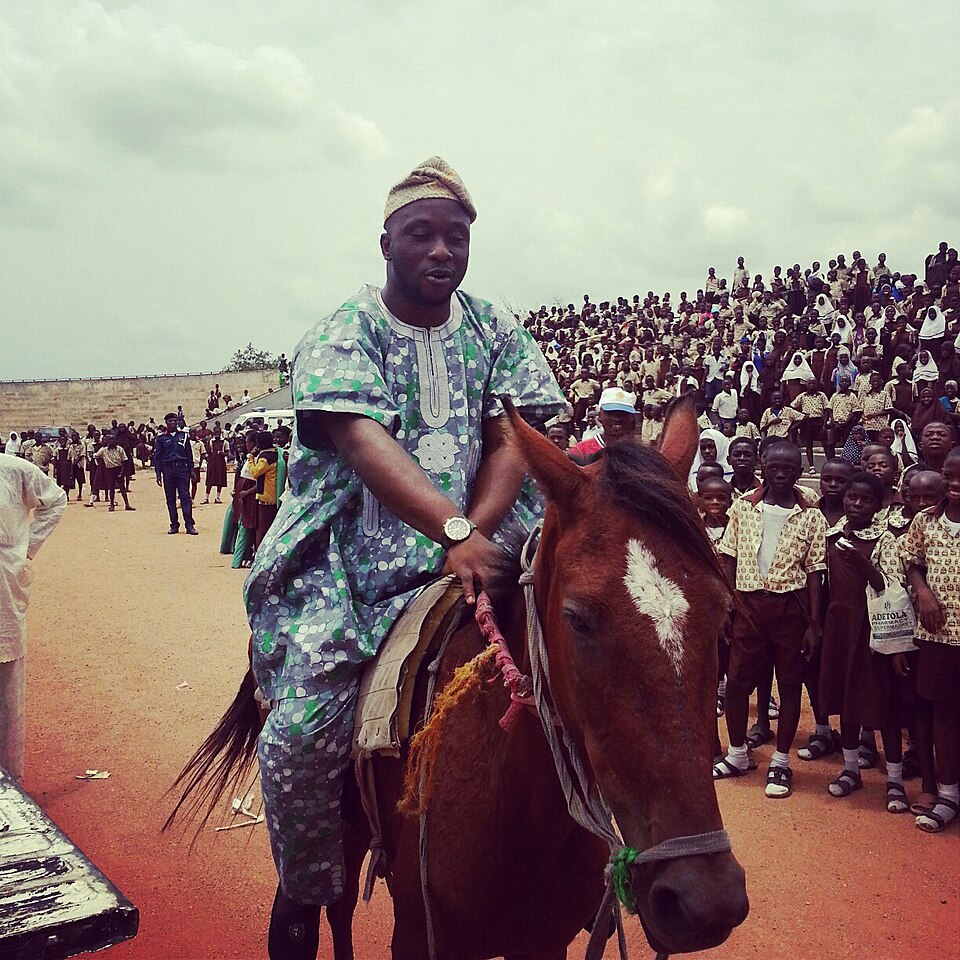
Humans have used horses in many different ways for travel, work, food, pleasure and show.
Horses were used in war as cavalry until the mid-20th century. They are still used today for riding and transport, but much less since cars were invented. They are also used for carrying things, pulling carts, or helping plough farmers’ fields in agriculture. People have used selective breeding to make more giant horses do heavy work.
Some people keep horses as pets. Today, horses are mainly used for entertainment and sports. Horses are used in equestrianism, and equine sports such as cross-country, show jumping, and other events. Show jumping, cross-country, and dressage are Olympic sports.
Other uses of horses
Horses are often seen as friendly companions (see above section). Horses have been used as therapy animals for people with mental health issues and physical problems.
Horsehide is a rugged leather made from the skin of horses. Horsehair is used to create a stiff fabric, to stuff furniture, as strings on musical instruments, and even mixed with plaster to make it strong.
Mare
A mare is a female horse. Other female equines are also sometimes called mares. Before the mare’s third birthday, the mare is called a filly. A mare for breeding is called a broodmare. When a mare wants to mate, the mare is called in heat. This part of the oestrous cycle lasts about three weeks.
Mares are more prone to being temperamental. Some people would call this being “mare-ish”. The leader of a pack of horses (called a herd) is usually a mare.
Horse colors
Horse colors have specific names.
- Chesnut: Chesnut horses have a reddish-brown coat, with a light mane and tail.
- Black: Black horses are fully black. For example, Friesian horses are always black.
- Cream: A specific gene gives horses a pale yellow, or cream color.
- Bay: Bay horses are brown with black points (legs, mane and tail). Very dark bay horses might look black, but the hair around their eyes is lighter than true black horses’ hair.
- Sorrel: Sorrel horses are brown with yellow points.
- Grey or gray: Grey horses look white, but they are called “grey” because their skin is black. They have white hair mixed with few dark hairs. Most grey horses are born dark, but they get white hair as they age.
- White: True white horses have pink skin. They are born white. Many are white because of “White Dominant” genes. Some die very young because of a “Lethal white” gene.
- Pinto: Pinto horses are spotted.
There are many more coat colors.
Horse breeds
These are some well-known horse breeds among the hundreds that exist:
- American Cream Draft
- Andalusian
- Arabian horse
- Clydesdale
- Dales Pony
- Destrier
- Dutch Draft
- Exmoor pony
- Fjord Horse
- Friesian
- Hanoverian
- Holstein
- Irish Sport Horse
- Jutland horse
- Mongolian Horse
- Morgan horse
- Mustang
- Noriker
- Paint Horse
- Peruvian Paso
- Quarter Horse
- Saddlebred
- Shetland Pony
- Spanish Mustang
- Thoroughbred
- Welsh Mountain Pony
- Welsh Pony
- Western horse
Where this page comes from
The article above is adapted from “Horse” on Simple English Wikipedia, by its contributors. We removed reference markers, navigation boxes and tables, expanded measurement templates into readable numbers, and kept the prose otherwise intact.
Both sources are published under CC BY-SA 4.0, so this page is published under the same licence. You may share and adapt it, including commercially, as long as you credit the original and keep the same licence.
Worksheets, answer keys and printable layouts elsewhere on K5Print are our own work and are not covered by this licence.