Immune System

The immune system is the set of tissues which work together to resist infections. The immune mechanisms help an organism identify a pathogen, and neutralize its threat.
The immune system can detect and identify many different kinds of disease agents. Examples are viruses, bacteria and parasites. The immune system can detect a difference between the body’s own healthy cells or tissues, and ‘foreign’ cells. Detecting an unhealthy intruder is complicated, because intruders can evolve and adapt so that the immune system will no longer detect them.
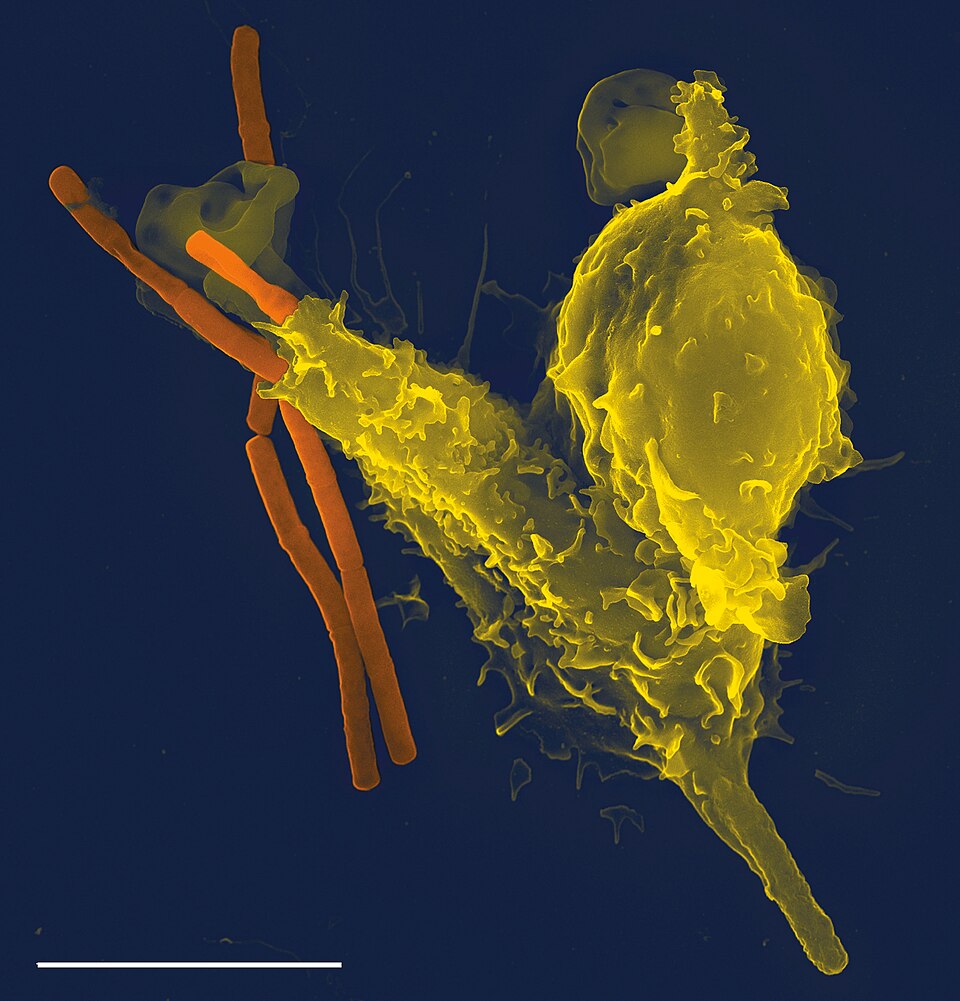
Once a foreign cell or protein is detected, the immune system creates antibodies to fight the intruders, and sends special cells (‘phagocytes’) to eat them up.
Innate immune system
Even simple unicellular organisms such as bacteria possess enzyme systems that protect against viral infections. Basic immune mechanisms appeared in ancient life forms and remain in their modern descendants, such as plants and insects. These mechanisms include antimicrobial peptides (called defensins), phagocytosis, and the complement system. These make up the innate immune system, which defends the host from infections in a non-specific way. The simplest innate system is the cell wall or barrier on the outside to stop intruders getting in. For example, skin stops most outside bacteria getting in.
The response
The innate immune system responds very quickly to anything foreign that enters the body. When something gets past the skin, as through a cut, the immune cells work to find the intruder and to alert each other of the foreign object. Small immune cells bring other cells from all over the body to the site where the foreign object was found. Other immune cells can send out messengers to cells nearby to have them help attack the foreign object. This process can make the skin look red and feel hot (inflammation). Phagocyte cells eat anything foreign that enters the body. This response is called non-specific because it responds the same way to anything foreign that enters the body from germs to a piece of dust.
Adaptive immune system
Vertebrates, including humans, have much more sophisticated defense mechanisms. The innate immune system is found in all metazoa, but the adaptive immune system is only found in vertebrates.
The adaptive immune response gives the vertebrate immune system the ability to recognize and remember specific pathogens. The system mounts stronger attacks each time the pathogen is encountered. It is adaptive, because the body’s immune system prepares itself for future challenges.
The typical vertebrate immune system consists of many types of proteins, cells, organs, and tissues that interact in a complex and ever-changing network. This acquired immunity creates a kind of “immunological memory”.
The process of acquired immunity is the basis of vaccination. Primary response can take 2 days to 2 weeks to develop. After the body gains immunity towards a certain pathogen, if infection by that pathogen occurs again, the immune response is called the secondary response.
Autoimmune disorders
In some organisms, the immune system has its own problems within itself, called disorders. These result in other diseases, including autoimmune diseases, inflammatory diseases and possibly even cancer. Immunodeficiency diseases occur when the immune system is less active than normal. Immunodeficiency can either be the result of a genetic (inherited) disease, or an infection, such as the acquired immune deficiency syndrome (AIDS), that is caused by the retrovirus HIV, or other causes.
In contrast, autoimmune diseases result from an immune system that attacks normal tissues as if they were foreign organisms. Common autoimmune diseases include Hashimoto’s thyroiditis, rheumatoid arthritis, Type 1 diabetes, and Lupus erythematosus.
Immunology is the study of all aspects of the immune system. It is very important to health and diseases.
History of immunology
Immunology is scientific part of medicine that studies the causes of immunity to disease. For many centuries people have noticed that those who recover from some infectious diseases do not get that illness a second time.
In the 18th century, Pierre Louis Maupertuis made experiments with scorpion venom and saw that certain dogs and mice were immune to this venom. This and other observations of acquired immunity led to Louis Pasteur (1822–1895) developing vaccination and the germ theory of disease. Pasteur’s theory was in direct opposition to contemporary theories of disease, such as the miasma theory. It was not until the proofs Robert Koch (1843–1910) published in 1891 (for which he was awarded a Nobel Prize in 1905) that microorganisms were confirmed as the cause of infectious disease. Viruses were confirmed as human pathogens in 1901, when the yellow fever virus was discovered by Walter Reed (1851–1902).
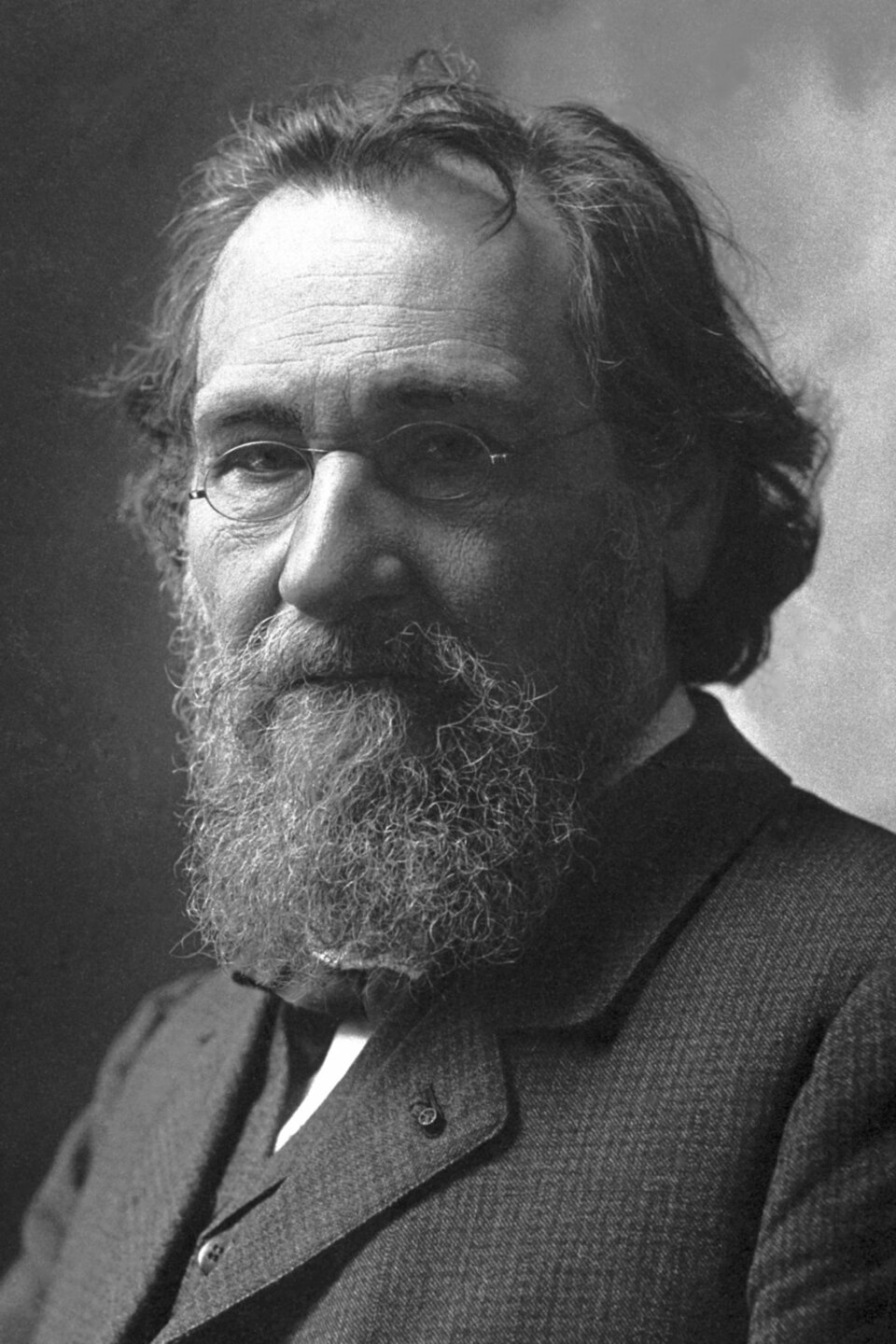
Immunology made a great advance towards the end of the 19th century, through rapid developments, in the study of humoral immunity and cellular immunity. Particularly important was the work of Paul Ehrlich (1854–1915), who proposed the side-chain theory to explain the specificity of the antigen-antibody reaction. The Nobel Prize for 1908 was jointly awarded to Ehrlich and the founder of cellular immunology, Ilya Mechnikov (1845–1916). The Nobel Prize in Physiology or Medicine 1908 Nobelprize.org, accessed 8 January 2007
Evolution
The immune system is extremely ancient. It may go back to single-celled eukaryotes which needed to distinguish between what was food and what was part of themselves.
Written for younger readers
Immune System, in simpler words
This version comes from Wikijunior, a set of books written for children aged 8 to 11. It is shorter and uses plainer language than the article above.
From Wikijunior: Biology
NOTOC
The immune system protects our bodies from disease. Cells called white blood cells found in our blood are able to kill bad things such as bacteria and viruses.
There are many different types of white blood cells. Some of them make things called antibodies that stick to things that enter our bodies, making them easy to find. Other white blood cells get rid of bacteria and stop viruses like the flu. When our immune system does not work well, we are vulnerable to diseases caused by bacteria and viruses.
Problems with the immune system include allergies; when someone has allergies, their white blood cells attack things that are not harmful to the body. When someone sneezes or their eyes water because of pollen or cat dander, it is because of the immune system’s reaction to those things.
AIDS (Acquired Immunodeficiency Syndrome) is a disease caused by a virus that kills some white blood cells, which hurts the immune system and leaves our bodies vulnerable to bacteria or viruses.
Covid-19 is a virus that attacks humans. Some people have damaged immune systems after being infected with the virus.
Where this page comes from
The article above is adapted from “Immune System” on Simple English Wikipedia, by its contributors. We removed reference markers, navigation boxes and tables, expanded measurement templates into readable numbers, and kept the prose otherwise intact. The simpler version is adapted from Wikijunior on Wikibooks.
Both sources are published under CC BY-SA 4.0, so this page is published under the same licence. You may share and adapt it, including commercially, as long as you credit the original and keep the same licence.
Worksheets, answer keys and printable layouts elsewhere on K5Print are our own work and are not covered by this licence.