Moth

Fast facts
- Phylum
- Arthropoda
Scientific name
- Scientific name
- Lepidoptera
- Kingdom
- Animalia
- Phylum
- Arthropoda
- Class
- Insecta
- Order
- Lepidoptera
How to say it in other languages
- Chinese
- 鱗翅目
- French
- Lépidoptères
- German
- Schmetterlinge
- Italian
- Lepidotteri
- Japanese
- チョウ目 (鱗翅目)
- Korean
- 나비목
- Portuguese
- Lepidópteros
- Russian
- Чешуекрылые
- Spanish
- Lepidóptero
Facts from Wikipedia’s “Moth” page and Wikispecies (CC BY-SA 4.0).
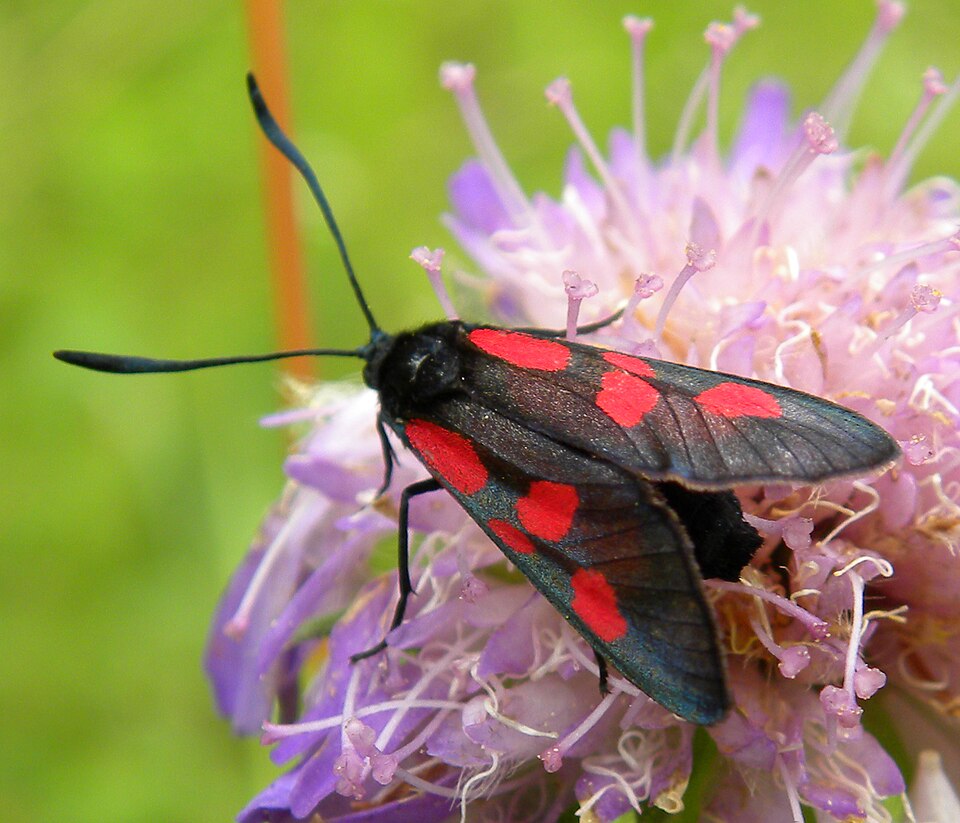
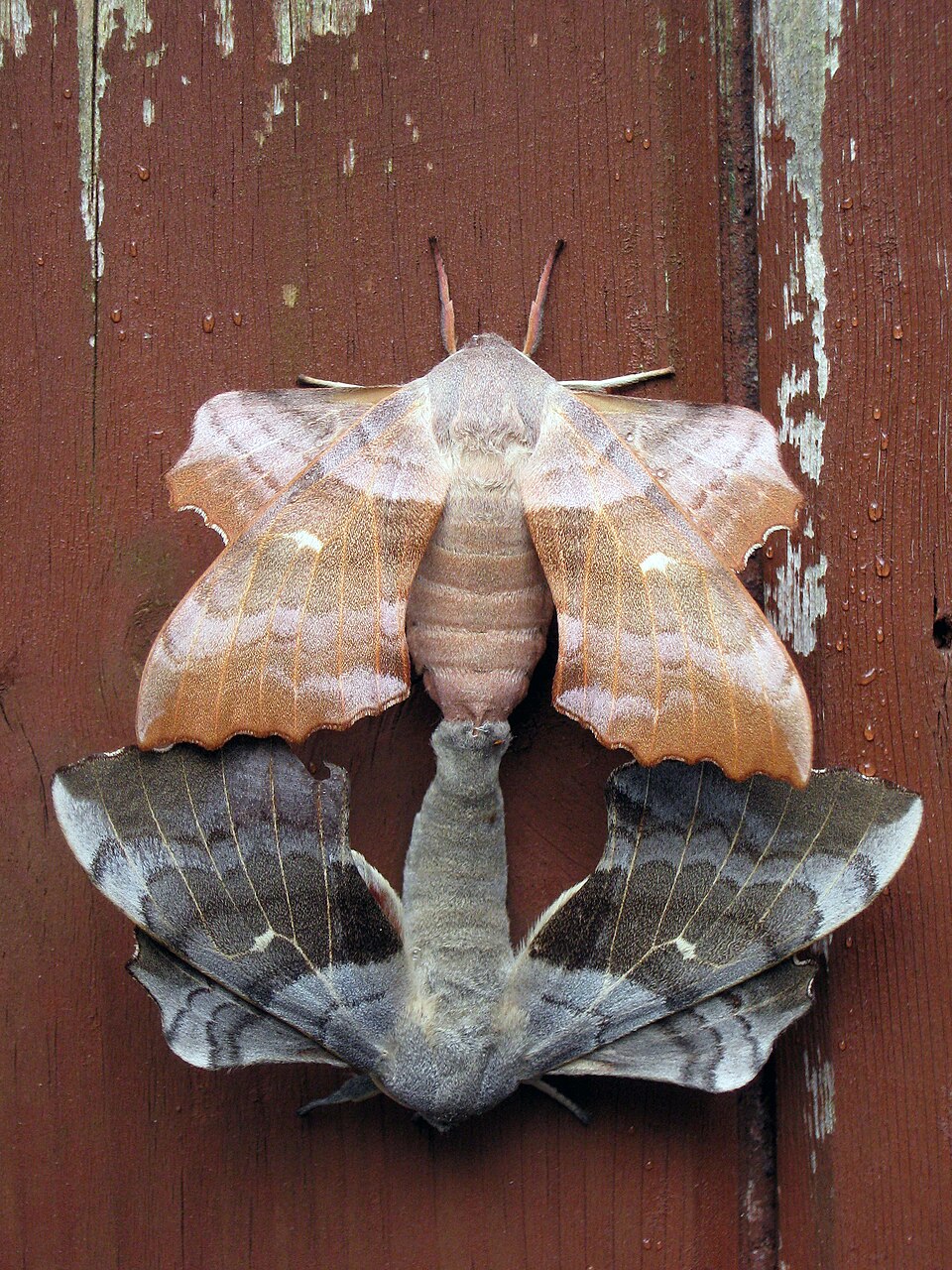
Moths are insects of the order Lepidoptera. They are closely related to butterflies, which evolved from them. They also have wings, just like butterflies. Most species of moths are active only at night. They can be told apart from butterflies in several ways. Moth antenna look like little feathers, and their wings are held flat on their backs when they are not flying.
Most Lepidoptera are moths. There are thought to be about 160,000 species of moths (nearly ten times the number of species of butterflies). Thousands of species are still to be described. Most moths are tiny: they are called micromoths or microlepidoptera. The large moths are much better known, but fewer. Most species of moths are nocturnal, but not all. There are crepuscular and diurnal species.
Moths as pests
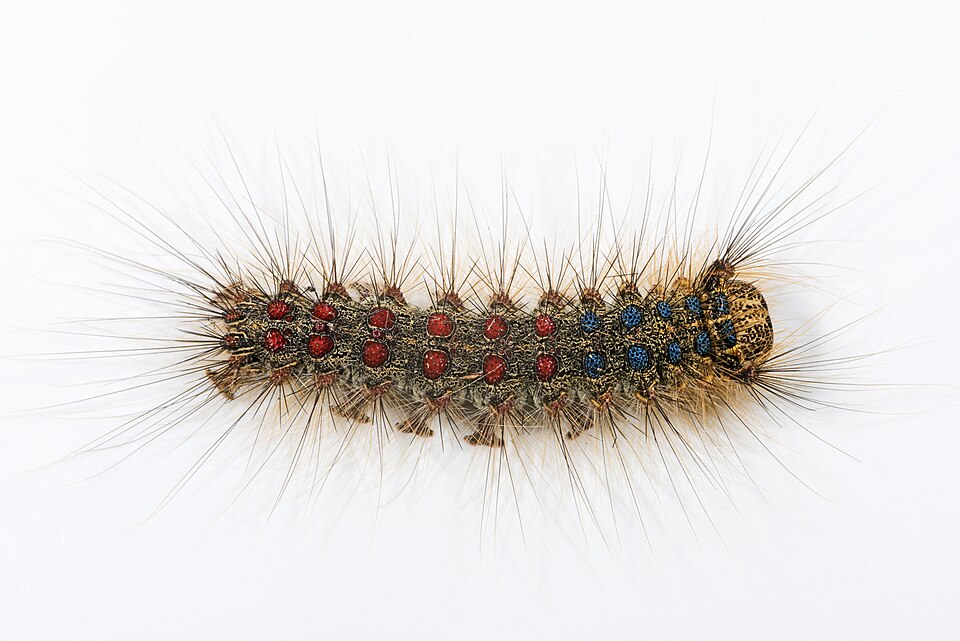
Moths, usually their caterpillars, are a major farm pest in many parts of the world. Caterpillars eat the plants that farmers grow and sometimes kill them. The caterpillar of the spongy moth (Lymantria dispar) causes great harm to forests in the northeast United States. In warm climates, the diamondback moth (Plutella xylostella) is perhaps the most serious pest of cabbage crops.
Several moths in the family Tineidae have larvae which eat clothes and blankets made from natural fibres, such as wool or silk. They are less likely to eat materials containing some artificial fibres. They may be repelled by the scent of wood from juniper and cedar, by lavender, or by other natural oils.
Chemicals are the most effective way to keep moths away, but there are concerns about the chemicals being dangerous to people.
Silk production
Some moths are farmed. The most important of these is the silkworm. It is farmed for the silk with which it builds its cocoon. The silk industry produces over 130 million kilograms of raw silk, worth about 250 million U.S. dollars, each year. Not all silk is produced by Bombyx mori. There are several species of Saturniidae that also are farmed for their silk, such as the Ailanthus moth (Samia cynthia group of species), the Chinese oak silkmoth (Antheraea pernyi), the Assam silkmoth (Antheraea assamensis), and the Japanese silk moth (Antheraea yamamai).
Attraction to light
Moths will fly around bright objects, and appear to be attracted to light. Most scientists think that this is because moths use the light of the moon to help them fly in a straight line. The light from lamps confuses the moths.
Night-blooming flowers usually depend on moths (or bats) to pollinate them, and artificial lighting can draw moths away from the flowers, hurting the plant’s ability to reproduce.
Pollination
Moths usually pollinate night-blooming flowers because they are nocturnal (they rest during the day and come out at night). A moth uses its proboscis to collect nectar just like a butterfly does. However, moths do not always land on the flower to get the nectar: they often hover near the flower and flap their wings hard while they sip the nectar. Because of this, moth-pollinated flowers do not need a landing pad. In fact, some moth-pollinated flowers point downward, like the yucca flowers.
Predators and parasites
Nocturnal insectivores often feed on moths. Many bats, and some species of owls and some other birds eat moths. Moths are also a minor part of the diet of some lizards, cats, dogs, rodents, and some bears. Moth larvae are eaten by many birds, and are also vulnerable to parasitism by ichneumon wasps.
Many adult moths and larvae are protected by noxious substances eaten by the caterpillars. They advertise their foul taste in various ways. Warning colouration is visible by day, and some adult moths emit clicks which bats learn are warning signals.
Baculoviruses are double-stranded DNA viruses which parasitize insects. They are often used as biological control agents. They are members of the Baculoviridae, a family that is restricted to insects.
There is evidence that ultrasound in the range emitted by bats causes flying moths to make evasive manoeuvers because bats eat moths. Ultrasonic frequencies trigger a reflex action in the noctuid moth that cause it to drop a few inches in its flight to evade attack. Tiger moths also emit clicks which foil bats’ echolocation.
Notable moth species
Large and dramatic Moth species include:
- Death’s-head Hawkmoth Acherontia sp.
- Luna Moth Actias luna
- Atlas moth Attacus atlas The largest moth in the world
- Emperor Gum Moth Opodiphthera eucalypti
- Polyphemus Moth Antheraea polyphemus
Moths that are of economic significance include:
- Spongy moth Lymantria dispar
- Cotton bollworm or corn earworm Helicoverpa zea, a major agricultural pest
- Codling moth Cydia pomonella, a pest mostly of apple, pear and walnut trees
- Light brown apple moth Epiphyas postvittana
- The silkworm Bombyx mori is the larva of a moth.
Other notable moths:
- The Peppered moth, Biston betularia, is the subject of research into Peppered moth evolution.
Written for younger readers
Moth, in simpler words
This version comes from Wikijunior, a set of books written for children aged 8 to 11. It is shorter and uses plainer language than the article above.
From Wikijunior: Bugs
Moths have 4 wings with delicate scales that rub off easily. They have a long coiled tube (proboscis) for drinking nectar or tree sap. The proboscis is small or absent in some species. A few species have jaws for eating pollen.
Most moths are night fliers and have dark, dull colors. Those that fly in the day have brighter colors. Moths have different ways of holding their wings. Some hold them like a roof over the body. Others curl them around the body. Antennae sometimes look like combs or feathers.
Yucca Moths are small with a wingspan of 1-3/8 inches or less. Many are black or metallic blue. They are sometimes marked with gold or silver. Others are pure white. They have long threadlike antennae. The wings are covered with tiny hair-like spines under the scales.
Fairy Moths are a kind of Yucca Moth. Males have long delicate antennae. They have a wingspan of ½ to 5/8 inch. The front wings are shiny black or bronze. Wings are sometimes yellowish-brown with rows of black dots and silver bands.
Clothes Moths are small and pale. There is a tuft of dense bristly hair on the head. Their threadlike antennae have scales around each segment. Their wingspan is 3/8 to 1-3/8 inches. Wings may have a dull golden sheen.
Bagworm Moth males are small with blackish or transparent wings. The wingspan is 3/8 to 1 inch. Most female Bagworm Moths are wingless.
Gelechiid Moths are small. They often have brilliant metallic colors. Their wingspan is less than 5/8 inch. The back wings are broader and pointed at the tips. Wings are fringed along the outer edges.
Potato Tuber Moths are a kind of Gelechiid Moth. The body is silver-gray or brown. The wingspan is 3/8 to 5/8 inches. Wings have dark specks or streaks. Back wings are smaller and have fringe along the outer edges. The forewings are silver-gray or brown.
Ermine Moths are small with a wingspan of 1-1/8 inch or less. They have spots or patterns on their wings. Wings wrap around the body when at rest.
Ailanthus Webworm Moths are a kind of Ermine moth. Their wingspan is 1-1/8 inches. Forewings and thorax are shiny orange. Forewings have greenish-yellow spots and black borders. Hind wings are pale gray with dark gray borders.
Clear Winged Moths are slender. They look like wasps. They have dark bodies banded with yellow or red. Fringes of hair cover the legs. There are tufts of bristles on the tips of the antennae. Wings are narrow and partly transparent. They have a wingspan of ½ to 2-3/8 inches.
Manroot Borers are a kind of Clear Winged Moth. They have a wingspan of 1-5/8 to 2-3/8 inches. The front wings are brownish to gray. The back wings are feathery and reddish orange.
Spanish Vine Borers are a kind of Clear Winged Moth. Their wingspan is 1 to 1-1/2 inches. The body is about 5/8 inches long. They resemble wasps. The forewings are metallic olive-green. Hind wings are transparent with narrow brown margins. They have a red abdomen and a row of black dots on the back. Their legs are black with thick reddish fringes.
Doll’s Clearwing Moths are about 7/8 of an inch long. They have a wingspan of 1-1/8 to 1-5/8 inches. The wings are reddish-brown with yellow bands and streaks.
California Sycamore Borer is a kind of Clear-Winged Moth. The body is about ¾ inch. Wingspan is ¾ to 1 inch. The forewings are clear with a large black spot. Hind wings are transparent with black veins and fringes.
Tortricid Moths are small. They can be brown, tan, yellow-gray, or black-and-white. Many have square-tipped forewings. They have a wingspan of 3/8 to 1-3/8 inches. The wings fold back in a shield shape when at rest.
Fruit Tree Leaf-Roller Moths are a kind of Tortricid Moth. They have a wingspan of ¾ inch. The front wings are pale yellow-brown with cream colored spots on the front margin.
Orange Tortrix Moths have a wingspan of ½ to 5/8 inch. The wings are tan to rusty brown. The wings fold over in a V-shape when at rest. Codling Moths are a kind of Tortricid Moth. Their wingspan is 5/8 to ¾ inch. The body and front wings are brownish-gray. Back wings are brown with pale fringes.
Fairy Moths are found throughout North America, at the edges of shady woods. In the northern regions, they can be seen flying April through July.
Yucca Moths live in dry regions wherever yucca plants grow. They are found from New York to the Midwest, south to the Southwest and Mexico. Many caterpillars live inside leaves and feed on leaf tissue. They are called leaf miners, They make tiny lines or spots on leaves. Others spin cases (cocoons) from dark coarse silk. Some make cocoons at the base of the tree. Others wrap up in living leaves. Adults can be seen in flight May through July.
Potato Tuber Moths live in potato fields and storage areas. They are found in the southern and southwestern United States.
Ailanthus Webworm Moths live in meadows of southern New England to Michigan and south to the Gulf of Mexico.
Manroot Borer Moths live in dry open areas. They are found in Kansas and western Texas, in southern California, and north to Oregon.
Spanish Vine Borers live in open areas that are being prepared for raising crops (cultivated). They are found from southern Canada to Mexico, but not on the Pacific Ocean coast.
Doll’s Clearwing Moths live in woods where the trees are not too close together. They live on tree-lined streets and along roads. They are found along the Atlantic coast from Massachusetts to the Appalachian Mountains in Virginia.
California Sycamore Borers live in forests that have California sycamores and oaks trees. They are found from Idaho to California and north to Washington.
Fruit Tree Leaf-Roller Moths are found throughout North America. They are found in forests and orchards living among trees. Their caterpillars live in rolled up leaves held together with silk.
Orange Tortrix Moths live in orchards and in fields where shrubs and plants grow close to the ground. They are found from Wyoming to California and north to Canada.
Codling Moths are found throughout North America in fruit orchards, especially apple and pear trees.
Fairy Moth caterpillars feed on flowers or seeds of milkweed and other plants. As they grow they feed on foliage.
Yucca Moths eat foliage and seeds. Their caterpillars eat yucca plant seeds. Without moths, yucca plants cannot reproduce by pollination. They have to reproduce by root offshoots instead. Fewer new yucca plants grow by offshoots.
Clothes Moth caterpillars have moveable cases and live near a food source. They feed on leaves, fungus, vegetable fibers, and hair. Adults are short-lived and do not feed. Bagworm Moths spin a cocoon to carry around while feeding.
Gelechiid Moth caterpillars include leaf miners, gall makers, and seed eaters. Leaf miner larvae live inside plant leaves. Leaf miners make little lines in the leaf. Gall makers cause little bumps on leaves, stems, flowers, and roots. Galls appear in many shapes and sizes.
Potato Tuber caterpillars feed on leaves, stems, and potatoes. Ermine Moth caterpillars eat leaves or bore into fruit. Spanish Vine Borer caterpillars eat gourds, squash, pumpkin, cucumber, and musk-melon.
Clear Winged Moth caterpillars make holes on stems, roots, and bark of trees and other plants. Dolls Clearwing Moth caterpillars bore into willow and poplar trees. California Sycamore-Borer caterpillars usually eat older, living trees.
Fruit Tree Leaf-Roller caterpillars eat leaves of apple, pear, quince, and walnut trees. Orange Tortrix caterpillars feed on buds, leaves, and blossoms of fruit trees and shrubs. Codling Moth caterpillars feed on fruit.
Some species of moths make a clicking sound to defend against bats. The clicking sound disrupts echolocation signals that bats use to find prey.
Fruit Tree Leaf-Roller caterpillars use silk threads to drop to the ground when threatened. They use the same threads to return to their nests after danger passes.
The Wood Tiger Moth has bright colors to warn predators. This moth has two kinds of defenses. One is a very bad smell to keep birds away. The second is a toxic fluid that defends against insects.
Bagworm Moth females lay eggs in a cocoon to protect the caterpillars.
Gelechiid Moth females lay 150 to 300 eggs on leaves, stems, or exposed tubers (fleshy outgrowths). The caterpillars spin silken cocoons.
California Sycamore-Borer females lay eggs in bark crevices. Caterpillars hatch in a few days and bore into the bark. They make tunnels where they over-winter and mature.
Fruit Tree Leaf-Roller females lay their eggs in tree trunks or branches. They cover them with a kind of cement. The eggs hatch in the spring. They grow in rolled-up leaves.
Orange Tortrix females lay masses of pale-yellow eggs on twigs and branches. Caterpillars make nests among twig tips, where they overwinter and grow.
Fruit Tree Leaf-Roller caterpillars make silk threads to drop to the ground when danger threatens. ok
A Leaf-Roller caterpillar makes silk threads to wrap up a leaf and make a protective covering. ok
Yucca Moth females make a sticky ball from yucca flower pollen. They carry the ball to a different yucca flower to lay their eggs. This cross-pollinates the plant so many flowers will bloom. It also makes food for the caterpillars. ok
Adult flying moths do not damage clothing. Clothes Moth larvae make holes in clothes made from wool, silk, and other fibers.
Pantry Moths are also called Indian Meal Moths. They eat flour, bird seed, pet food, cereal and other grains.
Most Gall-making moths do not damage host plants. Galls are often used in flower arrangements and crafts.
Where this page comes from
The article above is adapted from “Moth” on Simple English Wikipedia, by its contributors. We removed reference markers, navigation boxes and tables, expanded measurement templates into readable numbers, and kept the prose otherwise intact. The simpler version is adapted from Wikijunior on Wikibooks.
Both sources are published under CC BY-SA 4.0, so this page is published under the same licence. You may share and adapt it, including commercially, as long as you credit the original and keep the same licence.
Worksheets, answer keys and printable layouts elsewhere on K5Print are our own work and are not covered by this licence.