Nervous System
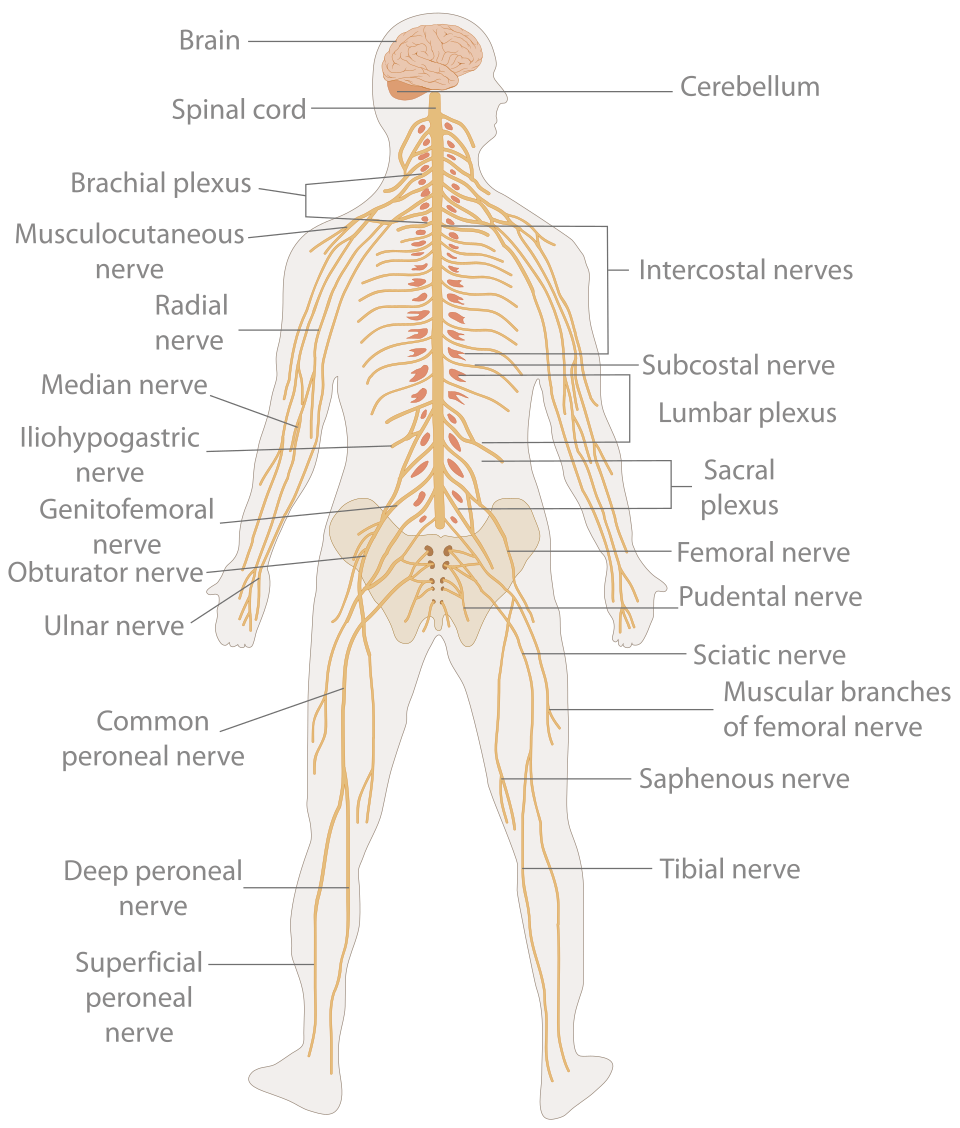

The nervous system is a body system which sends signals around the body. It lets animals respond to what is around them. The central nervous system is the brain and the spinal cord. It is present in almost all animals. It is there to process the input from the senses, and to coordinate movement. Neuroscience is the scientific study of the nervous system.
The nervous system is made up of neurons. Other cells, such as glial cells keep the neurons safe and in good condition.
The structure of the system includes the brain and spinal cord, which together are called the central nervous system. The brain has billions of nerve cells to help think, walk, and breathe. The nervous system can react in 1/100 of a second to a stimulus, like a pain signal.
The system of nerves in your body that sends messages for controlling movement and feeling between the brain and the other parts of the body anatomy of nervous systems can be sub-divided as follows:
- Central nervous system
- Brain
- Spinal cord
- Peripheral nervous system
- Autonomic nervous system
- Sympathetic nervous system
- Parasympathetic nervous system
- Somatic nervous system
Written for younger readers
Nervous System, in simpler words
This version comes from Wikijunior, a set of books written for children aged 8 to 11. It is shorter and uses plainer language than the article above.
From Wikijunior: Biology
NOTOC
The nervous system helps you sense the world around you. It includes the brain and the nerves as well as the senses.
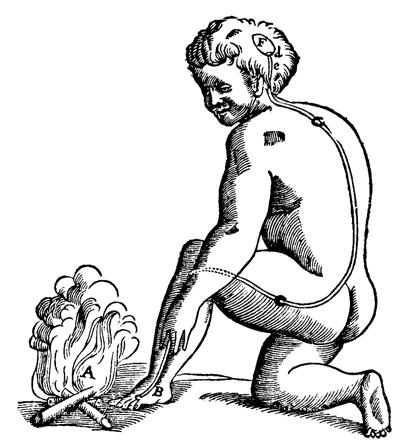
The nervous system can sense changes inside and outside the body through specialized cells called receptors. This information, in the form of small electric currents, is analyzed and responses are generated in the nervous system. These responses, again in the form of small electric currents, are conveyed to the appropriate organs such as muscles or glands, at a great speed.
Your five senses are: smell (with your nose), taste (with your tongue), touch (with your fingers, and so on), sight (with your eyes), and hearing (with your ears).
If human beings couldn’t smell, they wouldn’t know if their food had a bad odor. If they couldn’t taste either, they might like to eat everything, or, also bad in a different way, they might not like to eat anything. If they couldn’t see, it would be harder for them to find their way around and avoid danger. And if they couldn’t hear, they could not communicate with each other as easily.
Where this page comes from
The article above is adapted from “Nervous System” on Simple English Wikipedia, by its contributors. We removed reference markers, navigation boxes and tables, expanded measurement templates into readable numbers, and kept the prose otherwise intact. The simpler version is adapted from Wikijunior on Wikibooks.
Both sources are published under CC BY-SA 4.0, so this page is published under the same licence. You may share and adapt it, including commercially, as long as you credit the original and keep the same licence.
Worksheets, answer keys and printable layouts elsewhere on K5Print are our own work and are not covered by this licence.