Perch

Fast facts
- Phylum
- Chordata
- Genus
- Perca
Scientific name
- Scientific name
- Perca
- Kingdom
- Animalia
- Phylum
- Chordata
- Class
- Actinopterygii
- Order
- Perciformes
- Family
- Percidae
- Genus
- Perca
How to say it in other languages
- Russian
- Окуни
Facts from Wikipedia’s “Perch” page and Wikispecies (CC BY-SA 4.0).
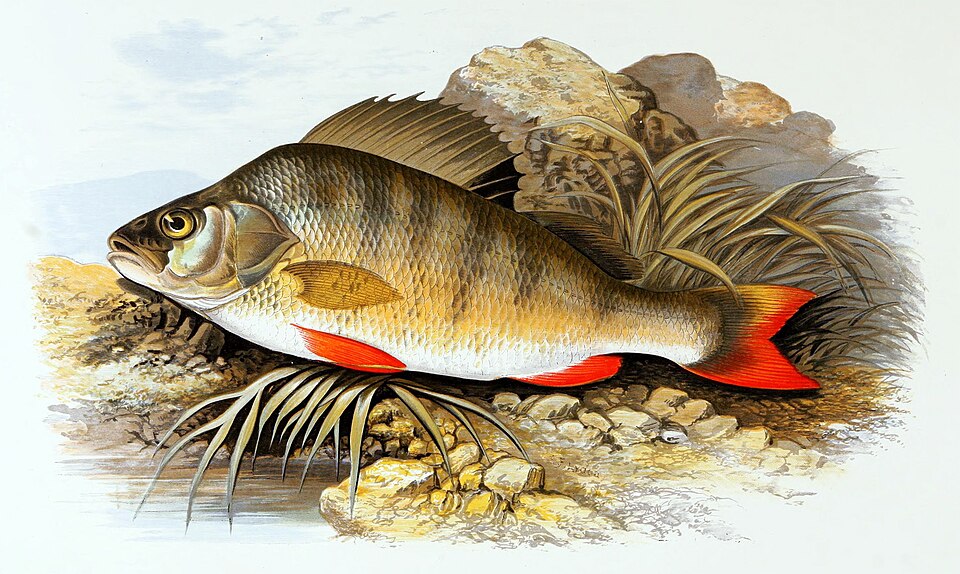
Perch is the name of a freshwater perciform fish belonging to the genus Perca.
Perch have “rough” scales. On the front end of the fish, there are two dorsal fins. The first one is spiny and the second is soft. There is also an anal fin, which is also spiny, and a caudal fin.
Species
There are three living species in this genus:
- Perca fluviatilis Linnaeus, 1758 (European perch)
- Perca flavescens Mitchill, 1814 (Yellow perch)
- Perca schrenkii Kessler, 1874 (Balkhash perch) File:Perca fluviatilis-female Siverskiy Donets River Ukraine.jpg|European perch (Perca fluviatilis) File:Yellow Perch (Perca flavescens) white background.jpg|Yellow perch (Perca flavescens) File:Perca schrenkii.png|Balkhash perch (Perca schrenkii)
External anatomy
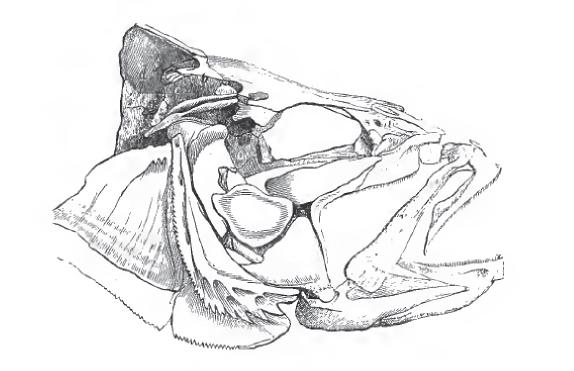
Perch have a round body shape which allows for fast swimming in the water. They have paired pectoral and pelvic fins, and two dorsal fins, the first one spiny and the second soft. These fins can be separate or joined.
Internal anatomy
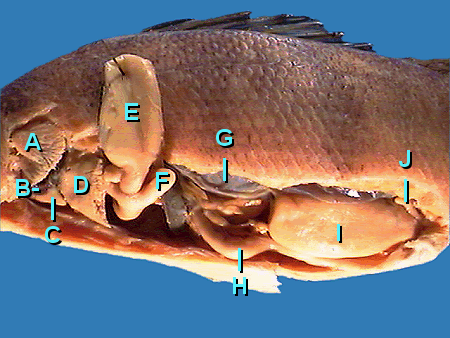
The cardinal anterior and posterior veins pursue an odd course through the head kidney, and the interrenal tissue occurs within the head kidney particularly around the junction of these veins. The bulk of the head kidney, as in most teleosts, is a mass of lymphoid tissue. The blood vessels associated with the kidneys have a segmental arrangement, as have the kidneys themselves.
In the context of their digestive system, the esophagus is a flexible pipe-like tube that goes from the mouth to the stomach. The stomach is connected to the intestine via the pyloric sphincter. The intestines of perch consist of the small intestine and large intestine. The small intestine consists of a part called the duodenum.
Like many kinds of fish, perch have a two-chambered heart. The heart consists of four parts: the sinus venosus, one atrium, one ventricle, and conus artieriosus (infundibulum). They also have a swim bladder to control buoyancy.
Habitats
Perch are carnivores, choosing waters where smaller fish, shellfish, and insect larvae are plentiful and abundant.
They are found in parts of the United States in freshwater ponds, lakes, streams, or rivers. These fish can be found in fresh water all over the world. They live in the Great Lakes region, in particular Lake Erie.
The fish like bodies of water with vegetation and debris. In the spring when the perch spawns, they use vegetation to hide their eggs from predators.
Perch in fishing
Perch is a popular game fish pursued by anglers. They are known to put up a fight. Perch can be caught using a variety of different methods like float fishing, lure fishing, and legering.
Perch as food
Perch is also a food and is praised for its mild, sweet flavor. It is also known for its health benefits.
Where this page comes from
The article above is adapted from “Perch” on Simple English Wikipedia, by its contributors. We removed reference markers, navigation boxes and tables, expanded measurement templates into readable numbers, and kept the prose otherwise intact.
Both sources are published under CC BY-SA 4.0, so this page is published under the same licence. You may share and adapt it, including commercially, as long as you credit the original and keep the same licence.
Worksheets, answer keys and printable layouts elsewhere on K5Print are our own work and are not covered by this licence.