Plants

Scientific name
- Scientific name
- Plantae
How to say it in other languages
- Arabic
- نبات
- Chinese
- 植物界
- Dutch
- Planten
- French
- Plantes
- German
- Pflanzen
- Hindi
- पादप; तरू; वनस्पति
- Italian
- Piante
- Japanese
- 植物
- Korean
- 식물
- Portuguese
- Plantas
- Russian
- Растения
- Spanish
- Plantas
Facts from Wikipedia’s “Plant” page and Wikispecies (CC BY-SA 4.0).
Plants are one of six big groups (kingdoms) of living things. They are autotrophic eukaryotes, this means they have complex cells, and make their own food. Usually, they cannot move (not counting growth). Plants need sunlight, soil and water whereas seeds need warmth.
Plants include familiar types such as trees, herbs, bushes, grasses, vines, ferns, mosses, and green algae. The scientific study of plants, known as botany, has identified about 391,000 extant (living) species of plants.
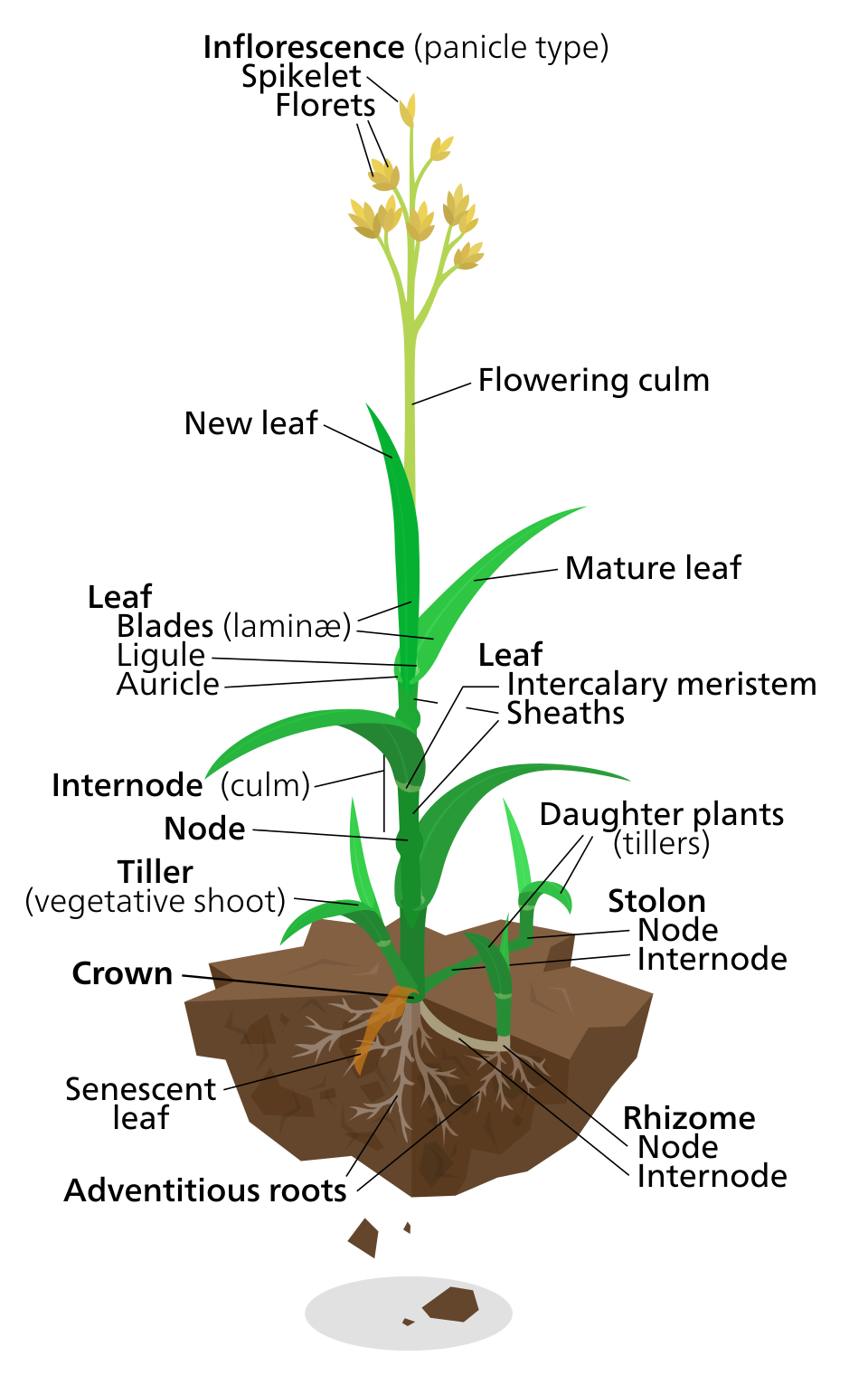
Most plants grow in the ground, with stems in the air and roots below the surface. Some float on water. The root part absorbs water and some nutrients the plant needs to live and grow. These climb the stem and reach the leaves. The evaporation of water from pores in the leaves pulls water through the plant. This is called transpiration.
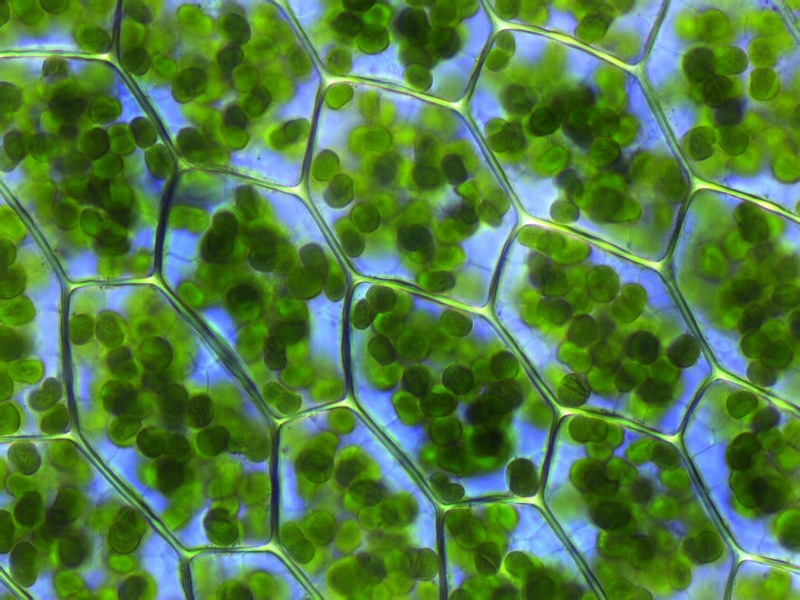
A plant needs sunlight, carbon dioxide, minerals from the soil and water to make food by photosynthesis. A green substance in plants called chlorophyll traps the energy from the Sun needed to make food. Chlorophyll is mostly found in leaves, inside plastids, which are inside the leaf cells. The leaf can be thought of as a food factory. Leaves of plants vary in shape and size, but they are always the plant organ best suited to capture solar energy. Once the food is made in the leaf, it is transported to the other parts of the plant such as stems and roots.
The word “plant” can also mean the action of putting something in the ground. For example, farmers plant seeds in the field.
Types of plants
Green algae:
- Chlorophyta
- Charophyta
Land plants (embryophyte)
- Non-vascular plants (bryophytes):
- Liverworts
- Mosses
- Hornworts
- †Horneophytopsida
- Vascular plants (tracheophytes)
- Lycopodiophyta—club mosses
- Pteridophyta: the ferns
- Pteridopsida: the typical ferns
- Sphenopsida: the horsetails
- Marattiopsida: a divergent group of ferns
- Psilotopsida
- sister-group to all other ferns
- †Rhyniophyta—rhyniophytes
- †Zosterophyllophyta—zosterophylls
- †Trimerophytophyta—trimerophytes
- †Progymnospermophyta
- Seed plants (spermatophytes)
- †Pteridospermatophyta: the seed ferns
- Pinophyta: the conifers
- Cycadophyta: the cycads
- Ginkgophyta: the ginkgos
- Gnetophyta: sister group to the Angiosperms
- Magnoliophyta or Angiosperms (flowering plants)
- Dicotyledons
- Monocotyledons
- †Nematophytes
The plant food factory
At least some plant cells contain photosynthetic organelles (plastids) which enable them to make food for themselves. With sunlight, water, and carbon dioxide, the plastids make sugars, the basic molecules needed by the plant. Free oxygen (O 2 ) is produced as a by-product of photosynthesis.
Later, in the cell cytoplasm, the sugars may be turned into amino acids for proteins, nucleotides for DNA and RNA, and carbohydrates such as starch. This process needs certain minerals: nitrogen, potassium, phosphorus, iron and magnesium.
Plant nutrients
Plant nutrition is the study of the chemical elements that are necessary for plant growth.
Macronutrients:
- N = Nitrogen (Carbohydrates, amino acids & glycolipids)
- P = Phosphorus (ATP and the energy cycle)
- K = Potassium (water regulation, opening and closing of stomata in some plant species)
- Ca = Calcium (transport of other nutrients)
- Mg = Magnesium (major constituent of chlorophyll, activator to various enzymes)
- S = Sulfur (some amino acids)
- Si = Silicon (cell walls)
Micronutrients (trace elements) include:
- Cl = Chlorine (osmosis and ion balance)
- Fe = Iron (photosynthesis ans enzyme co-factor)
- B = Boron (sugar transport and cell division)
- Mn = Manganese (building chloroplasts)
- Na = Sodium (various)
- Zn = Zinc (activator to many enzymes)
- Cu = Copper (photosynthesis)
- Ni= Nickel (an enzyme)
- Mo = Molybdenum (enzyme co-factors)
Roots
The roots of plants perform two main functions. First, they anchor the plant to the ground. Second, they absorb water and various nutrients dissolved in water from the soil. Plants use the water to make food. The water also provides the plant with support. Plants that lack water become very limp and their stems cannot support their leaves. Plants which specialise in desert areas are called xerophytes or phreatophytes, depending on the type of root growth.
Water is transported from the roots to the rest of the plant through special vessels in the plant. When the water reaches the leaves, some of it evaporates into the air. Many plants need the help of fungi to make their roots work properly. This plant/fungi symbiosis is called mycorrhiza. Rhizobia bacteria in root nodules help some plants get nitrogen.
Flowers and pollination
Flowers are the reproductive organ only of flowering plants (Angiosperms). The petals of a flower are often brightly colored and scented to attract insects and other pollinators. The stamen is the male part of the plant. It is composed of the filament (a stalk) that holds the anther, which produces the pollen. Pollen is needed for plants to produce seeds. The carpel is the female part of the flower. The top part of the carpel contains the stigma. The style is the neck of the carpel. The ovary is the swollen area at the bottom of the carpel. The ovary produces the seeds. The sepal is a leaf that protects a flower as a bud.
How pollen moves from one flower to another flower is called pollination. This transfer can happen in different ways. Insects such as bees are attracted to bright, scented flowers. When bees go into the flower to gather nectar, the spiky pollen sticks to their back legs. The sticky stigma on another flower catches the pollen when the bee lands or flies nearby it.
Some flowers use the wind to carry pollen. Their dangling stamens produce lots of pollen that is light enough to be carried by the wind. Their flowers are usually small and not highly coloured. The stigmas of these flowers are feathery and hang outside the flower to catch the pollen as it falls.
Seed travelers
A plant produces many spores or seeds. Lower plants such as moss and ferns produce spores. The seed plants are the Gymnosperms and Angiosperms. If all the seeds fell to the ground beside the plant, the area might become overcrowded. There might not be enough water and minerals for all the seeds. Seeds usually have some way to get to new places. Some seeds can be dispersed by the wind or by water. Seeds inside juicy fruits are dispersed after being eaten. Sometimes, seeds stick to animals and are dispersed that way.
Fossils
The question of the earliest plant fossils depends on what is meant by the word “plant”.
- If by plants we mean phototrophs using chlorophyll, then cyanobacteria in stromatolites are the first fossils, 3,450 million years ago (mya) in the Archaean eon. The remarkable precision is possible because the fossils were sandwiched between lava flows that could be precisely dated from embedded zircon crystals.
- If by plants we include all types of algae, then the earliest known red algae lived 1.6 billion years ago. Fossils of them were recently found in India.
- If by plants we mean green plants, Viridiplantae, then the first fossils are green algae. This is probably the majority position amongst professional botanists. There is convincing evidence for the monophyly of charophyte green algae and embryophytes. There are still two choices:
- Acritarchs (a group of organic-walled microfossils) may be reproductive cysts of green algae. If so, they are present in the Neoproterozoic era, 1000 mya.
- Otherwise, there is a large increase in planktonic algae around 540 mya in the Cambrian period.
- If by plants we mean land plants, the first fossils are in the Silurian.
By the Silurian, fossils of whole plants are preserved, including the lycophyte Baragwanathia. From the Devonian, detailed fossils of rhyniophytes have been found. Early fossils of these ancient plants show the individual cells within the plant tissue. The Devonian period also saw the evolution of the first tree in the fossil record, Wattieza. This fern-like tree had a trunk with fronds, and produced spores.
The coal measures are a major source of Palaeozoic plant fossils, with many groups of plants in existence at this time. The spoil heaps of coal mines are the best places to collect; coal itself is the remains of fossilised plants, though structural detail of the plant fossils is rarely visible in coal. In the Fossil Forest at Victoria Park in Glasgow the stumps of Lepidodendron trees are found in their original growth positions.
Written for younger readers
Plants, in simpler words
This version comes from Wikijunior, a set of books written for children aged 8 to 11. It is shorter and uses plainer language than the article above.
From Wikijunior: Biology
NOTOC
Plants are made of many cells. Plants are usually green. Plants make their food from the sun. They use the light, carbon dioxide, and water to make glucose (sugar). Animals, fungi, some bacteria, and some protists eat plants for food.
Plants make oxygen which humans breathe, and they take in carbon-dioxide which humans exhale (that is, breathe out). Plants make their food from the sun by photosynthesis. They also provide shade. We make our houses from plants and make clothes from plants. Most foods that we eat are plants. Without plants, animals could not survive.
Photosynthesis is making sugar using the energy of light.
Plants are green because they have green Chloroplasts.
But why are Chloroplasts green? Chloroplasts are green because they contain the green pigment chlorophyll in their thylakoid membranes. Chlorophyll is a pigment that absorbs red and blue light.
Where this page comes from
The article above is adapted from “Plants” on Simple English Wikipedia, by its contributors. We removed reference markers, navigation boxes and tables, expanded measurement templates into readable numbers, and kept the prose otherwise intact. The simpler version is adapted from Wikijunior on Wikibooks.
Both sources are published under CC BY-SA 4.0, so this page is published under the same licence. You may share and adapt it, including commercially, as long as you credit the original and keep the same licence.
Worksheets, answer keys and printable layouts elsewhere on K5Print are our own work and are not covered by this licence.