Rodent

Scientific name
- Scientific name
- Rodentia
- Kingdom
- Animalia
- Phylum
- Chordata
- Class
- Mammalia
- Order
- Rodentia
How to say it in other languages
- Arabic
- القوراض
- Chinese
- 啮齿目
- Dutch
- Knaagdieren
- French
- Rongeurs
- German
- Nagetiere
- Italian
- Roditori
- Japanese
- ネズミ目
- Korean
- 설치목(齧齒目)
- Portuguese
- Roedores
- Russian
- Грызуны
- Spanish
- Roedor
Facts from Wikipedia’s “Rodent” page and Wikispecies (CC BY-SA 4.0).
Rodents (from Latin rodere, “to gnaw”), are mammals of the order Rodentia, which are characterized by a single pair of continuously growing incisors in each of the upper and lower jaws.
Description
Rodents comprise about 40% of all mammal species. They are native to all major land masses except for New Zealand, Antarctica, and several oceanic islands, though they have subsequently been introduced to most of these land masses by human activity.
Rodent species
Rodent is the naming term of all members of Rodentia order of mammals and can be identified by their teeth. Their incisors (upper and lower) grow throughout their lives. Gnawing on hard material keeps the teeth worn down and sharp. Lagomorphs such as rabbits and hares are often mistaken for rodents. These animals have an additional pair of upper incisors that rodents lack, a very successful number of mammals that form the order Rodentia.
They have no more than 2 incisors. These keep growing, and must be kept worn down by gnawing (eroding teeth by grinding them on something hard); this is the origin of the name, from the Latin rodere, “to gnaw”, and dent, “tooth”.
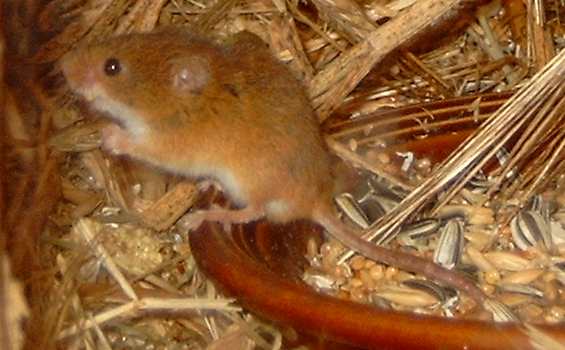
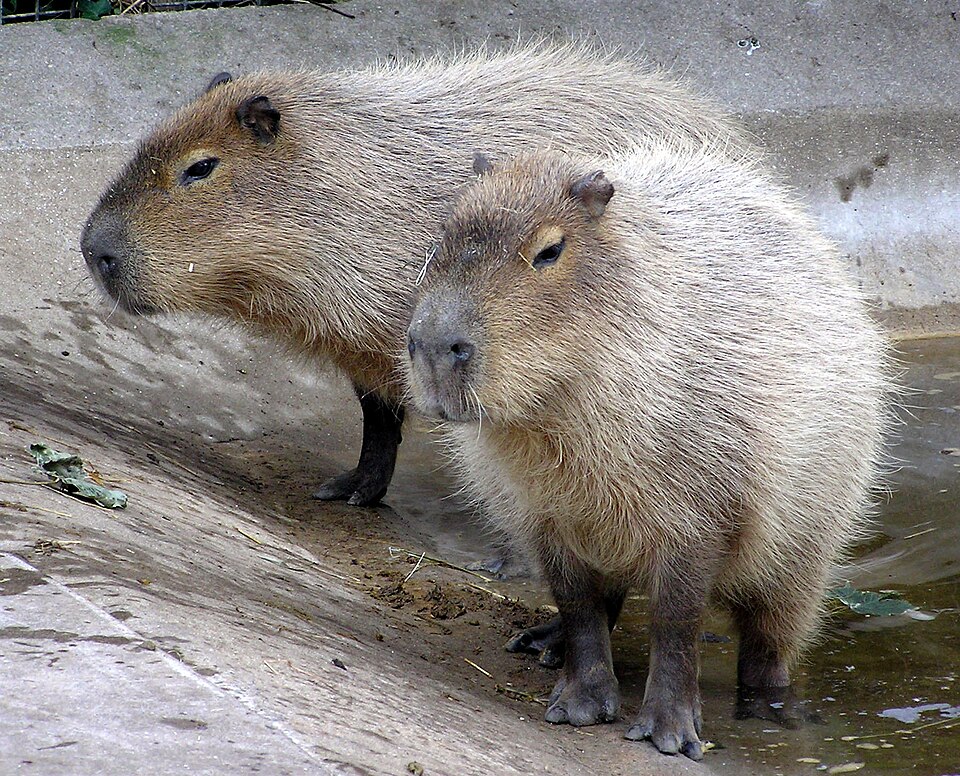
Most rodents are small. Examples of commonly known rodents are mice, rats, chipmunks, and squirrels. Some other small rodents sometimes kept as pets are Guinea pigs, hamsters, and gerbils. Examples of larger rodents are porcupines, beavers, and the largest living rodent, the capybara, which can grow to between 105 and 135 cm (40-55 in) in length, and weigh 35 to 65 kg (75-140 lbs).
Almost half of all mammal species are rodents. More examples of rodents are voles, prairie dogs, groundhogs, and chinchillas.
Rabbits, hares, and pikas are sometimes called rodents, because they also have teeth that keep growing. But in 1912 biologists decided to put them in a new, separate order, Lagomorpha, because they have two extra incisors in their upper jaw.
Shrews are sometimes called rodents, because they look like mice, but that is not correct. They are in the order Insectivora.
Taxonomy
There are more families than these. The list includes the more common families.
- Order Rodentia
- Suborder Anumaluromorpha
- Family Anomaluridae
- Family Pedetidae
- Suborder Castorimorpha
- Family Castoridae (Beavers)
- Family Geomyoidea (Pocket gophers, Kangaroo rats and mice)
- Suborder Hystricomorpha
- Family Ctenodactylidae
- Family Hystricidae
- Family Myocastoridae
- Family Caviidae
- Family Chinchillidae
- Family Cuniculidae
- Suborder Sciuromorpha
- Family Aplodontiidae: mountain beaver
- Family Gliridae (also Myoxidae, Muscardinidae): dormice
- Family Sciuridae: squirrels, including chipmunks, prairie dogs, & marmots
- Suborder Myomorpha
- Superfamily Muroidea
- Superfamily Dipodoidea
- Family Dipodidae
Where this page comes from
The article above is adapted from “Rodent” on Simple English Wikipedia, by its contributors. We removed reference markers, navigation boxes and tables, expanded measurement templates into readable numbers, and kept the prose otherwise intact.
Both sources are published under CC BY-SA 4.0, so this page is published under the same licence. You may share and adapt it, including commercially, as long as you credit the original and keep the same licence.
Worksheets, answer keys and printable layouts elsewhere on K5Print are our own work and are not covered by this licence.