Science and theory of evolution

NOTOC
Science and theory of evolution
The aim of science is to understand the world better (knowledge) and to produce new technology (innovation). Scientists develop mental models (theories) and functional models (such as an engine). Then they test these models through thought and experimentation. Appropriate models are presented to the public. Scientists change these models and test them again. For scientists, models are not the truth. They are therefore always looking for improvements. Good theories are understandable and thoroughly tested. File:Cucurbita_maxima_02_-Orange.jpg|Cucurbita maxima File:Cucurbita_pepo_accidental_hybrid_Acchini.jpg|Cucurbita pepo Acchini File:2006-10-18Cucurbita_pepo02.jpg|Cucurbita pepo File:Cucurbita_pepo‘Ufo’_-scallop_group_Weißer_Kürbis“Ufo”.jpg|Cucurbita pepo ‘Ufo’ File:Assorted Cucurbita pepo and maxima gourds.jpg|thumb|Assorted Cucurbita pepo File:Cucurbita in Bayern - Kürbis - Sortenvielfalt.jpg|thumb|Cucurbita from Bayern
Development of the theory of evolution
For centuries, scientists have repeatedly suspected that today’s creatures had common ancestors. They knew that breeders of crops and livestock can change the characteristics of living beings. So, the pumpkin growers used only the seeds of the best pumpkins for the next seed. In some regions, growers propagated red gourds, in other regions green ones. This is how different shapes came about. However, the scientists could not explain how breeding without a breeder could work.
Charles Darwin recognized that natural selection is possible without a breeder. For example, if the food is encased in a thick shell, a bird must be able to crack it to survive. A thick beak makes this possible. The problems in the habitat of living beings determines the goals. A narrow-pointed beak helps to capture insects. He realized this through observations on a trip to the Galapagos Islands. File:Evolution_sm.png File:Darwin’s_finches.png|Darwin’s finches File:Darwin’s_Finches,_Denver_Museum_of_Nature_and_Science.jpg
Evolution as natural selection
The genes are located in the cells of living beings. The genes contain the building and operating instructions of the living being. These are made up of DNA.
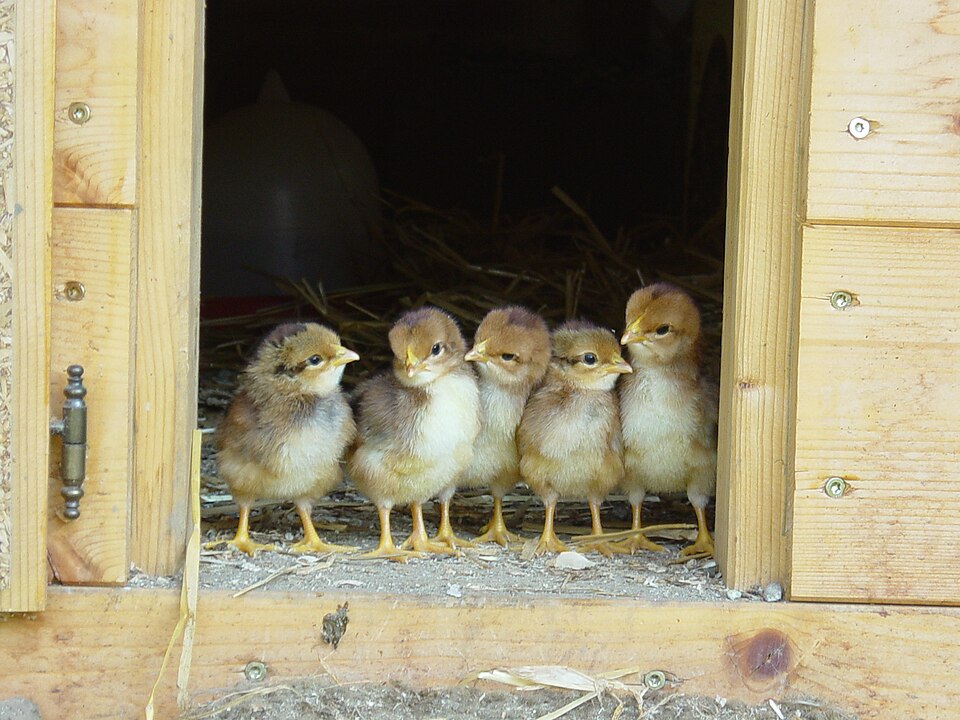
Mutation DNA can be altered by naturally occurring radioactive radiation. This leads to changes in the offspring. As a result, children, such as Darwin finch chicks, have different characteristics. They are called variations.
Selection Some chicks die, others survive. Creatures that are better adapted to the environment have a better chance of surviving. Chicks with a feeding beak are more likely to survive.
Propagation The survivors can have children.
Evolution as a scientific process
Evolution and scientific work are based on a comparable process:
Mutation Science: Scientists modify existing models. Evolution: Radiation changes DNA.
Selection Science: Scientists test the models in experiments. Evolution: The realities of nature are a severe test for all living beings.
Propagation Science: Through a publication, other scientists learn about the model. Evolution: Living beings have children.
The theory of evolution describes a scientific knowledge and innovation process. Evolution produces innovations and insights
Direction and destination
A breeder strives for goals, the evolutionary process of nature does not. But the mechanism of evolution has one direction: best possible adaptation to the environment in order to survive. For example, being able to fly is very useful. Many innovations were needed before the physical and mental abilities were available for birds to fly and find their way back home after a migration.
Science and truth
In philosophy, there have been arguments about truth for centuries. Since each side was convinced that they had the (absolute) truth at their disposal, an agreement was impossible. Science has solved the problem: on the one hand, science dispenses with absolute statements. All statements are preliminary and can always be improved. On the other hand, scientists have developed methods to check the quality of models. Scientific statements are not true or untrue, but of high or low quality. That doesn’t mean scientists aren’t confident in their theories. However, good scientists are generally willing to revise their own convictions.
Is the theory of evolution a good theory?
The theory of evolution is understandable. It is clear that well-adapted creatures are more likely to survive.
The theory of evolution is logical. It is based on the laws of mathematics (statistics).
The theory of evolution is often tested. It has been verified by computer simulations, experiments and observations in nature.
The theory of evolution is helpful. It explains many properties of living things and processes in nature that would otherwise be incomprehensible.
The theory of evolution is a high-quality theory.
In particular, questions of speciation, the Cambrian Explosion and the origin of life are currently under discussion.
NOTOC
Written for younger readers
Science and theory of evolution, in simpler words
This version comes from Wikijunior, a set of books written for children aged 8 to 11. It is shorter and uses plainer language than the article above.
From Wikijunior: Biology
NOTOC
The aim of science is to understand the world better (knowledge) and to produce new technology (innovation). Scientists develop mental models (theories) and functional models (such as an engine). Then they test these models through thought and experimentation. Appropriate models are presented to the public. Scientists change these models and test them again. For scientists, models are not the truth. They are therefore always looking for improvements. Good theories are understandable and thoroughly tested. File:Cucurbita_maxima_02_-Orange.jpg|Cucurbita maxima File:Cucurbita_pepo_accidental_hybrid_Acchini.jpg|Cucurbita pepo Acchini File:2006-10-18Cucurbita_pepo02.jpg|Cucurbita pepo File:Cucurbita_pepo‘Ufo’_-scallop_group_Weißer_Kürbis“Ufo”.jpg|Cucurbita pepo ‘Ufo’ File:Assorted Cucurbita pepo and maxima gourds.jpg|thumb|Assorted Cucurbita pepo File:Cucurbita in Bayern - Kürbis - Sortenvielfalt.jpg|thumb|Cucurbita from Bayern
For centuries, scientists have repeatedly suspected that today’s creatures had common ancestors. They knew that breeders of crops and livestock can change the characteristics of living beings. So, the pumpkin growers used only the seeds of the best pumpkins for the next seed. In some regions, growers propagated red gourds, in other regions green ones. This is how different shapes came about. However, the scientists could not explain how breeding without a breeder could work.
Charles Darwin recognized that natural selection is possible without a breeder. For example, if the food is encased in a thick shell, a bird must be able to crack it to survive. A thick beak makes this possible. The problems in the habitat of living beings determines the goals. A narrow-pointed beak helps to capture insects. He realized this through observations on a trip to the Galapagos Islands. File:Evolution_sm.png File:Darwin’s_finches.png|Darwin’s finches File:Darwin’s_Finches,_Denver_Museum_of_Nature_and_Science.jpg
The genes are located in the cells of living beings. The genes contain the building and operating instructions of the living being. These are made up of DNA.
Mutation DNA can be altered by naturally occurring radioactive radiation. This leads to changes in the offspring. As a result, children, such as Darwin finch chicks, have different characteristics. They are called variations.
Selection Some chicks die, others survive. Creatures that are better adapted to the environment have a better chance of surviving. Chicks with a feeding beak are more likely to survive.
Propagation The survivors can have children.
Evolution and scientific work are based on a comparable process:
Mutation Science: Scientists modify existing models. Evolution: Radiation changes DNA.
Selection Science: Scientists test the models in experiments. Evolution: The realities of nature are a severe test for all living beings.
Propagation Science: Through a publication, other scientists learn about the model. Evolution: Living beings have children.
The theory of evolution describes a scientific knowledge and innovation process. Evolution produces innovations and insights
A breeder strives for goals, the evolutionary process of nature does not. But the mechanism of evolution has one direction: best possible adaptation to the environment in order to survive. For example, being able to fly is very useful. Many innovations were needed before the physical and mental abilities were available for birds to fly and find their way back home after a migration.
In philosophy, there have been arguments about truth for centuries. Since each side was convinced that they had the (absolute) truth at their disposal, an agreement was impossible. Science has solved the problem: on the one hand, science dispenses with absolute statements. All statements are preliminary and can always be improved. On the other hand, scientists have developed methods to check the quality of models. Scientific statements are not true or untrue, but of high or low quality. That doesn’t mean scientists aren’t confident in their theories. However, good scientists are generally willing to revise their own convictions.
The theory of evolution is understandable. It is clear that well-adapted creatures are more likely to survive.
The theory of evolution is logical. It is based on the laws of mathematics (statistics).
The theory of evolution is often tested. It has been verified by computer simulations, experiments and observations in nature.
The theory of evolution is helpful. It explains many properties of living things and processes in nature that would otherwise be incomprehensible.
The theory of evolution is a high-quality theory.
In particular, questions of speciation, the Cambrian Explosion and the origin of life are currently under discussion.
NOTOC
Where this page comes from
The article above is adapted from “Science and theory of evolution” on Simple English Wikipedia, by its contributors. We removed reference markers, navigation boxes and tables, expanded measurement templates into readable numbers, and kept the prose otherwise intact. The simpler version is adapted from Wikijunior on Wikibooks.
Both sources are published under CC BY-SA 4.0, so this page is published under the same licence. You may share and adapt it, including commercially, as long as you credit the original and keep the same licence.
Worksheets, answer keys and printable layouts elsewhere on K5Print are our own work and are not covered by this licence.