Tissues
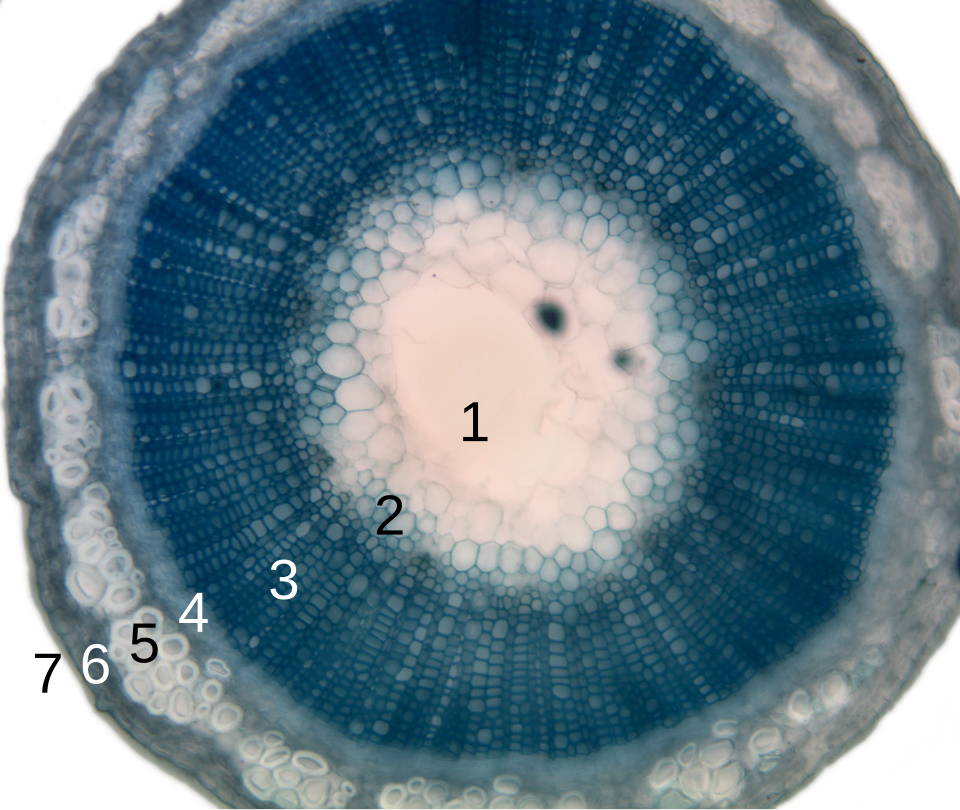

A Tissue forms part of an organ in plants or animals. Tissues are groups of cells that work together to do a job in the body. They are a group of cells having the same origin, structure and function. The cells look the same or almost the same. The work the cells in a tissue do is the same or almost the same.
The four main kinds of tissue in animals are:
- Connective tissue
- Musclular Tissue
- Nervous Tissue
- Epithelial tissue
Organs are made up of more than one kind of tissue. The heart is an organ. It is made up of different tissues. It has muscle tissue called myocardium. It has connective tissue on the inside (endocardium), and on the outside (pericardium). The heart has valves that make sure the blood goes the right way through the heart. So the heart is an organ made from several tissues.
The study of the structure of tissues under a microscope is called histology.
Written for younger readers
Tissues, in simpler words
This version comes from Wikijunior, a set of books written for children aged 8 to 11. It is shorter and uses plainer language than the article above.
From Wikijunior: Biology
NOTOC
Organisms are made of tissues. Tissues are groups of cells that work together. Plant leaves have tissues that capture light and make sugar. Most animals have muscle tissues that help them move.
When two or more tissues work together to do one thing, they make up organs.
In most Animals, there are four types of tissues:
- Epithelial tissue: This forms the borders of organs, and lines cavities or surfaces.
- Muscle tissue: Moves the body.
- Nervous tissue: Sends signals throughout the body and forms the brain and sense organs.
- Connective tissue: Holds the body together. It includes the blood, bones, and fat.
In plants, there are two types of tissues:
- Meristematic tissue: This has actively dividing cells.
- Permanent tissue: This type of tissue has developed cells. They do not divide.
There are also two different types of permanent tissue:
- Simple permanent tissue: This type of permanent tissue has only one kind of cells. Some examples of simple permanent tissues are:
- Parenchyma: They have loosely packed cells. The cells do not have a particular function.
- Collenchyma: They have cells which have layers called pectin. They contain chlorophyll.
- Sclerenchyma: They have dead cells. Between the cells, there are layers called lignin.
- Complex permanent tissue: This type of permanent tissue contains different kinds of cells. Some examples of complex permanent tissues are:
- Xylem: This type of tissue contains mainly dead cells. They help to move water from the roots to leaves.
- Phloem: This type of tissue contains mainly living cells. They help moving food materials from leaves to other parts.
Where this page comes from
The article above is adapted from “Tissues” on Simple English Wikipedia, by its contributors. We removed reference markers, navigation boxes and tables, expanded measurement templates into readable numbers, and kept the prose otherwise intact. The simpler version is adapted from Wikijunior on Wikibooks.
Both sources are published under CC BY-SA 4.0, so this page is published under the same licence. You may share and adapt it, including commercially, as long as you credit the original and keep the same licence.
Worksheets, answer keys and printable layouts elsewhere on K5Print are our own work and are not covered by this licence.