Anatomy
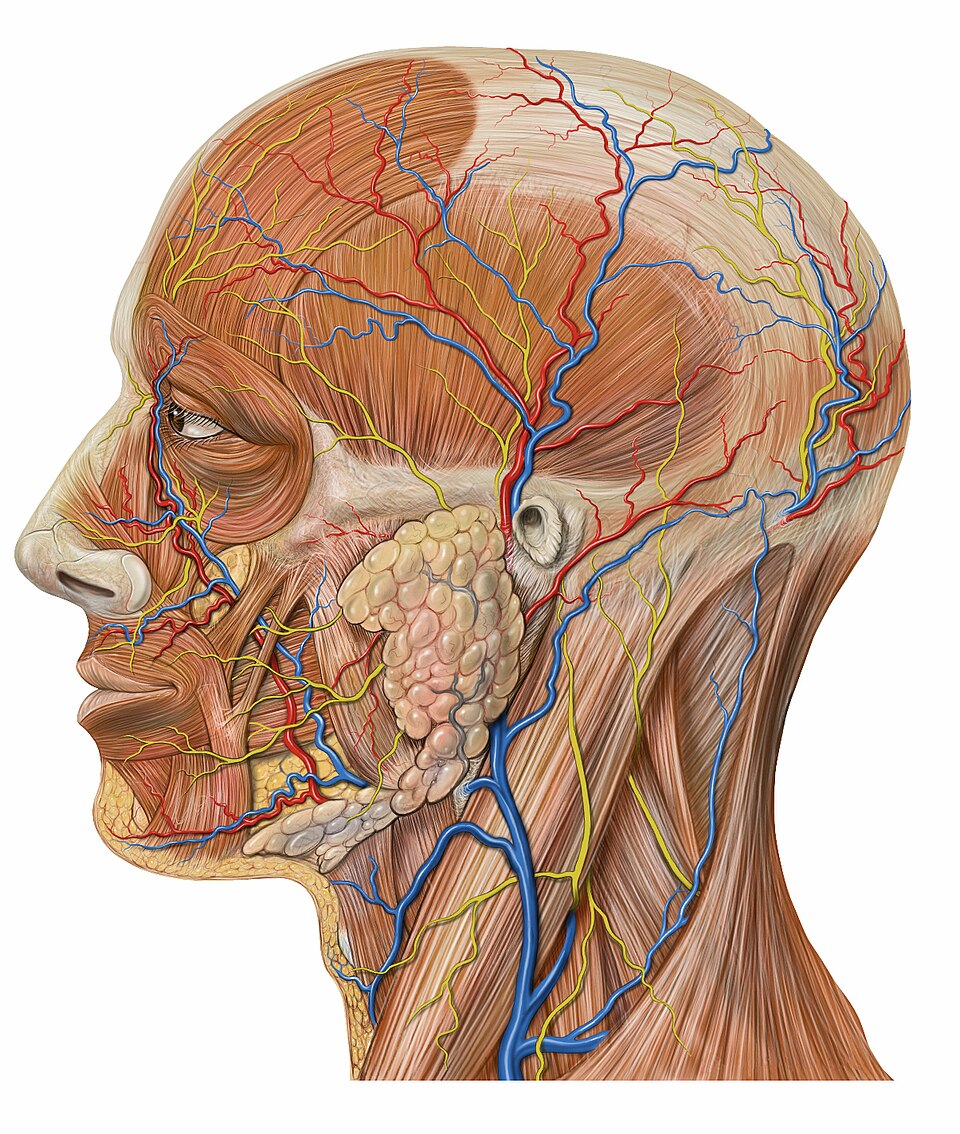

Anatomy is the study of the bodies of people and other animals. Anatomy is the study of the inside of the body and outside the body. Anatomy notes the position and structure of organs such as muscles, glands and bones. A person who studies anatomy is an anatomist.
The history of anatomy dates back to 1600 BC when Egyptians began studying human anatomy. They discovered the functions of many organs like the liver, spleen, kidneys, heart etc. and were the first to discover the structure and functions of the lymphatic system.
For long periods the dissection of deceased people was forbidden, and correct ideas about human anatomy was a long time coming.
Academic human anatomists are usually employed by universities, medical schools and teaching hospitals. They are often involved in teaching and research. Gross anatomy studies parts of the body that are big enough to see. Micro-anatomy studies smaller parts.
Body systems
There are different organ systems, such as the cardiovascular system, also known as the circulatory system (the system that gets blood around the body), the muscular system (the system that contains muscles), the nervous system (the system that controls the nerves, and the brain) and the skeleton (the bones).
Anatomy, physiology and biochemistry are similar basic medical sciences.
Written for younger readers
Anatomy, in simpler words
This version comes from Wikijunior, a set of books written for children aged 8 to 11. It is shorter and uses plainer language than the article above.
From Wikijunior: Human Body
What is Anatomy?
Right now, without even thinking about it, your heart is beating, your lungs are breathing, and your brain is reading these words. Pretty amazing, right?
Anatomy is the study of how our bodies are put together - all the different parts, where they are, and how they work alongside each other. Every part of your body has a job to do, and anatomy helps us understand what those jobs are.
Your body is made up of organs, like your heart, brain, and stomach. Each organ has its own special job. Organs that work together as a team are called an organ system. For example, your heart, blood vessels, and blood all work together as the circulatory system - like a delivery network running through your whole body!
We can look at organs in two ways:
Up close (microscopic) - using a microscope to see the tiny cells that every organ is made of
From a distance (macroscopic) - looking at the whole organ with just our eyes
When you think of movement, you probably think of running, jumping, or dancing. But, did you know your body is moving on the inside too, all the time?
The movement apparatus is the team of organs that makes all movement possible. This includes your:
Bones - the strong framework that holds your body up, like the scaffolding of a building
Muscles - the engines that pull your bones to create movement
Tendons - the tough cords that connect your muscles to your bones, like strong elastic bands
Inside your body, muscles are also hard at work in places you can’t see. The muscles in your digestive system push food along as it’s being broken down. Your diaphragm, a big dome-shaped muscle under your lungs, squeezes and relaxes every time you breathe, pulling air in and pushing it back out.
So whether you’re kicking a football or just sitting quietly, your movement apparatus never really stops!
Have you ever wondered what your blood actually does all day? It’s actually one of the busiest systems in your whole body!
The circulatory system is in charge of keeping your blood healthy and moving it around your body non-stop. Think of it like a giant delivery and collection service, carrying things your body needs to where they’re needed, and picking up waste along the way.
The main players are:
Heart - the powerful pump at the centre of it all, beating around 100,000 times every single day
Blood vessels - the network of tubes (arteries, veins and capillaries) that blood travels through, stretching so far that if you laid them end to end they’d wrap around the Earth twice!
Bone marrow - the spongy stuff inside your bones where new blood cells are made
Spleen - helps clean the blood and recycles old blood cells
Liver - also helps keep your blood healthy, on top of its many other jobs
Lungs - add fresh oxygen to the blood and remove waste gases from it
All of these organs work together to make sure every single part of your body gets what it needs to keep going!
Take a deep breath in… and slowly let it out. You just used your respiratory system! But have you ever wondered exactly what happens to that air once it enters your body?
The respiratory system is how your body takes in the oxygen it needs and gets rid of a waste gas called carbon dioxide. Every cell in your body needs oxygen to work, it’s like fuel for your body’s engine.
Here’s the journey air takes when you breathe in:
Mouth and nose - where air enters your body
Epiglottis - a clever little flap that makes sure food and drink go down the right tube and not into your lungs!
Trachea (windpipe) - the tube that carries air down toward your lungs
Lungs - where the magic happens!
Inside your lungs are millions of tiny air sacs called alveoli. Think of them like a swap shop - oxygen from the air you breathed in passes through their thin walls into your blood, while carbon dioxide passes back out to be breathed away.
Your respiratory and circulatory systems are best friends! One brings in the oxygen, and the other delivers it everywhere it needs to go!
Have you ever eaten a sandwich and wondered where it actually goes? Your digestive system is basically a long, clever processing line that breaks your food down into tiny pieces your body can actually use!
From the moment food enters your mouth to the moment waste leaves your body, it goes on quite a journey - around 9 metres of it in fact!
Here’s the route it takes:
Mouth - where digestion actually begins! Your teeth break food into smaller pieces and your saliva starts breaking it down chemically
Oesophagus (food pipe) - a muscular tube that squeezes food down into your stomach
Stomach - a stretchy bag that churns food around and breaks it down further using special acids
Small intestine - where the really important work happens! Nutrients - all the good stuff your body needs like vitamins, minerals and energy - are absorbed into your blood here. Water is also passed into the bloodstream here, beginning its journey toward the kidneys and bladder
Large intestine - absorbs water from what’s left over
Anus - where waste (faeces) finally leaves your body
So next time you eat your favourite meal, just remember, your digestive system has a lot of hard work ahead of it!
You probably only think about your urinary system when you really need the toilet - but it’s actually working quietly in the background all day long, keeping your blood clean!
The urinary system is your body’s built-in filtration system. Its main job is to remove waste and extra fluid from your blood and send it out of your body as urine.
Here’s how it works:
Blood vessels - when you drink water, it gets absorbed into your bloodstream through the small intestine. That water-filled blood then travels through your body via blood vessels and is carried directly to the kidneys to be cleaned
Kidneys - you have two of these bean-shaped organs sitting either side of your spine. They filter your blood hundreds of times every day, pulling out waste products and any extra fluid your body doesn’t need
Ureters - two small tubes that carry the urine from each kidney down to the bladder
Bladder - a stretchy bag that stores urine until your body is ready to release it. That’s when you get that familiar “I need the loo!” feeling!
Urethra - the final tube that carries urine out of your body
Here’s a cool reason to drink plenty of water - the more you drink, the better your kidneys can flush out anything unhealthy from your blood. So staying hydrated is basically giving your kidneys a helping hand!
The reproductive system is the part of the body responsible for creating new life - in other words, how babies are made!
This is one area where male and female bodies are different from each other, because they each play a different role in making a baby.
Here’s what’s involved:
Male reproductive organs - produce tiny cells called sperm
Female reproductive organs - produce tiny cells called eggs (ova) and include the uterus (womb), which is where a baby grows during pregnancy
Placenta - when a baby is growing in the uterus, a special temporary organ called the placenta forms. It acts like a lifeline between the mother and baby, passing oxygen and nutrients from the mother’s blood to the baby so it can grow and develop
A human pregnancy lasts around 9 months, during which the baby grows from a tiny cluster of cells into a fully formed human being ready to enter the world - which is honestly one of the most amazing things the human body can do!
Imagine the most powerful computer ever built! One that controls everything you think, feel, see, hear, taste, touch and smell, all at the same time, without ever switching off. That computer is your brain, and it’s the command centre of your nervous system!
The nervous system is your body’s communication network. It sends and receives messages at lightning speed!! Some nerve signals travel at over 400 kilometres per hour!!
Here are the main parts:
Brain - the control centre of your entire body. It processes information, stores memories, creates emotions, and sends instructions to every other part of your body
Spinal cord - a thick bundle of nerves running down the centre of your spine, acting like a motorway carrying messages back and forth between your brain and your body
Nerves - a huge network of message-carrying fibres that spread out from the spinal cord to every single part of your body - from your fingertips to your toes!
Your nervous system also controls things you don’t even have to think about - like your heartbeat, your breathing, and even your digestion. It never rests!
The Liver
The liver is one of the hardest working organs in your entire body, it has over 500 known jobs! Here are some of its most important ones:
Produces substances that other cells in your body need to function
Makes special juices that help your digestive system break down food
Stores energy in a form called glycogen, which it can quickly convert into glucose, instant fuel that your body can rush to wherever it’s needed most
Helps keep your blood clean and healthy
Your brain in particular relies heavily on a steady supply of glucose and oxygen - without them, a person can become unconscious in as little as 3 minutes. That’s how important the liver’s energy storing job really is!
The Skin
Did you know your skin is actually an organ? In fact it’s the largest organ in the entire human body! It covers and protects everything inside you, regulates your body temperature, and is packed with nerve endings that allow you to feel touch, heat, cold and pain.
The Immune System Organs
Your body has a built-in defence system to fight off bacteria and viruses that could make you ill. In children especially, three organs play a big role in this:
Thymus - helps train your immune cells to recognise and fight invaders
Spleen - filters the blood and helps produce immune cells
Tonsils - act as the first line of defence against germs entering through your mouth and nose
Where this page comes from
The article above is adapted from “Anatomy” on Simple English Wikipedia, by its contributors. We removed reference markers, navigation boxes and tables, expanded measurement templates into readable numbers, and kept the prose otherwise intact. The simpler version is adapted from Wikijunior on Wikibooks.
Both sources are published under CC BY-SA 4.0, so this page is published under the same licence. You may share and adapt it, including commercially, as long as you credit the original and keep the same licence.
Worksheets, answer keys and printable layouts elsewhere on K5Print are our own work and are not covered by this licence.