Blood
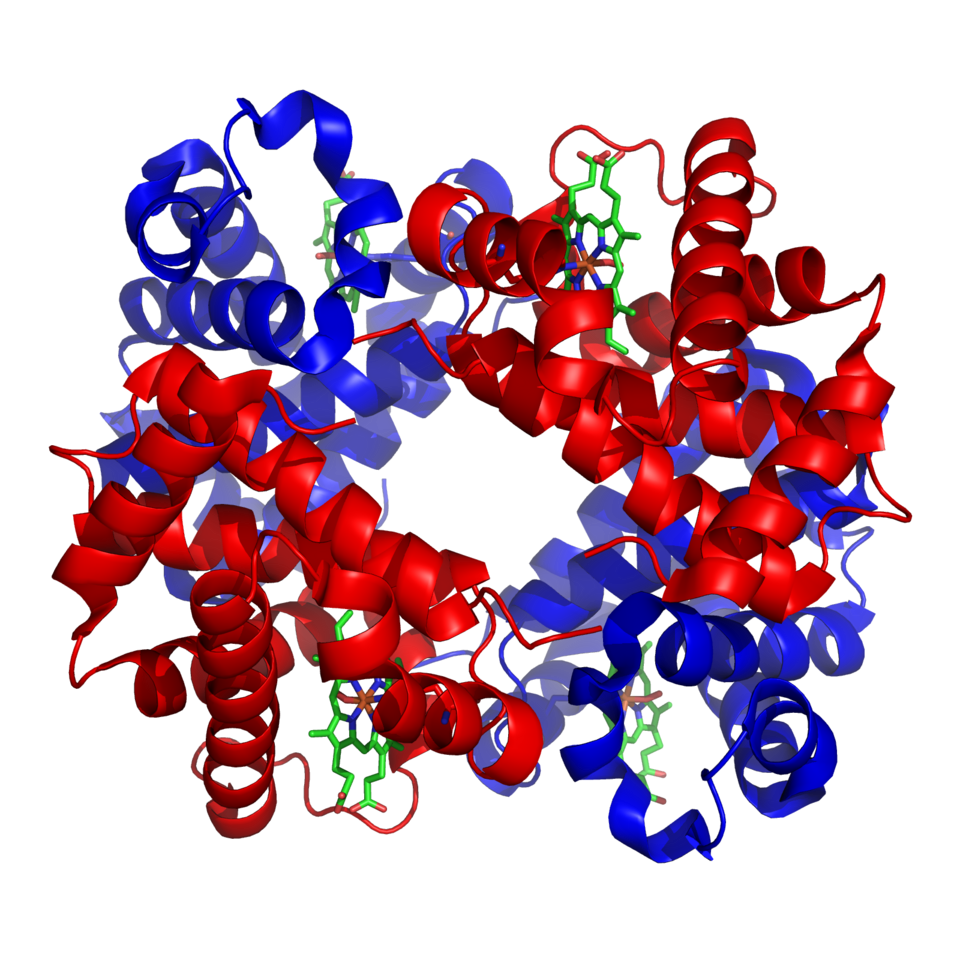

Blood is a liquid in humans and many animals. There are about 5 litres of blood in the human body. Blood is pushed through the organism by the heart. It brings nutrients and oxygen to the tissues of the body. It also takes away waste and carbon dioxide from tissues.
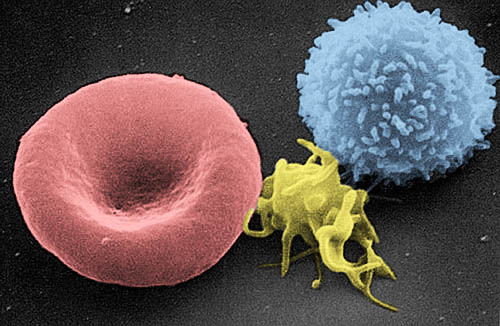
Blood is made up of blood plasma and various cells. These include red blood cells, white blood cells and platelets. Platelets help blood to clot. Hemoglobin is in red blood cells. White blood cells help fight infections and heal wounds.
Plasma
Blood plasma is the yellow liquid in which blood cells float. Plasma is made up of nutrients, electrolytes (salts), gases, non-protein hormones, waste, lipids, and proteins. These proteins are albumin, antibodies (also called immunoglobulins), clotting factors, and protein hormones. Plasma that does not have the protein fibrinogen is called serum and cannot clot. Adults have about 3 liters of plasma. Plasma is a liquid, mostly water (90%). Plasma takes up 55% of blood volume.
Red blood cells
Another name for red blood cell is erythrocyte. ‘Erythro’ means red; ‘cyte’ means cell. RBC is an acronym for red blood cell.
RBCs carry oxygen and carbon dioxide around the body. Cells in the body need oxygen to live. Cells also make carbon dioxide as a waste.
RBCs are filled with hemoglobin. This is a protein. It is made to carry a large amount of oxygen. Hemoglobin has iron in it. The iron and oxygen gives hemoglobin its red color. Erythropoietin promotes the creation of RBCs. Blood type antigens are carried on the surface of red cells.
RBCs also help the blood stay at a normal pH. The blood needs to be at a pH of 7.4. If it is much more or less than 7.4, a person can get very sick or die. RBCs stops changes in blood pH. The proteins and the carbon dioxide in the RBC do this.
White blood cells
White blood cells are a big part of the immune system. They attack things that do not belong in the body. They kill germs such as bacteria and viruses. They kill cancer cells. White blood cells also help to fight other toxic substances.
White blood cells find where the germs are and start to destroy them. WBCs arrive in the blood. They also go out of the blood in places where there is infection. WBCs do this to fight the germs that make the infection. If they go out of the blood to fight an infection, they may return in the lymphatic system. So, WBCs are in lymph nodes.
Another name for white blood cell is leukocyte. ‘Leuko’ means white; ‘cyte’ means cell. WBC is an acronym for white blood cell. There are three main kinds of WBCs. They are lymphocytes, granulocytes and monocytes. Some of the WBCs mature into cells which do similar work in the tissues.
The different WBCs work in different ways. Some WBCs kill and eat germs and cancer cells. Some WBCs make antibodies. These are proteins that stick to a cell and tell other WBCs to kill it. Some WBCs make chemicals. They release these chemicals to fight things that do not belong in the body. These chemicals cause inflammation in a part of the body. When a germ makes someone sick, the body shows it. If a bacteria gets under someone’s skin and causes an infection, the skin gets red, hot, and painful. This redness, heat, and pain are signs of inflammation. This shows that WBCs are fighting the infection and killing the bacteria.
Platelets
Platelets help make blood clot. A clot is when the liquid blood becomes solid. The body makes blood clot when the skin is cut. This stops blood from going out of the skin too much.
For blood to be able to clot is essential. But rarely, some blood clots are bad. If a blood clot happens in a blood vessel going to the brain, it can cause a stroke. If it happens in a blood vessel going to the heart, it can cause a heart attack. This does not usually happen to young, healthy people with the exception of clotting conditions.
Platelets are not the only things that make clots. There are proteins in the blood that help make clots. Both platelets and clotting proteins are needed to make good clots.
Gold in human blood
On average, the human body has about 0.2 milligrams of gold, mostly found in the blood.
Where blood comes from
Blood cells are made in the bone marrow. The spleen (a smaller, vital organ situated inside the ribcage) manages the amount of white blood cells that flow throughout your blood, it also can manage many functions of the liver. The bone marrow is the soft material in the middle of bones. Special cells in the bone marrow make most of the blood cells in the body.
Plasma proteins are made mostly by the liver. The water and electrolytes in plasma come from the food and water that a person digests.
Although blood is a fluid, in some respects it is a kind of connective tissue. Its cells originate in bone marrow and the spleen, and in the blood there are potential molecular fibres in the form of fibrinogen. These are activated when a blood clot forms.
Written for younger readers
Blood, in simpler words
This version comes from Wikijunior, a set of books written for children aged 8 to 11. It is shorter and uses plainer language than the article above.
From Wikijunior: Human Body
Blood is vital for the human body. Without it, none of the other organs or cells of the body could function.
Blood is a liquid. In humans, as with many other animals, oxygenated blood (the blood that is carrying a lot of oxygen) is bright red. De-oxygenated blood (the blood that has given away most of its oxygen) is a darker shade of red. It is often thought that the blood in veins is blue, but this is not true. It only looks blue through the skin because of the way light moves through the skin.
Blood is made up of many different things, red blood cells, white blood cells, platelets, and plasma. These three types of cell are very important and keep the other cells of the body alive and healthy. Also blood is used to send signals in the body since every cell can be reached this way. For example, the hormone (a small signalling molecule) insulin tells cells that food is on the way and cells should take up nutrients from the blood. This is the way of cells send each other instructions.
The red blood cells carry gases such as oxygen that are needed for cellular respiration.
The white blood cells are part of the immune system and play an active role in fighting infections in the body.
The platelets help the blood clot or stick together. If you get a cut or scrape, this helps stop the bleeding. The platelets create a ‘mesh’ that the red blood cells can clot upon. This prevents the body from losing more blood and helps to keep infection from entering the body.
The blood plasma is an aqueous substance made up of about 92% water, 8% blood proteins and small traces of other substances including:
- Antibodies (for fighting off infections)
- Hormones (chemical messengers used to control many of the body’s functions)
- Oxygen (transporting it to other cells)
- Glucose and fats (to feed the body’s cells)
- Carbon dioxide (removed from other cells)
- Salts (for maintaining the correct levels of ions in and around cells; when salts dissolve in water, they turn into ions)
In the human body, blood is the transport system. It allows the body to bring essential things such as nutrients and oxygen from central locations (i.e. The lungs or small intestine) to every part of the body. Blood is circulated all the way around the body many times a minute. It is pumped by the heart.
One of the most important things that the blood does is to carry oxygen from the lungs to the cells of the body. It is carried inside the red blood cells by a chemical called haemoglobin.
As cells function, they produce carbon dioxide. If this is left in the cells, they become useless. Fortunately, the blood removes the carbon dioxide from the cells and takes it to the lungs where it can be breathed out of the body.
The blood is also used to control the temperature of the body. If the body becomes hot (during the summer for example), more blood will flow to the surface of the skin. This cools the body. If the body becomes cold, the blood will be forced to flow deeper inside the body, keeping the body warmer.
Blood is produced in the bone marrow (inside bones). It also gets parts from the liver and kidneys among other body parts.
Blood is pumped throughout the body by the heart. Blood gets oxygen from the respiratory system and nutrients from the digestive system. Blood flows through the kidneys to be cleaned.
When the blood cells have reached the end of their useful lives, they are broken down in the liver and then put into the urine by the kidneys to get rid of non-reusable parts. The reusable parts, such as protein and iron, are recycled by the liver.
Where this page comes from
The article above is adapted from “Blood” on Simple English Wikipedia, by its contributors. We removed reference markers, navigation boxes and tables, expanded measurement templates into readable numbers, and kept the prose otherwise intact. The simpler version is adapted from Wikijunior on Wikibooks.
Both sources are published under CC BY-SA 4.0, so this page is published under the same licence. You may share and adapt it, including commercially, as long as you credit the original and keep the same licence.
Worksheets, answer keys and printable layouts elsewhere on K5Print are our own work and are not covered by this licence.