Kidneys
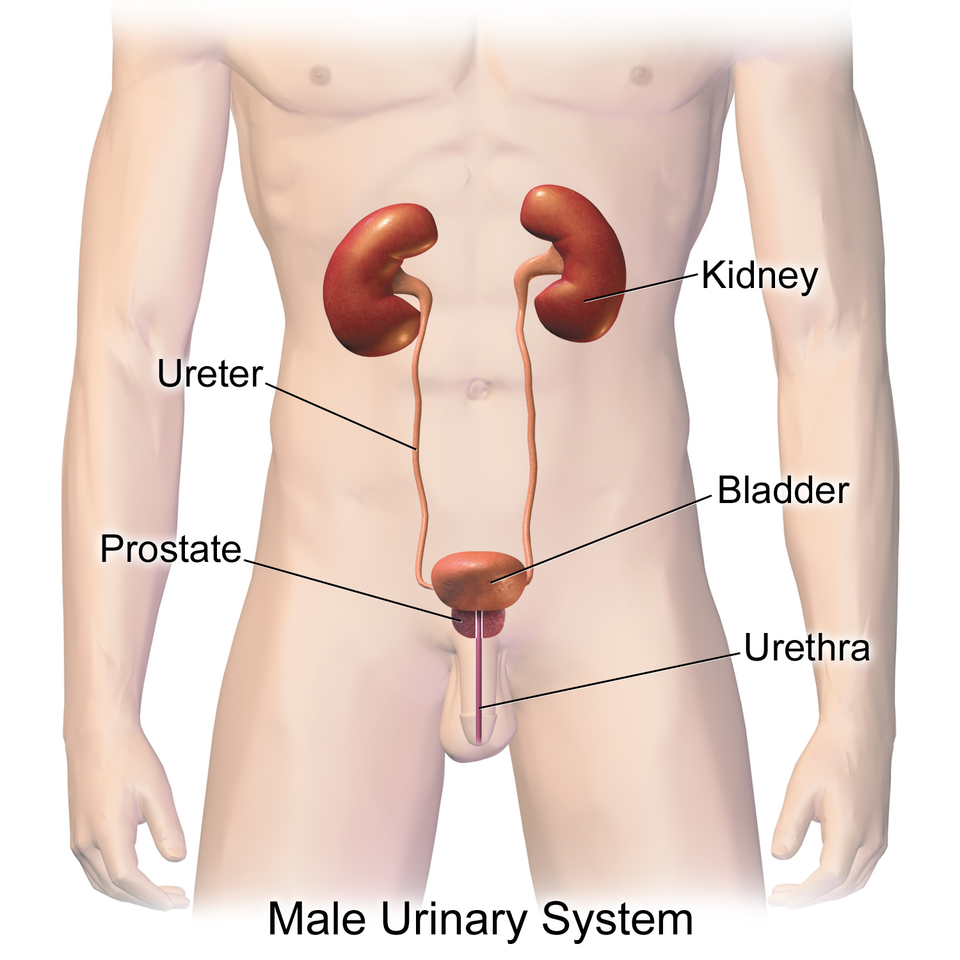

The kidneys are two bean-shaped organs located in the abdomen of vertebrates such as humans. They regulate (control) the amount of water and salts in the blood. They make urine so that waste can be removed from the body.
The adjective which is used for kidneys and latin name is is renal. For example, renal failure is when the kidneys do not work properly.
The prefix nephro- is also used in words to mean “kidneys”. For example, a nephrologist is a specialist who studies kidneys.
Hormones
The kidney makes hormones. The two most important ones that it makes are erythropoetin and renin.
Erythropoietin is made by the kidneys if there is less oxygen in the kidney. Erythropoietin signals the bone marrow to make more red blood cells. This makes it so more oxygen carried around the body in the blood.
Renin is made by the kidney if there is low blood pressure, low blood volume (hypovolemia), low amounts of salts in the blood. Renin makes the blood vessels smaller and tells the adrenal gland to make aldosterone (which tells the kidneys to save salts). It also makes a person feel thirsty. All of this makes the blood pressure go up.
Stable environment
The kidney’s most important work is keeping homeostasis. Homeostasis means that the body keeps a stable environment inside itself. The body needs to have the consistent and proper amount of water, salt, and acid (H+) and bicarbonate (NaHCO3), and potassium (K) in the blood. The kidney keeps these things constant.
If there is too much water, the kidney puts more water in the urine. If there is not enough water, the kidney uses less water in the urine. This is why people make less urine when they are dehydrated.
Kidney diseases
There are many types of kidney diseases. A kidney disease makes the kidneys unable to work perfectly but they do work in part. People can have mild kidney failure and have no symptoms. As long as it does not become worse, people may not even know they have it. Severe kidney failure means very bad failure. The kidneys do not work very much at all in severe kidney disease. People with severe kidney failure always have symptoms and need special care from doctors.
Main types
The main kinds of kidney diseases are:
- Kidney infections – also called pyelonephritis. This is a bacterial infection in the kidneys. Some of the symptoms are back pain, vomiting, fever, and dark or bloody urine. People with pyelonephritis may need strong antibiotic medicines
- Glomerulonephritis – this is a disease of the tissues in the kidneys that make urine. These are called glomeruli. Glomerulonephritis is an autoimmune disease. It can cause mild or severe kidney failure
- Congenital kidney disease – this is a congenital disease (born with the disease) in which the kidneys not work properly. This includes people that are born with kidneys in the wrong place, or in the wrong shape. About 1% of people are born with only one kidney
- Polycystic kidney disease – an inherited (from the parents) disorder in which cysts grow in the kidneys, and destroy the kidney tissue until the kidneys can no longer perform their functions (work properly)
- Diabetic nephropathy – this is the disease diabetics get when their blood sugar is too high for a long time. This is one of the most common causes of kidney failure in the United States
- Hypertensive nephropathy – this is caused by having hypertension (high blood pressure) for a long time. Many people have hypertensive and diabetic nephropathy together
- Cancer – Renal cell carcinoma is the most common kind of kidney cancer. It is most often found in adults, and is usually deadly. It is hard to stop it with radiation treatments or chemotherapy
Renal replacement
If a person’s kidneys do not work properly, they are very sick. If they have severe kidney failure, they cannot live unless they have a replacement for their kidneys.
There are two ways to replace the kidneys. These are dialysis and transplantation.
Dialysis
Dialysis is when doctors use a machine and medicines to do the work of the kidneys. There are two kinds of dialysis, being hemodialysis and peritoneal dialysis.
Peritoneal dialysis is when doctors put a plastic tube into the person’s abdomen. Every day the person fills the abdomen with fluid. The extra salts, waste, and water that the body does not need goes into the fluid. Then the fluid comes out and takes the wastes with it. This does part of the job that kidneys do.
Hemodialysis is when doctors take blood from a person, clean the blood with a special kind of filter, called a haemodialyser, and put it back in the person. When the blood is cleaned; water, salts and wastes are taken out of it. This must be done 2–4 times every week (usually 3 times.) It takes 2–4 hours to do this each time.
Hemodialysis and peritoneal dialysis are not perfect. They do some of the work of the kidney, but it is not as good as a real kidney. So people who need dialysis are not as healthy. They must take medicines. For example, in kidney failure, the kidneys do not make any erythropoietin. Doctors have to give people erythropoietin so they make enough red blood cells.
Transplant
A better way to do the kidneys’ work is to give the person another kidney. This is called a kidney transplant. Kidney transplants are the most common type of organ transplant. It is the most common because humans have two kidneys, but only need one kidney to live. People who are alive can donate a kidney to another person.
Even transplanted kidneys are not the same as kidneys people were born with. A person who gets a renal transplant must take strong medicines called immunosuppressant drugs to stop their body from attacking the new kidney. Sometimes, after years, the transplanted kidney stops working. But sometimes a patient can get a new transplanted kidney after the first one stops working.
History
It was widely believed in Europe that the conscience was actually located in the kidneys. This idea was taken from the Hebrew Bible. In modern times, medical scientists have shown kidneys do not have this kind of psychological role.
urinary system
Written for younger readers
Kidneys, in simpler words
This version comes from Wikijunior, a set of books written for children aged 8 to 11. It is shorter and uses plainer language than the article above.
From Wikijunior: Human Body
Kidneys are pairs of organs located in the back of the abdominal cavity. Each kidney is important to keep your body balanced and well suited.
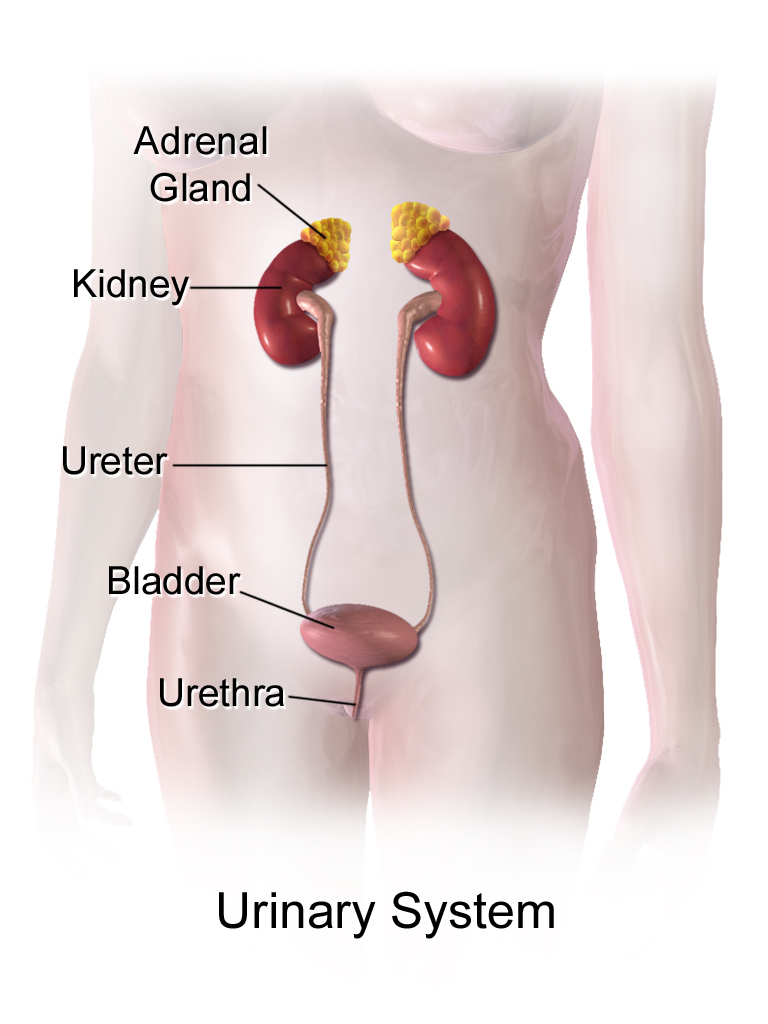
Kidneys separates the waste from the nutrients using nephrons. Then, the nutrients are taken up to the body where it will be useful and help us with our other systems. Next, the extra water or wastes go down through a tube called the uterus, which then goes to your bladder.
When you go to the bathroom, you push the urine out of your bladder and it goes to the urethra, which is the vessel where urine is released.. Now, you are healthy and the wastes are gone.
Yes, kidneys regulate water, in order for the human body to work like it’s suppose to be, it must have the right amount of water. What the kidney does is it extracts excessive water from the body or retain water when the body needs more. Kidney removes wastes, many of the blood and body fluids must have the right amount of water so the body can work properly. When the Kidneys are working properly, they extract excessive minerals, which is the urine, or “pee” you have. Kidneys produce hormones, these hormones regulate some body functions such as the blood pressure. So yes, without your kidneys you would have too much water, blood, excessive minerals (urine), and too much blood pressure. Thank your kidneys.
Eat the right foods and exercise daily. Also, when you have to go and use the bathroom, its a good idea to go. Or else, you will form “solid concretion or crystal aggregation formed in the kidneys from dietary minerals in the urine,” called Kidney stones. They form in the kidneys and hurts your body badly. Don’t hold your urine inside your bladder, or you will get kidney stones.
Some kidney stones are easy to push out, simply by urinating, or “peeing”. Some kidney stones could be taken out by surgery, basically if the kidney stones have been in your body for a while you’ll probably have to get surgery to push it out.
Drink a lot of water and also exercise a lot!
Where this page comes from
The article above is adapted from “Kidneys” on Simple English Wikipedia, by its contributors. We removed reference markers, navigation boxes and tables, expanded measurement templates into readable numbers, and kept the prose otherwise intact. The simpler version is adapted from Wikijunior on Wikibooks.
Both sources are published under CC BY-SA 4.0, so this page is published under the same licence. You may share and adapt it, including commercially, as long as you credit the original and keep the same licence.
Worksheets, answer keys and printable layouts elsewhere on K5Print are our own work and are not covered by this licence.