Skin
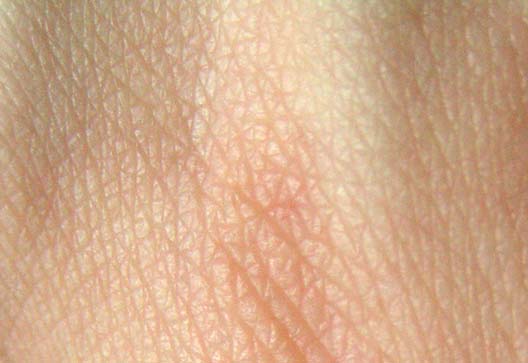

The skin is the outer covering of mammals and some other animals. It has many important jobs. First, it helps protect the body by stopping pathogens such as bacteria and parasites from getting inside. Second, it helps control the body’s temperature. It does this by allowing evaporation from the skin and by making changes to help the body stay at the right temperature. The skin is a physical barrier. In some animals it is very strong, while in humans it is less protective. The skin and hair of mammals also have several uses. Besides temperature regulation and protection, some hair is used to send signals to other animals.
Most animals have extra protection on their skin. Mammals have hair or fur. Birds have feathers. Most fish and reptiles, such as snakes and lizards, have scales.
The skin is the largest organ in the human body. Without skin, people would easily get infections and diseases. As part of the immune system, the skin can also help show signs of some diseases. Keeping the skin clean is important for good health. All mammals clean and care for their hair and skin. Skin care is an important part of staying healthy.
Humans can have different skin colours, such as black people and white people. These differences happen because of how their genes have adapted to different environments and climates over many generations. Humans can also have different skin types. The main skin types are oily, dry, combination, and sensitive.
A simple way to understand your skin type is to wash your face with a gentle cleanser and leave it without any skin care products for about one hour. If your skin feels tight and dry, you may have dry skin. If your forehead, nose, and chin (called the T-zone) become oily while the rest of your face stays fairly dry, you may have combination skin. If your face becomes red, irritated, itchy, or flaky, you may have sensitive skin.
The skin also helps protect the body by blocking harmful bacteria and viruses. It helps reduce the harmful effects of UV rays from the Sun. The skin also helps control body temperature.
Animal skins can be made into leather. Leather is used to make many things, including shoes, bags, and balls.
Written for younger readers
Skin, in simpler words
This version comes from Wikijunior, a set of books written for children aged 8 to 11. It is shorter and uses plainer language than the article above.
From Wikijunior: Human Body
Our body is covered by a thin layer we all know as skin. But have you ever thought of it as an organ that has important functions? Or did you know that there are multiple layers of skin and we just see the outermost part of it? Our skin is a very important organ and it covers almost the entire body. It both protects you from the outside and connects you with it. Skin_look.png| Skin Layers Epidermis_1.png| Epidermis Skin_Sensory.png| Overview of skin functions
Our skin comes in different colors, depending on what part of your body it is covering. It is usually darker on spots that are exposed to the sun. This happens because your skin is producing melanin to protect you from getting sunburned. The amount of melanin produced by your skin is also genetically determined and varies between people.
Your skin is covered with different amounts of hair, for example, your head is full of it whereas your palms will have none. If you think about other people you know, you will notice, that some of them have less and some of them have more body hair. This depends on gender, age and genetics but also their preferences. The hair on your head and your eyebrows and eyelashes are present from the moment you are born, whereas others such as the hair under your armpits start to grow later, during puberty. Facial hair, that can be worn as a beard is more present in men than women and older people can have hair loss sometimes and become bold.
Your skin is covered with glands that produce oil called sebum. Sebum makes your skin soft and protects it from getting cracked. It also makes it water-repellent. Using too much soap during showering can wash away the oil. You eventually end up with “dry skin” but you can use body lotion as a moisturizer or simply use less soap, so your skin produces enough sebum. You also have sweat glands on your body. They will get activated if it is hot or you do a heavy physical activity. Sweat will evaporate on the surface of your skin. Especially during puberty people tend to have pimples and blackheads on their faces. Blackheads are just clogged pores that have produced too much sebum. Pimples occur if bacteria get into the clogged pore. Your body is defending against the bacteria and this causes redness and purulent liquid.
Your skin is also harder and thicker in some areas. Your soles and especially your heels can feel hard and thick. They form a yellowish or whitish and dry layer of skin which is called callus. It is a reaction of your skin to pressure and friction and makes it more resistant. You will also notice that the hard patches have less sensation than the soft ones, which can be a good thing when you try to walk on shingle.
So far, we have looked at things you were able to see from the outside. But your skin has three layers: Epidermis, Dermis and Subcutis. Each of them is home to different tissues and cell types and different functions. Here we will only look at the epidermis, which has a protective barrier function. Epidermis: The bottom of the epidermis is close to the dermis. It produces new cell layers all the time. Older cells will move further away from the dermis with time. These cells die and get hard. At the surface of the epidermis, the dead cells will fall off over time. In the epidermis, you will also find cells that produce melanin to protect you from the sun.
One of the functions of the skin is to create a barrier between your body and the outside world. It stops things from entering your body. This means it has an important function for your health because it can protect you from bacteria and viruses. It also acts as a barrier the other way around and ensures your body stays hydrated and does not lose all its fluids on its surface.
Since the skin is the outermost part of your body it also connects your body with the world. By touching objects, you can gain information about them. This is important for blind people but also in everyday situations in your life where you are not even thinking about it. Grabbing your shoes from inside your sports bag without looking into it is only possible because your skin is full of sensors that provide you information about the size, shape and texture of the objects in it. Your skin cannot only feel touch, pressure and vibration but also cold and hot temperature and pain. For each of those sensations, you have a different sensor type in your skin. If they get activated they send a signal to your brain. The signal travels along nerves through your body to the spinal cord and there enters the central nervous system and finally reaches the brain. Once the signal has arrived in your brain you are able to tell where it is coming from and how strong it is. This allows you to know what is going on outside your body. The ability to precisely know where a certain sensation is coming from is not the same for every region of your skin. Your fingertips are much more sensitive to touch compared to your back. This is because the sensor density is much higher in your fingers than your back. Why is this the case you wonder? It is simply not as important to know the exact location or shape of something on your back. On the other hand, it is very useful to have precise information about the needle you are holding if you are trying to sew or about a berry you try to pick from a tree. Building and maintaining a system always cost your body energy and therefore you have a system that has the maximum benefits with minimal cost of energy.
Your skin has also a role in temperature regulation. If your body needs to lose heat you will start sweating to cool down and your skin will be more supplied by blood. If you are outside in winter, your body hair starts to straighten up which you know as goosebumps and less blood will pass through your skin, so it will not cool down.
Skin is producing Vitamin D which is important for a lot of different things but most commonly known for its role in maintaining healthy and strong bones. To produce vitamin D your skin needs sunbeams. If your skin is darker and therefore has better protection against sunbeams, it is harder to produce Vitamin D.
Where this page comes from
The article above is adapted from “Skin” on Simple English Wikipedia, by its contributors. We removed reference markers, navigation boxes and tables, expanded measurement templates into readable numbers, and kept the prose otherwise intact. The simpler version is adapted from Wikijunior on Wikibooks.
Both sources are published under CC BY-SA 4.0, so this page is published under the same licence. You may share and adapt it, including commercially, as long as you credit the original and keep the same licence.
Worksheets, answer keys and printable layouts elsewhere on K5Print are our own work and are not covered by this licence.