Glossary of Basic Terms

Items in the Glossary are alphabetically listed. The following format will be used throughout the glossary:
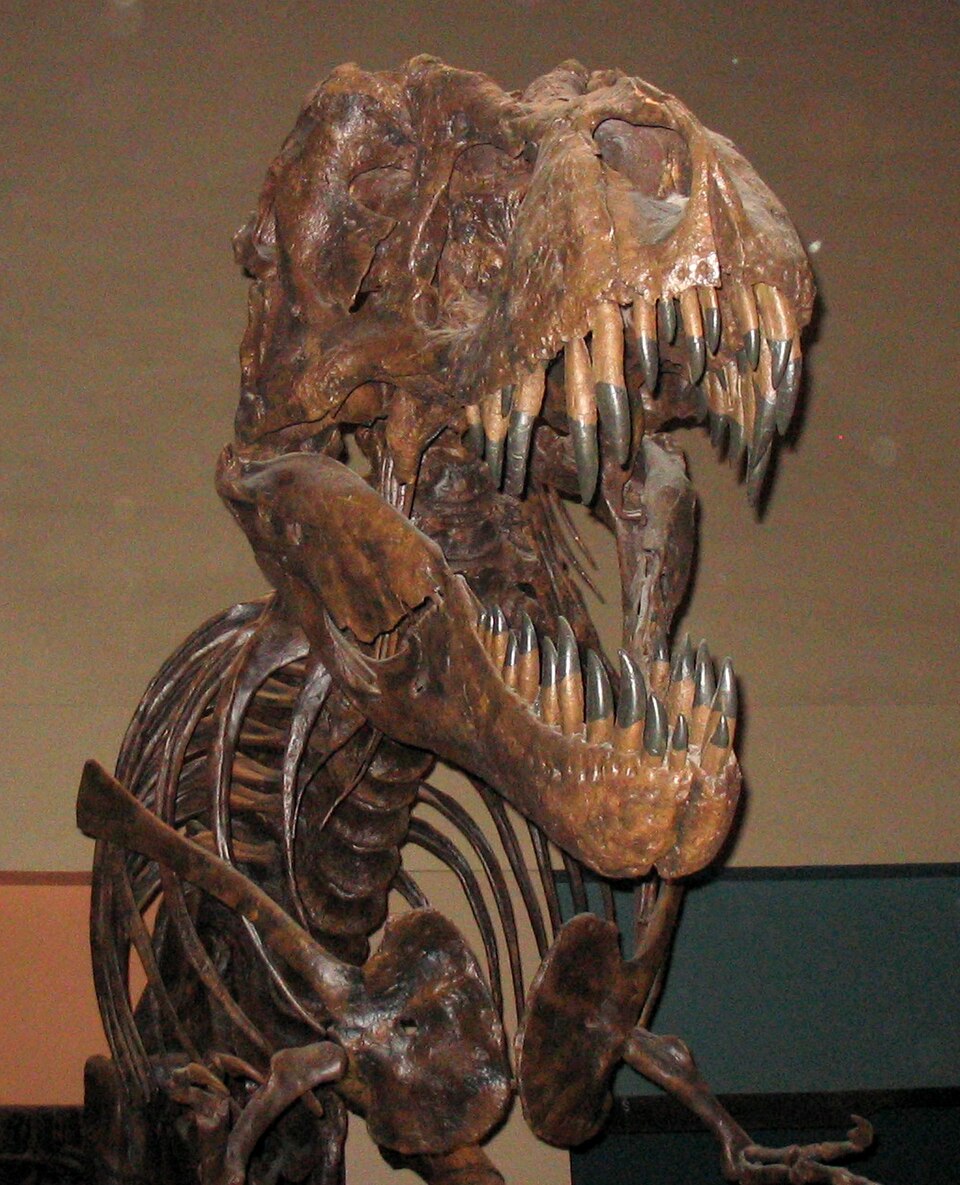
Carnivore (T-Rex): A meat eating animal. See also Omnivore and Herbivore.
Thus, the entry will be listed in its alphabetical order, followed in parenthesis by the section first listed and defined in. Following that, if available, should be related terms that could be looked up for further information.
Glossary
Carnivore (T-Rex): A meat eating animal. See also Omnivore and Herbivore.
Cretaceous Period: The time period when dinosaurs were at risk of extinction between 145 and 65 million years ago. This period also saw great diversification among insects and the beginnings of the rise of mammals and birds.
Depth Perception (T. rex): The ability to tell how far about from you an object is.
Era: A very long period of time which is somehow different from other periods of time.
Forelimbs (T-Rex)(Allosaurus): Arms; basically just limbs in the front, or fore.
Fossils: The preserved remains of dinosaurs and other ancient creatures that have turned to stone over the ages due to the pressure deep beneath the earth.
Geological Period: A period of time that is part of an Era. (For example the Jurassic period).
Herbivore: A plant eating animal. See also Omnivore and Carnivore.
Holotype: An example of a specific type of animal or plant.
Jurassic Period: The time period when the super continent of pagea began to break apart between 199 and 145 million years ago. Dinosaurs were the dominant land animals of this period.
Mesozoic Era: An Era when dinosaurs lived on the Earth between 251 million years ago and 65 million years ago. It is divided into the Triassic, Jurassic, and the Cretaceous geological periods (See also Era, Geological Period).
Omnivore: An animal that eats both plants and meat. See also Carnivore and Herbivore.
Paleontologist: A scientist who studies Dinosaurs.
Predator: An animal that hunts down and kills animals for food.
Prey: An animal hunted or caught for food.
Scavenger: An animal that feeds on animals that are already dead.
Specimen: An individual animal or plant.
Triassic Period: The time period when dinosaurs first evolved, between 251 and 199 million years ago.
Written for younger readers
Glossary of Basic Terms, in simpler words
This version comes from Wikijunior, a set of books written for children aged 8 to 11. It is shorter and uses plainer language than the article above.
From Wikijunior: Dinosaurs
Items in the Glossary are alphabetically listed. The following format will be used throughout the glossary:
Carnivore (T-Rex): A meat eating animal. See also Omnivore and Herbivore.
Thus, the entry will be listed in its alphabetical order, followed in parenthesis by the section first listed and defined in. Following that, if available, should be related terms that could be looked up for further information.
Carnivore (T-Rex): A meat eating animal. See also Omnivore and Herbivore.
Cretaceous Period: The time period when dinosaurs were at risk of extinction between 145 and 65 million years ago. This period also saw great diversification among insects and the beginnings of the rise of mammals and birds.
Depth Perception (T. rex): The ability to tell how far about from you an object is.
Era: A very long period of time which is somehow different from other periods of time.
Forelimbs (T-Rex)(Allosaurus): Arms; basically just limbs in the front, or fore.
Fossils: The preserved remains of dinosaurs and other ancient creatures that have turned to stone over the ages due to the pressure deep beneath the earth.
Geological Period: A period of time that is part of an Era. (For example the Jurassic period).
Herbivore: A plant eating animal. See also Omnivore and Carnivore.
Holotype: An example of a specific type of animal or plant.
Jurassic Period: The time period when the super continent of pagea began to break apart between 199 and 145 million years ago. Dinosaurs were the dominant land animals of this period.
Mesozoic Era: An Era when dinosaurs lived on the Earth between 251 million years ago and 65 million years ago. It is divided into the Triassic, Jurassic, and the Cretaceous geological periods (See also Era, Geological Period).
Omnivore: An animal that eats both plants and meat. See also Carnivore and Herbivore.
Paleontologist: A scientist who studies Dinosaurs.
Predator: An animal that hunts down and kills animals for food.
Prey: An animal hunted or caught for food.
Scavenger: An animal that feeds on animals that are already dead.
Specimen: An individual animal or plant.
Triassic Period: The time period when dinosaurs first evolved, between 251 and 199 million years ago.
Where this page comes from
The article above is adapted from “Glossary of Basic Terms” on Simple English Wikipedia, by its contributors. We removed reference markers, navigation boxes and tables, expanded measurement templates into readable numbers, and kept the prose otherwise intact. The simpler version is adapted from Wikijunior on Wikibooks.
Both sources are published under CC BY-SA 4.0, so this page is published under the same licence. You may share and adapt it, including commercially, as long as you credit the original and keep the same licence.
Worksheets, answer keys and printable layouts elsewhere on K5Print are our own work and are not covered by this licence.