Landslide
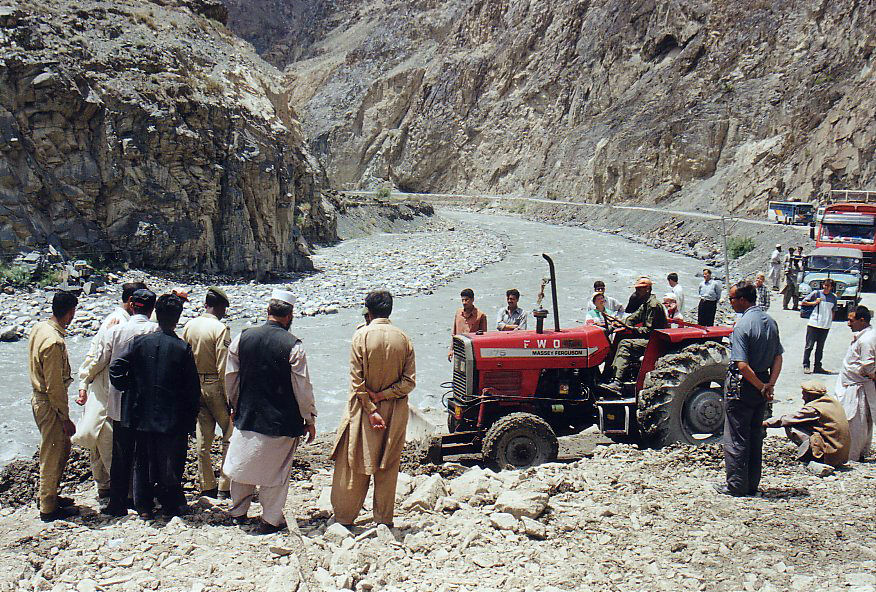

A landslide includes a wide range of ground movements, such as rock falls, deep failure of slopes and shallow debris flows.
The biggest reason for a landslide is that there is a slope and material goes down the slope because of gravity.
But other things also contribute to landslides:
- erosion by rivers, glaciers, or ocean waves makes slopes too steep
- rock and soil slopes made weak through saturation by snowmelt or heavy rains
- earthquakes that make weak slopes fail or crack the rocks that will eventually fall down
- volcanic eruptions produce loose ash deposits, heavy rain, and debris flows
- vibrations from machinery, traffic, blasting and even thunder may trigger failure of weak slopes
- weight from much rain or snow, stockpiling of rock or ore, from waste piles, or from buildings may stress weak slopes to failure and other structures
- groundwater pressure making the slope unstable
- in shallow soils, the removal of deep-rooted plants that bind the colluvium to bedrock
An underlying reason is the nature of the material. For example, a thixotropic material such as mud or sand and water, can change from a gel to a sol by adding water or pressure, or shaking. It goes from being stable one minute to fluid the next minute. The greatest disasters, like lahars or mudslides, happen suddenly. It is possible for much of a volcano to just slide down suddenly, as with Toba, Krakatoa and Mount St Helens.
Where this page comes from
The article above is adapted from “Landslide” on Simple English Wikipedia, by its contributors. We removed reference markers, navigation boxes and tables, expanded measurement templates into readable numbers, and kept the prose otherwise intact.
Both sources are published under CC BY-SA 4.0, so this page is published under the same licence. You may share and adapt it, including commercially, as long as you credit the original and keep the same licence.
Worksheets, answer keys and printable layouts elsewhere on K5Print are our own work and are not covered by this licence.