Oder

Fast facts
- Length
- 840 km (522 mi)
Facts from Wikipedia’s “Oder” page (CC BY-SA 4.0).
The Oder River (; Czech/) is a river in Central Europe. It starts in the Czech Republic and flows through Poland and Germany. It forms 187 kilometers of the border between Poland and Germany. The river is 854 kilometres long and ends in the Szczecin Lagoon in the Baltic Sea.
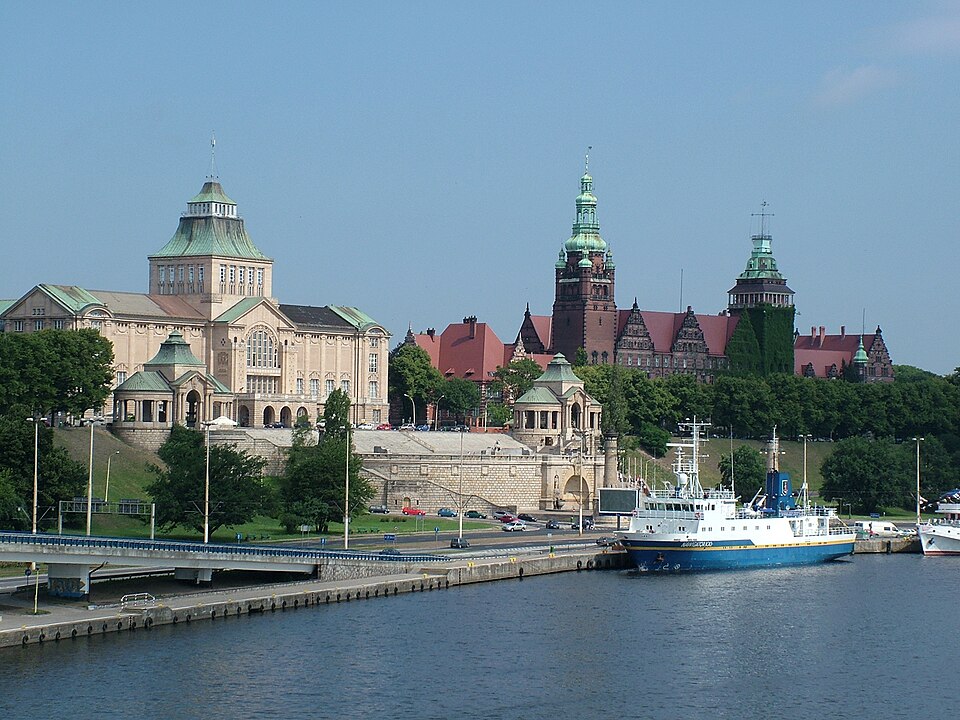
Some bigger towns the Oder passes are Wrocław, Eisenhüttenstadt, Frankfurt on the Oder, Szczecin and Police. The biggest city on the Oder River is Wrocław, in Lower Silesia, Poland.
Names
The Oder River has different names in different languages. Most of these names are very similar, or almost the same:
- English and
- Czech, Polish, and These names come from the Latin language names. In Medieval Latin the river was called Od(d)era. In Renaissance Latin, which was invented in 1534, the river was called Viadrus.
In the Old Church Slavonic language, the name of the river was Vjodr.
Geography
The Oder is 854 km long. 112 km pass through the Czech Republic. 742 km pass through Poland. 187 km make up part of the border between Germany and Poland.
The Oder is the second-longest river in Poland. (The Vistula is the longest river.)
It begins in a watershed in the Oder Mountains that is 118,861 km². This basin is mostly in Poland, but a little bit is in the Czech Republic and Germany. The river runs through five voivodeships in Poland, and two states in Germany.
The river ends in the Szczecin Lagoon near Police, Poland. Here the Oder splits into three other rivers: the Dziwna River, the Świna River, and the Peene River. These three rivers start in Szczecin Lagoon and end Bay of Pomerania in the Baltic Sea.
The biggest city on the Oder River is Wrocław in Lower Silesia, Poland.
Cities
The Oder passes through 28 major cities and towns. These are:
After the river splits, the Dziwna River branch passes through 3 towns:
The Świna River branch passes through:
The Peene River branch passes through:
These towns sit on the Szczecin Lagoon:
Where this page comes from
The article above is adapted from “Oder” on Simple English Wikipedia, by its contributors. We removed reference markers, navigation boxes and tables, expanded measurement templates into readable numbers, and kept the prose otherwise intact.
Both sources are published under CC BY-SA 4.0, so this page is published under the same licence. You may share and adapt it, including commercially, as long as you credit the original and keep the same licence.
Worksheets, answer keys and printable layouts elsewhere on K5Print are our own work and are not covered by this licence.