Cheese
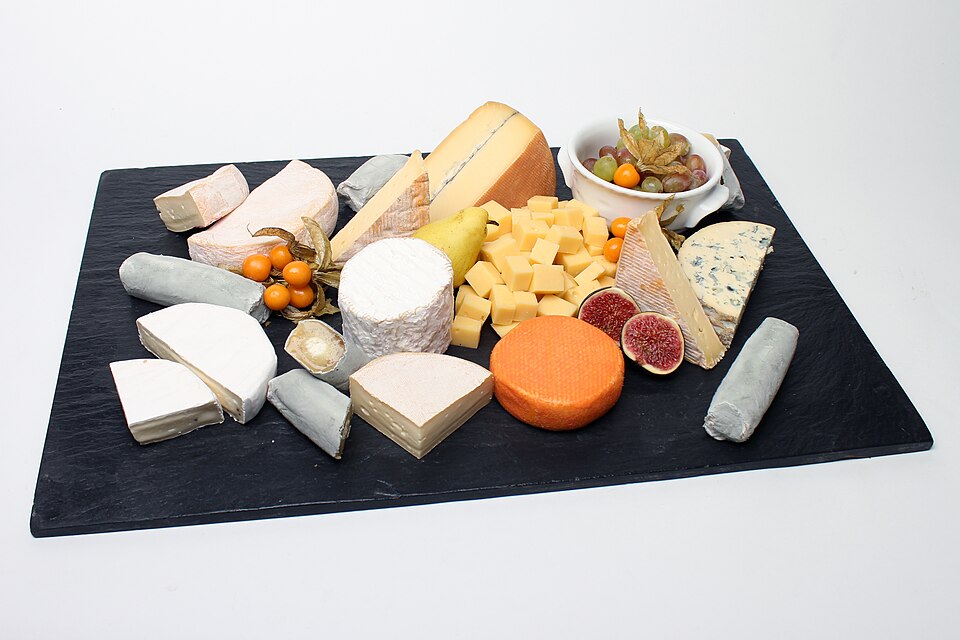

Nutrition facts: cheddar cheese
One serving is 1 slice (17 g).
| Nutrient | Per 100 g | Per serving | % Daily Value |
|---|---|---|---|
| Calories | 408 kcal | 69 kcal | — |
| Protein | 23.3 g | 4.0 g | 8% |
| Total fat | 34.0 g | 5.8 g | 7% |
| Carbohydrate | 2.4 g | 0.4 g | — |
| Sugars | 0.3 g | 0.1 g | — |
| Vitamin A | 316 µg | 54 µg | 6% |
| Calcium | 707 mg | 120 mg | 9% |
| Iron | 0.2 mg | 0.0 mg | — |
| Potassium | 77 mg | 13 mg | — |
| Sodium | 654 mg | 111 mg | 5% |
Data: USDA FoodData Central (public domain, CC0) — “Cheese, cheddar”. Percent Daily Values use the FDA’s reference amounts for labels.
Cheese is a dairy product that is made from the milk of cows, goats, sheep, and sometimes other animals. There are many types of cheese, such as Cheddar, Feta, Provolone, and Swiss
Many things affect the form, texture, color and flavor of a cheese. These include the milk (cow or goat), if the milk has been pasteurized, the amount of butterfat, bacteria and mold in the cheese, how the cheese is made, how much fat is in the cheese, and how old the cheese is.
Origin
People have been making cheese since before history was written down. It is not known when cheese was first made, but is known that cheese was eaten by the Sumerians in about 4000 BC.
Classification
There are many different ways to classify cheeses. Some ways include:
- How long the cheese was aged
- The texture of the cheese. These include Hard, Soft and Softer.
- How the cheese was made
- how tasty the cheese is.
- What type of milk was used to make the cheese. This is mainly what animal the milk comes from, such as cows, sheep, and goats. The diet of the animal can also affect the type of cheese made from its milk.
- How much fat is in the cheese
- What color the cheese is (common colors are yellow, and white)
There are also man-made foods that some people use instead of cheese. These are called Cheese analogues.
Different types of cheese include:
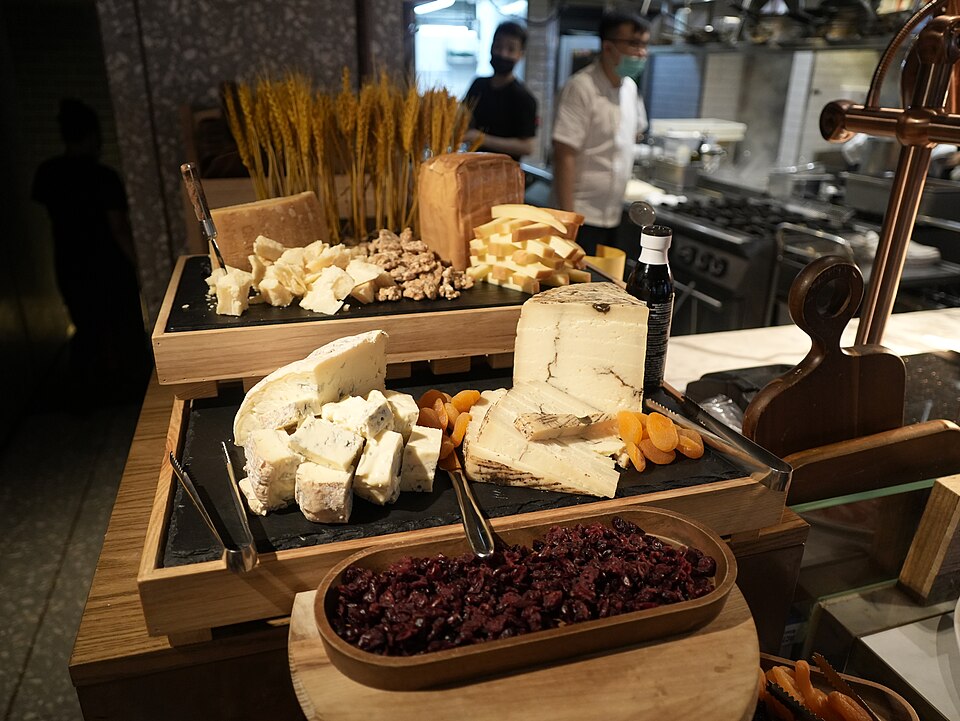
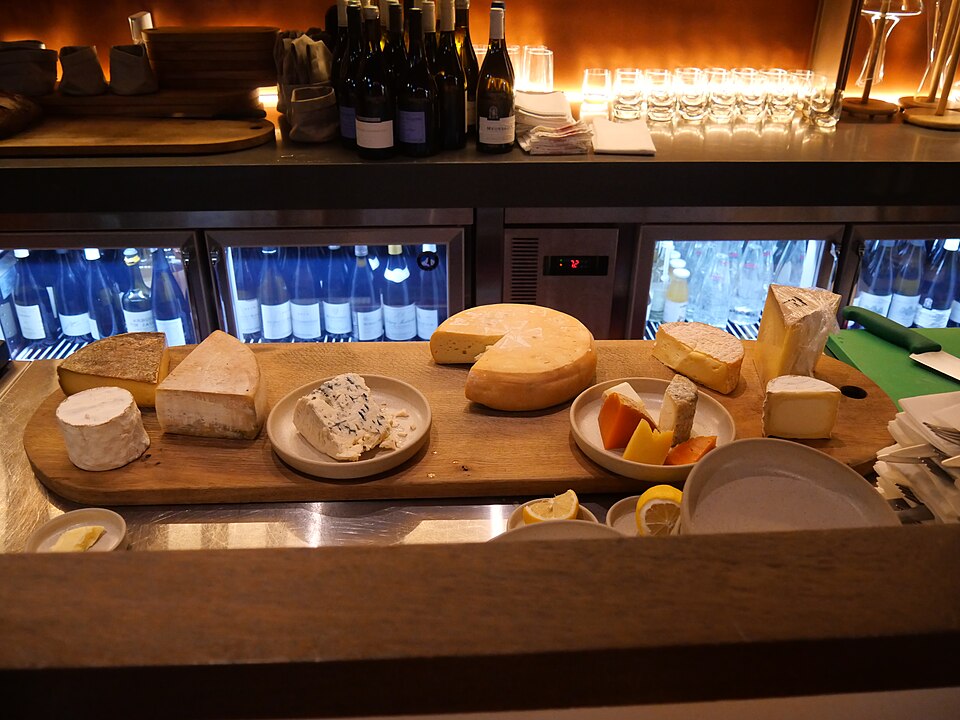
File:La Fourrière (cheese).jpg|A heart-shaped goat milk cheese from France. File:Feta Cheese.jpg|Feta cheese File:Parmigiano-Reggiano from Osteria Ristorante Italiano.jpg|Paremesan Cheese File:Swiss cheese and garlic cheese.jpg|Emmental and Boursin cheese File:Crumbly cheese.jpg|Crumbly cheese File:Brie Cheese and German Beechwood Smoked cheese.jpg|Smoked cheese and Brie Cheese File:A Swiss Cheese at home.jpg|Swiss Cheese File:Bleu de Gex.jpg|Bleu de Gex Blue Cheese File:A big blue cheese.jpg|Gorgonzola Cheese File:A Pecorino cheese plate at Hong Kong.jpg|Pecorino cheese File:Camembert cheese.jpg|Camembert cheese File:Mozzarella cheese ball with cherry tomatoes and basil.jpg|Mozzarella Cheese File:Le Cendrillon Alexis de Portneuf.jpg|Le Cendrillon Alexis de Portneuf File:Berkswell cheese.jpg|Berkswell Cheese File:Parmigiano-Reggiano in hk.jpg|Parmigiano-Reggiano File:Époisses cheese.JPG|Époisses File:Blue Cheese plate from Nicholini’s.jpg|Blue Cheese File:Cacio cavallo with slices.jpg|Cacio Cavallo File:Edam cheese with knife.jpg|Edam Cheese File:12 month manchego cheese plate with nuts.jpg|Manchego File:Rians Goat Cheese with Ash in Supermarket.jpg|Goat Milk Cheese
Where this page comes from
The article above is adapted from “Cheese” on Simple English Wikipedia, by its contributors. We removed reference markers, navigation boxes and tables, expanded measurement templates into readable numbers, and kept the prose otherwise intact.
Both sources are published under CC BY-SA 4.0, so this page is published under the same licence. You may share and adapt it, including commercially, as long as you credit the original and keep the same licence.
Worksheets, answer keys and printable layouts elsewhere on K5Print are our own work and are not covered by this licence.