Fig

Scientific name
- Scientific name
- Ficus carica
- Conservation status
- Least concern
How to say it in other languages
- Arabic
- تِين
- Chinese
- 無花果
- Dutch
- Vijgenboom
- French
- Figuier
- German
- Echte Feige
- Italian
- Fico
- Portuguese
- Figueira
- Spanish
- Higuera
Facts from Wikipedia’s “Fig” page and Wikispecies (CC BY-SA 4.0).
Nutrition facts: raw figs
One serving is 1 small (1-1/2" dia) (40 g).
| Nutrient | Per 100 g | Per serving | % Daily Value |
|---|---|---|---|
| Calories | 74 kcal | 30 kcal | — |
| Protein | 0.8 g | 0.3 g | 1% |
| Total fat | 0.3 g | 0.1 g | — |
| Carbohydrate | 19.2 g | 7.7 g | 3% |
| Fiber | 2.9 g | 1.2 g | 4% |
| Sugars | 16.3 g | 6.5 g | — |
| Vitamin C | 2.0 mg | 0.8 mg | 1% |
| Vitamin A | 7 µg | 3 µg | — |
| Calcium | 35 mg | 14 mg | 1% |
| Iron | 0.4 mg | 0.1 mg | 1% |
| Potassium | 232 mg | 93 mg | 2% |
| Sodium | 1 mg | 0 mg | — |
Data: USDA FoodData Central (public domain, CC0) — “Figs, raw”. Percent Daily Values use the FDA’s reference amounts for labels.
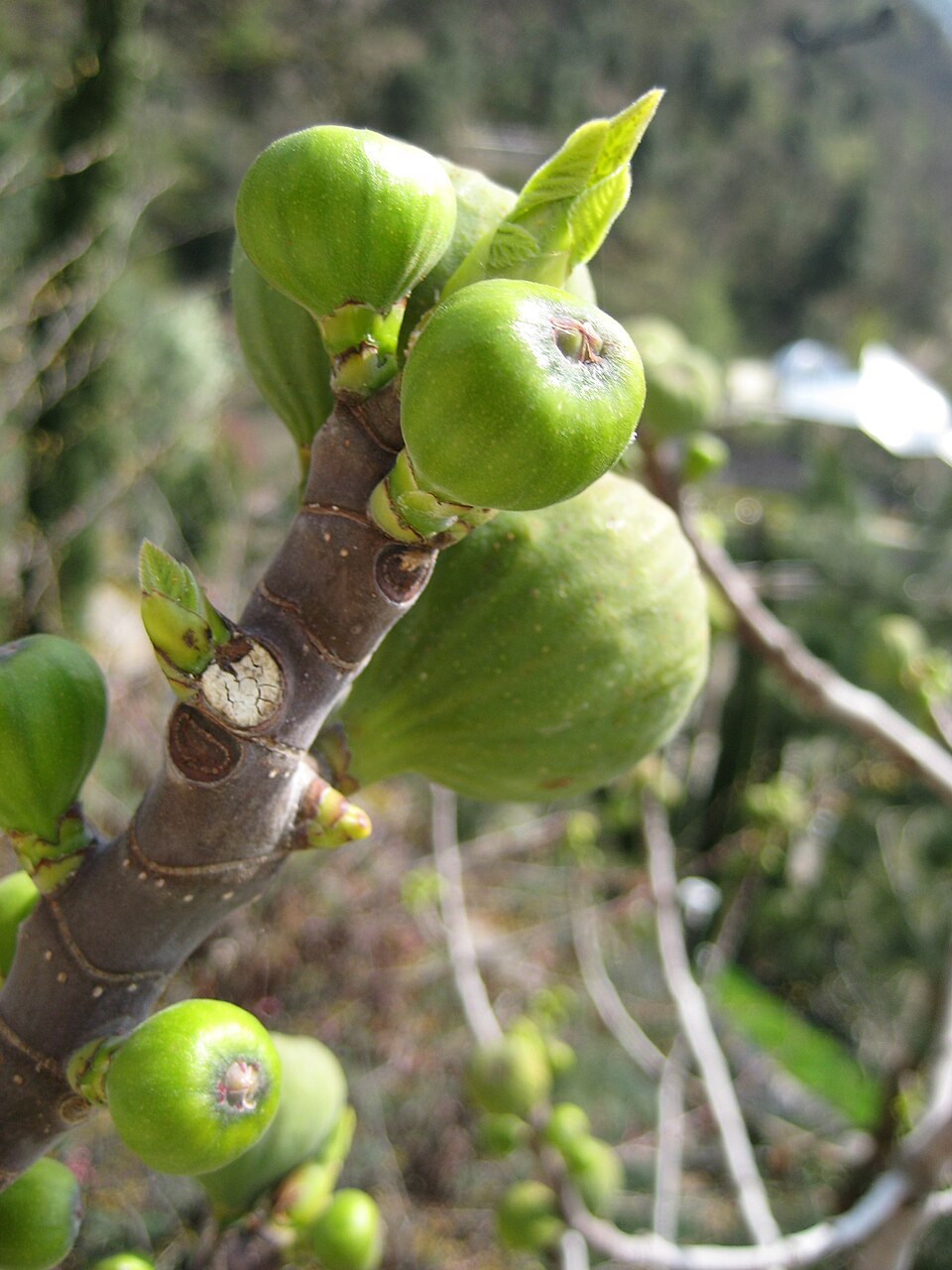
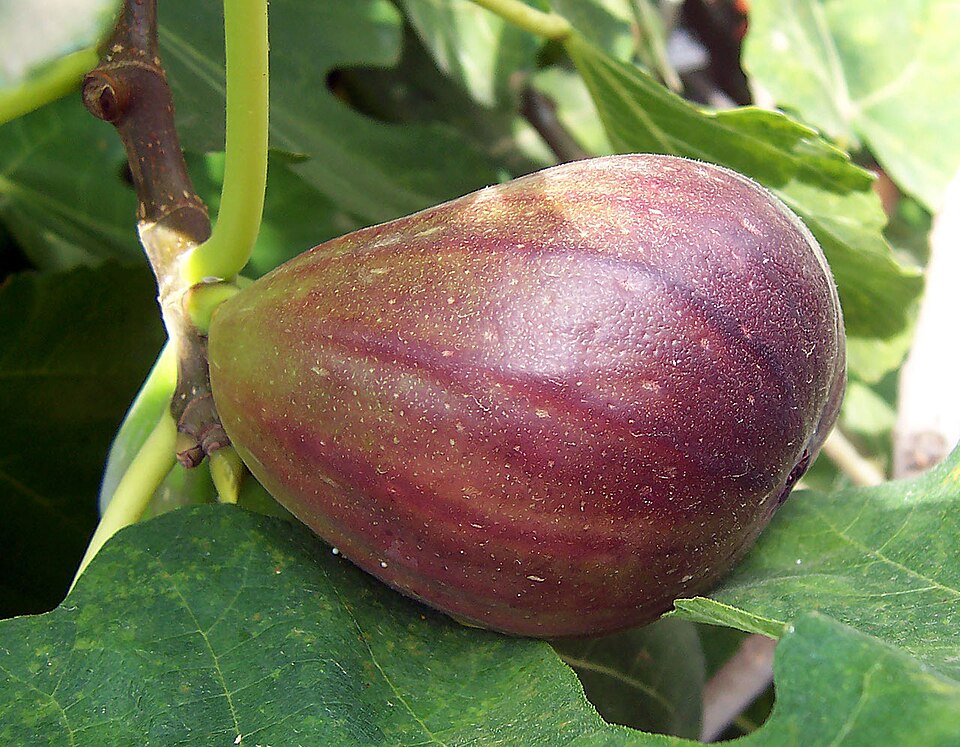
Fig (genus Ficus) is a soft, sweet fruit. Its skin is very thin and has many small seeds inside of it. There are more than 850 kinds of Ficus, the fig tree.
The fruits can be eaten when ripe and when dried. Figs grow in warm climates. Sometimes, figs are made into jam. Figs are also in a popular snack.
Figs are pollinated by fig wasps.
Fig fruit
Many figs are grown for their fruit, though only the common fig is grown to any amount for eating.
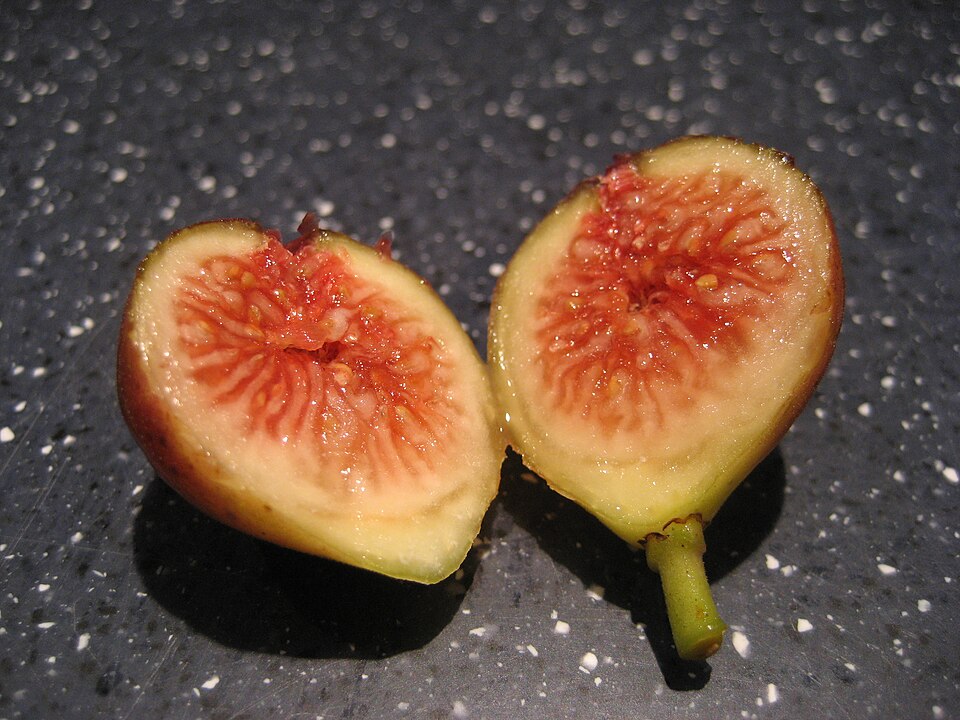
The fig is a false fruit or multiple fruit, in which the flowers and seeds grow together to form a single mass. Depending on the type, each fruit can contain up to several hundred to several thousand seeds.
A fig “fruit” is derived from a special type of an arrangement of multiple flowers. In this case, it is a turned inwards, nearly closed, with many small flowers arranged on the inside.
Then the actual flowers of the fig are not seen unless the fig is cut open. It is a fruit without a seen flower.
Contents of the fruit
The fig fruits, important as both food and traditional medicine, contain laxative substances, pigments, sugars, vitamins A and C, acids and enzymes. However, figs are skin allergies, and the sap is a big eye irritant.
Farmed figs
Some ‘virgin fruit’ farms of common figs do not require pollination at all, and will produce a crop of seedless edible figs without fig wasps. This section explains how this is done.
Pollination and fig wasps
- Note: some readers may find this section difficult. That is because the facts of fig pollination are complicated. The facts in short are: figs are pollinated by little wasps. The fig fruit is called a synconium.
The syconium often has a bulbous shape with a small opening (the ostiole) at the outward end used by pollinators. The flowers are pollinated by very small wasps which crawl through the opening in search of a suitable place to lay eggs.
Without this, fig trees cannot reproduce by seed. In turn, the flowers provide a safe haven and nourishment for the next generation of wasps. This has led to a co-evolutionary relationship.
Fig plants can be monoecious (hermaphrodite) or gynodioecious (hermaphrodite and female). Nearly half of fig species are gynodioecious, and have plants with inflorescences (syconium) with long styled pistillate flowers, or have plants with staminate flowers mixed with short styled pistillate flowers. The long flower styles tend to prevent wasps from laying their eggs within the ovules, while the short styled flowers are accessible for egg laying.
The common fig (Ficus carica) is a gynodioecious plant, which means its fruits are either hermaphrodite and “inedible figs” or caprifigs. In traditional culture in the Mediterranean region they were considered food for goats (Capra aegagrus): ‘caprifig’ means ‘goat fig’. In the female fig trees, the male flower parts fail to develop; they produce the “edible figs”.
Fig wasps grow in caprifigs but not in the female syconiums. The female flower is too long for the wasp to successfully lay her eggs in them. Nonetheless, the wasp pollinates the flower with pollen from the caprifig it grew up in. When the wasp dies, it is broken down by enzymes inside the fig. This means you do not eat the wasp because it has been dissolved. The wasp does not transmit any diseases harmful to humans.
Cultivation
The edible fig is one of the first plants that were cultivated by humans.
Co-evolution
There is typically only one species of wasp that is able to pollinate the flowers of each type of fig. For example, in Hawaii, some 60 types of figs have been introduced, but only four of the wasps that pollinate them have been introduced, so only four species of figs produce possible seeds there. This is an example of a helping relationship, in which each fig plant and fig wasp benefit each other.
The close relationship between fig types and their pollinators, and the one-to-one plant-pollinator ratio are a clear example of coevolution. Recent analyses have shown a close correspondence in the evolution and evolutionary process of these two, figs and wasps.
Where this page comes from
The article above is adapted from “Fig” on Simple English Wikipedia, by its contributors. We removed reference markers, navigation boxes and tables, expanded measurement templates into readable numbers, and kept the prose otherwise intact.
Both sources are published under CC BY-SA 4.0, so this page is published under the same licence. You may share and adapt it, including commercially, as long as you credit the original and keep the same licence.
Worksheets, answer keys and printable layouts elsewhere on K5Print are our own work and are not covered by this licence.