Halal
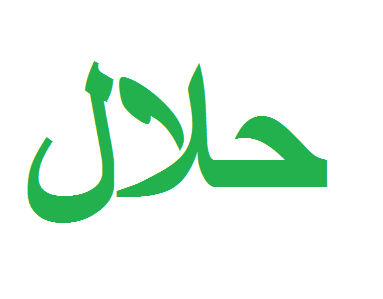

Halal () is an Arabic term meaning “permissible” Islam. The opposite is “haram”, which means “forbidden”.
Muslims have strict rules of what they may and may not eat:
- Animals need to be killed in a special way. They must be slaughtered by a Muslim man, and the slaughter must be humane. (The animals should be slaughtered by hand so that all of their blood could be drained from them before they are eaten. The process is called “Zabihah Halal” in Arabic, meaning “Permissible Slaughter”.)
- Muslims may not consume carcass animals even the animal slaughtered by knife, not in its neck, called Mari’ and wajadan. Hunting animals may be eaten but in a special manner.
- Muslims must not eat pork.
- According to the Shafi’i, Maliki and Hanbali madhabs (schools of Islamic jursisprudence), all seafood would be halal except for eels in the Maliki school and all seafood except for fish in the Hanafi branch.
- They should not drink alcohol or consume other intoxicating substances in the wrong way (such as narcotics). Substances that change the mind, and that are not taken for medical reasons are forbidden.
- Some sources even argue that caffeine, like alcohol and drugs, is forbidden.
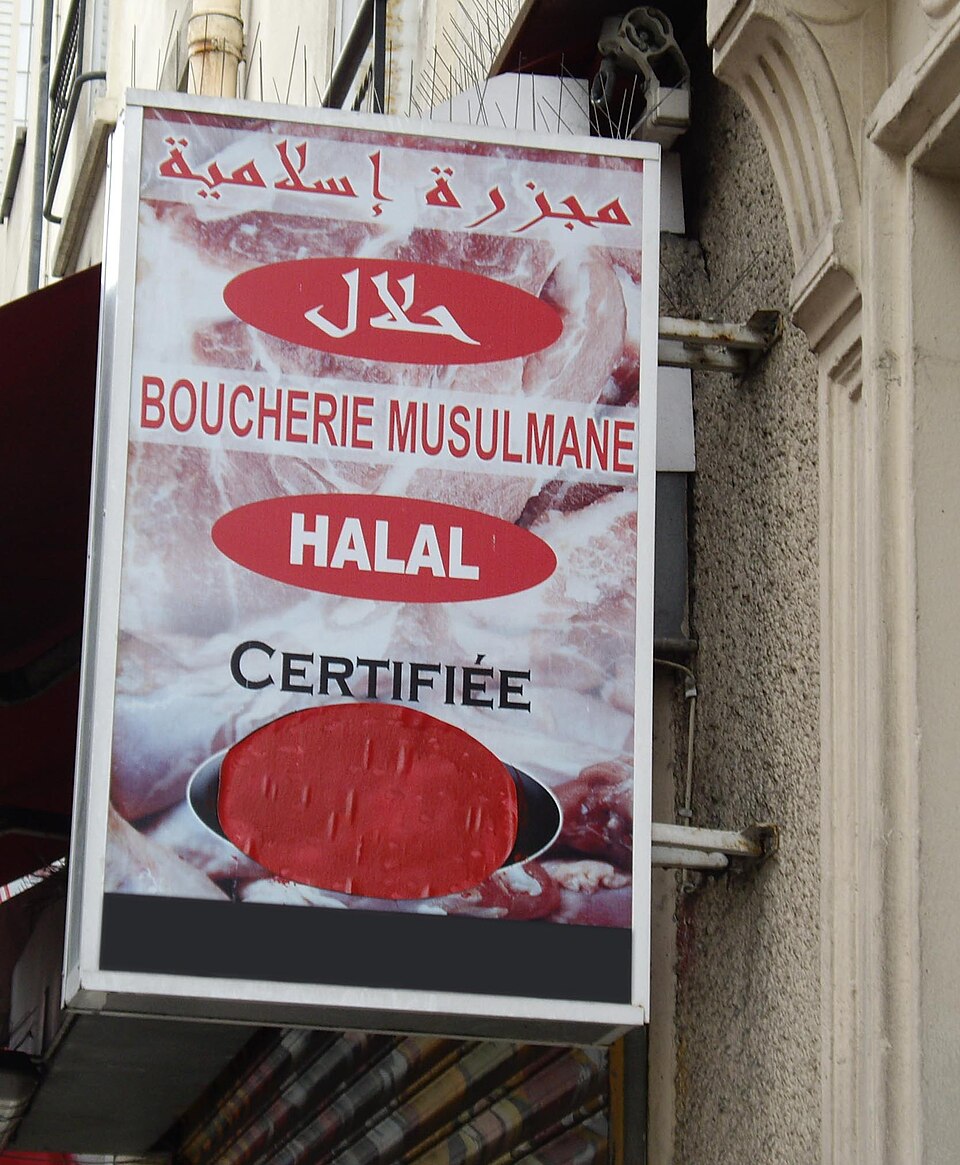
Where this page comes from
The article above is adapted from “Halal” on Simple English Wikipedia, by its contributors. We removed reference markers, navigation boxes and tables, expanded measurement templates into readable numbers, and kept the prose otherwise intact.
Both sources are published under CC BY-SA 4.0, so this page is published under the same licence. You may share and adapt it, including commercially, as long as you credit the original and keep the same licence.
Worksheets, answer keys and printable layouts elsewhere on K5Print are our own work and are not covered by this licence.