Spaghetti

Nutrition facts: cooked pasta
One serving is 1 cup shells (105 g).
| Nutrient | Per 100 g | Per serving | % Daily Value |
|---|---|---|---|
| Calories | 158 kcal | 166 kcal | — |
| Protein | 5.8 g | 6.1 g | 12% |
| Total fat | 0.9 g | 1.0 g | 1% |
| Carbohydrate | 30.9 g | 32.4 g | 12% |
| Fiber | 1.8 g | 1.9 g | 7% |
| Sugars | 0.6 g | 0.6 g | — |
| Vitamin C | 0.0 mg | 0.0 mg | — |
| Vitamin A | 0 µg | 0 µg | — |
| Calcium | 7 mg | 7 mg | 1% |
| Iron | 1.3 mg | 1.3 mg | 7% |
| Potassium | 44 mg | 46 mg | 1% |
| Sodium | 1 mg | 1 mg | — |
Data: USDA FoodData Central (public domain, CC0) — “Pasta, cooked, enriched, without added salt”. Percent Daily Values use the FDA’s reference amounts for labels.
Spaghetti (Italian: [spaˈɡetti]) is a long, solid, thin string-shaped kind of pasta.
The word spaghetti was first used in 1824 in the work Li maccheroni di Napoli by . A single strand of spaghetti is called a spaghetto, which means “short/little string” in Italian.
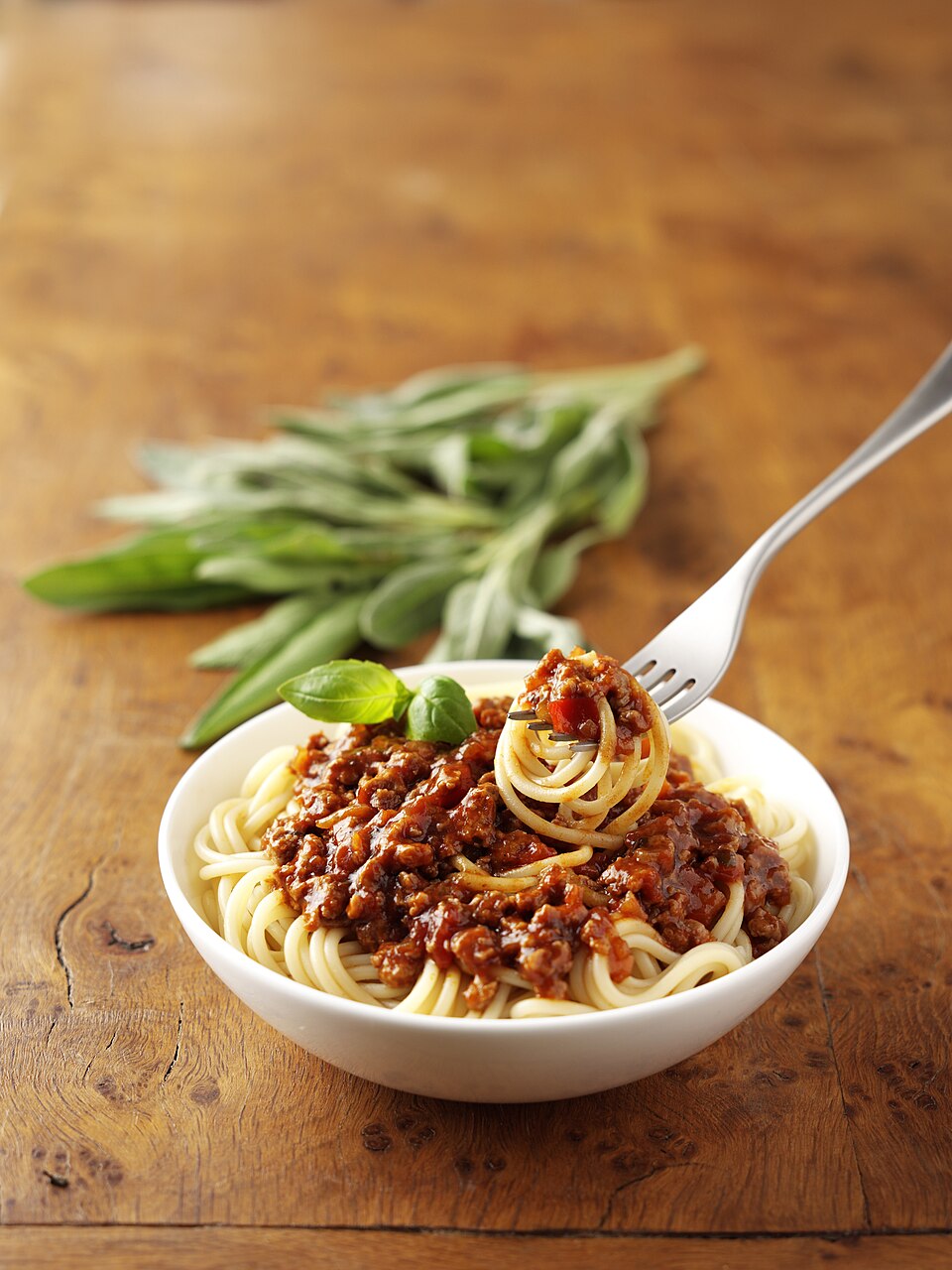
Spaghetti is now most commonly available in 25–30 cm (9.8–12 in) lengths. The varieties of pasta dishes are based on it and it is frequently used with tomato sauce, meat or vegetables.
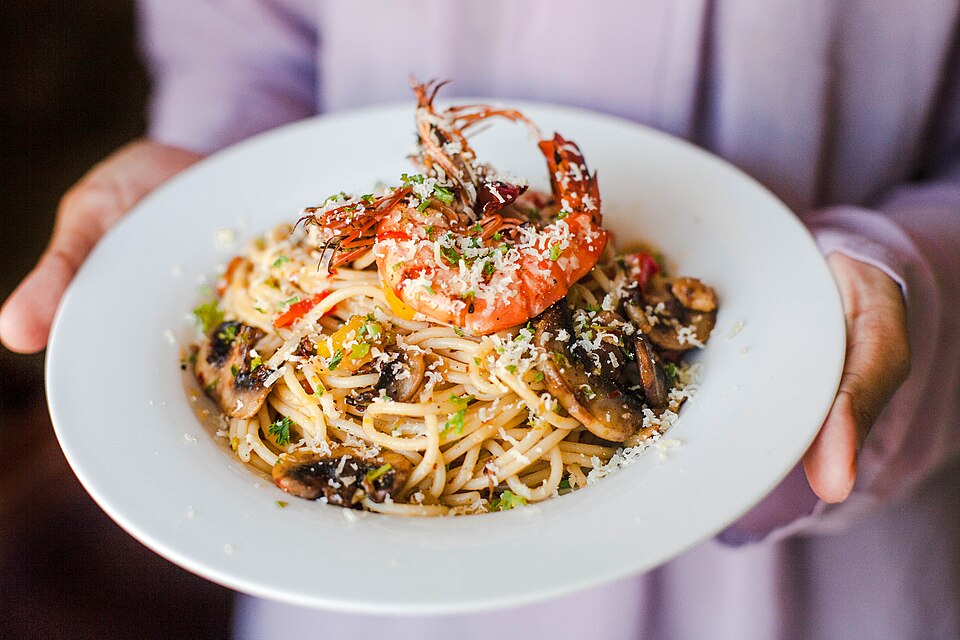
Spaghetti is made from wheat noodles, which are boiled in water for a short time. Spaghetti can either be served as a side dish, or as a main dish. Most commonly, a sauce is added. There are many different kinds of sauces. Simpler ones are made of butter, more complicated ones include tomatos, garlic, olive oil and various other herbs. Different varieties with mussels, fish or meat also exist. Ground parmesan cheese is often added.
In Italy, the sauce is usually mixed with the spaghetti while they are being prepared. Usually, spaghetti is eaten only with a fork, or with a fork and a spoon. Sometimes, they are cut with a knife for small children. Many Italians see using a knife to eat spaghetti as bad manners, except to prepare them for small children.
In the United States, there is a kind of spaghetti called “Alvaro’s spaghetti” which is served with alfredo sauce. In some countries, like United States or Canada, meatballs are often in the spaghetti sauce.
In China, spaghetti is often made by hand. In Italy, spaghetti is made with a machine so that large amounts can be made quickly. Italy is the biggest producer and consumer of spaghetti in the world.
It is also a popular dish in Libya.
Spaghetti is called by other words when it has a different thickness: “spaghettini (n. 3)” (which means “little spaghetti”), “spaghetti (n. 5)”, and “spaghettoni (n. 8)” (which means “big spaghetti”).
Usually, spaghetti leftovers last in a fridge for around 3 to 5 days, while spaghetti in a freezer will last more than one month.
Where this page comes from
The article above is adapted from “Spaghetti” on Simple English Wikipedia, by its contributors. We removed reference markers, navigation boxes and tables, expanded measurement templates into readable numbers, and kept the prose otherwise intact.
Both sources are published under CC BY-SA 4.0, so this page is published under the same licence. You may share and adapt it, including commercially, as long as you credit the original and keep the same licence.
Worksheets, answer keys and printable layouts elsewhere on K5Print are our own work and are not covered by this licence.