Afghanistan

Fast facts
- Capital
- Kabul
- Largest city
- Kabul
- Currency
- Afghani (افغانى)
- Time zone
- Afghanistan Time
- Drives on
- right
Facts from Wikipedia’s “Afghanistan” page (CC BY-SA 4.0).
Afghanistan, officially the Islamic Emirate of Afghanistan is a country in Asia. It borders Pakistan in the south and east (border with India is disputed), Iran in the west, Turkmenistan, Uzbekistan and Tajikistan in the north, and China in the far northeast. Kabul is the capital city.
Afghanistan is currently governed by the Taliban, after the collapse of the internationally recognized Islamic Republic of Afghanistan on 15 August 2021.
The country is around in size. There are 40.976 million people in Afghanistan. There are about 3 million Afghan refugees (people who had to leave the country) in Pakistan and Iran. In 2011 Kabul, had about 3,691,400 people living in it.
United Nations Human Rights Council decided in October 2021 to appoint an independent expert, known as a United Nations special rapporteur on Afghanistan, to find out about violations carried out by the Taliban and others who are now part of a big conflict.
Economy
The economy does not have growth (as April 2024), of that kind that is called GDP growth, according to Worldbank.org. In regard to the mining industry: In 2024, Chinese engineers broke ground for a mine; “The deposit is estimated to [… have] 11.5 million tons of copper ore”.
Geography
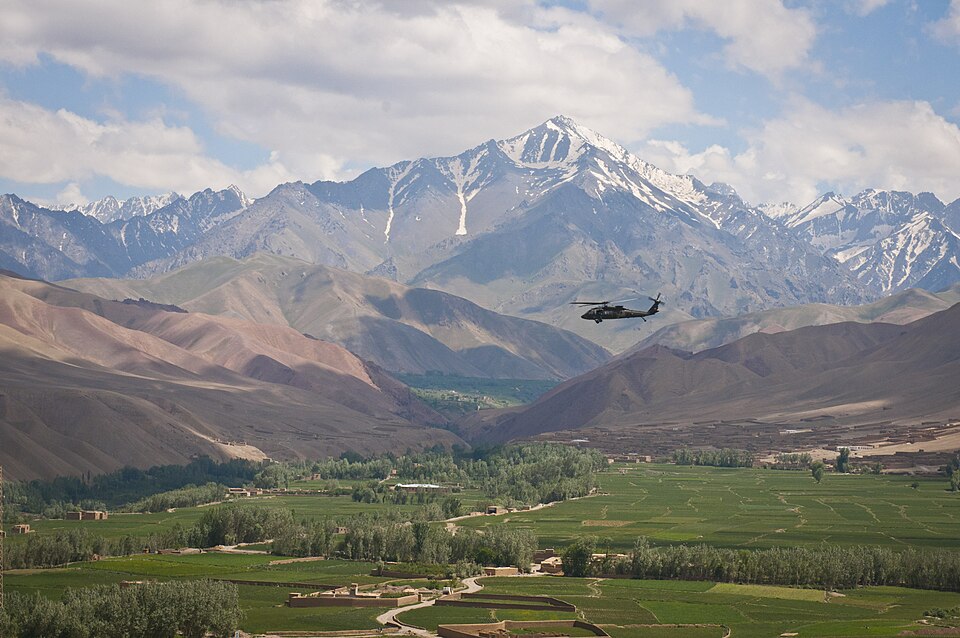
Afghanistan has many mountains. The mountains are called the Hindu Kush and Himalayas. The tallest mountain in Afghanistan is Mount Nowshak. There are plains (which have soil that is good for growing plants) and foothills. Parts of the country are also dry, especially the Registan Desert. Afghanistan has snow and glaciers in the mountains. Amu Darya is the big water stream, or river.
The country has a lot of a valuable stone called lapis lazuli, which was used to decorate the tomb of the Egyptian pharaoh Tutankhamun.
Climate
Afghanistan has a continental climate with hot summers and cold winters. Having no water sometimes causes problems for farmers. Sandstorms happen a lot in the desert.
Plants and animals
Southern Afghanistan does not have many plants because it is dry. There are more plants where there is more water. Mountains have forests of pine and fir, cedar, oak, walnut, alder, and ash trees.
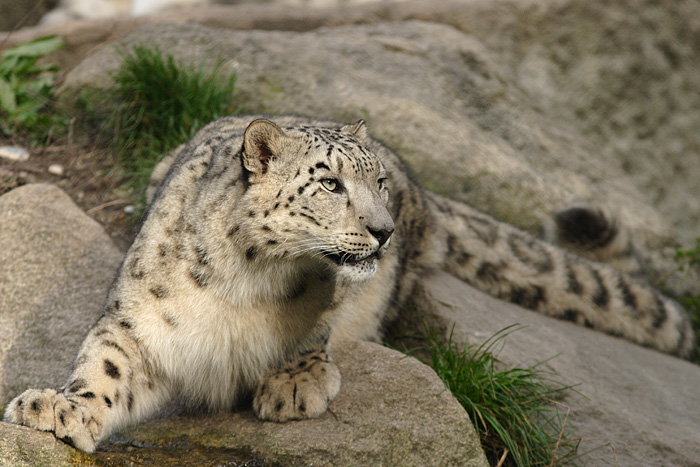
Afghanistan’s wild animals live in the mountains. There are wolves, foxes, jackals, bears, and wild goats, gazelles, wild dogs, camels, and wild cats such as the snow leopard in the country. The birds are falcons, eagles and vultures. The Rhesus Macaque and the red flying squirrel are also in Afghanistan.
Many years of war, hunting, and years of no water have killed animals in Afghanistan. There used to be tigers in Afghanistan, but now there aren’t any. Bears and wolves are almost gone.
People and culture
Many people have moved through or invaded the land of Afghanistan. Today’s people of Afghanistan are known as Afghans.
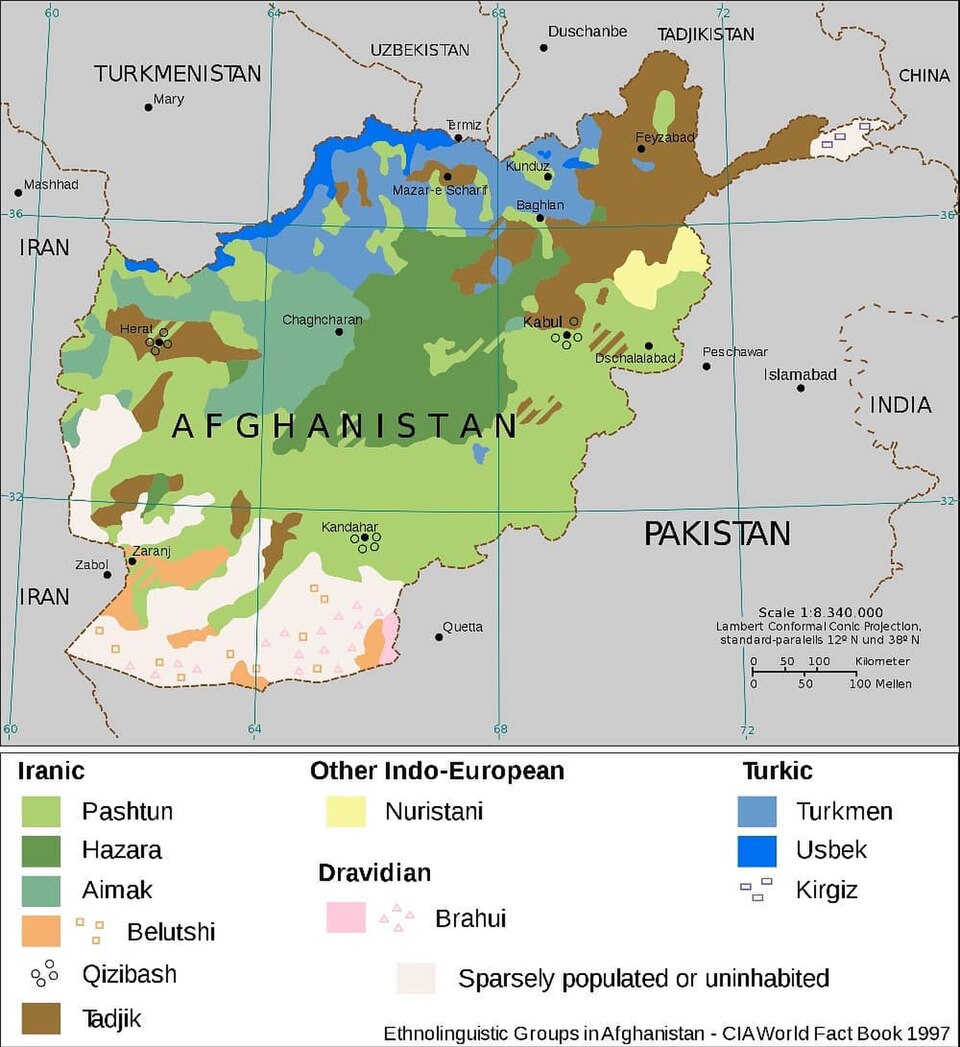
The largest group of people are the Pashtuns. They make up about half the population.See:
- Tajiks (often also known as “Farsiwan”, meaning Persian speaking) are the second-largest ethnic group, making up about one-fifth of the population. Before the 20th century, Tajiks were called Sarts and some come from Iranian peoples. Most Pashtuns are also related to the Iranian peoples. Some Pashtuns and Tajiks marry each other but at the same time they are rivals. The third-largest group are the Hazaras. They are native to the Hazaristan area in central Afghanistan. The country’s other groups include the Uzbek, Aimaq, Turkmen, Nuristani, Baloch, and Pashayi.
Dari-Persian and Pashto are the two official languages of Afghanistan. Many people speak both languages. Both are Indo-European languages from the Iranian languages sub-family. They are usually written with the Arabic alphabet. Uzbek and Turkmen are widely spoken in the north and Nuristani and Pashai are spoken in the east. Around 99% of Afghans follow the religion of Islam.
Afghanistan is a largely rural country. This means there are only a few major cities. About one fifth of the population live in cities. Kabul, the capital, is the largest city. It is south of the Hindu Kush range and alongside the Kabul River. Other cities are Kandahar, Herat, Mazar-e Sharif, and Jalalabad. The rural population is made up of farmers and nomads. The farmers live mainly in small villages along the rivers. The nomads live in tents while moving from place to place with their animals and belongings. Some people live in the high central mountains. Some live in the deserts in the south and southwest. Millions of people left Afghanistan to get away from the wars that happened in the late 20th and early 21st centuries. Most of them went to Pakistan and Iran.
History
Afghanistan is in the path of important trade routes that connect southern and eastern Asia to Europe and the Middle East. Because of this, many empire builders have tried to rule over the area. Signs that these emperors were near Afghanistan still exist in many parts of the country. Afghanistan is near what used to be the Silk Road. The peoples of Afghanistan helped develop major world religions, traded and exchanged many products, and sometimes controlled politics and culture in Asia.
Prehistory
Archaeologists digging a cave in Badakhshan discovered that people lived in the country as early as 100,000 years ago. They found the skull of a Neanderthal, or early human, as well as tools from about 30,000 years ago. In other parts of Afghanistan, archaeologists uncovered pottery and tools that are 4,000 to 11,000 years old—evidence that Afghans were among the first people in the world to grow crops and raise animals.
Farmers and herders settled in the plains surrounding the Hindu Kush as early as 7000 B.C. These people may have grown rich off the lapis lazuli they found along riverbeds, which they traded to early city sites to the west, across the Iranian plateau and Mesopotamia. As farms and villages grew these ancient people started irrigation (digging ditches for water so it flows to crops) that allowed them to grow crops on the northern Afghanistan desert plains. This civilization (advanced state of organization) is today called BMAC (Bactria–Margiana Archaeological Complex), or the “Oxus civilization”.
The Oxus civilization expanded as far east as the western edge of the Indus Valley during the period between 2200 and 1800 B.C. These people, who were the ancestors of the Indo-Aryans, used the term “Aryan” to identify their ethnicity, culture, and religion. Scholars know this when they read the ancient texts of these people; the Avesta of Iranic peoples and the Vedas of Indo-Aryans.
Zoroaster, the founder of the Zoroastrian religion, the world’s earliest monotheistic religion, (meaning a religion believing in one god) lived in the area (somewhere north of today’s Afghanistan), around 1000 B.C.
Ancient history
Before the middle of the sixth century BCE, Afghanistan was held by the Medes. Then the Achaemenids took over control of the land and made it part of the Persian empire. Alexander the Great defeated and conquered the Persian Empire in 330 BCE. He founded some cities in the area. The people used Macedonian culture and language. After Alexander, Seleucids, Mauryas, Greco-Bactrians, Scythians, Kushans, Parthians, Guptas and Sassanians ruled the area.
Kushans spread Buddhism from India in the 1st century BCE, and Buddhism remained an important religion in the area until the Islamic conquest in the 7th century CE.
The Buddhas of Bamiyan were giant statues, a reminder of Buddhism in Afghanistan. They were destroyed by the Taliban in 2001. There were international protests. The Taliban believe that the ancient statues were un-Islamic and that they had a right to destroy them.
Medieval history
Arabs introduced Islam in the 7th century and slowly began spreading the new religion. In the 9th and 10th centuries, many local Islamic dynasties rose to power inside Afghanistan. One of the earliest was the Tahirids, whose kingdom included Balkh and Herat; they established independence from the Abbasids in 820. The Tahirids were succeeded in about 867 by the Saffarids of Zaranj in western Afghanistan. Local princes in the north soon became feudatories of the powerful Samanids, who ruled from Bukhara. From 872 to 999, north of the Hindu Kush in Afghanistan enjoyed a golden age under Samanid rule.
In the 10th century, the local Ghaznavids turned Ghazni into their capital and firmly established Islam throughout all areas of Afghanistan, except the Kafiristan region in the northeast. Mahmud of Ghazni, a great Ghaznavid sultan, conquered the Multan and Punjab region, and carried raids into the heart of India. Mohammed bin Abdul Jabbar Utbi, a historian from the 10th century, wrote that thousands of “Afghans” were in the Ghaznavid army. The Ghaznavid dynasty was replaced by the Ghorid s of Ghor in the late 12th century, who reconquered Ghaznavid territory in the name of Islam and ruled it until 1206. The Ghorid army also included ethnic Afghans.
Afghanistan was recognized as Khorasan, meaning “land of the rising sun,” which was a prosperous and independent geographic region reaching as far as the Indus River.
All the major cities of modern Afghanistan were centers of science and culture in the past. The New Persian literature arose and flourished in the area. The early Persian poets such as Rudaki were from what is now Afghanistan. Moreover, Ferdowsi, the author of Shahnameh, the national epic of Iran, and Rumi, the famous Sufi poet, were also from here. It has produced scientists such as Avicenna, Al-Farabi, Al-Biruni, Omar Khayyám, Al-Khwarizmi, and many others who are widely known for their important contributions in areas such as mathematics, astronomy, medicine, physics, geography, and geology. It remained the cultural capital of Persia until the devastating Mongol invasion in the 13th century.
Timur, the Turkic conqueror, took over in the end of the 14th century and began to rebuild cities in this region. Timur’s successors, the Timurids (1405–1507), were great patrons of learning and the arts who enriched their capital city of Herat with fine buildings. Under their rule Afghanistan enjoyed peace and prosperity.
Between south of the Hindu Kush and the Indus River (today’s Pakistan) was the native land of the Afghan tribes. They called this land “Afghanistan” (meaning “land of the Afghans”). The Afghans ruled the rich northern Indian subcontinent with their capital at Delhi. From the 16th to the early 18th century, Afghanistan was disputed between the Safavids of Isfahan and the Mughals of Agra who had replaced the Lodi and Suri Afghan rulers in India. The Safavids and Mughals occasionally oppressed the native Afghans but at the same time the Afghans used each empire to punish the other. In 1709, the Hotaki Afghans rose to power and completely defeated the Persian Empire. Then they marched towards the Mughals of India and defeated them with the help of the Afsharid forces under Nader Shah Afshar.
In 1747, after Nader Shah of Persia was killed, a great leader named Ahmad Shah Durrani united all the different Muslim tribes and established the Afghan Empire (Durrani Empire). He is considered the founding father of the modern state of Afghanistan while Mirwais Hotak is the grandfather of the nation.
Since the 1800s
During the 1800s, Afghanistan became a buffer zone between two powerful empires, the British Indian Empire and the Russian Empire. As British India advanced into Afghanistan, Russia felt threatened and expanded southward across Central Asia. To stop the Russian advance, Britain tried to make Afghanistan part of its empire but the Afghans fought wars with British-led Indians from 1839 to 1842 and from 1878 to 1880. After the third war in 1919, Afghanistan under King Amanullah gained respect and recognition as a completely independent state.
The Kingdom of Afghanistan was a constitutional monarchy established in 1926. It was the successor state to the Emirate of Afghanistan. On 27 September 1934, during the reign of Zahir Shah, the Kingdom of Afghanistan joined the League of Nations. During World War II, Afghanistan remained neutral. It pursued a diplomatic policy of non-alignment.
The creation of Pakistan in 1947 as Afghanistan’s eastern neighbor created problems. In 1973, political crises led to the overthrow of the king. The country’s new leader ended the monarchy and made Afghanistan a republic. In 1978, a Communist political party supported by the Soviet Union seized control of Afghanistan’s government. This move sparked rebellions throughout the country. The government asked the Soviet Union for military assistance. The Soviets took advantage of the situation and invaded Afghanistan in December 1979.
Most people in Afghanistan opposed the sudden Soviet presence in their country. For nearly a decade, anti-Communist Islamic forces known as Mujahideen were trained in Pakistan to fight the Soviets and the Afghan government. The United States and other anti-Soviet countries supported the Mujahideen. In the long war, over one million Afghan civilians were killed. The Soviet Army also lost more than 15,000 soldiers in that war. Millions of Afghans left their country to stay safe in neighboring Pakistan and Iran. In 1989 the Soviet Army withdrew the last of its troops.
After the Soviets left in 1989, the Afghan Civil War started; different Afghan warlords began fighting for control of the country. The warlords received support from other countries, including neighboring Pakistan and Iran. A very conservative Islamic group known as the Taliban emerged in an attempt to end the civil war. By the late 1990s the Taliban had gained control over 95% of Afghanistan. A group known as the Northern Alliance, based in northern Afghanistan near the border with Tajikistan, continued to fight against the Taliban.
The Taliban ruled Afghanistan according to their strict version of Islamic law. People whom the Taliban believed violated these laws were given cruel punishments. In addition, the Taliban completely restricted the rights of women. Because of such policies, most countries refused to recognize the Taliban government. Only Pakistan, Saudi Arabia and the United Arab Emirates accepted them as the official government. The Taliban also angered other countries by allowing suspected terrorists to live freely in Afghanistan. Among them were Osama bin Laden and members of the al-Qaeda terrorist network. In September 2001, the United States blamed bin Laden for the terrorist attacks on the World Trade Center in New York City and the Pentagon outside Washington, D.C. The Taliban refused to hand him over to the United States. In response, the United States and its allies launched a bombing campaign against al-Qaeda in October 2001. Within months the Taliban abandoned Kabul, and a new government led by Hamid Karzai came to power, but fighting between the Taliban and US-led armies continued. Taliban fighters have gone into Afghanistan from neighboring Pakistan. Afghans accused Pakistan’s military of being behind the Taliban militants but Pakistan rejected this and stated that a stable Afghanistan is in Pakistan’s own interest.
In December 2004, Hamid Karzai became the first democratically elected president of Afghanistan. NATO began rebuilding Afghanistan, including its military and government institutions. Many schools and colleges were built. Freedom for women improved. Women can study, work, drive, and run for office. Many Afghan women work as politicians, some are ministers while at least one is a mayor. Others have opened businesses, or joined the military or police. Afghanistan’s economy has also improved dramatically, and NATO agreed in 2012 to help the country for at least another 10 years after 2014. Afghanistan improved diplomatic ties with many countries in the world and continues.
In August 2021, the Cabinet of Afghanistan lost its power. Most of the country fell to the Taliban on 15 August 2021 with President Ashraf Ghani escaping the country. The former government’s last holdout, [was] in the Panjshir Valley.
The Afghan conflict in the 2020s
The Afghan conflict as of 2025: In regard to (clashes or) skirmishes at the border with Pakistan; They have happened as late as 2025’s first quarter. Afghanistan–Pakistan border conflicts, is the name of that part of the conflict.
Some conflicts in other countries have spread into Afghanistan; Islamist insurgency in Khyber Pakhtunkhwa, and Islamist insurgency in Balochistan are two such conflicts.
Another part of the Afghan conflict, is the Republican armed rebellion in Afghanistan. Attacks by the NRF have happened as late as 2025’s third quarter; Attacks by the AFF have happened as late as 2025’s third quarter.
Government
Since the Taliban captured Kabul on 15 August 2021, the governance of Afghanistan is disputed between the Islamic Emirate of Afghanistan and the Islamic Republic of Afghanistan.
According to Transparency International, Afghanistan remains in the top most corrupt countries list.
Provinces
As of 2004, there are thirty-four provinces. Each province is divided into districts. (For cities see List of cities in Afghanistan.)
Relationship with other countries
Australia: Four officials in Afghanistan’s Taliban government, got travel bans and (other) sanctions in 2025; Australia’s foreign minister said that those officals [did or] were part of “the oppression of women and girls”; Furthermore, those officials were said to be [working against or] “undermining good governance or the rule of law”, according to media’s quote of the foreign minister.
India–Afghanistan relations. An “Indian [ diplomat or] envoy to Qatar” had [at least one] meeting “with Taliban leader Stanekzai in Doha in late August” 2021, media said.
Russia’s ambassador (Dmitrij Zjirnov) had a meeting with representatives from Taliban on 18 August 2021; Russia’s embassy was still in operation (or open).
A United States “team led by” [then] “Deputy Special Representative Tom West and [a] top USAID humanitarian official” had meetings, in Qatar in October 2021, with Afghanistani officials. Women’s rights was a subject during the talks.
In Norway, the Taliban government were permitted (2025) to re-open an embassy in the capital; The embassy is staffed by a first secretary; Norway will not accept a new ambassador, because of the current situation of human rights in Afghanistan. Earlier (January 2022), Norway’s ambassador visited Afghanistan - and had meetings with Taliban - during a two-day visit. Representatives of the Taliban leadership [came] to Norway and [met] diplomats from different countries, during 23.-25. January. Norway stopped (as of 2022’s first quarter) supporting with money, the authorities of Afghanistan. Previously, Norwegian diplomats had at least two meetings with Taliban in Doha, in 2021’s fourth quarter; The talks are about humanitarian aid and evacuation.
Turkey’s foreign minister had a meeting (in Turkey) with “a delegation led by” foreign minister of Afghanistan, in 2021’s fourth quarter.
Pakistan: The 2025 Afghanistan–Pakistan conflict is ongoing (as of 2025’s fourth quarter).
Other information
In early times people passed through it with animals and other goods as it connected China and India with Central Asia and the Middle East. More recently, Afghanistan has been damaged by many years of war. There are not enough jobs.
Written for younger readers
Afghanistan, in simpler words
This version comes from Wikijunior, a set of books written for children aged 8 to 11. It is shorter and uses plainer language than the article above.
From Wikijunior: Asia
Afghanistan (Pashto/Dari: افغانستان), officially the Islamic Republic of Afghanistan, is a landlocked country in the Middle East. Afghanistan has a population of 32 million people, making it the 42nd most populated country in the world. The country’s strategic location along the Silk Road allowed Afghanistan to have significant interactions with other cultures in the Middle East and other parts of Asia, justifying Afghanistan’s extreme diversity.
Afghanistan’s history spans over thousands and thousands of years. Records show that Afghanistan was home to many settlers that had fixed settlements accompanied by farming and the use of domesticated crops/animals (known as the Neolithic Era, final phase of the Stone Age). These settlements eventually grew to be massive civilizations. Eventually, Zoroastrianism flourished throughout Afghanistan with the oncoming of the Yaz culture from about 1500 BCE to 1100 BCE. Historians say that the lack of burials founded in relation to the Yaz Culture correlates to the Zoroastrian belief of sky burials, which is where a human body (after death) is left at the top of a mountain to be taken away by “natural elements” (scavengers, wind, rain, etc.). After invasions by the Persians (in 6th century BCE) and Alexander the Great (in 4th century BCE), Buddhism and Hinduism took over as the major religion with the arrival of the Mauryan Indians from the Indian subcontinent. In the 7th century, Islam took over Afghanistan when Arab Muslims arrived. What followed afterwards were several centuries of Islamic ruling by various Islamic dynasties, such as the Saffarid and Ghurid dynasties.
Eventually, the British attempted to keep Afghanistan under long British ruling, with a couple of wars between the two parties. By 1919, the country was completely free of British influences. A monarchy was created promptly afterwards, which lasted until 1973 when political crises forced the king out of his power (a coup took place). A republic, non-religious government was established until the Soviets invaded Afghanistan in 1979 after a Soviet-backed political party took over the government, sparking outrage and violent protests throughout the nation. The Soviets were met with the fierce fighting of the Mujahideen rebels, who were soldiers trained in neighbouring Pakistan to fight against the Soviets. The Soviet-Afghan war ended in February of 1989, resulting in the withdrawal of the Soviet troops. Various Afghan tribes started fighting each other for power over the nation, with the Taliban (Islamic militant group) emerging victorious over the other tribes in the 90s. They ruled with an iron fist, adhering to their strict version of the Islamic faith.
The Taliban were harshly criticized for their inhumane and cruel punishments and their severe restrictions on women’s rights. They ruled the whole nation until the US invasion of Afghanistan in 2001 (occurring right after the 9/11 attacks), in which they were partially dethroned. This has caused conflicts between the Taliban and the Afghan government, resulting in many innocent civilian casualties over the past two decades. Although still facing many issues with the Taliban, Afghanistan improved tremendously ever since the partial dethronement of the Taliban, with improved women’s rights and educational standards. This ended when they returned to power in 2021.
Its capital and largest city is Kabul and the currency is the Afghan Afghani.
Afghanistan is located in Central and Southern Asia. It borders Iran towards the west, Pakistan towards the south and east, Tajikistan, Turkmenistan, Uzbekistan to the north, and China towards the northeast. The country’s location gave away to many important and beneficial trade routes, including the Silk Road.
The population, as of 2020, is reported to be at 38 million people (including 3 million Afghanis living in Pakistan and Iran). In 2017, out of a population of 29 million people, 15 million were reported to be male and 14.2 million were reported to be female. Majority of Afghanis live in rural areas (a lot of land, very little peope). Life expectancy averages are reported to be about 60.5 years.
The Afghan Constitute mentions 14 ethnic groups, including but not limited to: Pashtun, Tajik, Hazara, Uzbek, Aymāq, Turkmen, Baloch, Pashai, Nuristani, Gujjar, Arab, Brahui, Pamiri and Kyrgyz. The biggest ethnic group of Afghanistan is the Pashtun, who take up about 40% of the total population. They are primarily located between the Hindu Kush mountains (northeastern Afghanistan). and the Indus River in Pakistan. The other two largest ethnic groups, in order, are the Tajiks (native Persian speakers; make up 27% of the population) and the Hazaras (in the Hazarat region in central Afghanistan; make up 9% of the population).
Cricket and Soccer, or football, are the two most popular sports in the country. The traditional sport of Afghanistan is Buzkashi (literally known as “goat pulling” in Persian: بزکشی), where participants on horses attempt to drive a dead goat/calf in a goal. It is also known as kokpar, kupkari, ulak tartysh (in Kazakhstan and Kyrgyzstan), kökbörü and gökbörü (in Turkey). Afghanistan also play a number of other sports, including basketball, volleyball, golf, boxing, weightlifting, etc. Afghanistan officially became a full member of the ICC (International Cricket Council), enabling the national Afghani cricket team to take part in test matches with other countries.
99% of citizens are Muslim. 80% of Afghanistan Sunni Muslims while the rest are either Shia Muslims or other followers of other forms of Islam. Majority of the Shiites live in the central region of Afghanistan, with other significant bands of Shiites in cities towards the west (including the capital, Kabul).
The other 1% is made up of Sikhs, Hindus and Christians.
Pashto (native language of the Pashtuns) and Dari, otherwise known as Persian, are the official (as declared in the constitution) and most spoken languages in the country. Dari, or Afghan Persian, is the preferred language spoken in governmental context despite Pashto being more popular among the common folk. Various dialects of Dari exist in Afghanistan, consisting of dialects akin to Iranian Persian and other dialects similar to Tajik Persian. Regionally, you can find other languages spoken by a significant minority in that region, including: Balochi, Uzbek, Turkmen and Urdu. English, as of a 2017 survey, was spoken by 6% of the population. Hindustani, or Hindu-Urdu, can be understood by certain populations (especially in Kabul) due to the heavy presence of Bollywood movies (Indian films) in the Afghan film industry.
It is common for people to speak two, or more, languages.
- Band-e-Amir National Park (Commander’s Dam) - A Hazara-populated national park situated in central Afghanistan, this scenic beauty boasts 6 blue lakes (Band-e Gholaman, Band-e Qambar, Band-e Haibat [biggest and deepest lake], Band-e Panir, Band-e Pudina and Band-e Zulfiqar) accompanied with natural dams in between them. Band-e-Amir hosts one of the rarest lakes in the world that are made out of a form of limestone called travertine. Several requests were made to the Afghan government over the decades to admit Band-e-Amir as Afghanistan’s first national park. Finally, after many years of destructive war, the park was given its worthy title in 2009. According to a 2013 report, the national park entertains around 6,000 tourists every year. The local Hazaras use the national park to aid them in their livelihood. Band-e-Amir is popular during the summer times as the park gets overbearingly cold during the winter.
- Tirich Mir (Urdu/Pashto:ترچ میر, also known as Terich Mir, Terichmir and Turch Mir) is a chain of mountains that lies in the Hindu Kush mountain range 100 miles north of Peshawar, Pakistan. It’s main peak standing at 25,000 feet/7,500 miles, it is the highest mountain chain in the Hindu Kush. Tirich Mir was first climbed in 1950 by a Norweigan-led group of scientists consisting of Norwegian philosopher Arne Næss, P. Kvernberg, H. Berg, and Tony Streathe. The peak is located in a village named Tirich Mir (where the name of the mountain range comes from) and overlooks the Pakistani city of Chitral. Although the mountain range is quite dangerous and risky, it provides a plethora of excitement and beauty. Tirich Mir fits perfectly into the agenda of adventure lovers who want to experience living life on the edge.
- Minaret of Jam (Arabic: مئذنة جام) is a 65 meter/200 feet stack of baked bricks, located in western Afghanistan near the Hari-rud River, created in 1190. The Minaret of Jam is believed to have been created as a sign of Islamic victory (more specifically, according to a British archeologist named Dr. Ralph Pinder-Wilson, the victory of Muslim ruler Mu’izz ad-Din against Chauhan leader Prithvijay) during the time of Islamic ruling. It is most significantly known for its unique design, consisting of tiles integrated with Quranic verses. Unfortunately, the UNESCO World Heritage Site is in danger of erosion, currently on the list of World Heritage in Danger since 2002. The minaret is said to be in danger of collapsing in a BBC report in 2014.
Where this page comes from
The article above is adapted from “Afghanistan” on Simple English Wikipedia, by its contributors. We removed reference markers, navigation boxes and tables, expanded measurement templates into readable numbers, and kept the prose otherwise intact. The simpler version is adapted from Wikijunior on Wikibooks.
Both sources are published under CC BY-SA 4.0, so this page is published under the same licence. You may share and adapt it, including commercially, as long as you credit the original and keep the same licence.
Worksheets, answer keys and printable layouts elsewhere on K5Print are our own work and are not covered by this licence.