Chile

Fast facts
- Capital
- Santiago 1
- Languages
- Spanish
- Currency
- Peso
- Time zone
- CLT or EAST
- Drives on
- right
- Calling code
- +56
Facts from Wikipedia’s “Chile” page (CC BY-SA 4.0).
Chile, officially the Republic of Chile, is a country on the south-western side of South America. Most people there speak Spanish.
Chile, which claims a part of the Antarctic continent, is the longest country on earth. The Atacama Desert, in the north of the country, is the driest place on earth. The average rainfall there is less than 0.05 mm per year. The center of Chile, with the two cities Santiago and Valparaíso, has a Mediterranean climate with an average temperature of 28 °C in January and 11 °C in July. In the middle of Chile, the country is very good for growing things.
There are about 16.9 million people living in Chile in 2009. About 10 million people live in the center of Chile around Valparaíso and Santiago, on about 20% of the total land.
Chile is a well-educated country. Only 2.7% are not able to read or write. Some believe that Chile has one of the best school systems in South America.
About 95% of Chileans are people with a combination of European descent, mostly Spanish, but also German, English, Italian and Arab people. Around 2% of the population is Native American, but most people have native ancestors. Immigrants are 7% of the population. including Peruvians, Bolivians, Colombians, Haitians, Chinese and Europeans. The majority of people are Roman Catholic (62.8%), but many do not go to church. About 10% are Protestant, and there are some Jews and Muslims as well. The country’s official language is Spanish. Chili peppers, first cultivated by Native Americans from other Latin American countries and the United States, did not come from this country, although it has a similar name.
Chile’s currency is the Chilean peso.
Geography
Chile borders Peru to the north, Bolivia to the northeast, Argentina to the east, and the Drake Passage in the far south. It is over 4,630 kilometres north to south, but only 430 kilometres at its widest point east to west.
The northern Atacama Desert has great mineral wealth, mostly copper and nitrates. Chile is the largest producer of copper. The Andes Mountains are on the eastern border.
Chile controls Easter Island and Sala y Gómez Island, the easternmost islands of Polynesia.
Animals
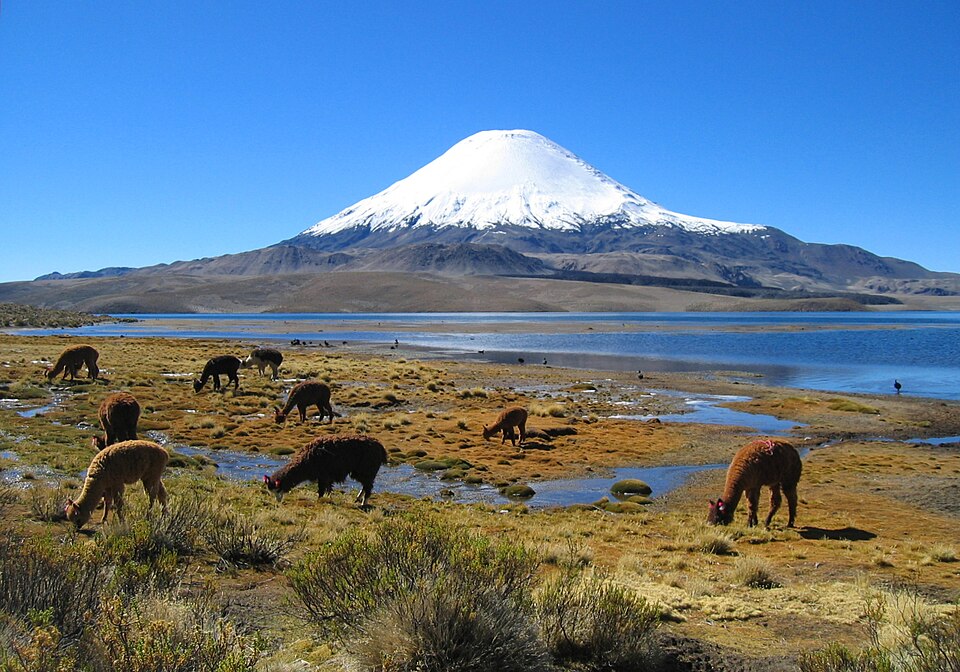
Only a few of the many distinctive South American animals are found in Chile. Among the larger mammals are the puma or cougar, the llama-like guanaco and the fox-like chilla. In the forest region, several types of marsupials and a small deer known as the pudu are found.
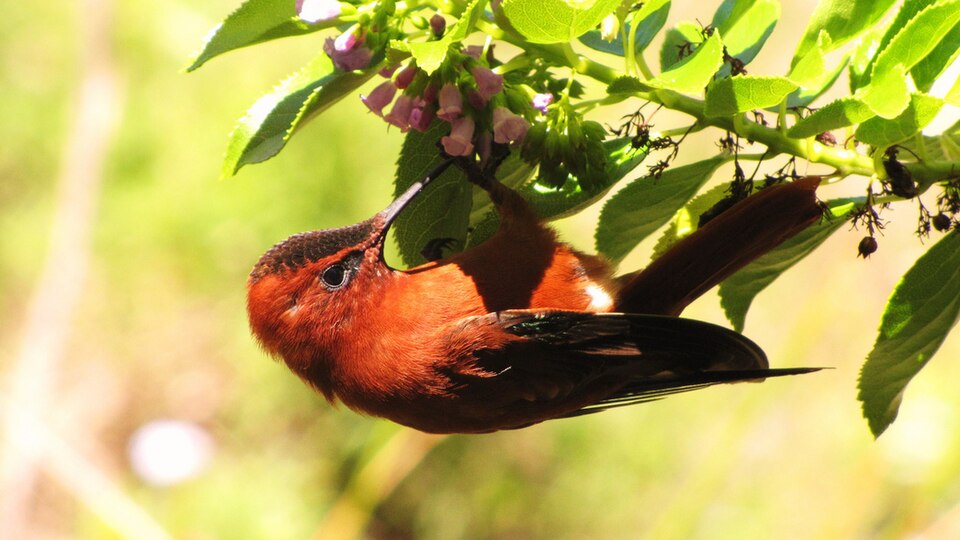
There are many species of small birds, but not most of the larger common Latin American types. Few freshwater fish are from Chile, but North American trout have been successfully introduced into the Andean lakes. The coast of Chile is close to the Humboldt Current, so ocean waters have many fish and other forms of marine life. This in turn supports a rich variety of waterfowl, including several penguins. There are many whales, and six species of seals in the area.
Fungi
Just over 3,000 species of fungi are recorded in Chile. This number is far from complete. The true total number of fungal species in Chile is likely to be far higher. The generally accepted estimate is that only about 7 percent of all fungi worldwide have so far been discovered.
Plants
The northernmost coastal and central region is largely empty of vegetation. It is the most close to an absolute desert in the world. On the slopes of the Andes, besides the scattered tola desert brush, grasses are found. The central valley has several species of cacti, the hardy espinos (a kind of acacia tree), the Chilean pine, the southern beeches and the copihue, a red bell-shaped flower that is Chile’s national flower.
In southern Chile, south of the Biobío River lots of rain has made dense forests of laurels, magnolias, and various species of conifers and beeches, which become smaller and more stunted to the south.
The cold temperatures and winds of the extreme south make it impossible for heavy forestation. Grassland is found in Atlantic Chile (in Patagonia).
Much of the Chilean plant life is different from that of neighboring Argentina. This shows that the Andean barrier existed during the formation of Chile.
Regions
Chile is divided into 16 regions. The regions are then divided into provinces. Each province is divided into communes.
Literature
Chileans call their country país de poetas-country of poets. Gabriela Mistral was the first Latin American to receive a Nobel Prize for Literature (1945). Chile’s most famous poet, however, is Pablo Neruda. He also received the Nobel Prize for Literature (1971).
Among the list of other Chilean poets are Lily Garafulic, Vicente Huidobro, Pablo Simonetti, and Paulo Coloane. Isabel Allende is the best-selling Chilean novelist, with 51 millions of her novels sold worldwide. Novelist José Donoso’s novel The Obscene Bird of the Night is said by critic Harold Bloom to be one of the important works of 20th century Western literature. Another internationally recognized Chilean novelist is Roberto Bolaño. His translations into English have had an excellent reception from the critics.
People
The Chilean population is estimated to be about 65% mestizo, 35% white, 5% native.
Food and drink
Chilean food shows the differences in the land across the country. There is an assortment of seafood, beef, fruits, and vegetables. Traditional recipes include asado, cazuela, empanadas, humitas, pastel de choclo, pastel de papas, curanto and sopaipillas.
Crudos is an example of food from the various ethnic groups in Chile. Onions were brought by the Spanish colonists, and the use of mayonnaise and yogurt was introduced by German immigrants, as was beer.
Sports
Chile’s most popular sport is association football. Chile has been in eight FIFA World Cups which includes hosting the 1962 FIFA World Cup. Other results by the national football team include four finals at the Copa América, one silver and two bronze medals at the Pan American Games, a bronze medal at the 2000 Summer Olympics and two third places finishes in the FIFA under-17 and under-20 youth tournaments. The top league in the Chilean football league system is the Chilean Primera División. It was named by the IFFHS in 2011 as the ninth strongest national football league in the world.
Tennis is one of Chile’s most successful sports. Its national team won the World Team Cup clay tournament twice (2003 & 2004). They played the Davis Cup final against Italy in 1976. At the 2004 Summer Olympics the country took gold and bronze in men’s singles and gold in men’s doubles. Marcelo Ríos became the first Latin American man to reach the number one spot in the ATP singles rankings in 1998. Anita Lizana won the US Open in 1937. She was the first woman from Latin America to win a grand slam tournament. Luis Ayala was twice a runner-up at the French Open and both Ríos, Nicolas Massu Friedt and Fernando González Ciuffardi reached the Australian Open men’s singles finals. González also won a silver medal in singles at the 2008 Summer Olympics in Beijing.
At the Summer Olympic Games Chile has a total of two gold medals (tennis), seven silver medals (athletics, equestrian, boxing, shooting and tennis) and four bronze medals (tennis, boxing and football). In 2012 Chile won its first Paralympic Games medal (gold in Athletics).
Rodeo is the country’s national sport. It is practiced in the more rural areas of the country. A sport similar to hockey. Skiing and snowboarding are practiced at ski centers in the Central Andes. Surfing is popular at some coastal towns. Polo is professionally practiced in Chile. In 2008 Chile won top prize in the World Polo Championship.
Basketball is a popular sport. Chile earned a bronze medal in the first men’s FIBA World Championship held in 1950. They won a second bronze medal when Chile hosted the 1959 FIBA World Championship. Chile hosted the first FIBA World Championship for Women in 1953 finishing the tournament with the silver medal. Other sports such as marathons and ultramarathons are also increasing in popularity. San Pedro de Atacama is host to the yearly “Atacama Crossing,” a six-stage, 250-kilometer footrace which has about 150 competitors from 35 countries each year. The Dakar Rally off-road automobile race has been held in both Chile and Argentina since 2009.
Immigration to Chile
A few European immigrants settled in Chile during the nineteenth and twentieth centuries, mainly from Spain. The general picture is as follows:
National symbols
The national flower is the copihue (Lapageria rosea, Chilean bellflower), which grows in the woods of southern Chile.
The coat of arms shows the two national animals: the condor (Vultur gryphus, a very large bird that lives in the mountains) and the huemul (Hippocamelus bisulcus, an endangered white tail deer). It also has the saying Por la razón o la fuerza (By reason or by force).
The flag of Chile has two equal horizontal bands of white (top) and red. There is a blue square the same height as the white band. The square has a white five-pointed star in the center. The star is a guide to progress and honor. Blue is for the sky, white is for the snow-covered Andes, and red stands for the blood spilled to get independence.
Written for younger readers
Chile, in simpler words
This version comes from Wikijunior, a set of books written for children aged 8 to 11. It is shorter and uses plainer language than the article above.
From Wikijunior: South America
Part of Wikijunior South America project
Chile is a long, thin country running down the southwest side of South America. The country runs in the shape of a snake between the Andes mountains and the Pacific Ocean. It borders ../Argentina/, ../Bolivia/, and ../Peru/.
People first came to the area now called Chile around ten thousand years ago. They may have descendants of the first Native Americans who came from Asia during the Ice Age, but some people think that their ancestors “island-hopped” across the Pacific. The area was good for fishing and offered decent opportunities for hunting and agriculture, but it was separated from the rest of South America by the Andes mountains, and so it was not as widely inhabited as other parts of the continent.
No one knows for sure why the place was called “Chile”. Some people think it is a variation on the name of an ancient Indian chief called Tili. Others think it may be a word in an Indian language for “the place where the land ends”, “snow”, or the sound of a bird’s call. No matter where the name came from, the Spanish soldiers who invaded the land in the 16th century said that the people there called themselves “men of Chile”.
The Spanish, searching for gold, reported that hundreds of thousands of people lived in the area. Although they never did find any gold or silver in the region, they admired the agricultural possibilities of the area and governed it as a part of the colony they called the Viceroyalty of Peru. The native peoples were not happy about being taken over, and there were frequent uprisings and rebellions. When slavery was outlawed in 1683, the situation improved and revolts became less common.
In 1810, the Chilean people declared they were an independent country, and not under Spanish control. Spain disagreed, and war broke out. But seven years later Chile was recognized as its own country. Still, little changed for the average Chilean. The country was still run by wealthy landowners, and the average citizen had few rights. In the late 19th century, a democracy was set up, but the leaders in parliament were concerned primarily with protecting the land-owners at the expense of the working class. As poor Chileans became more politically powerful and organized, they were able to elect a leftist president in 1920 who tried to change the laws to benefit the working class. Some were promoting communism, and conservatives in the country were alarmed. So in 1924, a general took over the country by force, leading to a violent and unstable period.
When democracy was finally restored, the people voted in governments which kept the country relatively stable for many decades. Liberal parties appealed to people by promoting programs to feed the poor and provide housing and education. Conservative parties appealed to people by securing better relationships with the United States and loans from American banks. It was a healthy democracy.
In 1970, a man named Salvador Allende was elected. As a leftist, he was very popular for his programs for the poor and working class. But as part of these programs, he took over foreign mines and banks in the country, which angered foreign investors. Actions that the United States took in retaliation hurt the country economically. In 1973, the Central Intelligence Agency (CIA) engineered a coup that led to Allende’s death and put Augusto Pinochet, a military dictator, in power.
Pinochet greatly improved relations with the United States and the economy, but took away many rights of Chileans. Thousands of people were executed, imprisoned, or tortured for their political views. Many Chileans see this as a dark time in history. When Pinochet stepped down after losing an election, democracy happily returned to the country, and Chile has had an improved human rights situation since that time.
Chile is long and thin, giving it a ribbon-like shape. It is 4,300 kilometers long and its width averages 175 kilometers. Chile is almost double the size of California.
As a result of Chile’s shape, climate varies throughout the country. Chile is dry in the north and cool and damp in the south. Chile’s terrain also varies.
The north is made up of desert. This Northern Desert region extends from the Peruvian border in north to the Aconcagua River north of Valparaiso. There is hardly any rainfall which means that there is almost no plant life. The land is barren and remote which means that it is free from air pollution and bright artificial lights. As a result, it is a great place to study the stars and planets – in fact Northern Chile is the location for the Cerro Tololo Inter-American Observatory where astronomers do just that. In this region you’ll find one of the driest spots on Earth, the Atacama desert. The Atacama desert is so dry that a 1971 rainfall was the first precipitation recorded in the desert town of Calama in 400 years.
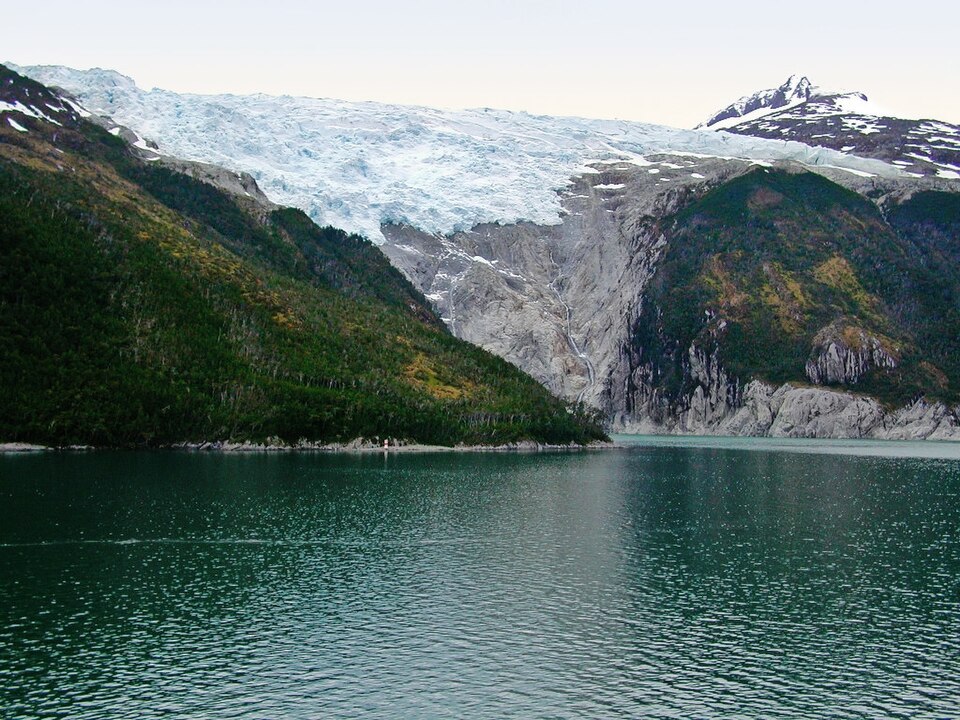
Southern Chile is icy and has a windswept coast. In the south, there are snow-capped volcanoes, thick forests, glaciers and lakes.
Chile has a rugged coastline.
Chile’s eastern border is home to the Andes mountains. The Andes extend along Chile’s border with Argentina and Bolivia.
Between the Andes and the lower mountains of Chile’s west coast, you’ll find the Central Valley. This is a mild, fertile region. Several rivers run through this region which is considered to be the heartland of Chile and the center of its population. The Central Valley is also where most of the farms and factories are. The Central Valley is made up of orchards, vineyards, pastures and croplands.
Santiago is the capital of Chile. Other major cities in Chile include: Concepcion-Talcahuano, Vina del Mar-Valparaiso, Antofagasta and Temuco.
Chile is home to 16.4 million people. 6 million Chileans live in Santiago. Men are expected to live to age 75 and women to age 81. Most people in Chile speak Spanish. Christianity is the major religion in Chile. 69.9% of Chileans are Roman Catholic and 15% are Protestant.
About three quarters of Chileans are mestizos, people of mixed Spanish and Indian heritage. About a fifth of Chileans are of European descent, mostly Spanish or British. About three percent come from unmixed Indian ancestry. Just a few thousand people are of African origin, or Zambo—people of mixed Indian and African heritage.
de:Wikijunior Südamerika: Südamerikanische Länder: Chile es:Wikichicos/América del Sur/Chile
Where this page comes from
The article above is adapted from “Chile” on Simple English Wikipedia, by its contributors. We removed reference markers, navigation boxes and tables, expanded measurement templates into readable numbers, and kept the prose otherwise intact. The simpler version is adapted from Wikijunior on Wikibooks.
Both sources are published under CC BY-SA 4.0, so this page is published under the same licence. You may share and adapt it, including commercially, as long as you credit the original and keep the same licence.
Worksheets, answer keys and printable layouts elsewhere on K5Print are our own work and are not covered by this licence.