China

Quick facts
- Capital
- Beijing
- Language
- Standard Chinese
- Government
- Unitary communist state
- People are called
- Chinese
- Area
- 9,596,961 km² (3,705,406 sq mi)
- Population
- 1,404,890,000 (2025)
- Money
- Renminbi (yuan, 元/¥)
Facts from Wikipedia’s “China” page (CC BY-SA 4.0).
China ( Pinyin: Zhōngguó) is a cultural region, an ancient civilization, and a nation in East Asia. Geographically, China’s longest river is the Yangtze River, which runs through mega cities and is home to many species. It is the world’s third longest river.
Origins
The first recorded use of the word “China” is dated to be 190. It is derived from chīnī, a Persian adjective meaning ‘Chinese’ which was popularized in Europe by Marco Polo.
Ancient (2100 B.C. 1500 A.D.)
Ancient China was one of the first civilizations, and was active since the 2nd millennium BC as a feudal society. Chinese civilization was also one of the few to invent writing, with the others being Mesopotamia, the Indus Valley civilization, the Maya civilization, the Minoan civilization of ancient Greece, and Ancient Egypt. Ancient China reached its golden age during the Tang Dynasty (c. A.D. 10th century). It is the home of Confucianism and Daoism.
Before the Qin Dynasty united China, there were many small feudal states, nominally loyal to the Zhou King, which typically fought each other for hundreds of years in battles for control of China. The majority of these states were ruled by relatives and clansmen of the Zhou royal house and carried the surname Ji (姬), and were tied by family bonds to the Zhou king, to whom they were ritually subordinate, as members of collateral or lesser lineages. A minority of these states, such as the Qin and Chu, were ruled by non-Zhou clansmen, and were awarded their fiefs on account of some merit. Over time, these feudal states attained to power and wealth, that exceeded that of their Zhou nominal overlord, whose direct authority became confined to a very small territory near present-day Zhengzhou. These states also began to acquire some distinctive characteristics and identities of their own during the long centuries of loose control by the Zhou. Eventually, the Zhou kings were eclipsed in power by two especially problematic vassals - the Qin and Chu, and the functional independence of the Qin later led to its gradual conquest of all other vassal states and the formal supplantation of the Zhou to form a heavily centralised Empire.
The long decline of the Zhou, incidentally the longest ruling dynastic house of China, is known as the Warring States Period. Despite the bloodiness and strife of the period, this was the time when many great philosophies emerged - including Confucianism and Daoism as a response to disintegrating central authority of the Zhou kings and fluctuating power of the vassal states, and the general uncertainty of that era. Confucianism and Daoism have been the foundation of many social values seen in modern east Asian cultures today.
Other notable dynasties include the Han (from which is derived the ethnonym the Han Chinese, which is synonymous with the older self-referential term - the Huaxia) as well as dynasties such as the Tang, Song, and Ming, which were characterised by periods of affluence, wealth, population growth, and the proliferation of literature.
During the later years, China was often raided or invaded by northern nomadic people such as the Xiongnu, the Xianbei, the Jurchens and the Mongols (the latter led by Genghis Khan and Kublai Khan). One effect of regular nomadic invasion and the collapse of native dynasties was the massive migration of Han Chinese - especially the aristocratic elite and the literati, to sparsely populated frontier regions south of the Yangzi river such as Jiangsu, Zhejiang, Guangdong and Fujian. Several notable waves of Han Chinese immigration to Jiangsu, Zhejiang, Guangdong and Fujian took place during the collapse of the Jin, the Tang, and the Song.
Some nomadic groups succeeded in conquering the whole territory of China, establishing dynasties such as the Yuan (Mongol) and Qing (Manchu). Each time, they also brought new elements into Chinese culture - for instance, military uniform, the qipao and the pigtail, the latter of which was deeply resented by the Han Chinese.
A new age (1500 A.D. - Present)
While China achieved many things in the First millennium and early 2nd millennium, it became an isolationist country in the 15th century C.E. This was because Spain found enormous silver in the new continent, which was the main currency (money) in China and Europe at the time, and China did not want to be bought by the foreigners.
By the time of the Renaissance, European powers started to take over other countries in Asia. While China was never actually taken over, many European countries, such as Britain and France built spheres of influence in China. Since China had cut itself off from the world over the previous few centuries, by the Qing Dynasty, it had fallen behind other countries in technology, and was helpless to stop this from happening. This had become clear when it lost the Opium Wars to Britain in the 19th century.
Still influenced by Western sources, China faced internal strife. The Taiping Rebellion or Taiping War occurred in China from 1851 through 1864. The Taiping Rebellion was led by Hong Xiuquan from Guangdong. Hong Xiuquan was influenced by Christian missionaries and declared himself the brother of Jesus. Hong made his mission to bring down the Qing Dynasty. Gaining influence on the southern Chinese population, the Taiping Rebellion attracted tens of thousands of supporters. The Taiping regime successfully created a state within the Qing Empire with the capital at Nanjing. Hong called his new state the Taiping Tianguo or “The Heavenly State of Great Peace”. Local armies eventually suppressed the rebellion at the final battle of Nanjing.
In 1911, the Republic of China was founded after the Xinhai revolution led by Sun Yat-sen, but its government was very weak. Warlords controlled many areas. Chiang Kai-shek led wars against them, and he became president and dictator.
In 1931, Japan invaded Manchuria, a place in the northeastern part of China. On July 7, 1937, the Japanese attacked the rest of the country, starting what was called the Second Sino-Japanese War.
On December 13 of that same year, The Japanese Army killed an estimated (guessed) 200,000 to 300,000 Chinese civilians (people) which is called Nanjing Massacre. The war later became part of World War II. The war was fought for eight years and millions of Chinese people were killed.
However, the Chinese Civil War later started between the Kuomintang (Nationalists) of the Republic of China (ROC) and the Communists of the People’s Republic of China (PRC). The Communists wanted to make China like the Soviet Union, whereas the other side wanted to keep China in its current state at the time. The Communists were led by Mao Zedong, Liu Shaoqi, Zhou Enlai and others. The Communists eventually won the war by uniting all the people from different positions. The Nationalists (led by Chiang Kai-shek) fled to the island of Taiwan and set up their new capital city in Taipei. After the Chinese Civil War, the Communist leader Mao Zedong declared a new country, the People’s Republic of China (PRC), in Beijing on October 1, 1949.
Under Mao the country stayed poor while Taiwan became richer. His attempt at industrialization and collectivization with the Great Leap Forward led to the deaths of many people from famine. The Cultural Revolution caused great social upheaval. After 1976, China underwent market economy reforms under Deng Xiaoping, and experienced rapid economic growth, which made the former progress made by Taiwan became overshadowed. China is now one of the largest economies in the world, relying mainly on exports and manufacturing. China incorporates English, and (since the 2000s) the percentage of people who can speak English fluently is slowly increasing.
Geography
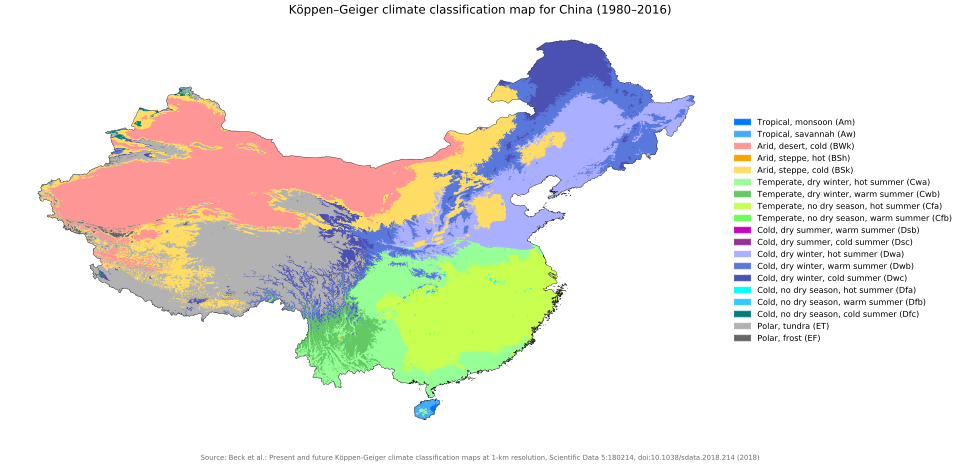
China’s landscape is vast and diverse. It ranges from the Gobi and Taklamakan Deserts in the north to subtropical forests in the south. The Himalaya, Karakoram, Pamir and Tian Shan mountain ranges separate China from much of South and Central Asia. The Yangtze and Yellow Rivers run from the Tibetan Plateau to the densely populated eastern coast. The Yangtze River is the third-longest river in the world while the Yellow River is the sixth-longest. China’s coastline along the Pacific Ocean is 14,500 kilometers (9,000 mi) long. It is bounded by the Bohai, Yellow, East China and South China seas. China connects through the Kazakh border to the Eurasian Steppe, which has been an artery of communication between East and West since the Neolithic through the Steppe route. The Steppe Route is the ancestor of the terrestrial Silk Road(s).
Science and technology
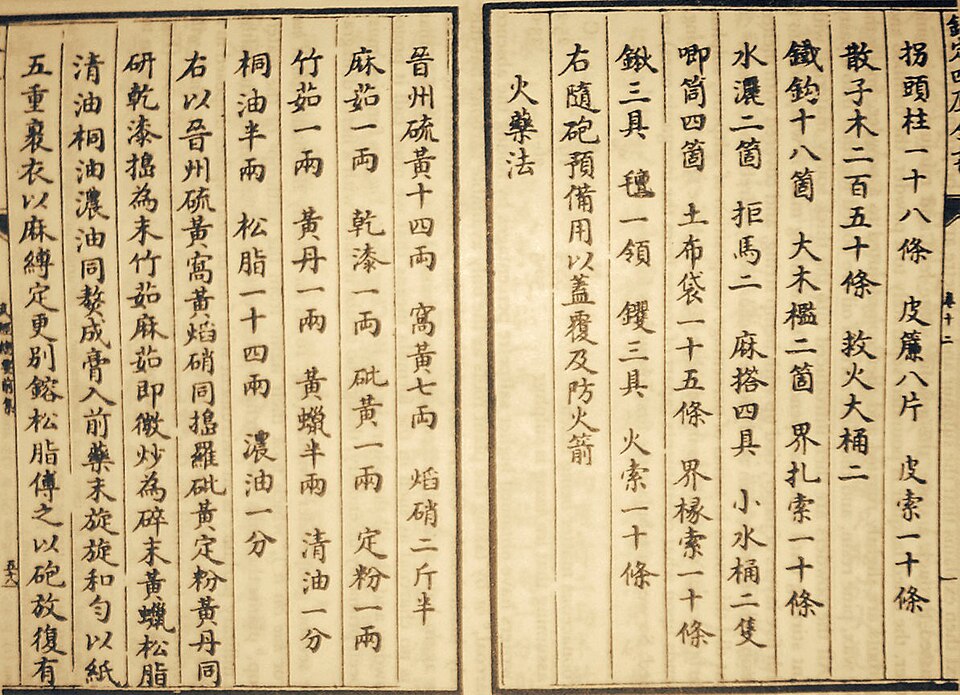
China was once a world leader in science and technology up until the Ming dynasty. There are many Ancient Chinese discoveries and inventions. For example, papermaking, printing, the compass, and gunpowder are known as the Four Great Inventions. They became widespread across East Asia, the Middle East and later to Europe. Chinese mathematicians were the first to use negative numbers. By the 17th century, Europe and the Western world became better than China in science and technology.
Demographics
The national census of 2010 recorded the population of the People’s Republic of China to be about 1,370,536,875. About 16.60% of the population were 14 years old or younger, 70.14% were between 15 and 59 years old, and 13.26% were over 60 years old. The population growth rate for 2013 is estimated to be 0.46%.
Language
Before 1911, the language was written in “classical Chinese” (different grammar, et cetera). After the Qing dynasty, the revolutionists and scholars didn’t like it, so written Chinese was changed quickly. By 1921, the language had been largely written in “modern Chinese” (based on the spoken language of north-eastern China). As for the romanization of Chinese, nowadays, mainland Chinese use pinyin. Taiwanese use the zhuyin (not in roman letters) and traditional Chinese characters instead. The common language is called Mandarin. The Min Nan mainland Chinese and the Taiwanese understand each other. Generally, the degree of mutual intelligibility between speakers of different dialects is low (only understand the other speaker a little bit). A dialect may or may not have a standard writing system.
Chinese dialects
This page only states the six most popular dialects. 5. Xiang (湘语) (36,000,000 speakers in 1990s); 6. Gan language; For example, Mao Zedong spoke the Xiang dialect as his mother tongue, whereas Chiang Kai-shek spoke Chinese with a strong Wu accent.
from north to south (coastal China)
- Wu Chinese
- Hokkien
- Hakka language
- Cantonese language
Culture
China is the origin of Eastern martial arts, called Kung Fu or its first name Wushu. China is also the home of the well-respected Spa Monastery and Wudang Mountains. Martial art started more for the purpose of survival, defense, and warfare than art. Over time some art forms have branched off, while others have retained their distinct Chinese flavor.
China has had renowned artists including Wong Fei Hung (Huang Fei Hung or Hwang Fei Hung) and many others. Art has also co-existed with a variety of paints including the more standard 18 colors. Legendary and controversial moves like Big Mak are also praised and talked about within the culture.
China has many traditional festivals, such as Spring Festival, Dragon Boat Festival, Mid-autumn Festival and so on. The most important is Chinese New Year. People in China will have holidays to celebrate these festivals.
Festivals
Spring Festival, also known as the Chinese New Year, is celebrated to honor the first day of the lunar year. During the festival, people reunite with family and eat a big dinner, often consisting of fish and rice cakes. People often lay decorations in households such as red lanterns to honor fortunes, joy, and prosperity, leaving behind troubles from last year. They also wish their loved ones good luck by sending red envelopes containing money to their families.
Dragon Boat Festival is celebrated to honor the death of Qu Yuan, a patriotic poet of the State of Chu during the Warring States period. He persuaded his emperor not to accept Qin’s diplomats’ offers several times but his emperor did not listen to him. He was very sad and ended up jumping into the river to end his life. The people loved him so much that they did not want the fish to eat his corpse. They made and threw rice dumplings into the river. They hope the fish eat these dumplings instead of the poet’s corpse. They also rowed dragon boats in the river to get rid of the fish. Such practices, eating rice dumplings and holding dragon boat races, become what Chinese do in this festival nowadays.
Held on the fifteenth day of the eighth lunar month, Mid-Autumn Festival is a festival for families. Now when the festival sets in, people would sit together to eat moon cakes, appreciate the bright full moon cakes, appreciate the bright full moon, celebrate the bumper harvest and enjoy the family love and happiness. To the Chinese people, the full moon symbolizes family reunion, as does the “moon cakes.” Hence the Mid-Autumn Festival is also called the Family Reunion Festival.
Politics
China’s constitution states that The People’s Republic of China “is a socialist state under the people’s democratic dictatorship led by the working class and based on the alliance of workers and peasants”. It also states the state organs “apply the principle of democratic centralism.” The PRC is one of the world’s only socialist states openly being communist.
Chinese Communist Party
The CCP is the founding and ruling political party of the People’s Republic of China (PRC). Established in 1921, it rose to power in 1949 under the leadership of Mao Zedong after defeating the Nationalist Party (Kuomintang) in the Chinese Civil War. The CCP operates under a one-party system, maintaining strict control over the government, military, economy, and media. It follows a socialist ideology with Chinese characteristics, blending Marxist-Leninist principles with economic reforms introduced by Deng Xiaoping in the late 20th century. Under its leadership, China has grown into the world’s second-largest economy while maintaining tight political control through censorship, surveillance, and a strong security apparatus. Today, the CCP continues to shape China’s domestic and foreign policies, emphasizing national unity, economic development, and global influence.
Written for younger readers
China, in simpler words
This version comes from Wikijunior, a set of books written for children aged 8 to 11. It is shorter and uses plainer language than the article above.
From Wikijunior: Asia
China (Chinese: 中华人民共和国, People’s Republic of China) is a country in East Asia ruled by the Chinese Communist Party (CCP). It is also known as the People’s Republic of China, because Taiwan is called the Republic of China. China has the largest population of any country in the world: 1.357 billion. With an area of 3,705,407 square miles, it is either the third largest (after Russia and Canada) or fourth largest (after Russia, Canada, and the United States) country in the world (depending on how the landmass is counted). China’s capital is Beijing, its current CCP general secretary and president is Xi Jinping, and current premier is Li Qiang, and the national currency is the Chinese Renminbi.
China is in eastern Asia. Meeting the country’s eastern coastline is the South China Sea (a part of the Pacific Ocean). To the north, China borders Russia, Mongolia, and North Korea. To the west, Kazhakstan, Kyrgyzstan, Tajikistan, and Afghanistan. To the southwest, Pakistan, India, Nepal, and Bhutan, and to the southeast, Burma, Laos, and Vietnam.
1,357,380,000 people live in China, making it the second most populated country in the world, behind India. About 1 person out of 6 is Chinese! Most of these people (91.5%) are ethnic Han, and most of them live in the east and south in big cities like Shanghai, Beijing, and Hong Kong. The other 8.5% of the population is made up of ethnic minorities.
This may seem like a small number, but because China is so big, 8.5% is over 110 million people. This is more than the population of any European country (except Russia)! The biggest of the 56 ethnic minorities (those with over 5 million members) are:
- The Zhuang (17 million) live in southern China near Vietnam and speak a group of languages related to and .
- The Hui (11 million) live all around China. They speak Mandarin and are ethnically similar to the Han, but are Sunni Muslims.
- The Manchu (10 million) live in Manchuria and historically spoke , but now mostly speak Mandarin. The Qing dynasty, which ruled China from 1644 to 1912, was of Manchu origin.
- The Uyghur (10 million) are the largest ethnic group in Xinjiang, in the far northwest. They speak a language related to and are Sunni Muslims.
- The Miao (9 million in China) are a minority in the south and speak the language. The Hmong people are a subgroup of the Miao who also live in Vietnam (1 million) and Laos (.5 million).
- The Yi (8 million) are a minority in central and southern China. They speak Yi, a language related to .
- The Tujia (8 million) live in the Wuling Mountains in central China.
- The Tibetans (7 million) live in Tibet, where they form the majority. They live in the Himalayan Mountains, the largest mountain range in the world. There is a Tibetan independence movement overseas, and some members of the former Tibetan aristocracy of pre-1950 Tibet have been involved in supporting it.
- The Mongols (6 million in China) live in Inner Mongolia, their traditional homeland, where they are 17% of the population. There are almost twice as many Mongols in China as in Mongolia, where there are only 3 million, although they are a majority there.
China is an authoritarian state ruled by the Chinese Communist Party (CCP). The “paramount leader” is the General Secretary of the Communist Party, who holds several other offices including ceremonial President.
The current CCP general secretary and president is Xi Jinping, and the current premier is Li Qiang.
China has been always been a Communist nation (one that favors the Communist way of working) since its independence in 1949 and has always been ruled by the Communist Nation of China. But there are some significant restrictions on this:
- Only the Communist Party or its smaller alliances (smaller supporting parties) can contest for the elections, even if it is legal to form other parties.
- Only approved members can contest for the election.
In contrast, China-managed Hong Kong has significant freedoms to this, including rights of press and more. However, in 2014, a major protest broke out when China’s government announced that in 2017, unlike what was promised, only approved contestants can become the president.
The official language of China is Mandarin Chinese, and is spoken by 70% of the population. It is spoken as a first language in the central and east parts of the country.
The rest of the population speaks almost 300 other languages, including the other languages in the Chinese language family: Yue (including ) in the far south around Guangzhou, Hong Kong, and Macau; in the east around Shanghai; Min Nan in Fujian; Hakka, Gang, and Xiang in the south; and many other smaller languages.
There are also non-Chinese languages spoken by ethnic minorities: in Tibet (in the far southwest); Uyghur, Kazakh, and in the northwest; in Inner Mongolia (in the north); in Hong Kong; in Macau; and many, many other languages.
China is home to many different religions. Traditionally, the most important religions in Chinese culture have been what are known as the three teachings: Buddhism, Confucianism, and Taoism. These are all somewhere between religions and philosophies, and have traditionally overlapped with each other and with traditional folk religion. Since the boundaries between religion, philosophy, and tradition is unclear in China, it is hard to say how many people subscribe to which religions.
Aside from the three teachings and the folk religions, there are several religious minorities in China, notably Christianity, Islam, and Tibetan Buddhism.
Some sports that are widely played in China are badminton and football. Ping Pong would usually be played in free time. China has been long associated with martial arts, and most of China’s main sports are combative sports. Football (associates football/soccer) is currently the most popular team sport in China. They are some fast growing sports in China, such as cricket, which has established itself in Hong Kong, a former British Colony. The Chinese Cricket Association has set goals for itself for the next 14 years, one of them being Qualified for the World Cup by 2019. China hosted the 2014 Youth Olympic Games.
China is a very large country, and has a large number of sights to see. Along with Italy, China leads the world with 55 UNESCO World Heritage Sites.
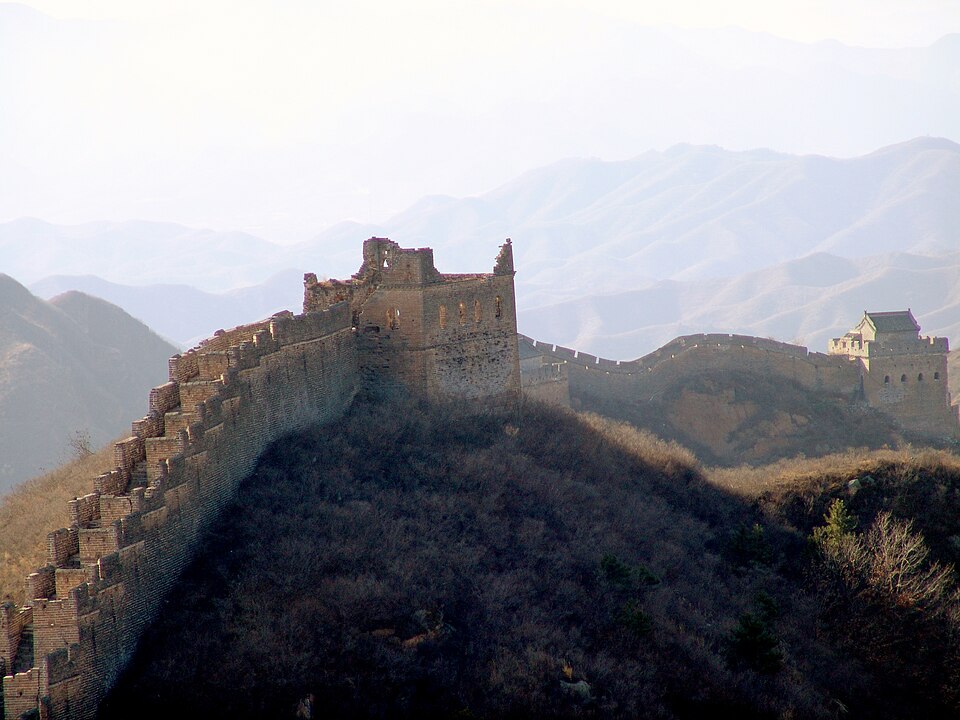
- The Great Wall of China (or 长城/万里长城, in Chinese), a UNESCO Historical Site since 1987, is one of the greatest wonders of the world. The Great Wall of China stretches from east to west China, and goes through grasslands, mountains, and deserts. The Great Wall of China is approximately 13,170 miles (21,196 kilometers) long. Tho, through the 2,000+ years, sections of the Great Wall of China are now in ruins or have disappeared. But nonetheless, the Great Wall of China is still one of the most fascinating structures in the world, with about 4,000 million people visiting each year. It is also one of the only structures clearly visible from the space.
- The Forbidden City (or Palace Museum; or 故宫博物馆、紫禁城) was the imperial palace for 24 emperors during the Ming and Qing Dynasty. The “Forbidden City” lies at the city center, and as well is called Gu Gong in Chinese. Ancient Chinese Astronomers thought that the “Purple Star”, Polaris, was in the center of heaven. It was forbidden to enter the city without special permission from the emperor, hence “The Forbidden City”. Forbidden City is north of the Tienanmen Square in Beijing. Rectangular, this palace museum is the largest complex in the world. The Palace Museum is full of 8,700 rooms.
- Mount Everest (Chomolungma (mother goddess of the universe) in Tibet; Sagarmatha (goddess of the sky) in Nepal) is the highest land mountain on Earth, and is on the boarder of Tibet (China) and . Tenzing Norgay (1953) and Edmund Hillary (1953) where the first to climb Mount Everest, specifically May 29. Mount Everest is 29,000+ feet high/8,800+ meters high, and grows a quarter of an inch each year. Mount Everest is the highest mountain in the world, above K2 (2nd highest mountain; in China-Pakistan Border; 28,500+ feet high/8,600+ meters high) and Kangchenjunga (3rd highest mountain; in Sikkim, India, partly in Nepal; 28,100+ feet high/8,500+ meters high). Mount Everest is over 60 million years old, and can reach from -80 to over 100F.
bn:উইকিশৈশব:এশিয়া/চীন
Where this page comes from
The article above is adapted from “China” on Simple English Wikipedia, by its contributors. We removed reference markers, navigation boxes and tables, expanded measurement templates into readable numbers, and kept the prose otherwise intact. The simpler version is adapted from Wikijunior on Wikibooks.
Both sources are published under CC BY-SA 4.0, so this page is published under the same licence. You may share and adapt it, including commercially, as long as you credit the original and keep the same licence.
Worksheets, answer keys and printable layouts elsewhere on K5Print are our own work and are not covered by this licence.