Everglades
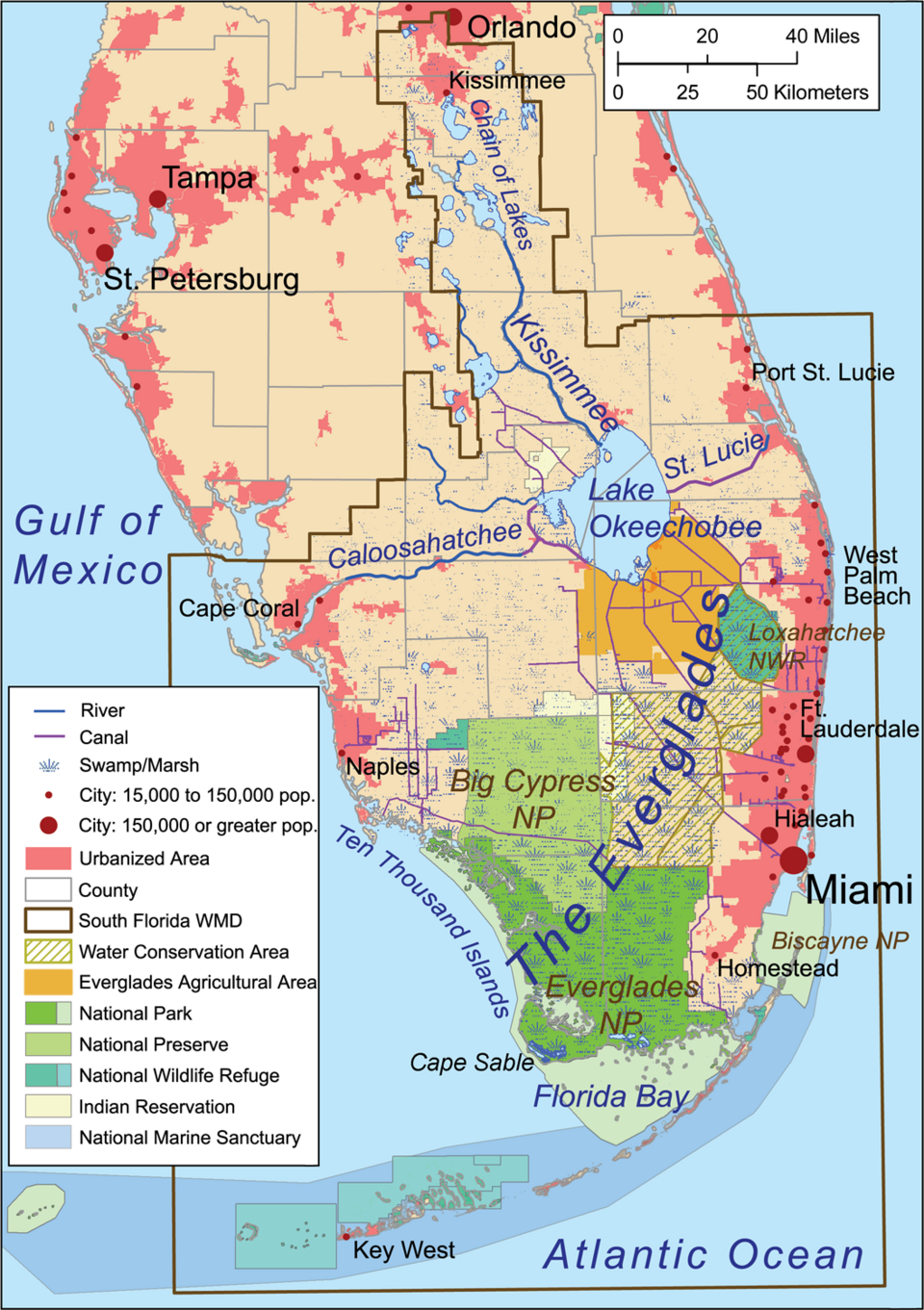

The Everglades is a flat tropical river and mangrove swamp. It is in the southern part of Florida near the city of Miami.
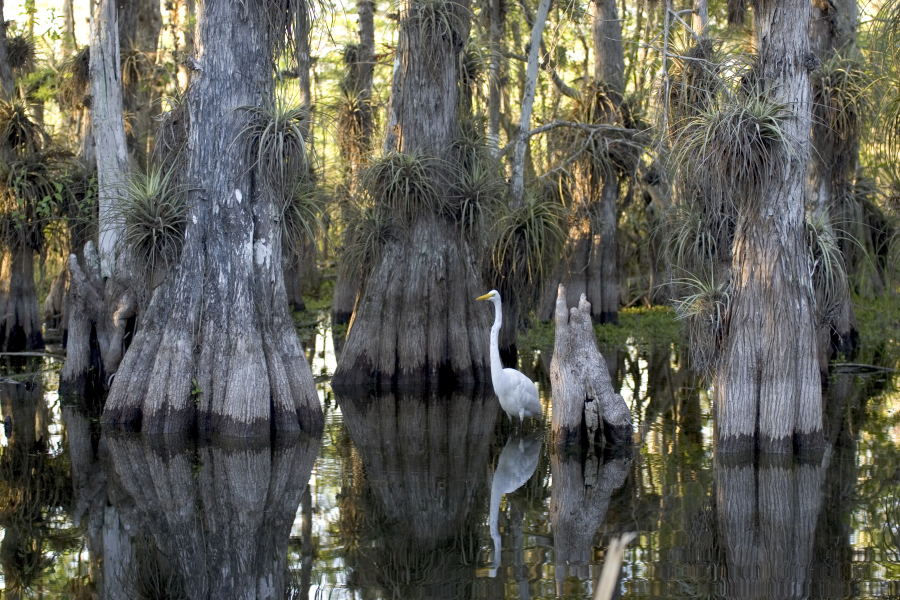
The Everglades is a tropical river delta which runs slowly through a low-lying basin near sea level. Many plants and animals live there. It is the only place in the world where crocodiles and alligators live together.
It is a National Park and part of the UNESCO World Heritage Site.
National park
Being a national park in the U.S. state of Florida, it helps protect around 25 percent of the original Everglades. It is the largest subtropical forest in the United States. On average, around one million people visit it each year.
It is the third-largest national park in the lower 48 states after Death Valley and Yellowstone. It is an International Biosphere Reserve, a World Heritage Site, and a Wetland of International Importance. It is one of only three parks in the world to be on all three lists.
Unlike most national parks in the US, Everglades National Park was started to protect a weak ecosystem and its unique geographic feature. The Everglades are wetlands. It is created by a slow-moving river coming from Lake Okeechobee. It flows through the Kissimmee River to the southwest at about .25 miles (0.4 km) per day, to Florida Bay.
The park protects a connected network of marshland and forest ecosystems. They are maintained by natural forces. There are thirty-six species of endangered and threatened living in the park. Some of them are Florida panther, the American crocodile, and the West Indian manatee.
The park protects the largest U.S. wilderness area east of the Mississippi River. It is the most significant breeding place for tropical wading birds in North America. It also has the largest mangrove ecosystem in the Western hemisphere.
It is also home to more than 350 species of birds, 300 species of fresh and saltwater fish, 40 species of mammals, and 50 species of reptiles live within Everglades National Park.
Diversion and quality of water
All of South Florida’s fresh water are kept in the Biscayne Aquifer. They are also recharged in the park. Only less than 50 percent of the Everglades water remain today.
Between the 1940s and 2000s, the number of wading birds has become smaller. It has reached around 90 percent decrease from their original numbers.
The diversion of water to South Florida’s still-growing metropolitan areas is the number one threat for the park’s inhabitants.
In the 1950s and 1960s, 1,400 miles (2,253 km) of canals and levees, 150 gates and spillways, and 16 pumping stations were built to lead water towards the cities and away from the Everglades. Low levels of water leave many fishes vulnerable to reptiles and birds. As sawgrass dries, it can burn or die off. As a result, many apple snails and other animals that wading birds feed upon, are killed. Populations of birds have been dropping.
In 2009, the South Florida Water Management District claimed that the number of wading birds across South Florida have increased by 335%. However, despite three years of reported higher numbers, The Miami Herald discovered the same year that populations of waders in the park decreased by 29%.
Where this page comes from
The article above is adapted from “Everglades” on Simple English Wikipedia, by its contributors. We removed reference markers, navigation boxes and tables, expanded measurement templates into readable numbers, and kept the prose otherwise intact.
Both sources are published under CC BY-SA 4.0, so this page is published under the same licence. You may share and adapt it, including commercially, as long as you credit the original and keep the same licence.
Worksheets, answer keys and printable layouts elsewhere on K5Print are our own work and are not covered by this licence.