Florida

Fast facts
- Languages
- English only: 67.3% *Spanish: 21.2% *Other: 11.5%
- Capital
- Tallahassee
Facts from Wikipedia’s “Florida” page (CC BY-SA 4.0).
Florida ( American Spanish: ), is a state in the southeast part of the United States. It is the 22nd largest US state by total area with 65,757.70 sq mi (170,313 km 2 ) and the third most-populous with a 2020 population of more than 21 million. It is a peninsula, which means that water surrounds the state on three of four possible sides. To the west is the Gulf of Mexico, to the south is the Florida Straits, and to the east is the Atlantic Ocean. It also borders two states, Alabama and Georgia, both along its northern border. The highest elevation in Florida is Britton Hill. Many Cubans, Haitians and other Caribbeans live in state.
In 2018, The top countries of origin for Florida’s immigrants were Cuba, Haiti, Colombia, Mexico and Jamaica.
History
Native Americans had first settled in Florida before the arrival of the Europeans. Florida had many residents from many tribes and nations living in almost all parts of it for thousands of years. These include the Timucua, the Tequesta, the Calusa, the Seminole, the Miccosukee, and many more. Florida was first discovered by a European in 1513 by the Spanish Ponce De Leon, who called this peninsula “Tierra de la Pascua Florida” (Land of the Easter flowered) because it was discovered on Easter: in the next centuries only the last word remained.
Natural landscape and geography
Northern Florida contains hills because it is at the very end of the Appalachian Mountains. The highest hill in Florida is Britton Hill, in northern Walton County near the town of Lakewood, Florida. It is 345 feet above sea level. It is the shortest of the highest points in all other states.
Florida has the longest coastline in the continental United States.The Gulf Stream ocean current goes through the Atlantic Ocean near the east coast of Florida, so the water is warmer than the Pacific Ocean. The Gulf of Mexico is on the west coast of Florida.
In the center of southern Florida is a lake called Lake Okeechobee. It is the seventh largest freshwater lake in the United States and the second largest freshwater lake entirely within the lower 48 states. Okeechobee is 730 square miles (1,890 km²), about half the size of the state of Rhode Island, and is very shallow for a lake of its size, with an average depth of only 9 feet (3 m).
A lot of south Florida used to be covered by a swamp called the Everglades. When Florida was first being settled, farmers found out the soil there was fertile, so they drained some of the wetlands in 1882 for farming. In 1947, the state constructed levees and canals to make more room for farming and houses. The Everglades is now about half the size it used to be. Most of what is left is now the Everglades National Park. Lots of animals live there, including alligators and Florida panthers. Walt Disney with his EPCOT project fixed and maintained a lot of the Floridian swamp area. Recently, Florida has been trying to restore the Everglades.
At the southernmost tip of Florida is a chain of islands called the Florida Keys. There are 4500 islands in the Keys. The most famous one is Key West.
Few states had a bigger population boom than Florida during the Covid pandemic. But now, many who moved there have decided that Florida is not for them, citing high inflation and the state’s politics, among other things.
Weather
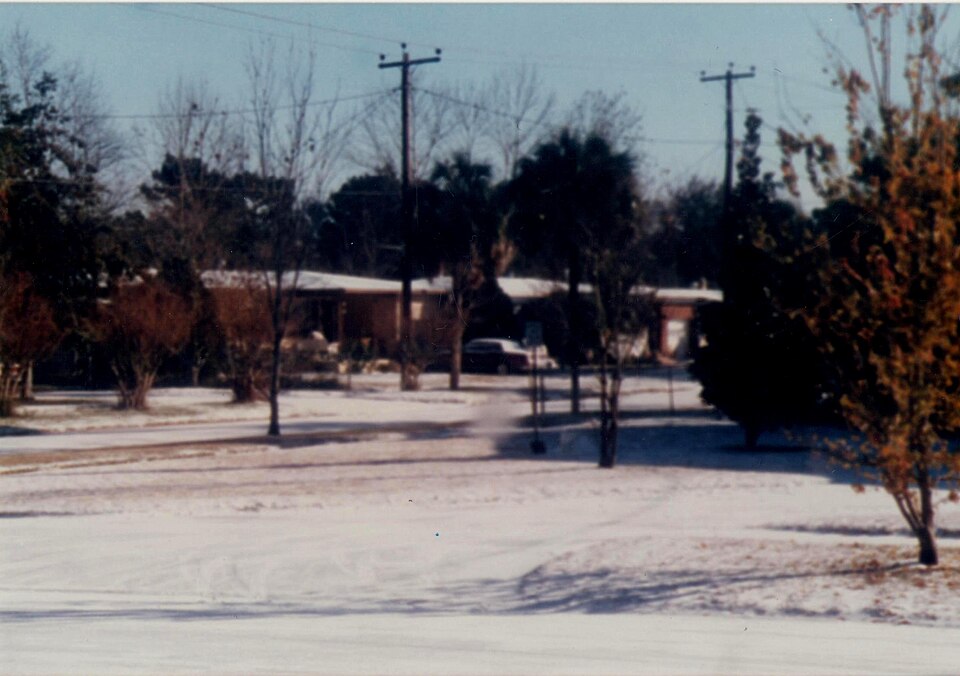
Florida is nicknamed the Sunshine State. During the summer, temperatures may rise up to as high as 109 degrees Fahrenheit (or 40.5 degrees Celsius). Its annual average temperature is much warmer than many of the other states, but during winter, temperatures occasionally fall below 32 degrees Fahrenheit. In Florida, a dozen palm tree species are native to the state. Florida has both a rainy season and dry season. Southern Florida does not have four separate seasons.
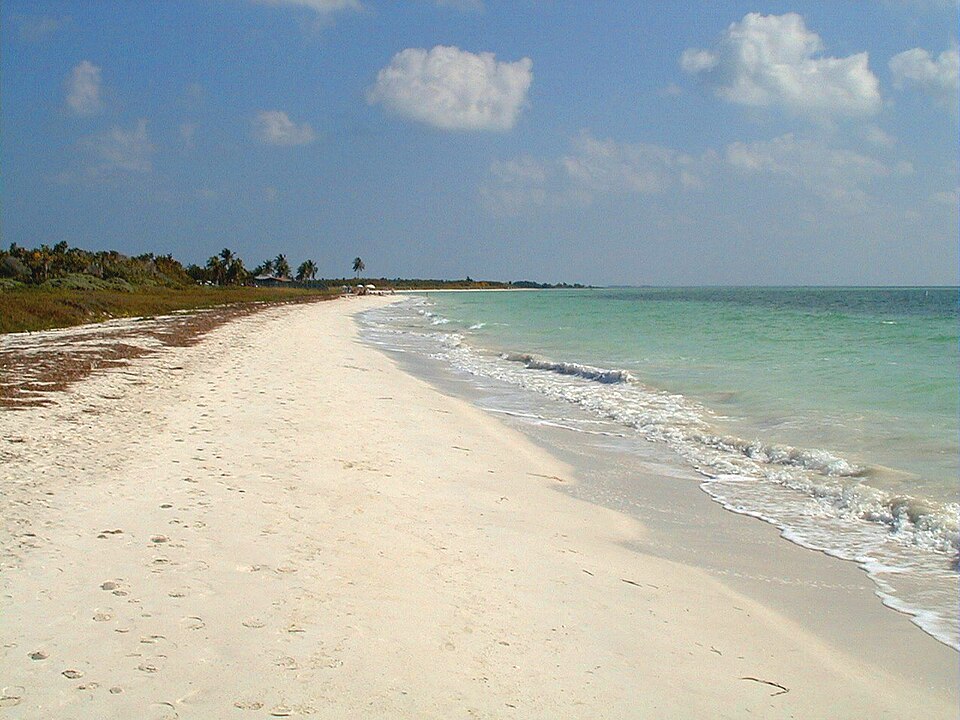
Florida’s sunny climate attracts visitors. The summer is great for surfing the waves and enjoying the beaches. The most popular sport in Florida is fishing.
Florida is vulnerable to hurricanes due to its proximity to the warm waters of the Atlantic Ocean and Gulf of Mexico. Hurricane season is from June 1 to November 30, but sometimes a hurricane will occur outside of this period. Hurricane Andrew was a destructive hurricane that hit Florida on August 23, 1992. Florida’s most active recorded hurricane seasons were in 2004 and 2005, when it was hit by hurricanes Charley (August 13), Frances (September 4–5), Ivan (September 16), Jeanne (September 25), Katrina (August 25), and Wilma (October 24).
Animals
Florida has many types of wildlife including:
- Marine Mammals: Bottlenose Dolphin, Short-finned Pilot Whale, North Atlantic Right Whale, West Indian Manatee
- Reptiles: American Alligator and Crocodile, Eastern Diamondback and Pygmy Rattlesnakes, Gopher Tortoise, Green and Leatherback Sea Turtles, Eastern indigo snake
- Mammals: Florida panther, Northern River Otter, Mink, Eastern Cottontail Rabbit, Marsh Rabbit, Raccoon, Striped Skunk, Squirrel, White-tailed deer, Key Deer, Bobcats, Gray Fox, Coyote, Wild Boar, Florida Black Bear, Nine-banded Armadillos
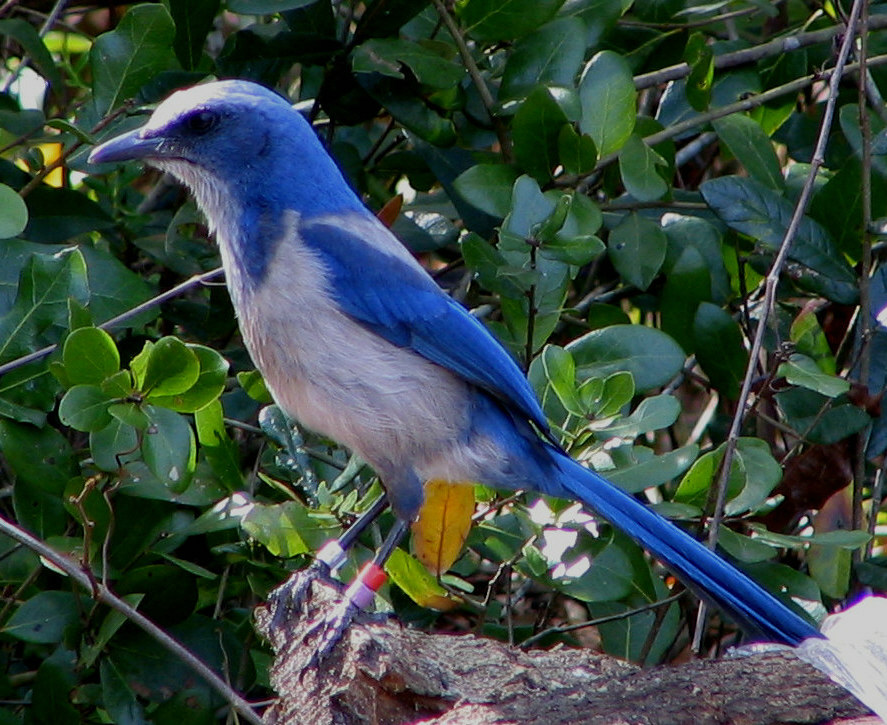
- Birds: Bald Eagle, Northern Caracara, Snail Kite, Osprey, White and Brown Pelicans, Sea Gulls, Whooping and Sandhill Cranes, Roseate Spoonbill, Florida Scrub Jay (state endemic), and others. One subspecies of Wild Turkey, Meleagris gallopavo, namely subspecies osceola, is found only in the state of Florida. Many species of eastern North American birds go to Florida in the winter.
- Invertebrates: carpenter ants, termites, and American cockroach.
In the 1930s, the Red imported fire ants were accidentally brought from South America to North America. Since then, they have spread to most of the Southern United States, including Florida. They are more aggressive than most native ant species and have a painful sting.
A lot of non-native snakes have been released in the wild. In 2010 the state created a hunting season for Burmese, Indian and African rock pythons, green anacondas, and Nile monitor lizards.
Cities
The capital of Florida is Tallahassee, and Jacksonville is the state’s largest city. Tallahassee is in the part of Florida called the panhandle, or the narrow part in the northwest. There are other big cities in Florida, like Tampa, Orlando and Miami.
Orlando is home to many amusement and theme parks, like Walt Disney World Resort, Sea World, and Universal Studios. Millions of tourists visit Orlando each year. There is also Busch Gardens in Tampa, which is another tourist attraction.
The oldest city in Florida is St. Augustine, which was founded by the Spanish in 1565.
The Kennedy Space Center is on Merritt Island, near Cape Canaveral, on Florida’s Space Coast.
Education
Florida has eleven state universities. They are Florida A&M University, Florida Atlantic University, Florida Gulf Coast University, Florida International University, Florida State University, New College of Florida, University of Central Florida, University of Florida, University of North Florida, University of South Florida, and University of West Florida. The University of Central Florida has the most students. There are 28 private universities in Florida.
Written for younger readers
Florida, in simpler words
This version comes from Wikijunior, a set of books written for children aged 8 to 11. It is shorter and uses plainer language than the article above.
From Wikijunior: North America
Florida is a state located in the southeastern region of the United States, bordering Alabama to the northwest and Georgia to the northeast. Much of the land mass of the state is a large peninsula with the Gulf of Mexico to the west and the Atlantic Ocean to the east. Most of Florida has a humid subtropical climate; southern Florida has a tropical climate. Florida is the fourth most populous state in the U.S. The state capital is Tallahassee and the largest city is Jacksonville.
Research indicates that Florida had been inhabited thousands of years before the Europeans settled there by different Native American tribes. Florida was given its name by the Spanish explorer Juan Ponce de León.
Over the following century, both the Spanish and French built settlements in Florida, with different degrees of success. In 1559, Spanish Pensacola was established by Don Tristán de Luna y Arellano as the first European settlement in the continental United States, but it had become abandoned by 1561 and would not be reinhabited until the 1690s. French Huguenots founded Fort Caroline in modern-day Jacksonville in 1564, but the fort was conquered by forces from the new Spanish colony of St. Augustine the following year.
Much of the state of Florida is located on a peninsula between the Gulf of Mexico, the Atlantic Ocean, and the Straits of Florida. It extends to the northwest into a panhandle, extending along the northern Gulf of Mexico. It is bordered on the north by the states of Georgia and Alabama, and on the west, at the end of the panhandle, by Alabama. It is near several Caribbean countries, particularly the Bahamas and Cuba.
Florida’s nickname is the “Sunshine State”, but severe weather occurs often in the state. Central Florida is known as the lightning capital of the United States, as more lightning strikes occur there than anywhere else in the country. Florida has the highest average precipitation of any state, in large part because afternoon thunderstorms are common in most of the state from late spring until early autumn.
As of 2020, Florida’s population was estimated to be 21,538,187. As of 2000, 77 percent of Florida residents age 5 and older spoke English at home as a first language, while 16 percent spoke Spanish.
Florida is mostly Protestant, but Roman Catholicism is the single largest denomination in the state. There is also a sizable Jewish community, located mainly in South Florida; no other Southern state has such a large Jewish population.
Florida receives a lot of tourism throughout the year. The Walt Disney World Resort is the largest vacation resort in the world, made up of four theme parks and more than 20 hotels in Lake Buena Vista, Florida; it, and Universal Orlando Resort, Busch Gardens, SeaWorld, and other major parks drive state tourism. Many beach towns are also popular tourist destinations, especially during the winter months.
- The State Motto is “In God We Trust”
- The State Nickname is the “Sunshine State”
- The State Bird is the .
- The State Mammals are the , Bottle-nosed Dolphin, and the Florida Panther.
- The State Reptiles are the American Alligator and the Loggerhead sea turtle
Where this page comes from
The article above is adapted from “Florida” on Simple English Wikipedia, by its contributors. We removed reference markers, navigation boxes and tables, expanded measurement templates into readable numbers, and kept the prose otherwise intact. The simpler version is adapted from Wikijunior on Wikibooks.
Both sources are published under CC BY-SA 4.0, so this page is published under the same licence. You may share and adapt it, including commercially, as long as you credit the original and keep the same licence.
Worksheets, answer keys and printable layouts elsewhere on K5Print are our own work and are not covered by this licence.