Iran

Fast facts
- Capital
- Tehran
- Largest city
- Tehran
- Official language
- Persian
- Currency
- Iranian Rial ()
- Time zone
- IRST
- Drives on
- right
- Calling code
- +98
Facts from Wikipedia’s “Iran” page (CC BY-SA 4.0).
Iran, officially the Islamic Republic of Iran and also known as Persia, is a country in Western Asia. It is officially known as Islamic Republic of Iran. Prior to 1935, the country was referred to by majority in the Western world as Persia. Iran is quite significant due to its ancient history and its positioning between the Middle East, Central Asia, and South Asia.
Iran is ranked as the 17th largest nation in the world. It is primarily a plateau which is high and arid land with high mountains such as the Zagros and Alborz.
There are numerous neighbors to the country:
- North: The Caspian Sea, Armenia, Azerbaijan and Turkmenistan.
- East: Pakistan and Afghanistan.
- West: Turkey and Iraq.
- South: Persian Gulf and the Gulf of Oman.
The capital city is Tehran. It is the capital city in the country and also the business and government hub.
By 2026, the population of Iran is estimated to be approximately 93 million. The majority of the population talks Persian (also known as Farsi), yet most of the population also speaks such languages as Azeri, Kurdish, and Luri.
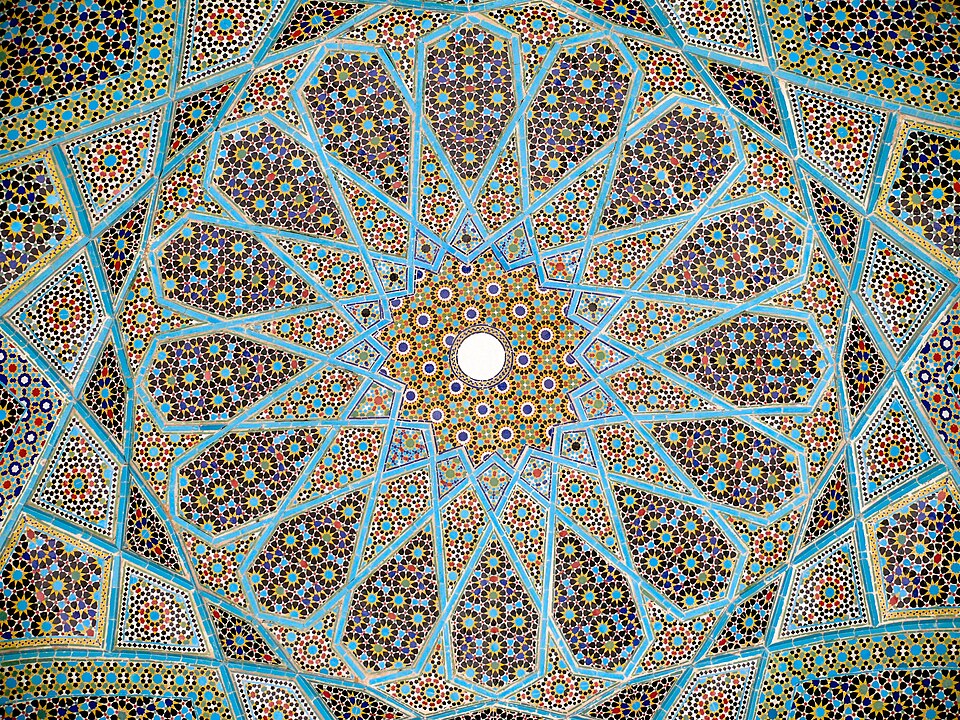
The majority of Iranians embrace Shia Islam which is the official religion. Iran has a very rich culture. It is well known in terms of its beautiful carpets, poetry and ancient art. It also contains 29 UNESCO World Heritage Sites which are unique places preserved due to their history.
Iran boasts of one of the oldest civilizations in the world.
- Antiquity: In an approximate 550 BC, Cyrus the Great began the Achaemenid Empire. It is the first superpower of all times. Other empires became great such as the Parthians and Sasanians.
- Middle Ages: The Islamic religion was introduced in Iran by the Arab forces in the 7th century. Although new rulers emerged, the Persian culture and language remained very powerful.
- Modern Times: During the majority of the 1900s Iran was being governed by kings known as Shahs. The Islamic revolution occurred in 1979. The Shah had to go and the nation was turned into an Islamic Republic.
Iran is a theocracy. It implies that the religious leaders possess the greatest power. The Supreme Leader is the most influential individual. Mojtaba Khamenei assumed the position of the new Supreme Leader in March 2026. The President and the Parliament also exist in the country, though they are obliged to obey the rules of the religious leaders.
Iran relies heavily on oil and natural gas in the economy. Iran possesses some of the largest energy reserves in the world. Nevertheless, due to the conflicts with other countries and the recent civil wars in 2025 and 2026, the economy has undergone numerous problems, including the high prices (inflation).
Overview
Tehran is the capital and largest city of Iran. Iran is the eighteenth largest country in the world. It has more than 84.9 million people. Iran has been a member of the United Nations since 1945. It is a member of the Organization of the Petroleum Exporting Countries (OPEC). It is an Islamic republic. Iran is a powerful country in the region. It has a lot of natural gas and oil, which is important for its economy. It’s also a significant place because it’s where Shia Islam is most important.
The country’s economy is big, and it’s a member of many important groups like the United Nations. Iran has a long history and a rich culture. That’s why it has many special places that are recognized by the United Nations. It’s also famous for its cultural traditions, like music and dance. In 2019, many people visited Iran, making it one of the fastest-growing tourist destinations in the world.
History
In the past, Iran was called “Persia” by people outside of the country. The people that lived there called the country “Iran”. The official name was Persia; the name Persia was used when dealing with other countries and in government papers.
In 1935, Reza Shāh Pahlavi was Shah of Iran. He officially asked foreigners to call the country “Iran”. This was done to show that Iran belongs to all the non-Persian Iranians as well as to Persian Iranians. The name Iran means land of the Aryans. It is used in the ancient book of the Zoroastrians, the Avesta. In the 19th and early 20th century, the name Aryan was used by Europeans to mean all Indo-Europeans. The “Aryan Race” was a term that Hitler used to describe his “Superior” or “perfect” race, but it first meant Iranians. “Aryan” means “noble” in Iranian languages.
Persian Empire
Around 500 BC, the area that is now Iran was the center of the Achaemenid Empire. The Greek city states fought against the Persian armies led by Darius the Great and Xerxes. Then Alexander the Great took the country by fighting the Achaemenid dynasty of Persia. He ruled until he died, then the Greek Seleucids ruled until they were defeated by the Parthian Empire which later fought the Roman Empire.
After the Parthians, the Sassanian dynasty (224 – 651) took over. Other people took Persia by conquest, like the Arabs (7th century), Turks (10th century) and Mongols (13th century). However, Iran has always had a different and distinct native Iranian culture which has continued to survive. After the Muslim Arabs conquered the Iranians, Persian women were enslaved as domestic servants while Persian men were forced to build and farm and engage in hard labour. The Arab Abbasid Harun caliph had Persian concubines like Marajil al-Badghisiyya whom the later Abbasid caliph Al-Ma’mun descended from in the maternal line.
After World War II
The Central Intelligence Agency (CIA) worked in Iran to create 1953 riots which led to the removal of Prime Minister Mosaddegh. The United States and the United Kingdom then made the Shah Mohammad Reza Pahlavi the most powerful person in Iran, again. The Shah left Iran in 1979 in the face of a revolt. The Iranian government was changed to an Islamic Republic by Islamic Revolution. Soon afterwards, the Iranian Students Movement (Tahkim Vahdat), with the backing of the new government, took over the U.S. Embassy in Tehran. They held most of the diplomats hostage for 444 days.
Relations between the two countries have not been good since. For example, the United States claims that Iran supports terrorist groups against Israel. Iran does not see Israel as a country. Iran, along with many Arab League countries, believes that Israel does not have the right to co-exist. However, Iran has collaborated with the United Nations at times. These deals have been about energy or about fighting terrorism. Iran fought the Iran–Iraq War in the 1990s-1980s. Many foreign countries supported Iraqi people’s regime.
Now, the West and United Nations is trying to prevent Iran from becoming nuclear technology country, even though Iran is a member of the Nuclear Non-Proliferation Treaty. The International Atomic Energy Agency (IAEA)’s has reported many times that there is no evidence that Iran is developing nuclear weapons. However, it also says that it can not say for sure that Iran is not doing so in secret.
A December 2007 CIA report on nuclear activity in Iran said that Iran’s secret program to get nuclear weapons technology was stopped in 2003. It said that Iran will probably not be able to build a nuclear weapon soon. The Joint Comprehensive Plan of Action is a political strategy to deal with this issue.
Iran and Israel are engaging in multiple conflicts, both direct and indirect. This is because after the 1979 Revolution, the Islamic Republic does not like/recognize the State of Israel and prefer Palestine along with Arab states like stated above. The first major engagement happened in 1985 during the South Lebanon conflict. In 2025, a 12-day Iran–Israel war broke out because Israel struck Iran first with an operation codenamed Rising Lion. On 22 June the same year, the United States, having expressed its support to Israel, struck three Iranian nuclear sites and in retaliation, Iran struck American military bases in the Middle East. The conflict will be solved by US President Donald Trump’s ceasefire which ended it on 25 June.
2026 War
On 28 February 2026, Israel and the United States launched a joint of military attack on Iran, which assassinated Iranian Supreme Leader Ali Khamenei. Along with that, a girls’ elementary school was also hit resulting in 180 deaths. These attacks led to the 2026 Iran War. In retaliation, Iran sent hundreds and thousands of missiles and drones across the Middle East, striking Gulf nations, U.S. bases, Israel and many others. Iran’s President Masoud Pezeshkian apologized for the attacks, ordered the Islamic Revolutionary Guard Corps (IRGC) not to strike neighbour nations and claimed to not attack anymore but reports showed that Iran still strikes those under IRGC’s command. On 8 March, ten days after the attack, Khamenei’s son Mojtaba Khamenei was elected as the 3rd Supreme Leader.
Economy
Iran has the natural resource of oil. It is a member of OPEC. Oil is one of its main exports. Rice, handicrafts, carpets and crocus are important local products. Iran is the world’s largest exporter and producer of caviar. Iran is also one of the world’s biggest exporters of pistachio nuts. Iran has factories that produce industrial products. Iran is also involved in the field of biomedical sciences. Rial is the money used in Iran.
Religions
About 90% of Iranian people are Muslim. The state religion is Shia Islam. It has been the state religion since the Safavid dynasty in the 16th century. This is the religion of about 75% of Iranians. They belong to the Twelver branch. About 9% of Iranians Muslim belong to the Sunni branch of Islam. The 9% of Iranians who are not Muslim are Bahá’ís, Mandeans, Zoroastrians, Christians and Jews. It is thought that there are between 300,000 and 310,000 Persian (Iranian) Jews.
Written for younger readers
Iran, in simpler words
This version comes from Wikijunior, a set of books written for children aged 8 to 11. It is shorter and uses plainer language than the article above.
From Wikijunior: Asia
Iran (Persian: ایران), officially the Islamic Republic of Iran (formerly called Persia), is a country in Western Asia. The president of Iran is Hassan Fereydoun, the capital is Tehran and the currency is the Iranian rial.
Iran is located in the Middle East in Asia.
To the north of Iran are Turkmenistan, Azerbaijan and Armenia, including the Caspian Sea. To the east is Pakistan and Afghanistan, to the south is bordered by the Gulf of Oman and the Persian Gulf, and Iraq and Turkey cover the west.
Being the 17th most populous country in the world, around 80 million people live in Iran (8.4 million of the population are living in Tehran, which makes Tehran the largest city in Western Asia and one of the largest cities in the Middle East), which is equivalent to 1.08% of the total world population. About 50.7% of the population are men, and the rest (49.3%) are women. Iran also holds over 1 million refugees, mainly from Iraq and Afghanistan.
Most of the people in Iran speak Persian, which is the official language and the most spoken language in Iran (with 65 million speakers). Other common languages include Azerbaijani, Kurdish, Lurish, Gilaki, Mazandarani, Luri, Arabic and Baluchi.
The most common religion in Iran is Shi’ism, as about 90% of Iranians practice Shi’ism. Shi’ism is one of the two main branches of Islam, and it is mostly practiced in Iran and Iraq. There is also a population of Sunni Muslims (mostly Arabs and Kurds), and a very small population of Christians, Jews, Zoroastrians, etc.
The national sport of Iran is wrestling. Many types of wrestling exist in Iran, and it has been practiced there since ancient times. But currently, the most popular sport in Iran is football (association football).
Ancient people of Persia invented polo. Chess was also popular in ancient Persia.
Another ancient sport, which is currently practiced only in Iran, is varzesh-e bastani. It is a combination of martial arts, calisthenics, strength training and music, which is practiced in a special stadium called zurkhaneh.
- Persepolis (also known as Takht-e-Jamshid), near Shiraz, was the capital city of the ancient Persian Empire. It was built by cutting huge stones.
- Naqsh-e Jahan Square, also known as Imam Square, was once the city center of the Isfahan, which was a capital city of Persia in its Islamic period.
- Golestan Palace, is the palace that became the seat of government for the Qajar dynasty in Iran. Golestan was built during the Safavid dynasty (1502-1736), reviewed and reformed by Karim Khan of the Zand Dynasty (1750-1779), and became the seat of government for the Qajar Dynasty (1742-1797). Another important feature of the Golestan Palace is that the palace became the residence of the Qajar Family during the reign of Agha Mohammed Khan (the founder of the Qajar Dynasty). This is because the location of this palace, the city of Tehran, became the capital of the Qajar Dynasty. Other than the interesting history, the palace holds a jungle of beautiful architecture! The Golestan Palace consist of 17 structures, including palaces and museums. The 17-structure building encloses heaps of gardens and royal buildings. Due to it’s beautiful, Persian-based structure, the Golestan Palace has became an inspiration for Iranian artists and architects. File:Persepolis 06.jpg|Persepolis File:Naghshe Jahan Square Isfahan modified.jpg|Naqsh-e Jahan Square
Where this page comes from
The article above is adapted from “Iran” on Simple English Wikipedia, by its contributors. We removed reference markers, navigation boxes and tables, expanded measurement templates into readable numbers, and kept the prose otherwise intact. The simpler version is adapted from Wikijunior on Wikibooks.
Both sources are published under CC BY-SA 4.0, so this page is published under the same licence. You may share and adapt it, including commercially, as long as you credit the original and keep the same licence.
Worksheets, answer keys and printable layouts elsewhere on K5Print are our own work and are not covered by this licence.