Lahore

Quick facts
- What it is
- Megacity
- Capital
- Lahore Town Hall
- Population
- 13,004,135
Facts from Wikipedia’s “Lahore” page (CC BY-SA 4.0).
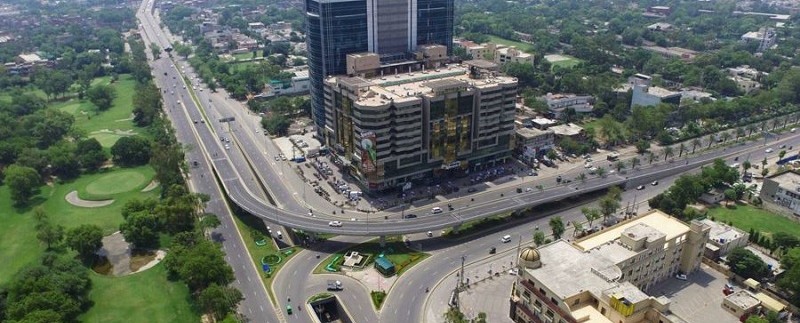
Lahore (, ) is the second biggest city in Pakistan. It is the capital of the province of Punjab. It is also known as the ‘City of Gardens’ because of its many parks and gardens. This city is known for its rich culture and lively atmosphere. Pakistan’s major Urdu film industry Lollywood is based here at the “Cultural Heart of Pakistan”. It is 60 km (35 mi) west of Amritsar, India. It has a semi-arid climate/humid subtropical climate (BSh/‘’Cwa’’ in the Köppen climate classification). Lahore’s population peaked at over 13 million. In 2024 population was estimated at 14,407,100.
Origins
According to legend, the city was founded thousands of years ago by Lava or Lav, son of the deity Rama (hero of the Ramayana). Its original name was either ‘Lav-garh’ (Fort of Lav/Lava) or ‘Lavapuri’ (Place of Lava/Lav) which was later changed to ‘Lavhur’ or ‘Lahor’ and then ‘Lahore’.
According to historians and archaeologists, Lahore was the capital of several Hindu dynasties from around 300-250 BC onwards. Probably the first of these dynasties was the ‘Loh’(or Lav) dynasty of the Gujar tribe. Some people also believe that this city is the same one mentioned by Ptolemy in his Geographia.
The ancient ‘Walled City’ was the old, proper Lahore, which later expanded in different directions. Much work was done on it by the kings of the Delhi Sultanate and later by the Mughals. Most of the newer areas and suburbs of the city are from the later British Raj from 1846 to 1947.
Historical importance
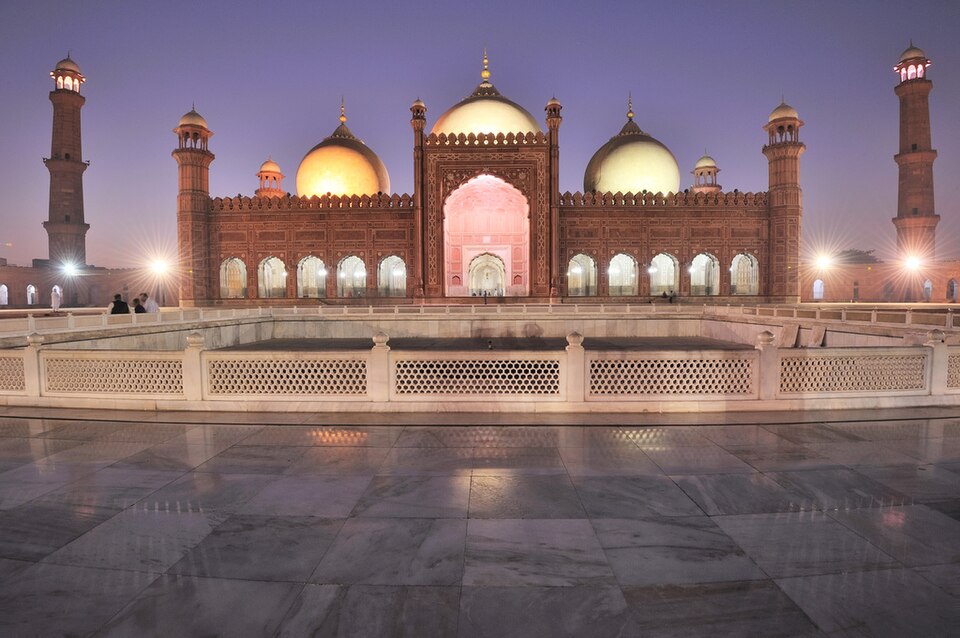
Lahore is historically an important place in the South Asian subcontinent. Famous buildings from the time of the Mughal Empire include the Badshahi Mosque, the Lahore Fort , and the Shalimar Gardens. It was the capital of the Sikh Empire of the early 19th century. Many of the city’s old artifacts and historical treasures over the ages, can be seen at the famous Lahore Museum built later in the 19th century during British Indian rule.
Lahore was a center of the Pakistan Movement later. The famous Lahore Resolution of 1940 was passed by the Working Committee of the All-India Muslim League, which eventually led to the making of an independent state of Pakistan in 1947. This event is commemorated by the Minar-e-Pakistan building in Iqbal Park.
To the north of Lahore, near the Ravi River, lies the old suburb of Shah Dara. It is also considered to be historically significant, as the tombs of the Mughal Emperor Jahangir and his wife Nur Jahan, are situated here. According to the early English traveler, Thomas Coryat, who visited Lahore in its ‘Golden Age’ during the reign of Jahangir, it was probably the finest city in the world at that time, and ’exceedeth evene Constantinople in greatnesse’ (It was even greater than Constantinople).
Education
Lahore is Pakistan’s top educational center. The old University of the Punjab has two campuses in the city. Other old and famous institutions of higher learning include the Government College University (GCU), the Forman Christian College , and the Kinnaird College for Women. The National College of Arts, a specialized fine arts institute, is also located here.
The city is also home to Pakistan’s most prestigious high school and college, Aitchison College Lahore. Other institutions include the Central Model School, St Anthony’s School, the Beaconhouse School System, Lahore College of Arts and Sciences (LACAS), and the Lahore Grammar School, and the world-famous King Edward Medical University is also located in Lahore.
Cultural life
Lahore is Pakistan’s cultural, literary, and artistic heart. It has some of the best food in the whole Indian subcontinent at the Gawalmandi Food Street, near the old Walled City; and several notable cultural centers like the Alhamra Theatre, the Punjab Arts Council, the Lahore Museum, the Shakir Ali Museum, the Fakir Khana museum, and the Rafi Peer Theatre Group. The Lawrence Gardens, Lahore are another site from British times that is worth visiting. The famed Heera Mandi in the old Taxali Gate area is also a part of Lahore’s historic culture. The Anarkali Bazaar is also a great place for traditional shopping.
Lahore is also important in Pakistan as a center of cultural and religious tolerance. The city does not have many religious fanatics or extremists, unlike some other parts of this country. The main reason is because of the strong influence of many famous Sufi saints who lived here in the past. The shrines (burial places) of some of them are still visited by many people. The shrines of Hazrat Daata Sahib and Mian Mir Sahib are especially famous.
Additional reading
- Griffin and Massey, Chiefs and Families of Note in Punjab, revised edition 1910-11.
- WG Osborne, The Court, and Camp of Runjeet Singh, London, 1846.
- Lady Emily Eden, Up the Country, new edition, London, 1983.
- Hakim Ahmad Shuja, Lahore ka Chelsea (Urdu), Lahore, 1969.
- Ian Talbot, Divided Cities: Lahore and Amritsar:1947-1957, Karachi, 2005 edition.
- FS Aijazuddin, Lahore: Illustrated Views of the 19th Century, Lahore, n.d.
- WJ Glover, Making Lahore Modern: Constructing and Imagining a Colonial City, Karachi, 2011.
- B. Gascoine, The Great Mughals, London, 1971.
- M. Athar Tahir, Punjab Portraits, Lahore, 1992.
- Isobel Shaw, Pakistan Handbook 1988.
Recent Developments
In recent years, Lahore has witnessed significant efforts to preserve and restore its rich historical heritage. Several restoration projects have been undertaken at key sites such as the Lahore Fort and Shalimar Gardens to maintain their cultural significance and promote tourism.
Additionally, new archaeological surveys around the city have uncovered artifacts dating back to the Mughal era, providing deeper insights into Lahore’s historical timeline.
Urban development continues to shape Lahore’s landscape, blending its historical past with modern growth.
Where this page comes from
The article above is adapted from “Lahore” on Simple English Wikipedia, by its contributors. We removed reference markers, navigation boxes and tables, expanded measurement templates into readable numbers, and kept the prose otherwise intact.
Both sources are published under CC BY-SA 4.0, so this page is published under the same licence. You may share and adapt it, including commercially, as long as you credit the original and keep the same licence.
Worksheets, answer keys and printable layouts elsewhere on K5Print are our own work and are not covered by this licence.