Languages
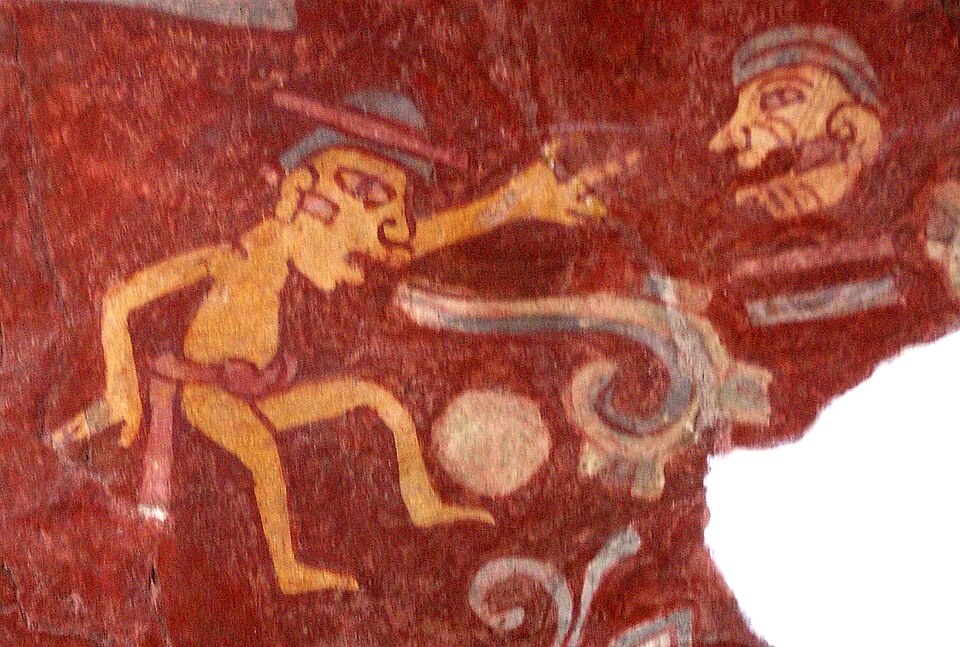

Language is the normal way humans communicate. Only humans use language, though other animals communicate through other means. The study of language is called linguistics.
Human language has syntax, a set of rules for connecting words together to make statements and questions. Language can also be changed, by adding new words, for example, to describe new things. Other animals may inherit a set of calls which have preset functions.
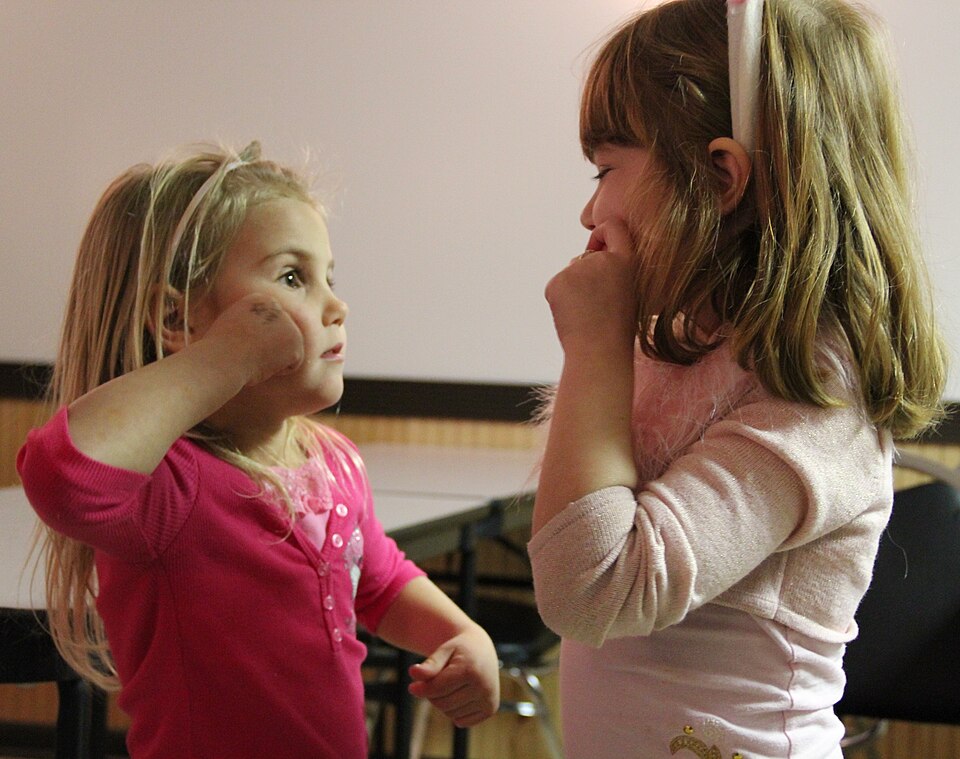
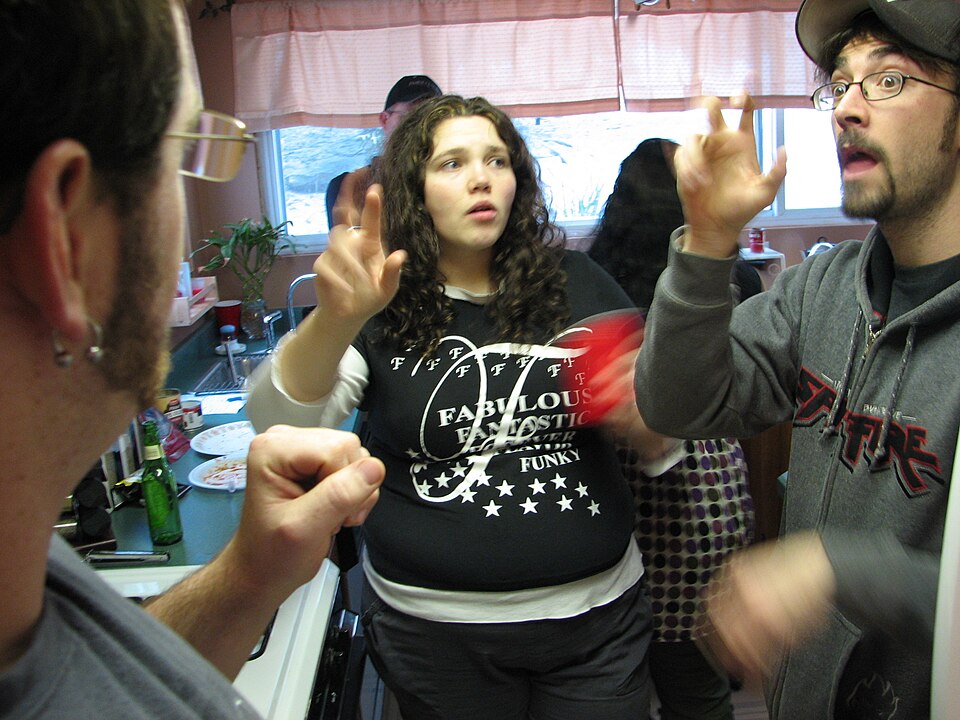
Language may be done by speech or by writing or by moving the hands to make signs. It follows that language is not just any way of communicating. Even some human communication is not language: see non-verbal communication. Humans also use language for thinking.
When people use the word language, they can also mean:
- the language of a community or country
- the ability of speech
- formal language in mathematics, logic and computing
- sign language for deaf people (people who cannot hear)
- a type of school subject
UNESCO says that 2,500 languages are at risk of becoming extinct.
Universals of language
All languages share certain things which separate them from all other kinds of communication.
- A language has rules which are shared by a community.
- All human languages are based on sound and hearing, or in the case of sign language, vision. All the basic sound units, or phonemes, have this in common: they can be spoken by the human voice, and heard by the human ear.
- The sounds come out in a sequence, not all at once. This is mimicked in writing, where the marks are put on the paper or screen in the same sequence.
- The stream of sounds has little gaps between them and come in bigger packages. We call the bigger packets sentences or questions or replies or comments.
- In most languages, English being one, the syntax or order of the words can change the meaning: “the cat sat on the man” is different from “the man sat on the cat”.
- Words (which may be made up of more than one phoneme) divide up into two classes: content and non-content. Content words have meaning: nouns, verbs, adjectives, etc.. Non-content words are there to make the language work: and, not, in, out, what, etc. Grammar consists of studying how words fit together to mean something.
- All languages have:
- sentences with two types of expression: nouns and verbs: Jill is here.
- adjectives to modify nouns: good food.
- ways of linking: sink or swim.
- dummy elements: Jill likes to swim, so do I.
- devices to order or ask questions: Get up! Are you ill?
- Most of the languages have a written form. Before the invention of audio recording, the writing system was the only way to keep track of spoken information.
- All languages constantly evolve. New words appear, new forms of saying things, new accents. There are many more things in common between languages.
Inheritance
The capacity to learn and use language is inherited. Normally, all humans are born with this capability. Which language is learned by a child depends on which language is spoken by the child’s community. The capacity is inherited, but the particular language is learned.
Children have a special period, from about 18 months to about four years, which is critical for learning the language. If this is seriously disrupted, then their language skills will be damaged. Older people learn differently, so they seldom learn a second language as well as they learn their native language.
Types of language
Mathematics and computer science use created languages called formal languages (like computer programming languages), but these may or may not be ’true’ languages. Mathematics itself is seen as a language by many. Some people consider musical notation to be a way of writing the musical language.
Chinese is the language with the most native speakers in the world, but it is not really a language. It is a close family of dialects, some of which are as different as Romance languages are from one another.
The Russian language is one of the largest Slavic languages ever spoken.
English is often called “the international language”, or lingua franca. It is the main second language of the world and the international language of science, travel, technology, business, diplomacy, and entertainment. French had a similar status until the 20th century, and other languages had it at other times.
Some languages are spoken only by closed ethnic groups such as Romani, which is an Indo-Aryan language spoken only by Roma.
Constructed languages (or made-up languages)
Some languages are made up so that a lot of people around the world can learn them, without the new languages being tied to any specific country or place. These are called constructed languages, or conlangs. One of the most popular of these languages is Esperanto, which is sometimes called “La Internacia Lingvo,” or “The International Language.” Another of these languages is called Volapük, which was popular about a hundred years ago but is much less popular now. It has mostly been replaced by languages like Esperanto, Interlingua, and Ido. Dialects are basically other versions of a language. For example, Hoffish is a dialect of Swedish.
Part of the reason that Volapük became unpopular is that some sounds are difficult for people who speak Spanish or English, two of the most widely spoken languages in the world.
Other information
Humans started using language, at the latest, 135 000 years ago, according to research (published in 2025).
Written for younger readers
Languages, in simpler words
This version comes from Wikijunior, a set of books written for children aged 8 to 11. It is shorter and uses plainer language than the article above.
From Wikijunior: Asia
Some languages spoken in Asia are Indo-European languages which are languages originated between Europe and India. The Indo-European languages in Asia can be divided into different groups:
- Indo-Aryan - mainly spoken in the Indian subcontinent, also known as South Asian countries: Hindustani (Hindi-Urdu), Bengali, Bhojpuri, Punjabi, Marathi, Rajasthani, Gujarati, Sylheti, Noakhali etc.
- Iranic - mainly spoken in and around the Iranian Plateau, spread across the modern-day countries of Iran, Afghanistan, Tajikistan, and Pakistan and neighboring regions: Persian, Kurdish, Pashto and Balochi.
- Slavic - Russian in Siberia.
- Greek - around the Black Sea
- Armenian - Armenia
Other languages in Asia include:
- Austroasiatic (also known as Mon–Khmer languages) - are the language family in South and Southeast Asia. Languages given official status are Vietnamese and Khmer (Cambodian).
- Kra–Dai - (also known as Tai-Kadai) are found in southern China, Northeast India and Southeast Asia. Languages given official status are Thai (Siamese) and Lao.
- Austronesian - widespread throughout Maritime Southeast Asia, including major languages such as Indonesian (Indonesia and Timor-Leste), Fijian (Fiji), Hiligaynon, Bikol, Ilocano, Cebuano, Tagalog (Philippines), and Malay (Brunei, Malaysia, and Singapore). Other significant Austronesian languages in Indonesia include Javanese, Sundanese, and Madurese. Meanwhile, Indonesian is the most widely spoken language in the Austronesian family.
- Dravidian - are languages spoken in South India and parts of Sri Lanka include Tamil, Telugu, Kannada, Malayalam and Tulu, while smaller languages such as Gondi and Brahui are spoken in central India and Pakistan respectively.
- Afro-Asiatic - represented in Asia by the Semitic branch and are spoken in Western Asia: various dialects of Arabic and Aramaic, Modern Hebrew, and Modern South Arabian languages.
- Sino-Tibetan - Chinese, Tibetan, Burmese, Karen, Boro and numerous languages of the Tibetan Plateau, Southern China, Myanmar, and North East India.
You can read more about Asian languages and other world languages at Wikijunior Languages
Where this page comes from
The article above is adapted from “Languages” on Simple English Wikipedia, by its contributors. We removed reference markers, navigation boxes and tables, expanded measurement templates into readable numbers, and kept the prose otherwise intact. The simpler version is adapted from Wikijunior on Wikibooks.
Both sources are published under CC BY-SA 4.0, so this page is published under the same licence. You may share and adapt it, including commercially, as long as you credit the original and keep the same licence.
Worksheets, answer keys and printable layouts elsewhere on K5Print are our own work and are not covered by this licence.