Norway

Fast facts
- Symbol
- Coat of arms of Norway
- Capital
- Oslo
- Currency
- Norwegian krone
- Time zone
- CET
- Drives on
- right
- Calling code
- +47
Facts from Wikipedia’s “Norway” page (CC BY-SA 4.0).
Norway is a country in the north of Europe. It is the western part of the Scandinavian peninsula. The mainland of Norway is surrounded by the North Sea and Atlantic Ocean on the west side, and borders Russia, Finland, and Sweden to the east. The southern coast touches the Oslofjord, Skagerrak, and the North Sea.
The Monarchy of Norway has been independent since 1814. Its head of state is a king - Harald the 5th (as of 2022). The national day is May 17, which celebrates Norway’s constitution of 1814. The parliament is called Stortinget and its members are elected by the people every 4 years.
About 5 million people live in Norway. The capital is the city of Oslo.
Norwegian is the national language. There are two official written versions of Norwegian called Bokmål and Nynorsk.
The Northern Sami language is spoken by around 90% of those who speak one of Norway’s 3 Sami languages. Northern Sami is mainly spoken in municipalities like Finnmark and Troms.
History
The battle of Hafrsfjord (872 A.D.) resulted in small kingdoms becoming one larger kingdom, ruled by Harald Fairhair. After the king’s death, again there were smaller kingdoms, inside Norway.
Stockfish (or fish that has been freeze-dried, outside in cold weather) has been traded and exported; this happened as early as either the 9th century, 10th century, or 11th century until 1066. Other sources say that the exporting was happening as early as the 12th century; stockfish is one of the country’s oldest [type of] things to be sold for export.
In 1349 half of the Norwegian people died, getting sick from the bubonic plague (or Black Death).
When a Norwegian king died in 1387, there was no king in Norway until the 20th century.
In 1397, Denmark, Norway and Sweden began the Kalmar Union.
The first [known] map, where Norway is drawn, was made in 1482.
Sweden left the Kalmar Union in 1523. From 1536/1537, Denmark and Norway formed a personal union that by 1660 became the state called Denmark–Norway; Norway was the weaker part of the union with Denmark. That union lasted until 1814, when the Treaty of Kiel said that Norway be ceded (or given) to Sweden; Denmark did not cede the Faroe Islands, Iceland, and Greenland.
The Norwegian constitution was written in 1814 and signed on 17th May that year. However, Denmark, on the losing side of the Napoleon wars, lost Norway to Sweden, on the winning side.
A Swedish–Norwegian War started on 26 July 1814. It ended on 14 August, because of an agreement, called the Convention of Moss.
The union with Sweden: It started on 14 August 1814, when the Convention of Moss (en) was signed; the union went on for 90 years.
The results of the election in 1882, led to parlamentarism becoming part of Norway’s political system; the votes of the “swamp men” decided the outcome of the election; they included teachers, artists and craftsmen who were not poor but also did not own land; ownership of land or a contract to use land was necessary to get voting rights; the “swamp men” had bough cheap land which was nearly useless, except for getting a right to vote.
The right to vote in [ national and local ] elections, was given to the public (or the general public) in 1898.
The end of the Union of Sweden and Norway, was on 7 June 1905, when Norway got its independence.
In 1905 Prince Carl of Denmark was elected King of Norway. His name as a king, was King Haakon VII.
In World War I, Norway was neutral and served as a trading nation.
Norway tried to stay neutral in World War II, but was occupied by German forces from 9 April 1940 to 8 May 1945.
In 1952 Norway became a member of NATO.
Oil was found in Norway’s part of the North Sea, during the 1960s; the oil was found under the sea floor.
Royal family since 1905
King Haakon VII was already married, before he came to Norway (in 1905). His wife, Princess Maud, became Queen Maud. Their son, Prince Alexander of Denmark, became Crown Prince Olav and followed after his father as King Olav V in 1957. Olav and his wife, Crown Princess Märtha, had three children; Princess Ragnhild, Princess Astrid and Prince Harald (later Crown Prince Harald and in 1991 he followed his father as King Harald V).
King Harald is the first king born in Norway in over 600 years. He has two children; Princess Märtha Louise and Crown Prince Haakon Magnus.
Government
The prime minister is the head of the cabinet. The cabinet got two new ministers, as late as September 2025.
Ministry of Defence
The Government has Norwegian soldiers working in Syria (as of 2017), together with soldiers from other countries that belong to NATO.
Economy
Exports include: natural gas, oil, hydroelectric power, and fish. Other natural resources are agriculture, forests, and minerals.
The government collects much money from various sources, and has policies intended to spread this wealth among Norwegians. This spread of wealth, is done both directly and indirectly.
Including year 2020, the fishing industry is catching between 2.5 million tons and 3 million tons fish from the ocean per year; from fish farms around 1.5 million tons are slaughtered per year.
Norway’s annual GDP is 482.4 billion in 2022.
Technology and science: The country has [satellites or] national satellites; The first of those was sent into Space in 2010. Those satellites have been launched from other countries.
Ethnicity
Most people in Norway are ethnic Norwegians.
A native population of Norway, the Sámi, has its home in the northern parts of the country. Their language is not at all related to Norwegian. In some municipalities in the far north, they make up the majority of people. Many Sami now live outside the Sami homeland, mostly in Oslo and other big cities. Earlier, Sami people were forced to speak Norwegian in school. Now Sami is taught as the first language in school for Sami children, and Norwegian is the first foreign language.
The national minorities of Norway are Kvens/Norwegian Finns, Jews, Forest Finns, Roma and Taters.
Many immigrants have come to Norway in the last 30–40 years. They mostly live in and around Oslo, and in the other big cities. Many immigrants come from nearby countries, like Sweden, Denmark, Germany, Poland and Russia. There are also many from countries far away, such as Pakistan, Somalia, Iraq and Vietnam.
At the end of 2020, immigrants and people who were born in Norway, but who had two parents who were immigrants, they were 18.5 percent of the population; from those (two categories), 11.8% came from Poland.
Norwegians speak a language that is related to German and English. Swedish and Danish are so close to Norwegian that most Norwegians understand them. Across Norway, many different dialects are spoken. Norwegians disagree on how to make one correct written language. Therefore, there are two standard languages, Bokmål and Nynorsk. Nynorsk is used in writing in most of the western areas and in the central mountains. Bokmål is written by most people in the rest of the country.
Traditionally, all Norwegians were Lutherans, a variety of the Protestant faith. Still, more than 80% of Norwegians are Lutherans. Other important faiths include Islam, other Protestant groups and Catholicism.
Tourism
Among tourists to Norway, more come from Germany than from any other country. There are also many Swedes, Danes, British, Dutch and Italians visiting Norway. The Swedes and Danes often come in winter to go skiing. The others mainly come in summer. Many people visit Norway to see the Northern Lights, also known as the ‘Aurora Borealis’.
Media
The largest national newspapers in Norway are Verdens Gang (VG), Aftenposten and Dagbladet.
Culture
Norwegian culture can be compared to English culture in the way that it is considered a bad thing to show off, as opposed to the US, where this is more acceptable. This is a big aspect of Norwegian culture, and it is related to the philosophy of egalitarianism. Because of this, people will understate things, for example if a Norwegian says something is good or nice, it can mean that it’s really great.
Items from the Viking Age (in Norway), are shown in museums: One item is the Gokstad ship.
Museums in Norway includes The Ibsen Museum - named after Henrik Ibsen.
The farmers’ culture (bondekulturen) was brutal. Unwanted babies were “placed in the forest” (sette barn på skogen) to die, until the nineteenth century; in the end, the [rural] police authority - consisting of individuals called lensmann (en) - were able to control [and stop] these crimes.
Modern, cambered skis were invented in the Norwegian province of Telemark in the early 19th century.
Politics
In Norway power is shared among three branches: The justice sector, the government and the parliament (Stortinget). Norway also has a king, Harald V, but he does not have any real power and acts as a symbol and ambassador. This form of government is called a constitutional monarchy. Elections are held every four years, and the winner of the election is the party or coalition of parties that gets the most votes and seats in the parliament. After the elections are done, the winners work together to find out who the prime minister should be, as well as who the other ministers should be.
Here is a short summary of the biggest political parties in Norway, from left to right on the political axis:
Red (Rødt): A revolutionary socialist party which works for equality of income, labour rights, a controlled economy and feminism.
Socialist Left Party (Sosialistisk venstreparti): The party is not very radical and is concerned with environmental issues as well as education. The party is traditionally regarded as the “teacher’s party” because of their focus on learning and school. One might call SV more of a social democratic party than a socialist party, since their socialist views have faded over the years. They were more radical in the 1970s and 80s.
Norwegian Labour Party (Arbeiderpartiet): The Labour Party is the biggest party in Norway. They work for a strong economy with many regulations on private businesses, and are traditionally the party for workers, securing labour rights and the welfare state.
Centre Party (Senterpartiet): The Centre Party used to be known as the farmer’s party; they no longer use this name, but still they are mostly popular in the countryside and other rural regions, since they work for the environment and protection of Norwegian farmers. For example, raising tariffs, or putting taxes on imports, to make foreign food cost more so that people will buy from Norwegian farmers. This is called protectionism.
Green Party (Miljøpartiet de Grønne): The Green party works for the environment only, and has recently been gaining a lot of popularity for its radical politics. They are mostly a left-side party, but will switch sides if it helps the environment.
Liberal Party (Venstre): Even though it is called Left in English, it is actually a social liberal party that belongs to the centre-right side of Norwegian politics. They work for liberal rights like freedom of speech, gender equality and they are also concerned with environment. Because of this they heavily support public transport.
Christian Democratic Party (Kristelig Folkeparti): Christian Democratic Party is at present more active in local than national politics.
Conservative Party (Høyre): It is a conservative party and is the second biggest party in Norway. It works for a free market, liberal rights and equality of opportunity. They are friendly towards private businesses and support economic growth by making taxes smaller, so that more people can start businesses.
Progress Party (Fremskrittspartiet): The Progress Party is a right-side party. It works for stronger immigration laws, a free market and tough penalties for crimes. They also support private schools and flat taxes.
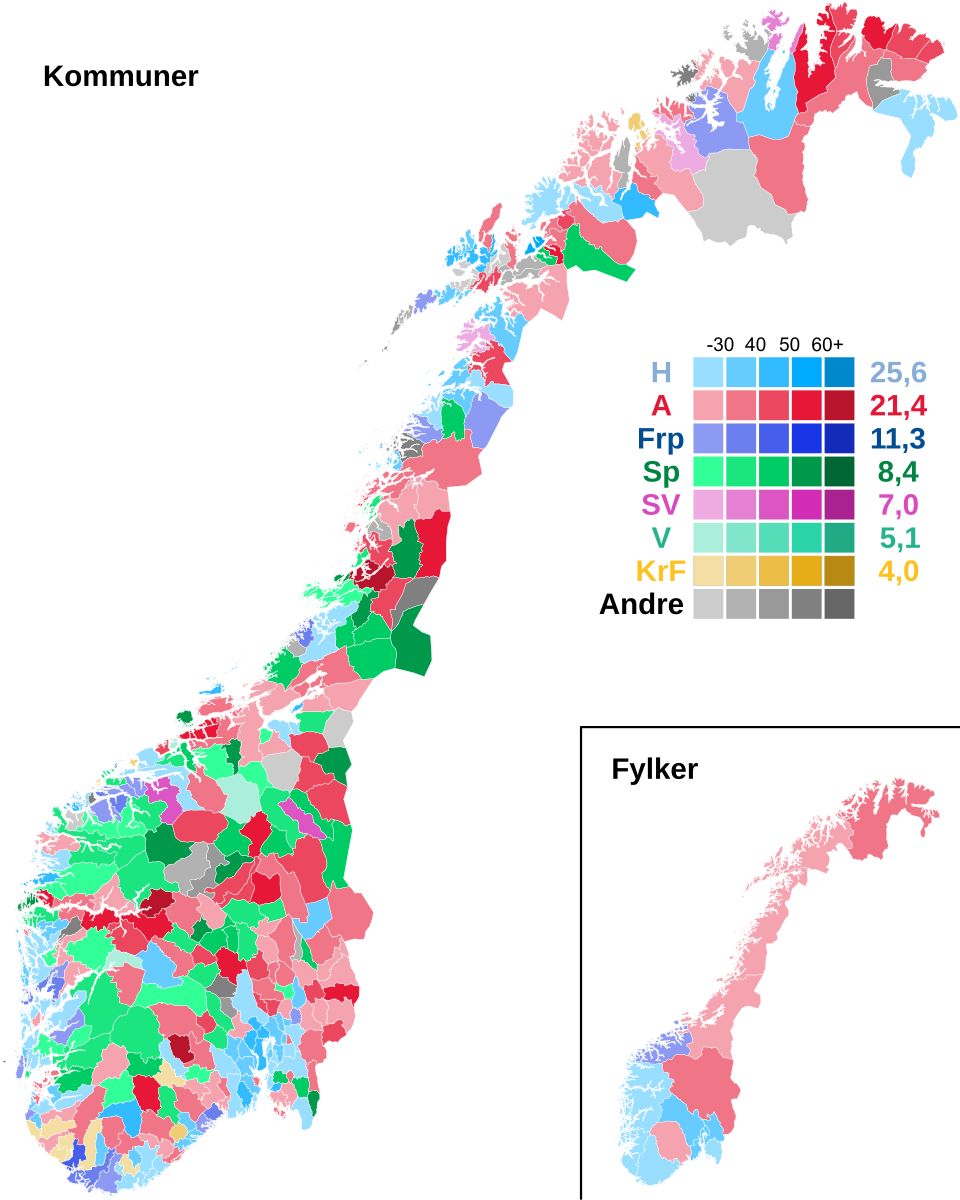
In regard to the 2025 Norwegian parliamentary election: 99% of the votes have been counted (as of the morning of September 9); Media is saying that the current prime minister will stay in power; The Labour Party will get more seats in parliament, then any of the other parties; However, that party does not have a majority (by itself).
In regard to climate politics: The country is supposed to get a Low-carbon economy, by 2050, according to a law.
Largest cities
The city with the most people living there (or inhabitants) is Oslo. The city of Bergen has 272,000 people living there; the city of Trondheim has 182,000 people in its population.
Some claim that Bergen and Trondheim, each had their time as Norway’s capital during the Middle Ages.
Organisations associated with the Government of Norway
- NATO: Norway was a founding member.
- United Nations
- European Economic Area
Animal life
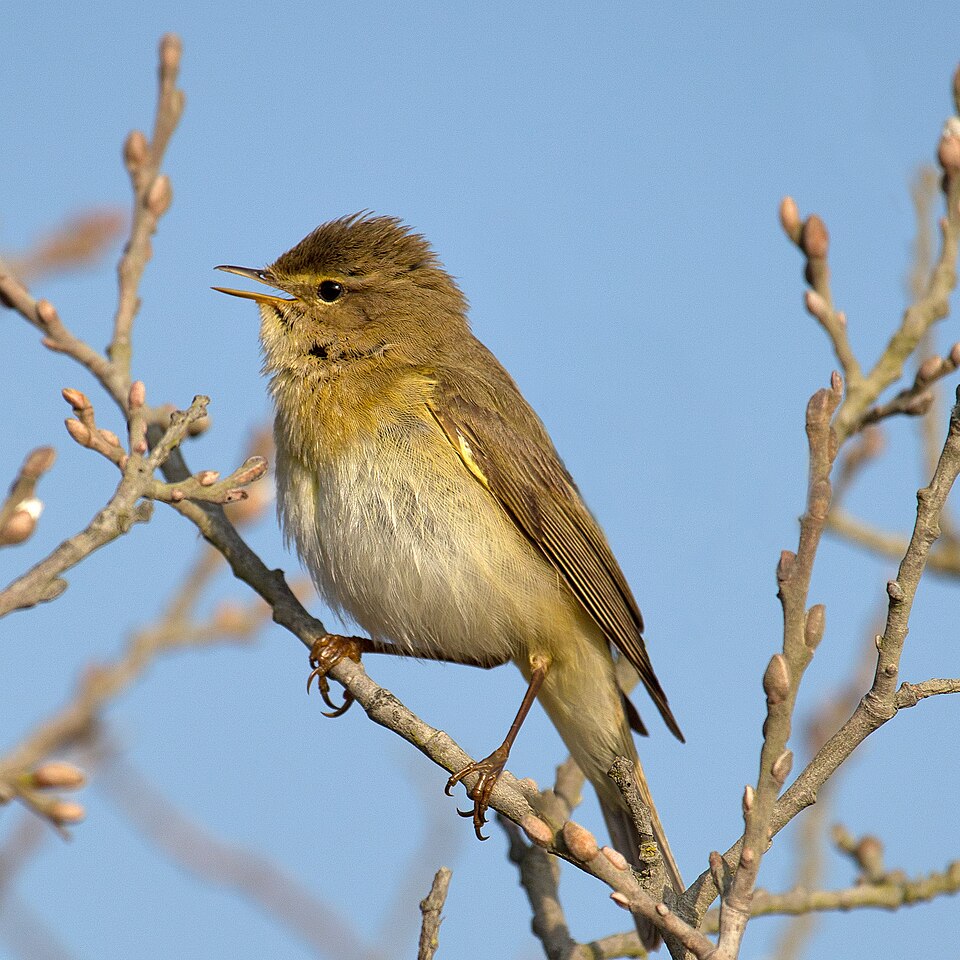
The birds that are most common: The willow warbler, a kind of leaf warbler, is the most common bird of those that sit on a clutch of eggs to incubate (the eggs).
Written for younger readers
Norway, in simpler words
This version comes from Wikijunior, a set of books written for children aged 8 to 11. It is shorter and uses plainer language than the article above.
From Wikijunior: Europe
Norway is a country in north-western Europe. It shares borders with Sweden, Finland, and Russia. The capital city is Oslo. Other big cities in Norway are Bergen, Stavanger, Trondheim and Kristiansand. Norway’s currency is called the Norwegian krone. Norway is not a member of the European Union. The Norwegian people voted “no” for joining the EU. id:Wikijunior:Eropa/Norwegia
Norway’s history is dominated by the sea, which has provided much of the wealth and income to the expert seafarers who lived here. From 900-1349 A.D, Norway is marked by war as warlords try to conquer each other’s lands and as Vikings from Norway travel the seas in search of wealth and land. With their superior boats, they traveled on shallow rivers and pillaged places which were thought inaccessable, but also traded wares all over europe. These Vikings discovered and settled far-off places like Newfoundland and Iceland and they conquered places like Normandy and the Orkneys.
After the Black Death in 1350, Norway lost half of its population and it became part of The Kalmar Union (Norway, Denmark and Sweden) during 1397-1450. When Sweden went out of the union, Norway was a province owned by Denmark from 1450-1814. In 1814, Norway made its own constitution. Because of the Napoleonic wars, Norway was made mostly autonomous, albeit in an union with Sweden. A feeling of nationalism and conflicting trade policies made the union unpopular in Norway, and by 1905 Norway became fully independent from Sweden without a war. After an election, the Norwegian people chose to be a democracy with a king, and they found the Danish King’s son for the role. He took the more Norwegian-like name Haakon, and his son took the name Olav. The Queen continued to be Maud.
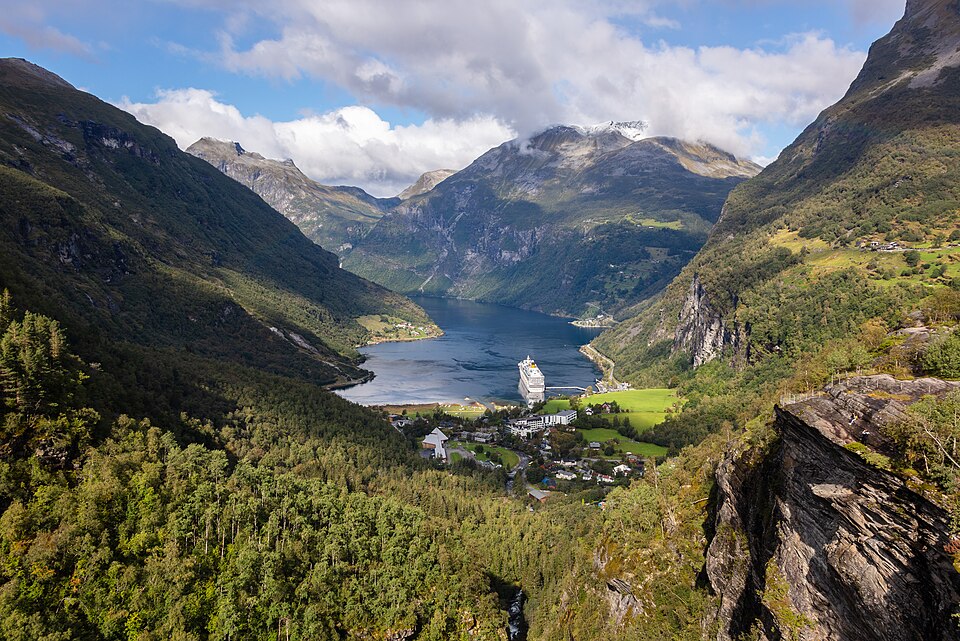
Fjords, long inlets from the sea, cover most of Norway’s coastline. Norway is a very long country, like Chile. It stretches from 57° and 81° North and parts of the north are in the Arctic Circle.
Norway has 239,057 registered islands spread across the coastline of 83,000 kilometres.
Norway’s highest mountain is Galdhøpiggen at 2,469 metres.
Norways’ population is mostly ethnic Norwegians and people from the other Scandinavian countries. Approximately 5 million people live in Norway.
The majority of Norwegians are Protestant Christian. There are also small minorities of Catholic Christians, Muslims and Jews.
The main language of Norway is Norwegian (which has 2 written forms). A variety of Sami languages are spoken by the Sami people especially in the north of the country.
One famous Norwegian artist was Edvard Munch who is famous for The Scream. Most of the famous artists such as Henrik Ibsen or Edvard Grieg lived during the 1800s.
Norway is very popular with tourists especially those who like the great outdoors. Norway is a very expensive country but many tourists visit every year to see the famous fjords, the unspoiled nature and the attractive towns around the country.
The most visited tourist sites in Norway are Holmenkollen Ski Jump and Bryggen which is a UNESCO World Heritage Site. The capital, Oslo, is popular for business trips and sight-seeing trips and cruises in the Arctic north are popular especially during the winter.
Where this page comes from
The article above is adapted from “Norway” on Simple English Wikipedia, by its contributors. We removed reference markers, navigation boxes and tables, expanded measurement templates into readable numbers, and kept the prose otherwise intact. The simpler version is adapted from Wikijunior on Wikibooks.
Both sources are published under CC BY-SA 4.0, so this page is published under the same licence. You may share and adapt it, including commercially, as long as you credit the original and keep the same licence.
Worksheets, answer keys and printable layouts elsewhere on K5Print are our own work and are not covered by this licence.