Pakistan

Fast facts
- Capital
- Islamabad
- Largest city
- Karachi
- Currency
- Pakistani rupee (₨)
- Time zone
- PKT
- Drives on
- left
- Calling code
- +92
Facts from Wikipedia’s “Pakistan” page (CC BY-SA 4.0).
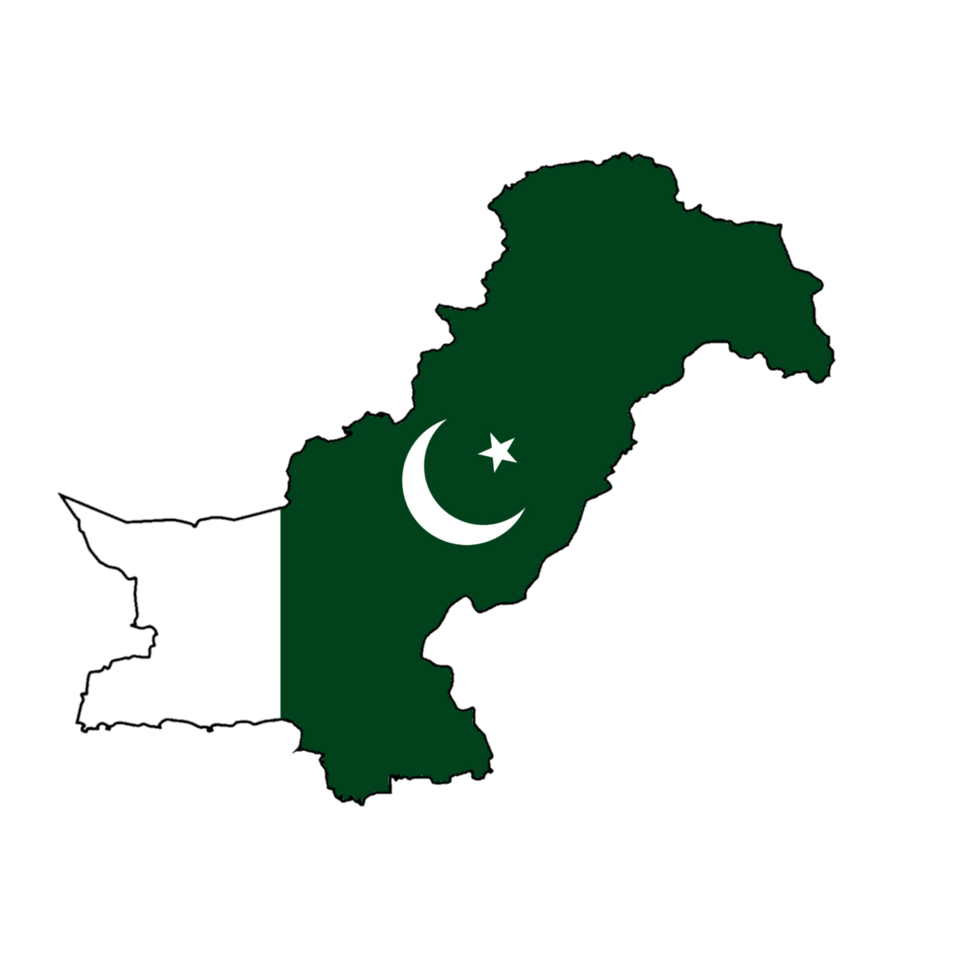
Pakistan, officially the Islamic Republic of Pakistan (Urdu: Islāmī Jumhūriyah Pākistān), is a country in South Asia. It shares its border with other countries India, Iran, Afghanistan and China (disputed with India). Pakistan has the fifth largest population (243.4 million) in the world and has a total land area of 880,940 km².or in simple words 881,000 km² This makes Pakistan the 34th largest country in the world by land area. It has a 1,365 km long coastline along the Arabian Sea in the south. The capital of Pakistan is Islamabad, but before 1960, it was Karachi, which is now the country’s largest city. While they were building Islamabad, Rawalpindi acted as the (temporary capital) from 1959 to 1967.
The lands of Pakistan have a long history with ancient cultures, such as the 8,500-year-old Neolithic site of Mehrgarh, the Bronze Age Indus Valley civilization, and the ancient Gandhara civilization. Over the years, various empires and dynasties, including the Achaemenid, Maurya, Kushan, Gupta, Macedonians, Mongols, Tibetans, Umayyad Caliphate, Samma, Hindu Shahis, Shah Miris, Ghaznavids, Delhi Sultanate, Mughals, and the British Raj, have influenced the region. Pakistan is also associated with the origins of major world religions like Hinduism and Sikhism, as well as the Mahayana and Vajrayana branches of Buddhism, rooted in the Gandhara region. The word “Pakistan” and the idea of the nation did not exist till the 1900s.
It is a nuclear-weapons state. Pakistan’s political history has seen periods of substantial economic and military growth, along with times of political and economic instability. The country has different groups of people and people who speak different languages, with different styles of geography and wildlife. However, Pakistan also faces challenges like poverty, illiteracy, corruption, and terrorism.
Name
“The National Anthem”
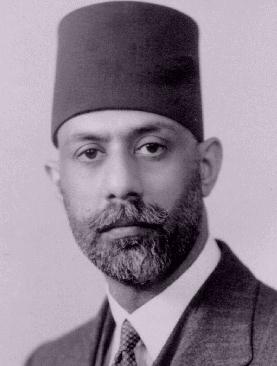
The Islamic name Pakistan ( English pronunciation: or ; ) means ‘Land of (the) Spiritually Pure’ in both Urdu and Persian languages. It alludes to the word pāk meaning pure in Persian and Pashto. The suffix (-stān) is a Persian word meaning the place of, and also recalls the synonymous (and cognate) Sanskrit word sthāna स्थान. Many South-central Asian states and regions end with the element -stan, such as Karakalpakstan, Afghanistan, Sindhustan, Balochistan, Kurdistan, and Turkistan. This -stan is formed from the Iranian root *STA “to stand, stay,” and means “place (where one stays), home, country”. Iranian peoples have been the main inhabitants of the various land regions of the Ancient Persian Empires now inhabit by the naturalised states for more than 1,500 years. The names are compounds of -stan and the name of the peoples living there. PAKISTAN is exceptionally unique; its naming is a compound of 2 names; which was coined on the 28th of January in 1933 AD as ’ by Choudhary Rehmat Ali Khan respectively, a Cambridge University Moslem student and a Pakistan Movement activist, who published it in his paper Now or Never. by using the suffix -istan from Balochistan preceded by the first letters of Punjab, Afghania, Kashmir and Sindh. The name is actually an acronym that stands for the “Thirty million Muslim brethren who live in Pakistan—by which we mean the Five Northern units of India viz: The Punjab, (Afghan Province), Kashmir, Sind, and Baluchistan”. The letter “ī” that was incorporated to ease pronunciation and elegantly forms the linguistical corrective and a Respective name meaningfully. Most notably interestingly, a word almost identical in form, etymology, and meaning to the Iranian suffix -stan is found in the Polish language, which has a word Stan meaning “State” (in the senses of both Polity and Condition). It can be found in the example of a Polish name for the “United States of America,” Stany’ Zjednoczone Ameryki’’ (literally “States United of America”).
Thus, the name Pākistān means “Land of the Pure” in Persian and Urdu respectively.
History
Pakistan became Independent in 1947 from the United Kingdom which was known as the British Raj. The first humans in Pakistan were the Soanian hunter-gatherers, who lived 50,000 years ago. Three of the world’s oldest civilisations are in Pakistan, these include Mehrgarh civilisation, the Indus Valley civilisation and the Gandhara civilisation. The first urban centre in South Asia was the Mehrgarh, a 11,000-year-old site in Pakistan. The first organised people in Ancient Pakistan were the ones who made the Indus Valley Civilization, they lived 9000 years ago. After that, the Vedic period came.
After the Muslim conquest, Pakistan began to be Islamized and it slowly turned into a Muslim majority region. The British Empire had effectively conquered the entire territories of modern-day Pakistan by the year 1849 and after the Indian Rebellion of 1857, the region was officially absorbed into the British Crown and came under direct British rule. Pakistan gained independence from British rule in 1947 however the Monarch of the United Kingdom (King George VI and Queen Elizabeth II) remained the monarch of Pakistan up until it officially became a republic in 1956. Until 1971, Pakistan also included an area in the North-east India region. This is now called Bangladesh. It lost that area after a war with the Indian Army and the joint militant group of Indo-Bangladeshi alliance of Mitro Bahini of West Bengal. Since 2000 Pakistan has supported the West in their war against fundamentalist terrorism, including the removal of the Taliban regime in Afghanistan. Despite not being part of the organization itself, Pakistan has developed close ties with and closely cooperated with the NATO organization assisting it in many of its military campaigns such as those in Bosnia and Somalia.
Pakistan is a member of the Commonwealth. However, after the war in East Pakistan the country was excluded (between 1972 and 1989). It was also a member between 1999 and 2007, it was excluded in 2007 for a time but again became a member in 2008.
Geography and climate
There are many earthquakes in the area. The earthquake in 2005 with its earthquake center in Kashmir is the strongest recorded so far. Over 100,000 people were killed or wounded on 8 October 2005.
Pakistan covers 880,940 km², roughly similar to the combined land areas of France and the UK. Its eastern regions are located on the Indian plate and the western and northern regions on the Iranian plateau and Eurasian landplate. Apart from the 1,046 km Arabian Sea coastline, Pakistan’s land borders total 6,774 km—2,430 km with Afghanistan to the northwest, 523 km with China to the northeast, 2,912 km with India to the south and east, and 909 km with Iran to the southwest.
The northern and western highlands of Pakistan contain the towering Karakoram and Pamir Mountain ranges, which include some of the world’s highest peaks, including K2 8,611 m and Nanga Parbat 8,126 m. The Balochistan Plateau lies to the west, and the Thar Desert and an expanse of alluvial plains, the Punjab and Sindh, lie to the east. The 1,609 km Indus River and its tributaries flow through the country from the disputed territory of Kashmir to the Arabian Sea.
Pakistan has four seasons: a cool, dry winter from December through February; a hot, dry spring from March through May; the summer rainy season, or southwest monsoon period, from June through September; and the retreating monsoon period of October and November. The beginning and length of these seasons vary somewhat according to location. Rainfall can change radically from year to year, and consecutive patterns of flooding and drought are also not uncommon. The country contains diverse ecosystems that support rich biodiversity.
International borders
Pakistan’s International borders are the external borders of the Islamic Republic of Pakistan.
Geography
Pakistan’s is unique geographically. It is located within Southcentral Asia, with the Indus River and its tributaries as its main water supply or lifeline, the world’s largest Irrigation system. The country is also home to the world’s largest earth-filled dam, the Tarbela Dam, which supports irrigation, hydroelectric power generation, and water management.
The nation is bordered by the Hindu Kush and Sulaiman Mountain ranges in the west, Karakoram Mountain range in the north, Sutlej River and Thar desert in east, and Arabian Sea in the south.
Historical background
The country in its form as of right now was made by the Pakistanis themselves out of the imperial colonial British India. The region that now constitutes Pakistan was part of the British India from 1858 to 1947. The demand for a separate Muslim homeland gained momentum under the leadership of the All-India Muslim League and Muhammad Ali Jinnah. Following the passage of the Indian Independence Act 1947, British India was partitioned into the independent dominions of India and Pakistan in August 1947.
Surrounding nations
Pakistan borders the People’s Republic of China in the north (Xinjiang Autonomous Türkic Region), and in the north-east Tibet Autonomous Region, the disputed territory of Kashmir which was part of the British Indian territory until 1948 is also included. Pakistan borders the entire eastern length of the country with the Republic of India and on the south towards the Arabian Sea, to the north-west Pakistan is separated by fourteen kilometres of a narrow strip of the Afghan-occupied Gorno-Badakhshan territory called the Wakhan Corridor which extends between Northern Pakistan and Tajikistan.
The Islamic Republic of Afghanistan is to the west and north, and Iran (Ancient Persia) is to the southwest. Pakistan also shares to the extreme south-west a marine border with Oman.
Maritime borders of Pakistan
The Maritime borders of Pakistan are the maritime boundary recognized by the United Nations Convention on the Law of the Sea. The Government of Pakistan promulgated Territorial and Maritime Zones Act 1976. In 1997, Pakistan also declared a straight baseline along its coast. Now the territorial sea is measured 12 nautical miles into sea from the baseline. Using Unclos III, Pakistan has also demarcated its sea boundaries with both Iran and Oman.
Sea frontier with India in the East remains in dispute. Pakistan and India have held 12 rounds of discussions for deciding the exact sea frontier at Kori Creek and the un-demarcated Rann of Kachchh. At times, the negotiations appear promising. However, there has been no progress since June 2012. Pakistan’s coastline is 1,146 Square kilometres² (712 Square miles²) long, with its claim of a territorial maritime zone and exclusive economic zone, has a more than 1,000 kilometres maritime border shared with the three nations namely:
Government and politics
Pakistan has a federal parliamentary system. The head of state is an indirectly elected ceremonial President. The Electoral college of the country, (composed of the Senate, the National Assembly, and the four Provincial Assemblies) chooses a leadership representing the President of Pakistan for a five-year term. The president is also the Commander in Chief of the Joint Armed Forces. The head of government is the Prime Minister, who is also indirectly elected.
The President’s appointment and term are constitutionally independent of the Prime Minister’s term. The Prime Minister is usually the leader of the largest party in the National Assembly or of a coalition in the National Assembly.
The Prime Minister is the head of government. Pakistan’s legislature is made of a 100-member Senate (upper house) and a 342-member National Assembly (lower house). The Chief Justice of Pakistan is the chief judge who oversees the judicature’s court system at all levels of command..
Politics
Pakistan is officially a federal republic, but during a long period in its history it changed to a democratic state and a military dictatorship. Military dictators include Ayub Khan in the 1960s, General Zia-ul-Haq in the 1980s.
On 27 December 2007, the leader of the Pakistan People’s Party, Benazir Bhutto, was assassinated. The reason is yet to be determined.
Administrative divisions
Pakistan is made up of four provinces, two Federally administered territories and two autonomous territories. Both special areas are in Kashmir. The provinces and territories are divided into 26 divisions with now 147 districts directly divided from the provinces. Each district is divided into several tehsils and each tehsil is divided into several union councils. There are around 596 tehsils and over 6,000 union councils in Pakistan.
Provinces:
- Balochistan
- Khyber Pakhtunkhwa (formerly NWFP)
- Punjab
- Hindoo/Hindu, latter India. Among the four provinces, Punjab has the most people, but Balochistan is the largest province by area. (Balochistan and Khyber Pakhtunkhwa also have Provincially Administered Tribal Areas (PATA) which are going to be regular districts.)
Territories: Islamabad Capital Territory Federally Administered Tribal Areas Autonomous Areas (Pakistan-administered Kashmir) Azad Kashmir Gilgit Baltistan
India, Pakistan and China separately control parts of the Kashmir region. India and Pakistan’s parts are divided by a Line of Control. The Pakistan–China border is internationally recognized.
Economy
Pakistan has a semi-industrialized economy. The growth poles of the Pakistani economy are situated along the Indus River. Diversified economies of Karachi and Punjab’s urban centres, coexist with less developed areas in other parts of the country. Despite being a very poor country in 1947, Pakistan’s economic growth rate has been better than the global average during the following four decades, but incautious policies led to a slowdown in the late 1990s.
The 2005 estimate of foreign debt was close to US$40 billion. However, this decreased with help from the International Monetary Fund and significant debt-relief from the United States. Pakistan’s gross domestic product, as measured by purchasing power parity, is estimated to be $475 billion while its per capita income stands at $1,842. The amount of poor people in Pakistan is estimated to be between 23% and 38%.
Languages
There are dozens of languages spoken in Pakistan. Urdu and English are two official languages of the country. English is still spoken among the Pakistani elite and in most government ministries. Other major languages spoken in Pakistan include; Saraiki, Punjabi, Hindko, Pashto, Sindhi, Balochi, Brahui, Khowar, Balti and many others. Shina is also one of the regional languages of Pakistan. It is spoken in Gilgit-Baltistan.
Religion
Most (90-95%) of the people are Muslim. Sunni Muslims constitute 70-75% of Pakistan’s populations and Shia Muslims 20-25%. Many other religions are followed in Pakistan too, these are Christianity, Hinduism, Sikhism, Zoroastrianism, Baha’i Faith, Zikrism, Ahmadiyya, Judaism, Buddhism and Animism.
After the end of British India rule, Hinduism had much less importance in the newly made state of Pakistan but has played an important role in its culture and politics as well as the history of its regions. In fact, Pakistan has the 4th largest population of Hindus in the world.
Society and Social Life
Pakistani society has historically been built around extended families, local communities, and religious traditions that strongly influenced social behavior and daily life. In earlier decades, most people lived in rural areas where social authority was often guided by elders, tribal leaders, and community networks. These traditional structures provided social stability and support, but also limited individual decision-making and social mobility in many communities.
A major transformation began with rapid urbanization and expansion of education after independence. Migration to cities created new social environments where people from different ethnic, linguistic, and cultural backgrounds interacted more frequently. Urban growth and increased access to education gradually shifted social influence from purely family-based systems toward professional institutions, modern workplaces, and individual career opportunities.
Another important change has been the increasing participation of women in education, healthcare, business, and public service. Over recent decades, female literacy rates and employment opportunities have improved, contributing to broader social and economic development. This shift has influenced family roles, workplace participation, and public representation, marking one of the most significant social changes in modern Pakistan.
Technological advancement has further accelerated social transformation. The spread of internet access, mobile technology, and digital media has connected Pakistani society more closely with global cultural and economic trends. Digital communication has expanded educational access, encouraged entrepreneurship, and increased public discussion on social and economic issues, particularly among younger populations.
Despite these developments, traditional cultural and religious values continue to shape social identity and community relationships. Modern Pakistani society reflects an ongoing balance between preserving cultural traditions and adapting to social, economic, and technological change.
Culture and Heritage
Pakistan is home to six UNESCO World Heritage Sites, which are places of outstanding cultural and historical importance recognised at the global level. These sites represent different periods of human history and reflect Pakistan’s ancient civilizations, diverse cultures, and architectural achievements. The six sites are:
- Archaeological Ruins at Mohenjo-daro: One of the major urban centres of the ancient Indus Valley Civilization, dating to around 2500 BCE, and one of the earliest planned cities in the world.
- Buddhist Ruins of Takht-i-Bahi and Neighbouring City Remains at Sahr-i-Bahlol: A well-preserved Buddhist monastic complex and ancient settlement dating from the 1st century CE.
- Fort and Shalamar Gardens in Lahore: Outstanding examples of Mughal architecture and garden design, illustrating the cultural achievements of the Mughal Empire.
- Historical Monuments at Makli, Thatta: An extensive necropolis with hundreds of thousands of elaborately carved tombs reflecting the history of Sindhi civilization from the 14th to the 18th century.
- Rohtas Fort: A large 16th-century fortress built under Sher Shah Suri, representing exceptional military architecture of the period.
- Taxila: An ancient city that was a hub of early urban development and a crossroads of cultures in the Gandhara region.
These heritage sites showcase Pakistan’s rich historical legacy and the diverse civilizations that have flourished in the region over thousands of years, making them important not only for Pakistan but for the world.
Festivals
The Pakistani region is very diverse in terms of cultural festivals owing to the diversity and historical background. Basant which is traditionally celebrated in Lahore is the beginning of spring and is connected with kite flying, music and festival foods, which is the sign of a colorful cultural life of the city. Traditional freestyle polo is also on display at the Shandur Polo Festival each year, held at the Shandur Pass between Gilgit-Baltistan and Khyber Pakhtunkhwa, where visitors come from around the country and abroad. One such competition in motorsport is the Hub Rally Cross, an off road race held at Hub, Balochistan, each year that brings dozens of competitors and spectators to the challenging desert and coastal course, representing Pakistan’s increasing focus on motorsport and its involvement in the event by young people. Collectively, these events have a significant role of safeguarding the intangible cultural heritage in Pakistan and encouraging cultural integration in Pakistan.
In addition to these events, Pakistan hosts a wide range of religious, cultural, and regional festivals that reflect the country’s diverse heritage. The two major Islamic festivals, Eid al-Fitr and Eid al-Adha, are celebrated nationwide with religious devotion, charitable giving, and communal gatherings. These occasions strengthen family ties and social unity across communities.
Various regional festivals further highlight Pakistan’s multicultural identity. The Lok Mela held in Islamabad showcases traditional crafts, folk music, dance performances, and regional cuisines from across the country, promoting cultural exchange and supporting local artisans. In the northern valleys, the Kalash community celebrates Chilam Joshi, a spring festival marked by traditional music, dance, and rituals that preserve one of Pakistan’s unique indigenous cultures. Similarly, Sindh Cultural Day promotes Sindhi heritage through traditional attire such as ajrak and topi, along with music and public celebrations.
Together, these festivals demonstrate Pakistan’s rich cultural mosaic, fostering social cohesion, encouraging tourism, and preserving intangible cultural traditions for future generations.
Poverty
Poverty in Pakistan is a growing concern because of population growth in the country. Although the middle-class has grown in Pakistan, nearly 50% of the population is classified poor as of September 2023.
Population growth
Pakistan has a high population growth. Between 1951 and 2017, the population increased by a factor of six. In 1951, there were 33.7 million people in Pakistan, in 2017, there were 207.7 million. Urbanization is ongoing. There are two megacities, Karachi and Lahore. Despite this, Pakistan has one of the lowest urbanization rates in the world. In 2017, over 130 million Pakistanis, or 65% of the population lived in rural areas.
Pakistan also has high fertility rate. Estimates of 2022 are that on average, there are 3.5 children per adult woman. As a consequence, the Pakistanis are young: 40.3% of the people are 15 years or younger, only 3.7% of the people are 65 or older. The median age in the country is 19. This means that half the population are 19 or younger, the other half are over 19.
There are also many refugees. The UNHCR estimated, that Pakistan has the forth-largest refugee population worldwide.
Sports
The national sport of Pakistan is field hockey, although cricket is the most popular game across the country. The national cricket team has won the Cricket World Cup once (in 1992), were runners-up once (in 1999), and co-hosted the games twice (in 1987 and 1996). Pakistan were runners-up in the inaugural 2007 ICC World Twenty20 held in South Africa and were the champions at the 2009 ICC World Twenty20 held in England. The team also won two Asia Cups in 2000 and 2012. Lately however, Pakistani cricket has suffered heavily due to teams refusing to tour Pakistan after militants attacked the touring Sri Lankan team in March 2009, after which no international cricket was played until May 2015, when the Zimbabwean team agreed to tour. However, now, with increased security, the Sri Lankan cricket team came for a tour as recently as 2019.
In addition to sports like field hockey, cricket, squash rackets, football and others, Pakistanis are also very keen on equestrianism of various types,and equestrian sports such as Polo and the traditional Tent pegging are played by many. Other traditional rural sports include two types of Wrestling, Kabbadi and a martial art called Gatka.
Olympics
Olympic Games Pakistan has taken part in since 1948. Pakistan has won several Olympic medals, mostly in field hockey. The country has won three Olympic gold medals in hockey (1960, 1968, and 1984).
Pakistan also won an individual gold medal in athletics at the 2020 Summer Olympics in javelin throw. This was Pakistan’s first Olympic gold medal in an individual sport.
Written for younger readers
Pakistan, in simpler words
This version comes from Wikijunior, a set of books written for children aged 8 to 11. It is shorter and uses plainer language than the article above.
From Wikijunior: Asia
Pakistan, also known as the Islamic Republic of Pakistan (Urdu: اِسلامی جمہوریہ پاكِستان), is a country in Southeast Asia. Pakistan is the 36th largest country in the world, covering approximately 307,374 square miles. Pakistan also hosts more than 243 million people!
Pakistan’s current president is Asif Ali Zardari, the current prime minister is Shehbaz Sharif, and Pakistan’s capital is Islamabad. East Pakistan, which is now an independent country known as Bangladesh, achieved independence from Pakistan in 1971 during the Bangladesh Liberation War (March 1971 – December 16, 1971).
Pakistan separated from India and became an independent country on 14th August 1947. The main figure behind this move was a man named Mohammed Ali Jinnah (known as the “Father of Pakistan”). He was initially supportive of the Hindu-Muslim unity in India, but soon demanded a separate country for Muslims.
Pakistan lies along the Arabian Sea and the Gulf of Oman towards the south, bordered by India to the east, Afghanistan to the west, Iran to the southwest and China towards the far northeast.
The Durand Line, which is 1,640 miles long, forms the border between Pakistan and Afghanistan. It was established in an agreement with Mortimer Durand, a British diplomat and civil servant of British India, and Abdur Rahman Khan, the Afghan Amir (ruler), in 1893. The reason this agreement was made was because both nations wanted to improve trade and relationships with each other.
Over 243 million people live in Pakistan, and because of that, Pakistan is the 5th most populous place in the world! Pakistan has more males, making up 51.24% of the population, while women make up 48.50% of the population.
The official languages of Pakistan are Urdu and English. There are a lot of regional languages that are spoken as well, such as Punjabi, Pashto, Sindhi, Balochi, Kashmiri, Brahui, Shina, Balti, Khowar, Dhatki, Marwari, Wakhi and Burushaski.
The script of Urdu is written right-to-left (like Arabic), but a person who speaks Hindi can easily converse with an Urdu-speaking person due to their similarities.
Islam is the national state religion and about 98% of Pakistanis are Muslims. Islam has two major sects, Sunni and Shia. Shia Islam is practiced by 20% of the Muslims in Pakistan, while 70% of the remaining Muslim population are Sunnis. Christianity, Hinduism and Sikhism are the other 3% percent. There are several mosques (a place of worship for Muslims) throughout Pakistan. Some famous mosques of Pakistan include the Faisal Mosque, which is located in Islamabad, and Masjid-e-Tooba in Karachi, Pakistan.
Field hockey is the national sport of Pakistan; Pakistan’s field hockey team won three gold medals during the 1960, 1968, and 1984 Olympic games. Pakistan also won the Hockey World Cup four times in 1971, 1978, 1982, and 1994.
Cricket is the most popular sport. Pakistan’s cricket team won the World Cup in 1992. Under Pakistani cricketer Imran Khan, Pakistan defeated England by 22 runs in the final.
- Kalash Valley is a historical site in the Chitral district of Pakistan, attracting many tourists due to its extensive history and majestic appearance. Kalash is a very old Greek civilization and the inhabitants of the valley were known as “the Kelash”. The valley used to be the home to many ancient cultures. The inhabitants lived in small log villages, placed strategically along the hillsides for protection.
- Shah Jahan Mosque is a mosque located in southern Pakistan. The mosque is known for its attractive architecture, which was designed by the Mughals. The mosque was built in 1647 AD by Mughal emperor Shah Jahan. The mosque was decorated with Turkish artwork and adorned with beautiful mosaic tiles and floorwork.
- Mohenjodaro is the oldest civilization in the world. It was discovered in 1922 by R. D. Banerji. “Mohenjodaro” means “mound of the dead”. Built-in 2600 BCE, Mohenjodaro attracts visitors due to its rich architecture and designs. The ruined civilization gives us a glimpse of the living standards of the people who used to live there. Unfortunately, a recent survey showed that Mohenjodaro will crumble in the next 20 years because of a lack of governmental care.
- Lahore Fort, also known as Shahi Qila, is a fort located in northern Lahore. Lahore Fort is one of the most popular attractions, resembling the architecture of Agra Fort in India. Though the fort has gone through several renovations, the Mughals’ influences are still apparent in its design. Lahore Fort contains a mosque, known as Moti Masjid.
- The Shalimar Gardens (or Shalamar Gardens) is a beautiful garden located nearly 10 kilometers east of Lahore. Built in 1641 AD by Shah Jahan, the Shalimar Gardens were heavily used by the Mughals from the 16th century to the 19th century. In 1981, Shalimar Gardens was designated as a UNESCO World Heritage Site.
Where this page comes from
The article above is adapted from “Pakistan” on Simple English Wikipedia, by its contributors. We removed reference markers, navigation boxes and tables, expanded measurement templates into readable numbers, and kept the prose otherwise intact. The simpler version is adapted from Wikijunior on Wikibooks.
Both sources are published under CC BY-SA 4.0, so this page is published under the same licence. You may share and adapt it, including commercially, as long as you credit the original and keep the same licence.
Worksheets, answer keys and printable layouts elsewhere on K5Print are our own work and are not covered by this licence.