Riyadh
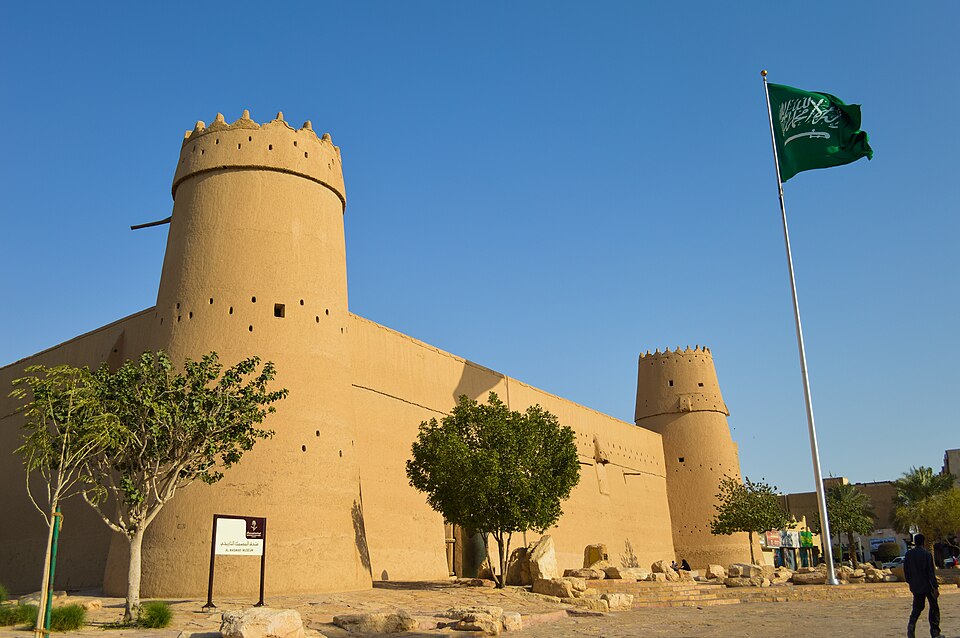

Quick facts
- What it is
- Capital city
- Country
- Saudi Arabia
- Area
- 1,973 km² (762 sq mi)
- Population
- 7,009,100 (2022)
Facts from Wikipedia’s “Riyadh” page (CC BY-SA 4.0).
Riyadh (/rɨˈjɑːd/; ar-Riyāḍ Najdi pronunciation: ) is the capital and most populous city of Saudi Arabia. It is also the capital of Riyadh Province, and belongs to the historical regions of Nejd and Al-Yamama. It is in the center of the Arabian Peninsula on a large plateau, and is home to 6.5 million people.
The city is divided into 15 municipal districts, managed by Riyadh Municipality headed by the mayor of Riyadh, and the Riyadh Development Authority, chaired by the governor of Riyadh Province, Faisal bin Bandar Al Saud. The current mayor of Riyadh is Ibrahim Mohammed Al Sultan. He was appointed mayor in 2015. It has been designated a global city.
Riyadh have many historical sites, the most popular is Diriyah, it has historic significance as well as UNESCO world heritage site.
Early history
During the Pre-Islamic era the city at the site was called Hajr (), and was reportedly founded by the tribe of Banu Hanifa. Hajr served as the capital of the province of Al Yamamah, whose governors were responsible for most of central and eastern Arabia during the Umayyad and Abbasid eras. Al-Yamamah broke away from the Abbasid Empire in 866 and the area fell under the rule of the Ukhaydhirites, who moved the capital from Hajr to nearby Al Kharj. The city then went into a long period of decline. In the 14th century, North African traveller Ibn Battuta wrote of his visit to Hajr, describing it as “the main city of Al-Yamamah, and its name is Hajr”. Ibn Battuta goes on to describe it as a city of canals and trees with most of its inhabitants belonging to Bani Hanifa, and reports that he continued on with their leader to Mecca to perform the Hajj.
City districts
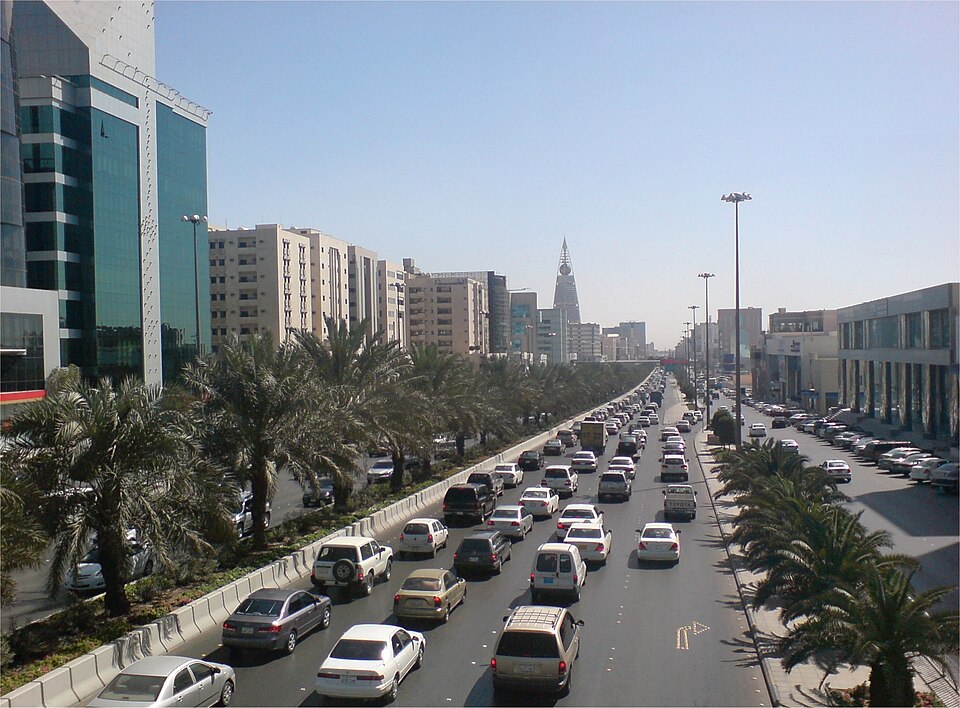
Riyadh is divided into fifteen branch municipalities, in addition to the Diplomatic Quarter. Each branch municipality in turn contains several districts, amounting to over 130 in total, though some districts are divided between more than one branch municipality. The branch municipalities are Al-Shemaysi, Irqah, Al-Ma’athar, Al-Olayya, Al-Aziziyya, Al-Malaz, Al-Selayy, Nemar, Al-Neseem, Al-Shifa, Al-‘Urayja, Al-Bat’ha, Al-Ha’ir, Al-Rawdha, and Al-Shimal (“the North”). Olaya District is the commercial heart of the city, with accommodation, entertainment, dining and shopping options. The Kingdom Center, Al Faisalyah and Al-Tahlya Street are the area’s most prominent landmarks. The centre of the city, Al-Bathaa and Al-Dir’iyyah, is also its oldest part.
Climate
Classified as having a hot desert climate (Köppen: BWh), temperatures during the summer months are extremely hot. The average high temperature in August is 43.6 °C. Winters are warm with cool, windy nights. The overall climate is arid, and the city experiences very little rainfall, especially in summer, but receives a fair amount of rain in March and April. It is also known to have dust storms during which the dust can be so thick that visibility is under 10 m (33 ft). On 1 and 2 April 2015, a massive dust storm hit Riyadh, causing suspension of classes in many schools in the area and cancellation of hundreds of flights, both domestic and international.
Where this page comes from
The article above is adapted from “Riyadh” on Simple English Wikipedia, by its contributors. We removed reference markers, navigation boxes and tables, expanded measurement templates into readable numbers, and kept the prose otherwise intact.
Both sources are published under CC BY-SA 4.0, so this page is published under the same licence. You may share and adapt it, including commercially, as long as you credit the original and keep the same licence.
Worksheets, answer keys and printable layouts elsewhere on K5Print are our own work and are not covered by this licence.