Spain

Fast facts
- Capital
- Madrid
- Largest city
- Madrid
- Languages
- Castilian Spanish (also in national language)
- Currency
- Euro (€)
- Time zone
- WET and CET
- Drives on
- right
- Calling code
- +34
Facts from Wikipedia’s “Spain” page (CC BY-SA 4.0).
Spain is a country in Southwestern Europe. It is in the Iberian Peninsula. Spain has borders with France, Portugal, Andorra and Gibraltar. Ceuta and Melilla border with Morocco in North Africa. In Spain’s northeast side are the Pyrenees mountains.
The people of Spain are known as Spaniards. They speak Castilian or Spanish (in Spanish, “Castellano”, from Castilla, or " Español “). They speak other languages in some parts of the country. They are Catalan, Basque, and Asturian, Galician, Leonese, Aragonese, Aranese Occitan and even Portuguese. The religion of about 67% of the population in Spain is Roman Catholic.
Since 1975, Spain has had a constitutional monarchy. The King of Spain is Felipe VI; he only does what the constitution allows him to. The parliament is called “Las Cortes Generales,” (General Courts) and has two bodies: “El Congreso” (The Congress) and “El Senado” (The Senate) and it is chosen by the Spanish people by voting. The Prime minister is Pedro Sánchez. The government and the king’s palace are in Madrid, the capital of Spain.
Spain has more than 500,000 square kilometers of land. It is smaller than France, but it is bigger than Germany. Almost fifty million people live in Spain. Spain is divided into 17 autonomous communities (this means that they can decide upon some affairs themselves). Each community has its own government. Although Spain seems small it used to be much bigger with a massive influence on South America and Central America, with the Philippines and Western African influence until France got most of it.
Spain is known for flamenco which is usually performed by the Caló.
Spain was a predominant Colonial Empire and had colonies throughout the continents South America, Asia, Oceania and Africa with a large hold of European lands.
Spain was under a Falangismo under general Francisco Franco from 1936 to 1974.
Early history
People have lived in Spain since the Stone Age. Later, the Roman Empire controlled Spain for about five hundred years; then as the Roman Empire broke up, groups of Germanic people including Visigoths moved in and took control.
Muslim rule
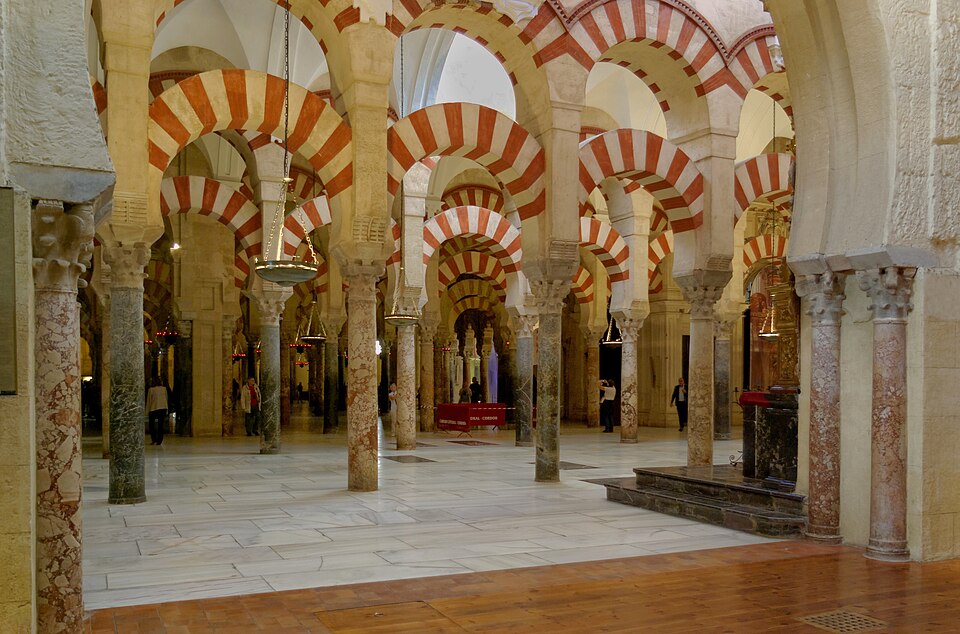
In 711, many parts of the Iberian Peninsula became under the control of the Muslim Umayyad Caliphate. They called the land Al-Andalus; it was the farthest western point of Islamic civilization. In 756, the Umayyads were defeated by the Abbasid in the east. The Umayyads ruled the Caliphate of Córdoba, which fell apart in the early 11th century. Muslim rulers sometimes fought each other when they were not fighting the Christians. Muslim Spain was focused on learning. The greatest library system outside Baghdad.
At first the Muslims ruled most of Spain but the reconquista slowly forced them out over seven centuries.
Kingdom of León
The Kingdom of León, the most important in the early Spanish Middle Ages, was started in 910. This Kingdom developed the first democratic parliament (Cortes de Llión) in Europe in 1188. After 1301, León had the same King as the Kingdom of Castile in personal union. The various kingdoms remained independent territories until 1833, when Spain was divided into regions and provinces.
In 1492, the Christians took the last part of Spain that still belonged to the Moors, Granada. Boabdil, the last Moorish King of Granada, surrendered to King Ferdinand II of Aragon and Isabella I of Castile on 2 January 1492. Ferdinand and Isabella then ruled all of Spain.
Before this, there were a number of Christian countries in what is now called Spain. Two of these countries, Castile and Aragon, came together when Ferdinand II of Aragon married the queen Isabella of Castile. The King ruled as much as the Queen.
In the same year, 1492, they sent Christopher Columbus to sail across the Atlantic Ocean. Columbus found the islands of the Caribbean Sea.
When other Europeans explored, like Hernán Cortés and Francisco Pizarro, they found out that there were two continents there - North America and South America. Spanish conquistador es took over very large parts of those two continents. This empire did not make Spain a rich country, for most of the money had to be spent in wars in Italy and elsewhere. Some of these wars were fought against other European countries who were trying to take over parts of the Americas.
Meanwhile, at home, the Muslim manuscripts had been either burnt or taken to other countries. Jews had also been expelled from Spain. Some Jews remained but they had to become Christians. Among the few old things kept and respected in Spain were in music: harmony and stringed instruments. The buildings that had been built by the Moors were kept, and many Muslim religious buildings (mosques) were turned into churches. Some Jewish religious buildings were also turned into churches. Many Arab words became part of the Spanish Language
16th and 17th century
The grandson of Ferdinand and Isabella was Charles. When his grandfather died he inherited Castille and Aragon. He also inherited many territories at the death of his other grandfather, Maximilian I of Austria. Charles received from Maximilian the Austria state and the territories of Burgundy. He was named Charles I in Spain, but he was elected as the emperor of the Holy Roman Empire, and was called Charles V, Holy Roman Emperor. This made the empire bigger than ever. However, it was not a single country, but a personal union of many independent countries with a single King. At first many Spaniards did not want Charles as their king, so they fought against him. However, he won.
Charles did not like the Protestant Reformation, and fought against it.
18th century
In the 18th century some of the parts of that large empire became their own countries, or were taken over by new countries, such as the United States of America.
19th century
Spain (and other European countries) was invaded by Napoleon of France. Britain sent troops to defend the peninsula, since it was so weak. Most of the Spanish Empire became independent in the following decades.
20th century
There was not much peace in Spain during the first part of the 20th century. Some Spaniards tried to set up a government chosen by the people (a democracy), and they made Alfonso XIII leave the country. However, in 1936, two different groups of Spaniards went to war over whether the government should be a democracy, in the Spanish Civil War (although those on the side of the Republic were largely socialist or anarchist), or take orders from one person. In 1939, those who wanted democracy were defeated, and a nationalist dictator named Francisco Franco took over the government.
Francisco Franco died on 20 November 1975. He had decided that Spain should have a monarchy again, and he chose Juan Carlos, the son of Juan of Bourbon who had been forced to leave the country, to be king and Adolfo Suárez to become its first Prime Minister. But the king and Suárez did not rule as a dictator; instead, they chose to set up a democracy.
On 23 February 1981 a group of people who had supported the now dead General Franco tried to take control of the democratic Spanish Parliament by force, they entered the building and fired guns in the air. It was seen live on Spanish television and there was widespread fear that this might be the start of another civil war. However, Juan Carlos I, quickly appeared on television and broadcast to the nation that they should remain calm. The people responsible for the attempt to take over the country were arrested.
Now Spain is a modern democratic country, and does business with many countries around the world. It is the eighth largest economy in the world and is an important part of the European Union.
21st century
On 2 June 2014, Juan Carlos I announced that he would abdicate in favour of his son, Felipe VI. The date of abdication and handover to Felipe occurred on 19 June 2014. He and his wife kept their titles.
Religion
Ancient religions in Spain were mostly pagan. Today, however, at least 55 percent of Spain is Roman Catholic. Spanish mystic Teresa of Ávila is an important figure within Catholicism. 27 percent of Spaniards are irreligious. 2 percent are from other religions, this include Baha’i Buddhists, Jain, Muslim,Unitarian Universalism and Zoroastrianism.
Geography of Spain
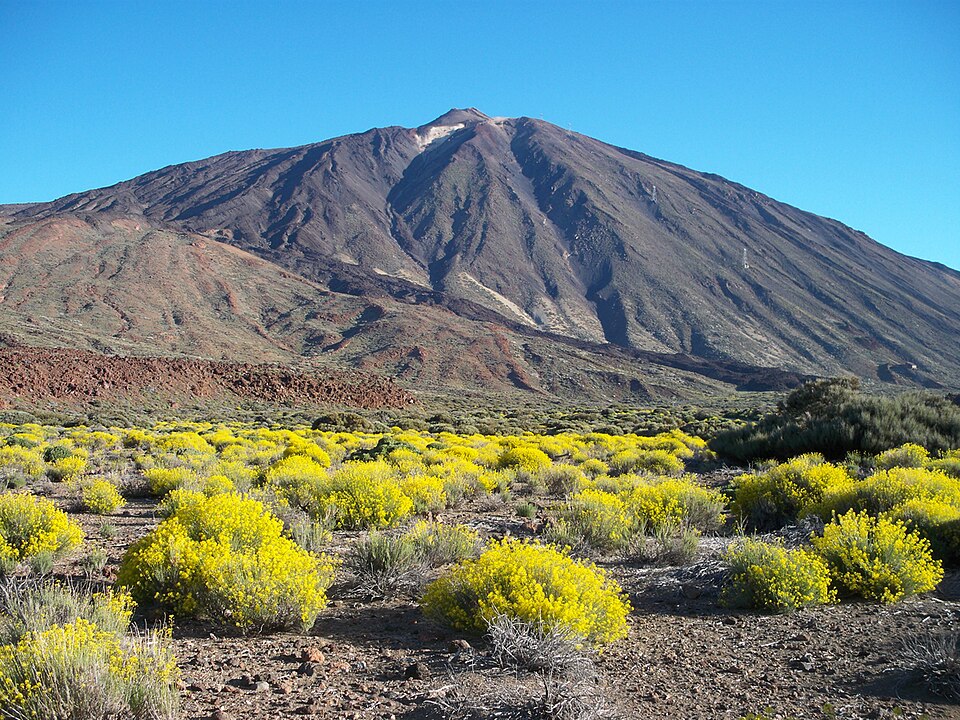
The middle of Spain is a high, dry, flat land called La Meseta. In La Meseta it can be very hot in the summer and cold or very cold in the winter. Spain also has many mountain ranges. The Mount Teide (Tenerife, Canary Islands), the highest mountain of Spain and the islands of the Atlantic (it is the third largest volcano in the world from its base). In the north there is a range of mountains called Los Picos de Europa (The European Peaks). Here it is very cold in winter with a lot of snow but with gentle warm summers and wet winters.
In the south-east of the country is a range of mountains called La Sierra Nevada (The Snowy Mountains). This range of mountains contains the highest mountain in mainland Spain, Mulacen, at 2952 metres. La Sierra Nevada is very popular in winter for winter sports, especially skiing. Snow remains on its peaks throughout the year. The south coast, has a warm and temperate climate, not very hot or very cold. Since Spain is in the south of Europe, it is very sunny. Many people from Northern Europe take their vacations in Spain, enjoying its beaches and cities.
Spain has a border with Portugal in the west and borders with France and Andorra in the North. In the south, it borders Gibraltar, a British territory. The Spanish territories of Ceuta and Melilla are in North Africa and border onto Morocco.
Regions
Spain is divided into Autonomous Communities, which means that they have their own regional governments. They are Andalucía (capital city Seville), Aragon (capital city Zaragoza), Asturias (capital city Oviedo), Balearic Islands (capital city Palma de Mallorca), Basque Country (capital city Vitoria), Canary Islands (capital cities Santa Cruz de Tenerife and Las Palmas), Cantabria (capital city Santander), Castilla-La Mancha (capital city Toledo), Castile and Leon (capital city Valladolid), Catalonia (capital city Barcelona), Extremadura (capital city Merida), Galicia (capital city Santiago de Compostela), La Rioja (capital city Logrono), Madrid Community (capital city Madrid), Murcia Community (capital city Murcia), Navarra (capital city Pamplona) and the Valencia Community (capital city Valencia).
Spain, Tapas
File:Palo Santo Cafe, Aranda de Duero, Spain, Jamón serrano, Tapas Bar & Restaurant.jpg|Palo Santo Cafe, Aranda de Duero, Spain, Jamón serrano File:Tapas Bar & Restaurant, Palo Santo Cafe, Aranda de Duero, Jamón serrano.jpg|Jamón serrano served at Palo Santo Cafe, Aranda de Duero File:Palo Santo Cafe, Aranda de Duero, Spain, Tapas Bar & Restaurant.jpg|Anchovies in Spanish olive oil File:Tapas Bar & Restaurant, Palo Santo Cafe, Aranda de Duero.jpg|Spanish tortilla
City areas
In Spain, many people live in cities or close to cities. The ten biggest city areas are:
Languages
While Spanish is the most spoken language in the country, other languages like Catalan, Basque or Galician are also spoken in a few territories.
Written for younger readers
Spain, in simpler words
This version comes from Wikijunior, a set of books written for children aged 8 to 11. It is shorter and uses plainer language than the article above.
From Wikijunior: Europe
Spain is a large country in south western Europe. It shares borders with France, Portugal, Andorra and Gibraltar (governed by the United Kingdom). The capital city is Madrid. Other big cities are Barcelona, Sevilla and Valencia. Spain is part of the European Union and uses the Euro as its currency.
Between 1936 and 1939 the Spanish Civil War happened. Spaniards fought a bloody civil between the Republican party and the Nationalist party led by Franco. The nationalists where supported by Nazi Germany (Hitler) and Fascist Italy (Mussolini), with men and weapons as well by Portugal (Salazar) in a smaller scale and some militias from Ireland and Romania. The Republican party had no declared support by any nation, in fact France and the United Kingdom adopted a policy of non-intervention (France did for a time support the Republicans). The only real support came from the USSR, and it included planes and other heavy armament. Most of the international help came in the form of militias (mostly civilians without military training) that volunteered to fight Fascism. They came mostly from Communist movements but also others, like Anarchists and Liberal democrats. They came from Mexico, the USA and all around the world, even China. In the end the Nationalist side won the civil war. This was a testbed for WWII.
Between 1939 and 1975 Spain was controlled by General Francisco Franco and was run as a dictatorship.
Spain has been a member of the European Union since 1986. Since this time there has been significant immigration from South America, the United Kingdom, France, Germany, other parts of Europe and north Africa.
Spain is the second largest country in Western Europe (after France). Spain has many high mountains with the largest mountain being Teide at 3,718 metres in the Canary Islands which are located off the African coast.
Spain has a mostly Mediterranean climate with warm winters and hot (often very hot) summers.
Spain is home to many breeds of animals including the rare Iberian Lynx.
Spain is home to over 48 million people which makes it the 6th biggest country in Europe (after Russia, Germany, France, United Kingdom and Italy) and 4th biggest EU country. The majority of people in the country are ethnic Spanish. There are also large minorities of people from Morocco, Ecuador, the United Kingdom, Romania and France.
Spanish (Castilian) is the official and most spoken language in Spain. There are also large numbers of Catalan, Basque and English speakers.
The majority of Spanish people are Catholic Christians (76%). There are also large minorities of Muslims (3%) and people of no religion (19%).
Spain is a popular tourist destination. 60 million people visit Spain every year with the majority of tourists from the United Kingdom, France, Germany, Sweden and Denmark.
The most popular destinations for tourists are the Canary Islands, Madrid, Barcelona, Valencia and the coastal regions of the country. Spain is the 4th most popular country for tourism in the world (after the USA, China and France) and the most popular destination for British and German tourists.
Spain has 48 UNESCO World Heritage Sites, second only to Italy. Notable UNESCO sites include the Works of Antoni Gaudi and Garajonay National Park in the Canary Islands.
Where this page comes from
The article above is adapted from “Spain” on Simple English Wikipedia, by its contributors. We removed reference markers, navigation boxes and tables, expanded measurement templates into readable numbers, and kept the prose otherwise intact. The simpler version is adapted from Wikijunior on Wikibooks.
Both sources are published under CC BY-SA 4.0, so this page is published under the same licence. You may share and adapt it, including commercially, as long as you credit the original and keep the same licence.
Worksheets, answer keys and printable layouts elsewhere on K5Print are our own work and are not covered by this licence.