Tea
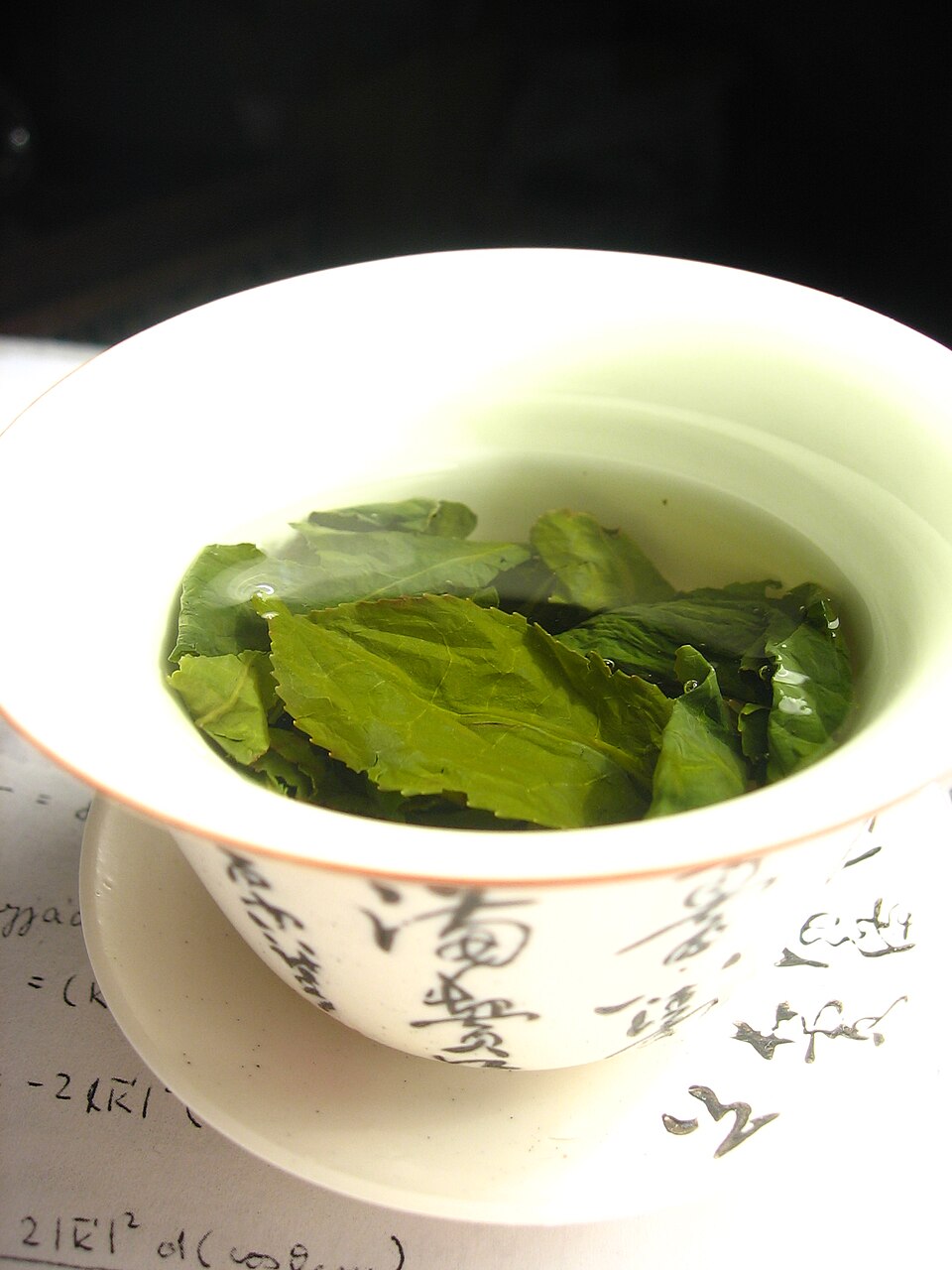

Tea is a caffeinated drink made from steeping the leaves of the Camellia sinensis plant. Tea can have other herbs, spices, or fruit flavors in it, like lemon.
Overview
Sometimes, tea is used for other drinks that have been made by soaking fruit or herbs in hot water, like “rosehip tea” or “chamomile tea”. These are called “herbal teas”. After water, tea is the most widely consumed drink in the world.
Types
There are three main types of tea: black tea, oolong, and green tea.
Black tea
To make black tea, leaves are dried with hot air until they turn brown or black. Next, they are broken into pieces and put into a room where they absorb oxygen, or oxidize. Chemical reactions change the taste and style of the tea.
Most black tea comes from Sri Lanka, Indonesia and eastern Africa. Another name used for black tea, especially in China, is red tea. That is because when black tea leaves are brewed in boiling water, the tea made from them looks deep dark red.
Oolong tea
Oolong tea is a traditional semi-oxidized Chinese tea. It is produced by withering the leaves under strong sun.
Green tea
Green tea is made by steaming freshly picked leaves. This keeps them green. Then they are crushed and dried in ovens. India is the biggest maker and user of green tea.
Distribution
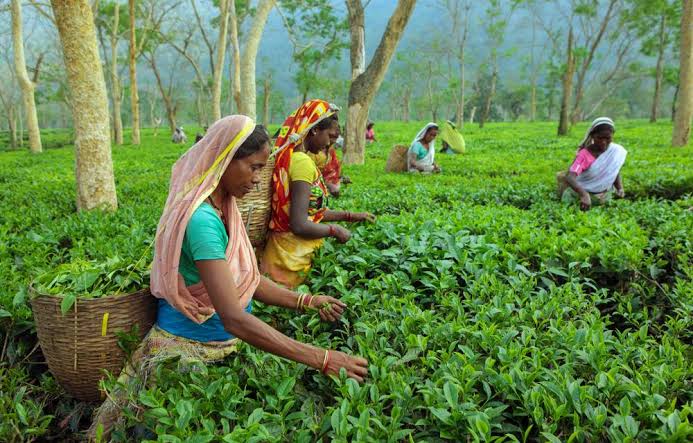
Tea is mainly grown in China, India, Pakistan, Sri Lanka, Taiwan, Japan, Nepal, Australia, Argentina and Kenya.
Brewing
Green tea is usually steeped for 2–3 minutes in water at 175 degrees Fahrenheit (79.4 °C), while black tea is steeped for 3–5 minutes in boiling water.
Blends
- Earl Grey tea is black tea with bergamot oil
- English afternoon tea is medium-bodied, bright and refreshing
- English breakfast tea is a full-bodied, robust blend that is made to go well with milk and sugar
- Assamese and Kenyan teas are blended with Ceylonese teas which adds a light, brisk quality to the blend
Where this page comes from
The article above is adapted from “Tea” on Simple English Wikipedia, by its contributors. We removed reference markers, navigation boxes and tables, expanded measurement templates into readable numbers, and kept the prose otherwise intact.
Both sources are published under CC BY-SA 4.0, so this page is published under the same licence. You may share and adapt it, including commercially, as long as you credit the original and keep the same licence.
Worksheets, answer keys and printable layouts elsewhere on K5Print are our own work and are not covered by this licence.