Togo

Fast facts
- Official language
- French
- Languages
- Gbe languages such as Ewe, Mina and Aja; Kabiyé; and others.
- Capital
- Lomé
- Largest city
- Lomé
- Currency
- CFA franc
- Time zone
- GMT
- Drives on
- right
- Calling code
- +228
Facts from Wikipedia’s “Togo” page (CC BY-SA 4.0).
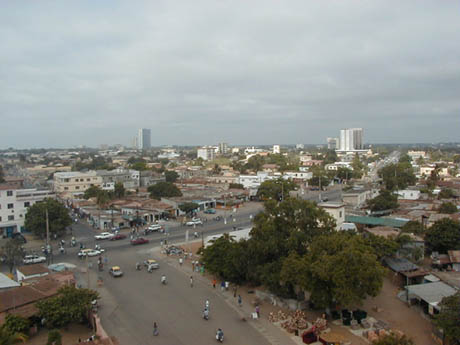
Togo (officially the Togolese Republic, in French: République togolaise) is a small country in West Africa. It is bordered by Ghana to the west, Benin to the east and Burkina Faso to the north. The capital city Lomé is located along the Gulf of Guinea. About 9.3 million people live there. The official language is French. Togo was a hub of the Atlantic slave trade for Europeans. Togo was a part of the Slave Coast. Many Togolese descendants live in the Americas. Togo is also known for its various flora and fauna. Monkeys, snakes, and lizards are numerous in many areas in Togo.
History
From the 11th century to the 16th century, various tribes entered the region from all directions: the Ewé from the east, and the Mina and Guin from the west; most of them settled in coastal areas. The Portuguese explored the area in the late 15th century. As Togoland, it became a protectorate of Germany in 1884. After World War I, Togo was ceded to the French. Togo gained independence from French rule on 27 April 1960. General Gnassingbé Eyadéma became the military leader in 1967. When Eyadéma resigned in 2002 and later passed away in 2005, his son, Faure Gnassingbe became president. In June 2022, Togo joined the Commonwealth of Nations.
Economy
The economy of this small African country is based on agriculture. Agriculture provides jobs for 65% of the labor force according to the CIA Factbook. Agricultural products include coffee, cocoa, cotton, yams, cassava (tapioca), corn, beans, rice, millet, and sorghum. Industries include phosphate mining, agricultural processing, cement, handicrafts, textiles, and beverages.
Government
The president of Togo is elected for 5 years. The president is also the commander of the armed forces. The president also has the right to begin legislation and dissolve parliament.
After Togo’s independence from France, General Gnassingbé Eyadéma became the military leader. When Eyadéma died in 2005, his son Faure Gnassingbe became president. During his re-election campaign, he helped get port concessions in Lomé extended for Bolloré Groupe from 10 to 35 years in exchange for help from the group’s public relations subsidiary Havas. In a 26 Feb 2021 civil hearing at the Paris judicial court, French billionaire Vincent Bolloré, along with associates Gilles Alix and Jean-Philippe Dorent, pleaded guilty to corrupt practices in Togo. The President of the court rejected the negotiated plea bargain and ordered that the three be tried in criminal court. In the same trial, Bolloré SE was fined $12 million.
Regions
Togo is divided into 5 regions. The regions are divided into 30 prefectures and 1 commune. From north to south the regions are Savanes, Kara, Centrale, Plateaux and Maritime.
Cities
The largest cities in Togo are:
Religion
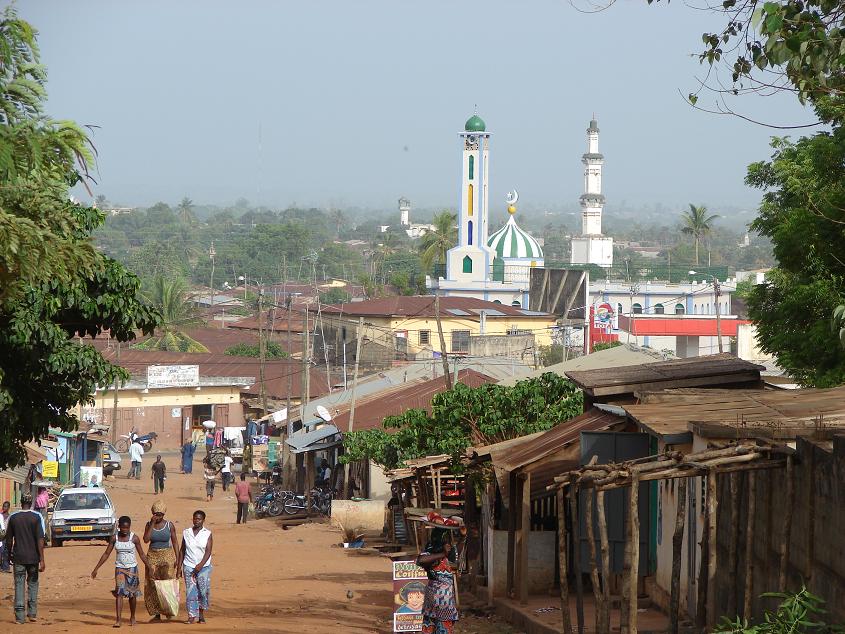
About 48% of the population is Christian. 33% have traditional faiths and 18% are Muslim.
Food and drink
The Togolese enjoy many foods including tropical fruits, pastries, and many different products made from peanuts. Major drinks include tea, coffee, and wine. Togolese often snack on plantains and French donuts or beignets.
Where this page comes from
The article above is adapted from “Togo” on Simple English Wikipedia, by its contributors. We removed reference markers, navigation boxes and tables, expanded measurement templates into readable numbers, and kept the prose otherwise intact.
Both sources are published under CC BY-SA 4.0, so this page is published under the same licence. You may share and adapt it, including commercially, as long as you credit the original and keep the same licence.
Worksheets, answer keys and printable layouts elsewhere on K5Print are our own work and are not covered by this licence.