Turkey
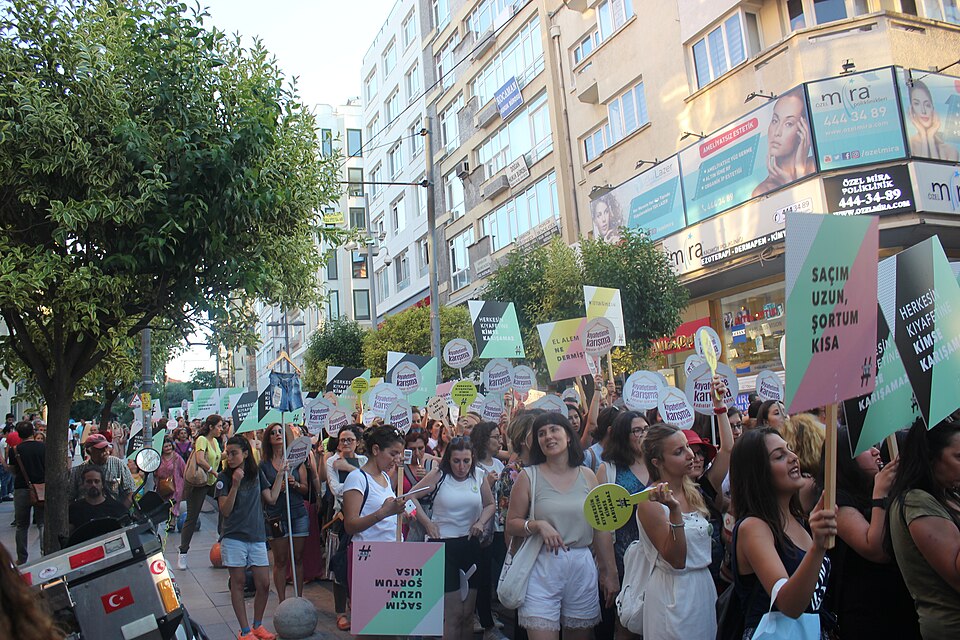

Fast facts
- Capital
- Ankara
- Largest city
- Istanbul
- Official language
- Turkish
- Languages
- Predominantly Turkish
- Currency
- Turkish lira (₺)
- Time zone
- TRT
- Calling code
- +90
Facts from Wikipedia’s “Turkey” page (CC BY-SA 4.0).
Turkey, officially the Republic of Türkiye, is a transcontinental country located mainly on the Anatolian Peninsula in Western Asia, with a small portion on the Balkan Peninsula in Southeast Europe. It shares borders with the Black Sea to the north; Georgia to the northeast; Armenia, Azerbaijan, and Iran to the east; Iraq to the southeast; Syria and the Mediterranean Sea to the south; the Aegean Sea to the west; and Greece and Bulgaria to the northwest. It also shares a maritime border with Cyprus to the south.
Turkey is a republic. There are 81 provinces in Turkey. The money of Turkey is called the Turkish Lira. The capital city is Ankara, a city in the central region, called Anatolia. The cultural and economic centre is in the European side of Istanbul. In the past Istanbul was called Constantinople. The republic was founded in 1923, after World War I and a war of independence (Kurtuluş Savaşı). Before that, Turkey was the core of the Ottoman Empire.
Many civilisations were in the area that is now Turkey, like the Hittites, the Roman Empire and the Byzantine Empire. Many important events in the history of Christianity happened in places that are now in Turkey. Because it lies in both Europe and Asia, some people see Turkey as the “door” between them. The vast majority of the Turkish population believes in the religion of Islam.
Modern Turkey’s varied climate lets many kinds of food crops grow, and livestock and forestry are important industries. Turkey makes enough food to feed itself. Turkish manufactures include aeroplanes, electronics, cars, clothing and textiles for home and for other countries.
Turkey is a popular place for tourists to visit. It has hundreds of kilometres of beaches on its Aegean and Mediterranean coasts, and many important historical places.
Ancient Anatolia
The first major empire in the area was the Hittites (from the 18th century to the 13th century BCE). The Hittites, who spoke one of the Indo-European languages, developed a high culture in Central Anatolia. Their kingdom was destroyed by the Sea People in the 11th century BCE and the successor states were Lydia, Caria and Lycia.
From 1950 BCE, Armenians and Assyrians inhabited parts of southeastern Turkey. The Assyrian capital was named Tushhan (900-600 BCE). The Assyrians ruled over southeastern Turkey until their empire was conquered by Babylonia in 612 BCE. Then Anatolia became home for various kingdoms including the Achaemenid Empire, Hellenistic kingdoms, Roman Empire, Byzantine Empire (Eastern Roman Empire), Seljuk Empire, and Mongol Empire.
The Ottoman Empire
Ottoman Empire During the 14th century, after the fall of the Mongol Empire, Gazi Osman built a new empire named after himself: the Ottoman Empire. It became one of the longest existing empires of all time. The Empire also stretched across the Balkans, (Yugoslavia and Bulgaria) in Europe. The Empire was ruled by Islamic law, but other religions had certain minority rights.
In World War I the Ottoman Empire was one of the Central Powers. During the war, 500,000 Armenians in the Ottoman Empire were massacred in the Armenian genocide. Turkey denies that the event was genocide. The Central Powers lost the war and the Ottoman Empire was destroyed, but after that Atatürk led the newly formed Turkish army to get rid of foreign enemies, like the Greeks and ousted the imperial Ottoman family from Anatolia.
Republic of Türkiye
Mustafa Kemal Atatürk was the first President of Turkey. He made many changes that made Turkey more modern. But some people did not like some of the changes that made life in Turkey more secular. Religious secondary schools were gotten rid of, for example. The opponents to Atatürk felt that he weakened Islam in the country. Later political disputes led to Coup d’état in 1960, 1971, and 1980, and several failed attempts.
In 1974, Turkey launched an invasion of Cyprus and later established the Turkish Republic of Northern Cyprus, Rauf Denktaş became the first Turkish Cypriot president.
On 15 July 2016, a coup d’état was attempted.
In 2022, the government of Turkey started to use the Turkish spelling of Türkiye in both Turkish and English. However, Turkey remains the more common name.
People
About 80 million people live in Turkey. Most of them are ethnic Turks. About 15% are ethnic Kurds. Many refugees from Syria (over 3 million) live in Turkey because they have run away from the Syrian civil war. Many Romani people in Turkey live in Istanbul and Edirne (European part of Turkey).
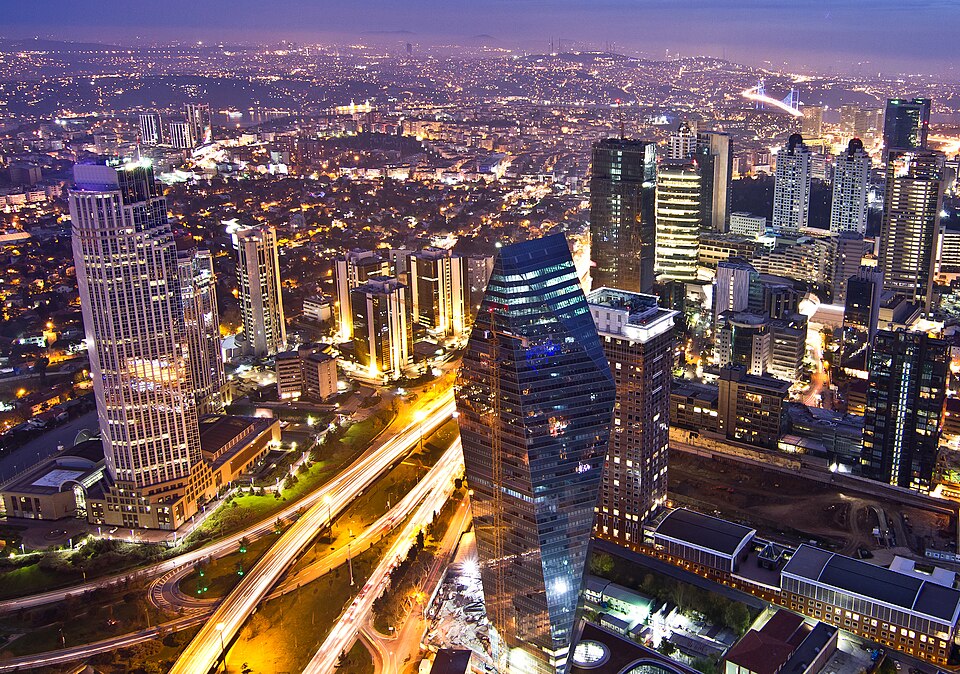
The biggest city in Turkey is Istanbul which has the biggest population of any city in Europe. Much of the population in Turkey is made up of young adults and adults.
According to religiosity poll conducted in Turkey in 2019 by OPTİMAR, 89.5% of the population identifies as Muslim, 4.5% believed in God but did not belong to an organized religion, 2.7% were agnostic, 1.7% were atheist, 0.5% were belonged to the other religions, and 1.1% did not answer. Another poll conducted by Gezici Araştırma in 2020 interviewed 1,062 people in 12 provinces and found that 28.5% of the Generation Z in Turkey identify as irreligious.
Turkish people have many ethnic and famous foods, such as mantı (Turkish ravioli), döner, kebap, Turkish delight (lokum), baklava, lahmacun, börek, köfte, and other foods.
According to a study, Anatolia is genetically more closely related to the Balkan populations than to the Central Asian populations. The Turks of Anatolia (Asian part of Turkey) have only 13% of genes from populations from Central Asia.
Majority and minorities
Most people in Turkey are Turks. The largest minority is Kurds. Kurds live mostly in Southeastern and Eastern Turkey. The second largest minority are the Romani people in Turkey, mostly live in Istanbul and East Thrace, the European side of Turkey. Before World War I, Armenians, Greeks and Assyrians were also significant minorities.
Economy
Turkey is in the OECD and the G-20 and is one of the 20 largest economies. The Turkish currency is called the Lira. The first coins were made in Turkey.
In the 1970s, many Turks moved to other countries, like Germany, to escape the bad economy at the time and to get better jobs. They often come back to Turkey for summer holidays. Today, many of the people who left in the 1970s want to move back to Turkey.
Until the 1980s the government owned most companies, but then Prime Minister Turgut Özal sold them. Before, foreigners were usually not allowed to buy companies, land or property. Turkey’s international trade is mostly with the EU, the United States, the Russian Federation, and Japan. Turkey and the EU agreed not to put a lot of tax on what they buy and sell to each other. After that it was easier for Turkish factories to sell products to the EU and for business people in the EU to buy companies in Turkey.
Turkey’s exports in 2010 were worth 117 billion United States dollars.
Earthquakes in 1994, 1999, and 2001 slowed economic growth a bit. Turkey has no petroleum and not much natural gas so it buys them from other countries, like Russia. In 2010, oil was found in the Turkish City of Diyarbakir, but there was not enough oil to extract. Turkey is searching for natural gas in Turkish Northern Cyprus.
Rich cities in Turkey include Istanbul, Ankara, İzmir, Edirne, Konya, Mersin (also known as İçel), and Antalya.
Language
Most people in Turkey speak Turkish. It is written in Latin script and it belongs to the Turkic language group, which also includes many other languages spoken across Asia, such as Azerbaijani and Tatar. The Turkish language came from Central Asia, but now it is a bit different from the languages spoken in Central Asia. Turks living by the Mediterranean have southern, much thicker, and more masculine accents than western Turkey. Northerners, by the Black Sea have softer accents.
In Turkey there are also minorities who speak languages such as Kurdish, Arabic, Armenian, Greek or Ladino, Romani and many others.
Many of the young adults can also speak English, which is taught throughout Primary, Middle and High school.
Lifestyle
Turkish culture is a diverse culture, with some European influence. Different parts of Turkey have similar but not exactly the same lifestyles. Central Turkey and Northern Turkey are somewhat more conservative and religious. Western Turkey and Southern Turkey, especially coastal cities are more liberal and secular. Eastern Turkey and Southeastern Turkey are made up of mostly Kurds–most of them are conservative and religious. Cosmopolitan neighbourhoods in major cities of Turkey are overwhelmingly liberal and secular. Cities like Hatay and Mardin, where different religions coexist, and Eskişehir, which is the prominent college town of the country, also have cosmopolitan characteristics.
Collectivism is dominant in society rather than individualism. This is seen in everything from a civilian’s worldview to the socio-political and socio-economic order of the country. People care a lot about what others think of them or their related ones. Sociologist Şerif Mardin, who argues that there is neighborhood watch in Turkish society, states that “There is no tolerance for deviations from norms in the Turkish tradition, a watching oppression is applied against individuals in this situation and this is not new.”
Traditions
The circumcision of boys in Turkey is very common, with over 98% of men being circumcised. This is due to religious and cultural traditions and the circumcisions are celebrated with ceremonies known as Sünnet Düğünü or at a Mevlüd ceremony. Anyway today enough Turkish Muslim men against it.
Provinces
The capital and second-largest city of Turkey is Ankara. The largest and the most crowded city is Istanbul which is the only city in the world that has land on two different continents. The third largest city is the coastal city of İzmir which is the main port of the country. Turkey is divided into 81 provinces. Each province has its own little government but they can only make decisions about small things: the government in Ankara decides important issues. The provinces are in 7 regions. Each province is divided into districts. There are 973 districts altogether. The biggest Main City at the European Side of Turkey is Edirne in East Thrace.
Education
Turkey’s literacy rate is currently 98.3%. People in Turkey have to go to school for 12 years.
Istanbul University was the first university in Turkey. It was established in 1453. Ankara University was the first university that was started after Turkey became a republic. It was established in 1946.
There were 6065 high schools in Turkey in 2002 according to Ministry of National Education. In 2022, there were 208 universities in Turkey.
Earthquakes
The 1999 İzmit earthquake was an approximately 7.4 magnitude earthquake that struck northwestern Turkey on 17 August 1999, at about 3:02 am local time. 18.000 people died in the earthquake. Many people have been killed by earthquakes in Turkey.
The New York Times estimated that over 570 people died in the Erzincan earthquake of 13 March 1992. The earthquake was a 6.8 on the Richter Scale.
European Union
Some people have wanted Turkey to join the European Union (EU) since the 1990s. Negotiations to join began in 2005.
Written for younger readers
Turkey, in simpler words
This version comes from Wikijunior, a set of books written for children aged 8 to 11. It is shorter and uses plainer language than the article above.
From Wikijunior: Asia
Turkey or Türkiye, is a country that occupies a unique geographic position, lying partly in Asia and partly in Europe. It is situated at the crossroads of the Balkans, Caucasus, Middle East, and eastern Mediterranean. It is also a birthplace of Ottoman Empire, created by Turkish tribes in Anatolia (Asia Minor) that grew to be one of the most powerful states in the world during the 15th and 16th centuries. The Ottoman period spanned more than 600 years and came to an end only in 1922, when it was replaced by the Turkish Republic.
The capital is Ankara and the currency of Turkey is the lira.
Turkey is borded on the north by the Black Sea, on the northeast by Georgia and Armenia, on the east by Azerbaijan and Iran, on the southeast by Iraq and Syria , on the southwest and west by the Mediterranean Sea and the Aegean Sea, and on the northwest by Greece and Bulgaria.
According to the 2021 census figures, the total population in Turkey was estimated at 84,680,273 people.
Under the Constitution of Turkey: Article 42, the Turkish language is established as the official language of the country. The language is also the most spoken in the country. The common ethnic languages spoken in Turkey are Turkish, Kurmanji, Arabic and Zazaki.
In a 1928 constitutional amendment, Islam was removed as the official state religion. However, more than 90% of the population is Muslim.
Turkish oil wrestling (also known as grease wrestling / Yağlı güreş ) is the national sport of Turkey.
It is an old sports apparently dates back to the Janissaries, the elite soldier class of the Ottoman Empire. The Janissaries trained extensively for combat and wrestling was a part of this. Tradition has it that the Janissaries used olive oil to either keep their bodies cool, or mixed with herbs to ward off mosquitoes through hours of training. At some point the oil became inseparable from the wrestling itself and its effects on the matches themselves far outweigh anything it can do for sun or mosquito protection in the modern era.
Wrestlers wear hand stitched leather trousers called kisbet and are drenched in olive oil before the match as this makes it more difficult to gain a grip on your opponent. The rule of grease wrestling are the competitors need to protect their own kisbet while trying to attack his challenger. To gain hold the wrestlers will go down the back of their opponents uniform. Winning using this move is known as paca kazık. The other rules are not to ‘show his navel to the heavens’. If you laid down with belly facing the skies , you lose.
File:Istanbul.Sultanahmet.BlueMosque.jpg|Blue Mosque / Sultan Ahmed Mosque File:Hagia Sophia Mars 2013.jpg|Hagia Sophia File:Aspendos Theatre - 2014.10 - panoramio.jpg|Aspendos Theatre File:Library of Celsus 6243.jpg|Library of Celsus File:Pamukkale 12.jpg|Pamukkale File:MountNemrut.jpg|Mount Nemrut
Blue Mosque / Sultan Ahmed Mosque - Istanbul mosque is that it has six minarets, as opposed to the usual two or four of most of the city’s mosques. In the history of the Blue Mosque, legend has it that this is because of a misunderstanding – when the Sultan decreed there should be altın minare (gold minarets), the architect heard altı minare (six minarets)
Hagia Sophia - It is a museum which was originally built as a church during Emperor Justinian and converted to a mosque during the Ottoman Empire and finally under order of Mustafa Kemal Atatürk , it was finally reopened as a museum in 1935.
Aspendos Theatre - Aspendos boasts one of the best preserved ancient theatres of antiquity. The theatre of Aspendos was built in 155 AD during the rule of the Roman Emperor Marcus Aurelius and could seat between 15,000 and 20,000 spectators. Because the stage area was later used as a caravanserai (a roadside inn) in Seljuk times, it was continuously repaired and maintained. Thus, the Aspendos Theatre has been able to survive to this days without losing almost any of its original qualities.
Library of Celsus - The library was built around 125 AD to store 12,000 scrolls and to serve as a monumental tomb for Celsus, the governor of Asia. The façade was carefully reconstructed in the 1970s to its present splendid state from the original pieces.
Pamukkale - It meant “cotton castle” in Turkish, is an unreal landscape in western Turkey, famous for its white terraces. The terraces are made of travertine, a sedimentary rock deposited by water with a very high mineral content from the hot springs. People have bathed in its pools for thousands of years. The ancient Greek city of Hierapolis was built on top of the hot springs by the kings of Pergamon. The ruins of the baths, temples and other Greek monuments can be seen at the site.
Mount Nemrut - One of Turkey’s most famous sites, Mount Nemrut has statues of Greek and Persian gods that were built by King Antiochus I of Commagene.
Where this page comes from
The article above is adapted from “Turkey” on Simple English Wikipedia, by its contributors. We removed reference markers, navigation boxes and tables, expanded measurement templates into readable numbers, and kept the prose otherwise intact. The simpler version is adapted from Wikijunior on Wikibooks.
Both sources are published under CC BY-SA 4.0, so this page is published under the same licence. You may share and adapt it, including commercially, as long as you credit the original and keep the same licence.
Worksheets, answer keys and printable layouts elsewhere on K5Print are our own work and are not covered by this licence.