Uganda

Fast facts
- Official language
- English, Swahili
- Languages
- Ganda, Luo
- Capital
- Kampala
- Currency
- Ugandan shilling
- Time zone
- EAT
- Drives on
- left
- Calling code
- +256 1
Facts from Wikipedia’s “Uganda” page (CC BY-SA 4.0).
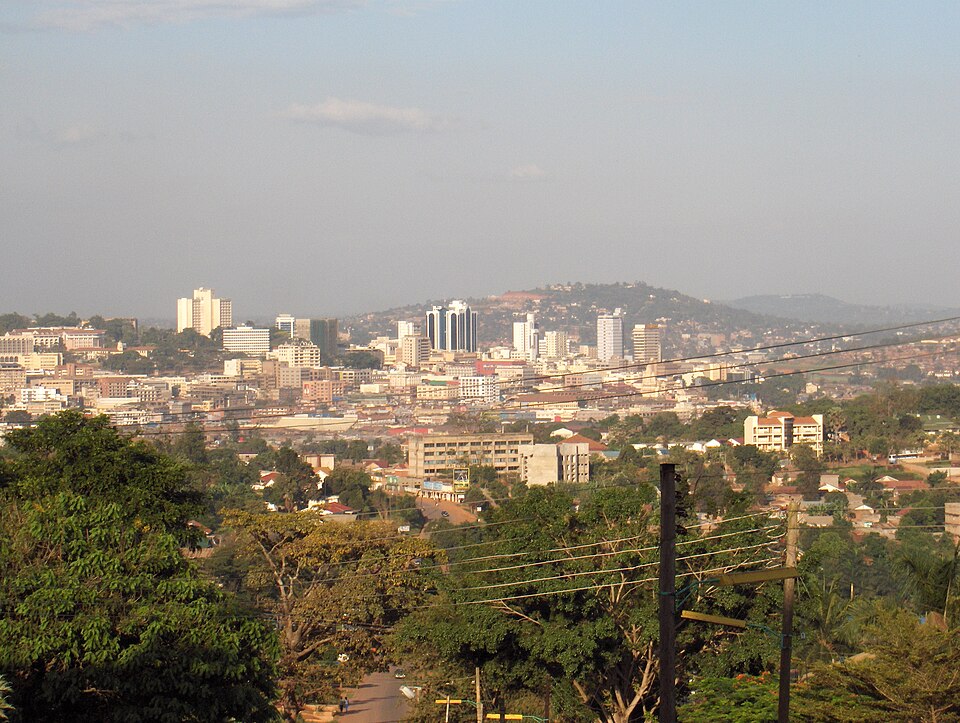
The Republic of Uganda is a landlocked country in east Africa. It shares land borders with five countries including the Democratic Republic of the Congo to the west, Kenya to the east, South Sudan to the north, Rwanda to the south-west, and Tanzania to the south. The capital and largest city is Kampala.
The currency is the Ugandan Shilling. The official languages of Uganda are English and Swahili. The most common religion is Christianity. The President of Uganda is Yoweri Kaguta Museveni. The country is to the East of Africa. The population of Uganda is 52.2 million people as of 2026. The total land area of Uganda is 199,810 km2 .
Uganda’s economy relies heavily on agriculture with the main exports being coffee, tea, and copper.
Uganda is among countries thought to be very corrupt by Transparency International. It is rated at 2.4 on a scale from 0 (the most corrupt) to 10 (the most clean). Uganda is one of the poorest nations in the world. 37.7 percent of the people live on less than $1.25 a day.
History
Uganda, located in East Africa, has a rich history. It was home to ancient kingdoms like Buganda, Bunyoro, and Ankole. Colonial rule began with the arrival of the British in the late 19th century. Independence was achieved in 1962 under the leadership of Milton Obote. The country faced political instability, with Idi Amin’s regime notorious for human rights abuses in the 1970s. Yoweri Museveni took power in 1986, bringing relative stability. Uganda has since experienced economic growth, though challenges like conflicts in the north have persisted.
Geography
Uganda is almost completely in the Nile basin. At the centre of the country is Lake Kyoga. Although landlocked, Uganda has many large lakes. Besides Lake Victoria and Lake Kyoga, there are Lake Albert, Lake Edward and the smaller Lake George. Most important cities are in the south, near Lake Victoria, including the capital Kampala and the nearby city of Entebbe.
The climate is mostly equatorial. But it is not the same everywhere because there are some changes in altitude. The difference in altitude changes the climate. Southern Uganda is wetter with rain generally throughout the year. At Entebbe on the northern shore of Lake Victoria, most rain falls from March to June and in the November/December period. Further to the north a dry season slowly emerges. At Gulu about 120 km from the South Sudanese border, November to February is much drier than the rest of the year.
Cities
The largest cities in Uganda are:
Culture and sport
Because there are so many communities, culture in Uganda is diverse. Many Asians (mostly from India) who had to leave during the regime of Amin have returned to Uganda.
Football is the national sport in Uganda. Games with the Ugandan national football team usually attract large crowds of Ugandans. The Ugandan Super League is the top division of Ugandan football. There are 16 clubs from across the country. It was made in 1968. Uganda’s most famous footballers are David Obua of Scottish club Hearts and Ibrahim Sekagya, who is the captain of the national team. Uganda’s notable past greats of the game include Denis Obua, Majid Musisi, Fimbo Mukasa and Paul Kasule.
Cricket has become more popular. Uganda won the World Cricket League (WCL) Division 3 in 2007.
In 2007, the Uganda national rugby union team were victorious in the 2007 Africa Cup, beating Madagascar in the final.
Hockey is the only Ugandan field sport to date to have qualified for and represented the country at the Olympics. This was at the 1972 Summer Olympics. Uganda won gold medals at the Olympics in athletics with legendary hurdler John Akii-Bua in 1972 and marathon winner at the London 2012 Olympics Stephen Kiprotich.
In July 2011 Kampala, Uganda qualified for the 2011 Little League World Series. Due to visa trouble they were unable to attend the Series. In 2012, Uganda qualified again for the Little League World Series. This time they were able to attend.
Where this page comes from
The article above is adapted from “Uganda” on Simple English Wikipedia, by its contributors. We removed reference markers, navigation boxes and tables, expanded measurement templates into readable numbers, and kept the prose otherwise intact.
Both sources are published under CC BY-SA 4.0, so this page is published under the same licence. You may share and adapt it, including commercially, as long as you credit the original and keep the same licence.
Worksheets, answer keys and printable layouts elsewhere on K5Print are our own work and are not covered by this licence.