United Arab Emirates

Fast facts
- Capital
- Abu Dhabi
- Largest city
- Dubai
- Official language
- Arabic
- Calling code
- +971
Facts from Wikipedia’s “United Arab Emirates” page (CC BY-SA 4.0).
The United Arab Emirates (UAE; in Arabic: الإمارات العربية المتحدة) is a country in Western Asia. It borders Oman, Qatar, and Saudi Arabia. The capital is Abu Dhabi, and the largest city is Dubai. The Burj Khalifa, Earth’s tallest building, is in Dubai. Approximately 83,600 square kilometers square kilometers is the area of the United Arab Emirates. till December 31, 2017, the UAE counted a population of 9,304,277, according to the reports of the Federal Competitiveness and Statistics Authority.
The main natural resources in The United Arab Emirates are oil and gas. The oil reserves of the UAE are approximately 8.2% of the global oil reserves according to OPEC. Economic growth has been more steady than in most countries in the Middle East.
The country is made of seven states, or emirates. Each emirate is an absolute monarchy. The UAE has a federal constitution by which the emirates share power.
History
The oldest human traces in the Emirates date back to 7000 years BCE. The Emirates has more than 330 historical buildings, some have a history from the Stone Age. After the start of Islam a new chapter began in the area, during the Umayyad period, the area of the Arabic Gulf was stable and it became important for navigation and shipping. The Portuguese were the first who arrived in this area after the fall of Al-Andalus. The explorer Vasco da Gama was the first to reach India from Europe after turning around the Cape of Good Hope and passing the Arabic Gulf. The Portuguese controlled all the harbors in the area for more than 2 centuries. During the 18th and 19th centuries Great Britain controlled the area after the Portuguese left. They organized the Trucial States, an informal protectorate.
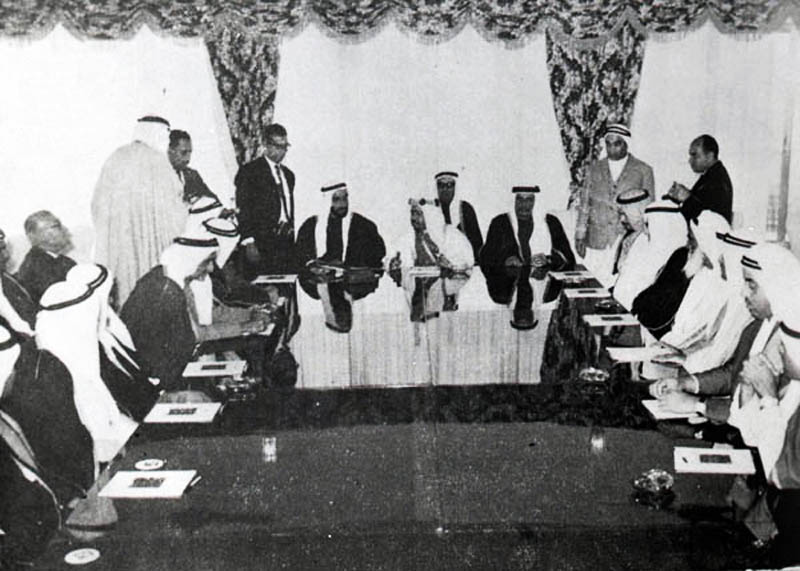
In 1968 the British announced that they were leaving their colonies in the Middle East and on 2nd December 1971, the United Arab Emirates was created, made of 6 emirates in the beginning. Ras Al Khaimah later joined the union in 1972, finally making the union containing of 7 emirates. Zayed bin Sultan Al Nahyan became the president of the country and Rashid bin Saeed Al Maktoum, the former ruler of Dubai, became the vice president. After the first president Zayed bin Sultan Al Nahyan died in 2004, his son Khalifa bin Zayed Al Nahyan became the second president of the UAE. After his death on the on the 13th of May 2022, his brother Mohamed bin Zayed Al Nahyan became the 3rd president.
Cities and landscape
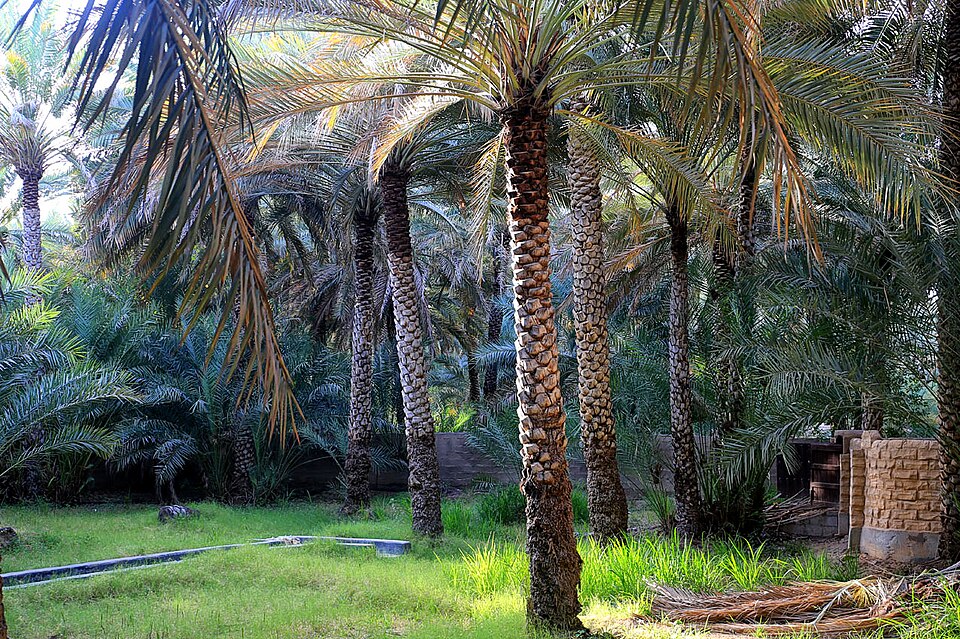
This country has seven emirates: Abu Dhabi, Dubai, Sharjah, Ajman, Ras Al Khaimah, and Fujairah. It has also more than 200 islands, that differ in size, origin, composition and importance. The UAE is characterized by a diversity of natural looks from steep mountains to flat coastal plains and from the high red sand dunes in Liwa to the city Al-Ain, which is considered a natural oasis full of palm trees.
Demographics
In 2014, the population in the United Arab Emirates became about 9 million citizens. Due to significant growth in various economic sectors, the United Arab Emirates got a significant increase in population over the past few years, the UAE witnessed a significant influx of labor from different religious and cultural backgrounds. The state of UAE adopts a culture of tolerance and moderation, especially when people from 200 nationalities are living in its land. The country’s inhabitants increased from 4.1 million to 8.3 million between 2005 and 2010 while the Emirati citizens formless than 1 million of them.
Culture
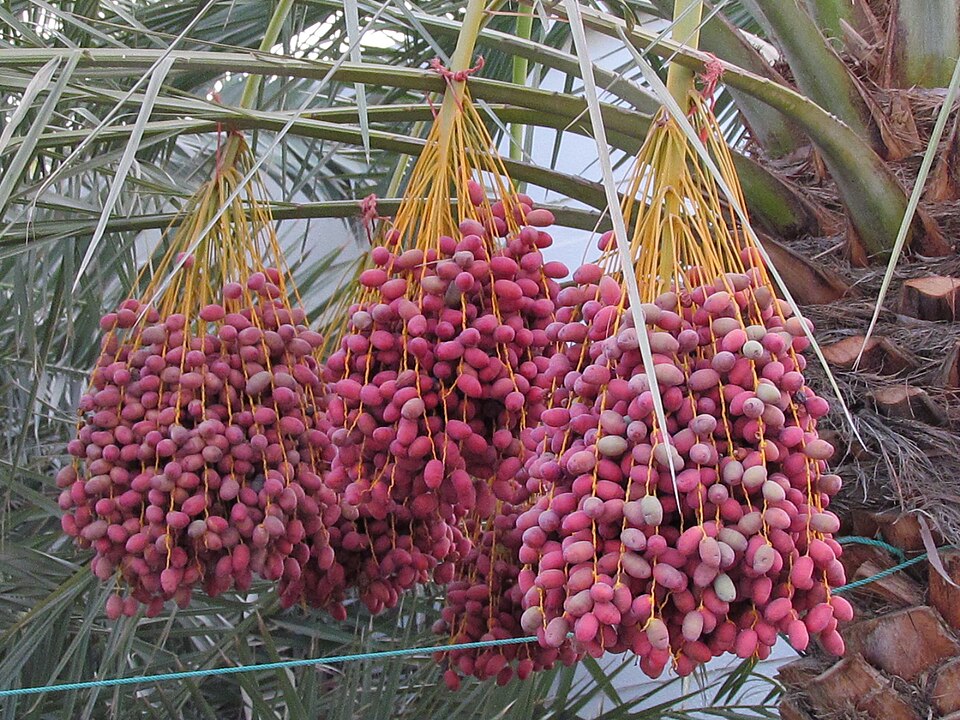
The UAE is a modern state which sticks to its heritage because the citizens are the minority. The officials in UAE support establishing the necessary balance between modernization and tradition and give an illustration of the cultural identity. The United Arab Emirates is colorful and rich in Folklore. The camel and the date palm have nomadic and agricultural bases in its society that are traceable to thousands of years before the spread of Arabs and Muslims. The UAE is also Influenced by other ancient civilizations like Mesopotamia and Greece however the colonial powers which controlled almost everything left very little affect on the folklore of this country. The aggressive behavior of the Portuguese left no space for social interaction and culture exchange
Government and politics
The United Arab Emirates is based on a federal-state system that is subject to the provisions of the UAE constitution with full sovereignty. The Federation has its capital, logo, flag, and national anthem. Several federal institutions shape the political system of the United Arab Emirates. The Federal Supreme Council (in Arabic: المجلس الأعلى للاتحاد) represents the highest authority in the country and the rulers of the seven emirates are members of it. Its mission is to take care of the common interests of the Emirates, the ratification of federal laws, the election of the president and his deputy and other tasks.
The seven emirates are:
- Ras al-Khaimah
- Umm al-Quwain
Emirates Mars Mission
In July 2020, the United Arab Emirates launched the EMM (Emirates Mars Mission) to Mars. It arrived in Mars orbit in February 2021. The mission is to use several scientific instruments to gain useful data about Mars. The Emirates Mars Mission is being operated from the United States (U.S.) and the United Arab Emirates (UAE). It became first Arab country to reach Mars.
Development of the UAE
The most important elements behind the growth and development since the founding of the UAE are oil and gas. The first export of oil took place in the year 1962, the former president Zayed bin Sultan Al Nahyan wanted to use these resources in building infrastructure for starting economic and civilization development. The development of the UAE is going so fast, especially in the last 20 years, so Dubai did realize huge projects like Palm Jumeirah, The World (archipelago), and Burj Khalifa, the world’s tallest building.
The state of UAE is focusing recently on building the basics for future development, by supporting projects and initiatives that promote qualitative innovation investments, research, technological- and industrial development. The government is preparing an integrated strategy that will enable them to completely dispense with oil as one important compartment of the economy because currently more than 30% of the UAE’s GDP is based on oil.
Religion
There is freedom of religion in the United Arab Emirates, but it is limited.
About 76 percent of the people living in the UAE are Muslims, about nine percent are Christians, and the remaining fifteen percent are mostly Hindus and Buddhists. One percent of the people are agnostic. There are other sources that say that the percentage of Christians is much higher, especially among foreigners. One report gives an estimate of almost thirteen percent. 99 to 100 percent of the citizens of the UAE are Muslims. In the UAE. most Muslims are are Sunni, most follow the Maliki school of jurisprudence. Most of the remaining fifteen percent are Shia. Most Shia Muslims live in the Emirates of Dubai and Sharjah. There are no official statistics for the breakdown between Sunni and Shia Muslims among noncitizen residents. Media estimates suggest less than twenty percent of the noncitizen Muslim population are Shia. The Sheikh Zayed Grand Mosque in Abu Dhabi is the largest mosque in the country and a major tourist attraction. Ibadi is common among Omanis in the UAE, while Sufi influences exist as well.
Most of the Christians are Roman Catholics.
Written for younger readers
United Arab Emirates, in simpler words
This version comes from Wikijunior, a set of books written for children aged 8 to 11. It is shorter and uses plainer language than the article above.
From Wikijunior: Asia
United Arab Emirates is a country in West Asia, in the Middle East. Abu Dhabi is the country’s capital, while Dubai, the most populous city, is an international hub.
United Arab Emirates is located at the eastern end of the Arabian Peninsula and shares borders with Oman and Saudi Arabia, while also having maritime borders in the Persian Gulf with Qatar and Iran.
The UAE is ethnically diverse. The five most populous nationalities in the emirates of Dubai, Sharjah, and Ajman are Indian (25%), Pakistani (12%), Emirati (9%), Bangladeshi (7%), and Filipino (5%). Immigrants from Europe, Australia, North America and Latin America make up 500,000 of the population. More than 100,000 British nationals live in the country. The rest of the population are from other Arab states.
Arabic is the official language in United Arab Emirates.
Islam is the official state religion in United Arab Emirates.
Football is the most popular sports in United Arab Emirates. Emiratis also play motorsports, cricket, badminton, camel racing, cycling, endurance riding, falconry, golf, ice hockey, squash and table tennis
- The World Islands (Arabic: جزر العالم; Juzur al-Ālam) are an archipelago of small artificial islands constructed in the shape of a world map, located in the waters of the Persian Gulf, off the coast of Dubai, United Arab Emirates.
Where this page comes from
The article above is adapted from “United Arab Emirates” on Simple English Wikipedia, by its contributors. We removed reference markers, navigation boxes and tables, expanded measurement templates into readable numbers, and kept the prose otherwise intact. The simpler version is adapted from Wikijunior on Wikibooks.
Both sources are published under CC BY-SA 4.0, so this page is published under the same licence. You may share and adapt it, including commercially, as long as you credit the original and keep the same licence.
Worksheets, answer keys and printable layouts elsewhere on K5Print are our own work and are not covered by this licence.