Washington

Washington, officially the State of Washington, is a state in the Pacific Northwest region of the United States. It is north of Oregon, west of Idaho, east of the Pacific Ocean, and south of British Columbia. (British Columbia is part of Canada.)
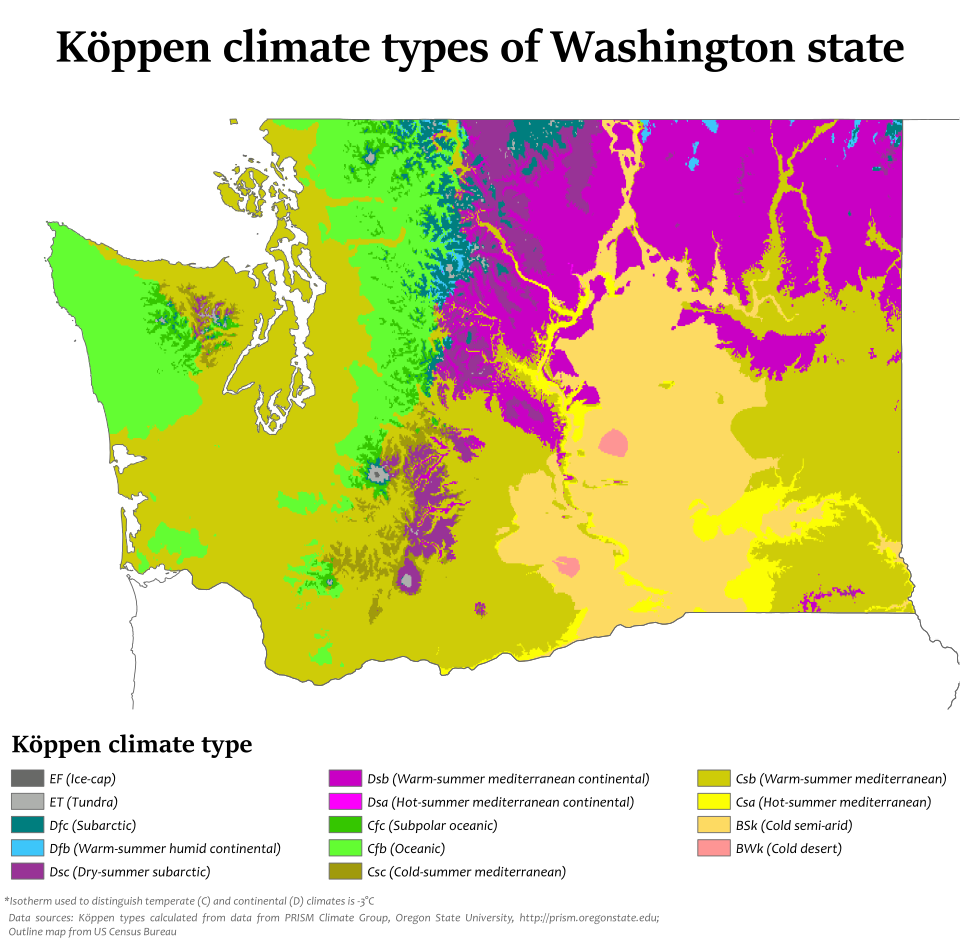
There are more than 7,000,000 people in Washington. Most live in the western part of Washington, which gets more rain. About a quarter of the people live in the east part, where it gets less rain, and some parts have a desert climate. The largest city on the eastern part is Spokane, which is also the second biggest city in the state.
The Cascade Mountains go down the middle of the state and divide it into two sides. The state’s nickname is the “Evergreen State” because it has a lot of pine trees. Washington was the 42nd state to join the United States, on November 11, 1889. It is often called “Washington State” so that it does not get confused with the nation’s capital, Washington, D.C. The name “Washington” comes from President George Washington.
The capital of Washington is Olympia. Olympia is a small city on the west side of Washington, at the south end of the Puget Sound. Washington’s biggest city is Seattle; Seattle is also on the Puget Sound.
Washington has many beautiful forests, rivers, gorges (gorges are small canyons), and mountains. Because it is next to the ocean, it has a long beach. However, because Washington is north of Oregon and California (the other two states on the West Coast of the United States), the ocean is colder, and usually not good to swim in.
The biggest universities in Washington are the University of Washington and Washington State University. The University of Washington is in Seattle. Washington State University is in a small town called Pullman. Pullman is on the east of the state.
Geography and climate
The state of Washington has an extremely varied geography, and therefore an extremely varied climate. The map shows western cities have shipping access. These are the low-lying parts on the next to the Pacific Ocean. The western side of the mountains is wet and forested with conifers. Some areas are temperate rain forests (in the Olympic Mountains).
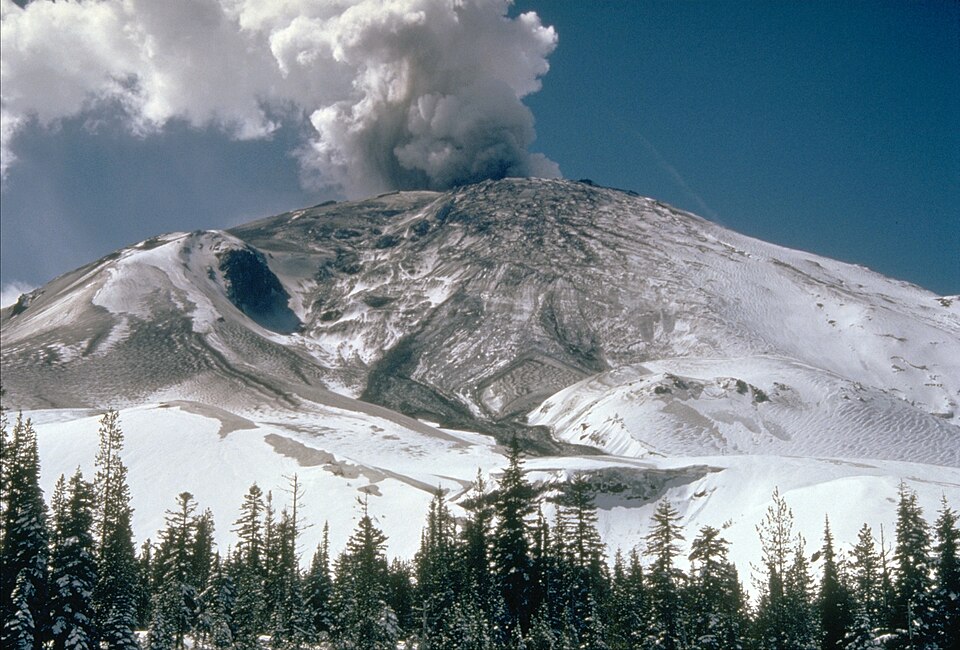
The central area is mountainous, including five volcanos: Mount Baker, Glacier Peak, Mount Rainier, Mount St. Helens, and Mount Adams. To the east of the mountains the land is dry and mostly dry grassland (high plains). Only one feature links the west to the east: the important Snake River, a tributary of the even larger Columbia River.
Lists of Federal land and reservations
National parks and monuments There are three National Parks and two National Monuments in Washington:
- Mount Rainier National Park
- North Cascades National Park
- Olympic National Park
- Mount St. Helens National Volcanic Monument
- Hanford Reach National Monument
National forests
Nine national forests are located (at least partly) in Washington:
- Colville National Forest
- Gifford Pinchot National Forest
- Idaho Panhandle National Forest
- Kaniksu National Forest
- Mount Baker-Snoqualmie National Forest
- Okanogan National Forest
- Olympic National Forest
- Umatilla National Forest
- Wenatchee National Forest
Federally protected wildernesses 31 wildernesses are located (at least partly) in Washington, E.g.:
- Alpine Lakes Wilderness
- Glacier Peak Wilderness
- Goat Rocks Wilderness
- Henry M. Jackson Wilderness
- Juniper Dunes Wilderness
- Lake Chelan-Sawtooth Wilderness
- Mount Baker Wilderness
- Norse Peak Wilderness
- Olympic Wilderness
- Pasayten Wilderness
- Wild Sky Wilderness
National wildlife refuges 23 National Wildlife Refuges are located (at least partly) in Washington E.g.:
- Dungeness National Wildlife Refuge
- Little Pend Oreille National Wildlife Refuge
- Nisqually National Wildlife Refuge
- Ridgefield National Wildlife Refuge
- Saddle Mountain National Wildlife Refuge
- San Juan Islands National Wildlife Refuge
- Turnbull National Wildlife Refuge
- Willapa National Wildlife Refuge
Other federally protected lands
Other protected lands of note are:
- Columbia River Gorge National Scenic Area
- Ebey’s Landing National Historical Reserve
- Fort Vancouver National Historic Site
- Klondike Gold Rush National Historical Park
- Lake Chelan National Recreation Area
- Lake Roosevelt National Recreation Area
- Ross Lake National Recreation Area
- San Juan Island National Historical Park
- Whitman Mission National Historic Site
- 17 National Natural Landmarks
Military and related reservations
There are many large military-related reservations, like:
- Fort Lewis
- McChord Air Force Base
- Fairchild Air Force Base
- Naval Base Kitsap
- Hanford Site
- Yakima Training Center
- Puget Sound Naval Shipyard and Intermediate Maintenance Facility (Bremerton)
- Naval Air Station Whidbey Island
- Naval Station Everett
Written for younger readers
Washington, in simpler words
This version comes from Wikijunior, a set of books written for children aged 8 to 11. It is shorter and uses plainer language than the article above.
From Wikijunior: North America
Washington is a state in the Pacific Northwest region of the United States. Washington was carved out of the western part of Washington Territory and admitted to the Union as the 42nd state in 1889. The state is named after George Washington, the first President of the United States. Washington is often called Washington state or the State of Washington to distinguish it from the District of Columbia (which is usually called Washington, D.C.).
The Pacific coast is relatively flat, but it soon rises up into rainy coastal mountains. Further east, there are the even higher and rainier Cascades, but the eastern part of the state is mostly high and relatively dry plains with a few deep and impressive river canyons.
Bill Gates lives in Seattle.
- The state is nicknamed the Evergreen State (unofficial)
- The state motto is “Alki”, which translates to “Bye and Bye” in Chinook Jargon (unofficial)
- The state amphibian is the Pacific Chorus Frog
- The state fish is the Steelhead Trout
- The state flower is the Pacific Rhododendron
- The state fruit is the Apple
- The state grass is Bluebunch Wheatgrass
- The state insect is the Green Darner Dragonfly
- The state marine mammal is the Orca
- The state tree is the Western Hemlock
- The state vegetable is the Walla Walla Sweet Onion
- The state fossil is the fossil of the Columbia Mammoth
- The state gem is Petrified Wood
- The state dance is the Square Dance
Where this page comes from
The article above is adapted from “Washington” on Simple English Wikipedia, by its contributors. We removed reference markers, navigation boxes and tables, expanded measurement templates into readable numbers, and kept the prose otherwise intact. The simpler version is adapted from Wikijunior on Wikibooks.
Both sources are published under CC BY-SA 4.0, so this page is published under the same licence. You may share and adapt it, including commercially, as long as you credit the original and keep the same licence.
Worksheets, answer keys and printable layouts elsewhere on K5Print are our own work and are not covered by this licence.