Bavaria

Fast facts
- Leader
- Markus Söder
Bavaria (; , ), which officially is the Free State of Bavaria (Freistaat Bayern, ; Freistoot Bayern), is a State (Bundesland) of Germany. The territory of this state is the largest of the 16 German states. The state capital is Munich with 1.5 million people. About 13.1 million people live in Bavaria.
Like many German states, Bavaria was once independent. Ludwig II of Bavaria was its last independent king. Bavaria joined the German Empire in 1871.
Structure
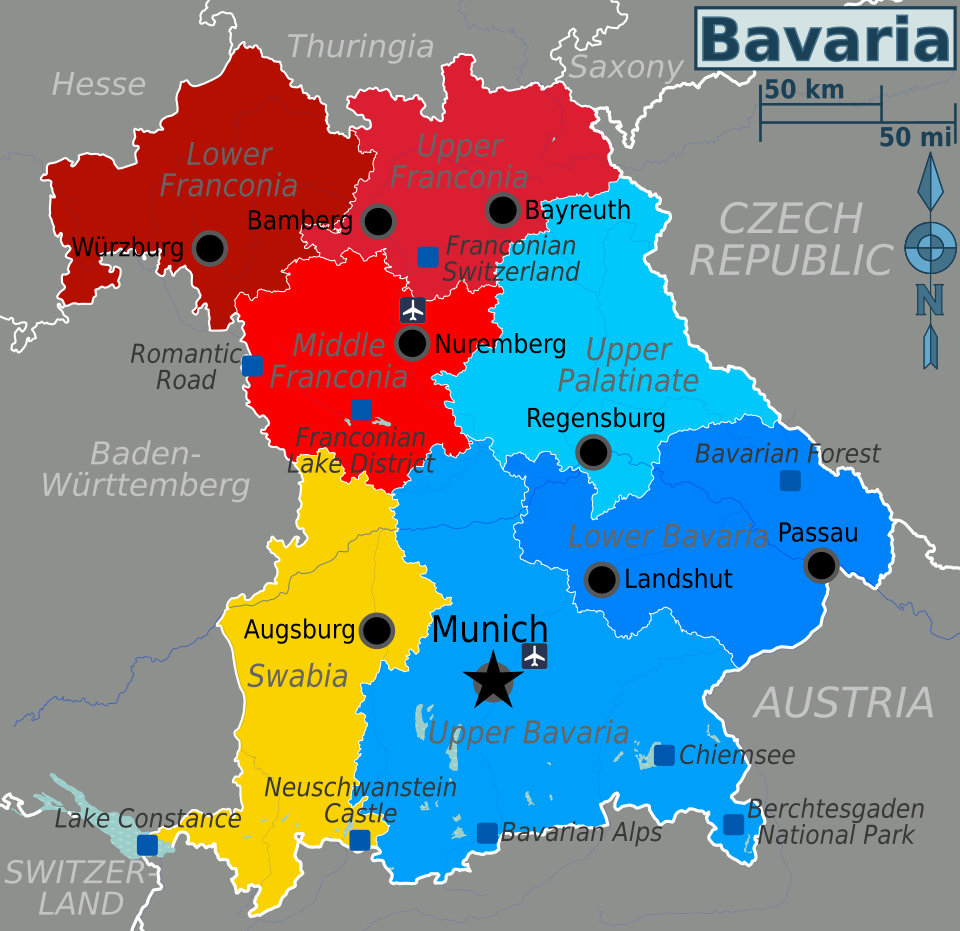
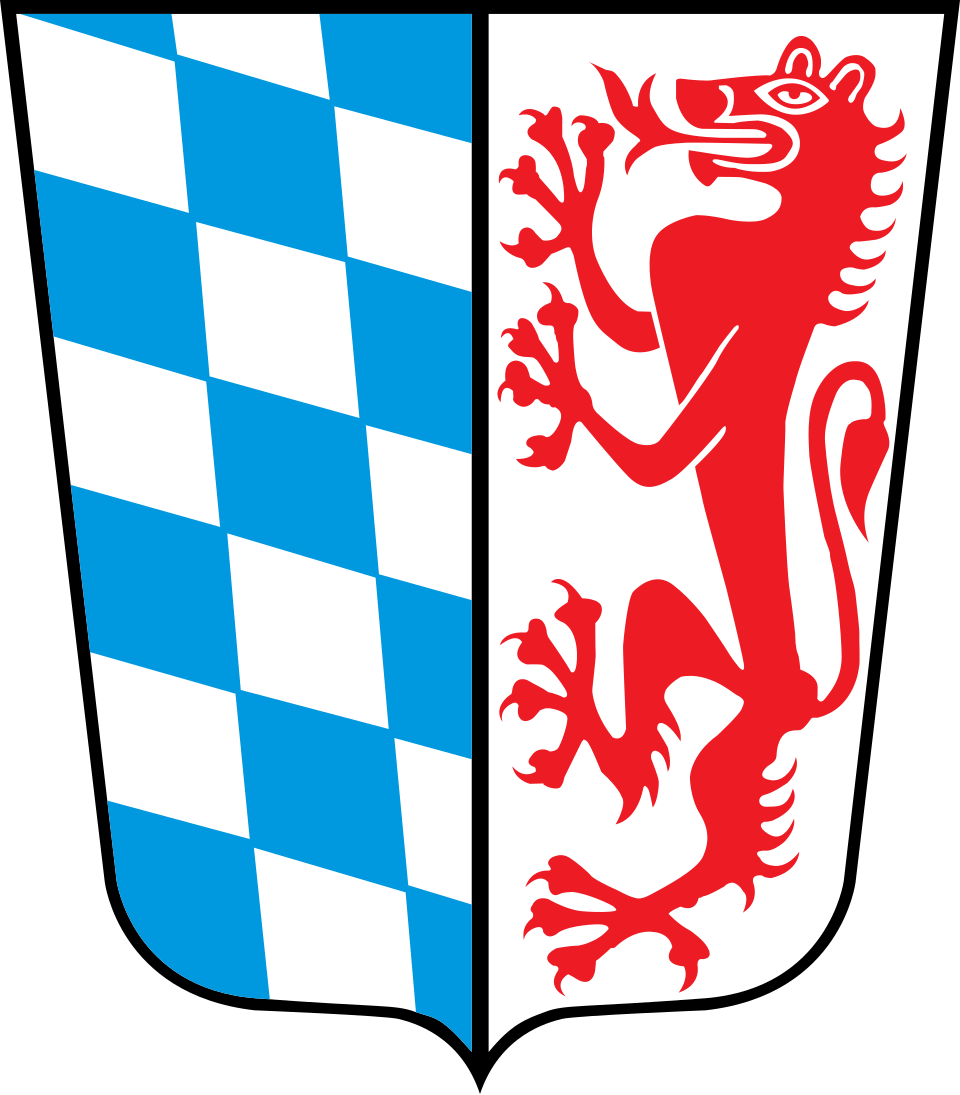
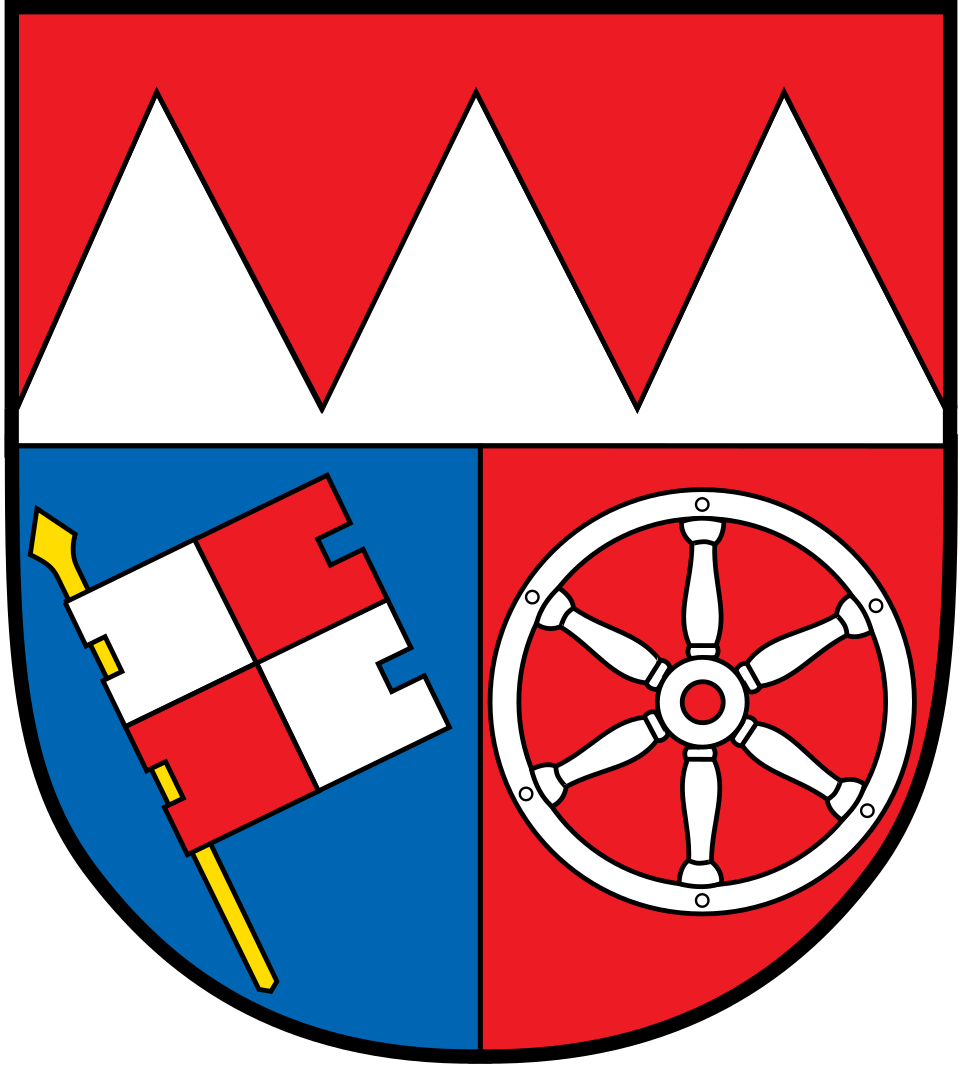
Bavaria has seven parts: Oberbayern (Upper Bavaria), Niederbayern (Lower Bavaria), Schwaben (Swabia), Mittelfranken (Middle Franconia), Unterfranken (Lower Franconia), Oberfranken (Upper Franconia) and Oberpfalz (Upper Palatinate). Bavaria has 71 districts and 25 free cities.
The highest point is the Zugspitze, which is also the highest mountain in Germany. Munich is the largest city, the second biggest city is Nuremberg (Nürnberg), which is famous for its gingerbread, a kind of Christmas bread that is often shaped like a Christmas tree, a snowman or Santa Claus.
Pope Benedict XVI was born in Bavaria.
Administrative regions
Bavaria is divided into seven administrative regions called Regierungsbezirke (singular Regierungsbezirk). For every Administrative region there is a state agency called Bezirksregierung (district government).
- Altbayern:
- Upper Palatinate
- Upper Bavaria
- Lower Bavaria
- Franconia:
- Upper Franconia
- Middle Franconia
- Lower Franconia
- Swabia:
- Swabia
Districts (Bezirke)
Bavaria has “Bezirke” or districts; the others are the Landkreise and the Gemeinden or Städte. The Bezirke in Bavaria are identical with the Regierungsbezirke. In the other larger states of Germany, there are only Regierungsbezirke as administrative divisions and no self-governing entities at the level of the Regierungsbezirke as the Bezirke in Bavaria.
Districts
Bavaria is made up of 71 rural districts that are comparable to counties, as well as the 25 independent cities, both of which share the same administrative responsibilities and duties.
Rural districts:
Independent cities:
Municipalities
The 71 rural districts are on the lowest level divided into 2,031 regular municipalities. Together with the 25 independent cities, there are a total of 2,056 municipalities in Bavaria.
In 44 of the 71 rural districts, there are a total of 215 unincorporated areas (as of 1 January 2005), not bel onging to any municipality, all unsettled and unpopulated, mostly forested areas, but also four lakes (Chiemsee-without islands, Starnberger See-without islands, Roseninsel, Ammersee, which are the three largest lakes of Bavaria, and Waginger See).
Major cities and towns
Source: Bayerisches Landesamt für Statistik und Datenverarbeitung
Where this page comes from
The article above is adapted from “Bavaria” on Simple English Wikipedia, by its contributors. We removed reference markers, navigation boxes and tables, expanded measurement templates into readable numbers, and kept the prose otherwise intact.
Both sources are published under CC BY-SA 4.0, so this page is published under the same licence. You may share and adapt it, including commercially, as long as you credit the original and keep the same licence.
Worksheets, answer keys and printable layouts elsewhere on K5Print are our own work and are not covered by this licence.