Benito Mussolini
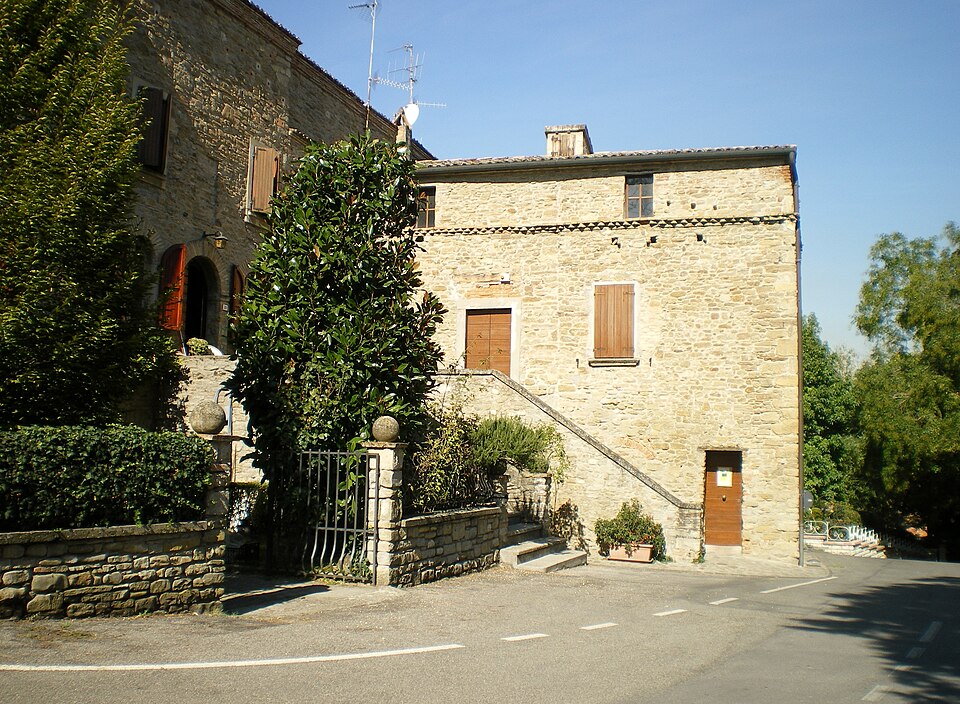

Quick facts
- Born
- July 29, 1883, Dovia di Predappio, Italy
- Died
- April 28, 1945, Giulino di Mezzegra, Italy
Facts from Wikipedia’s “Benito Mussolini” page (CC BY-SA 4.0).
Benito Amilcare Andrea Mussolini (July 29, 1883 – April 28, 1945) was an Italian politician who was the dictator of Italy during the Fascist era, which lasted from the March on Rome in 1922 until his overthrow in 1943.
Early life
Benito Mussolini was named after Benito Juarez, a Mexican opponent of the political power of the Roman Catholic Church, by his anticlerical (a person who opposes the political interference of the Roman Catholic Church in secular affairs) father. Mussolini’s father was a blacksmith. Before being involved in politics, Mussolini was a newspaper editor (where he learned all his propaganda skills) and elementary school teacher.
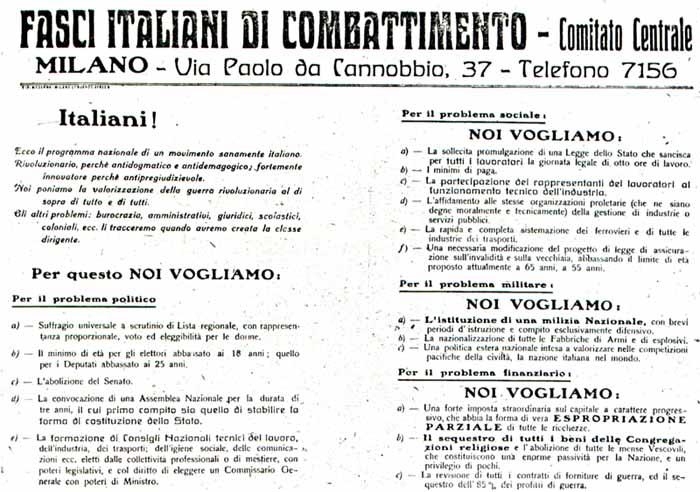
At first, Mussolini was a socialist, but when he wanted Italy to join the First World War, he was thrown out of the socialist party. He ‘invented’ a new ideology, Fascism, much out of Nationalist and Conservative views.
Rise to power and becoming dictator
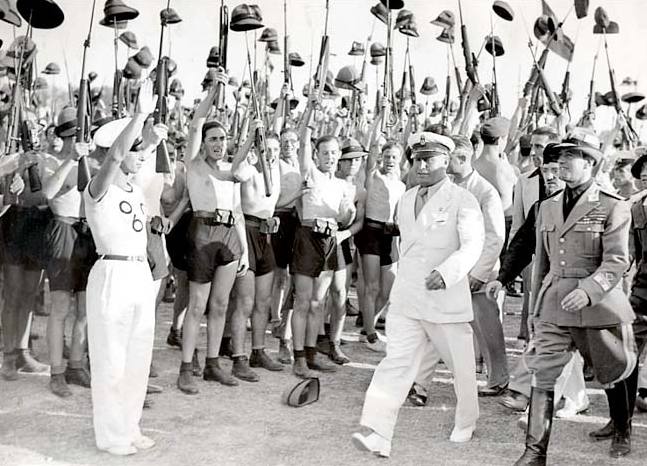
In 1922, he took power by having a large group of men, “Black Shirts,” march on Rome and threaten to take over the government. King Vittorio Emanuele III gave in, allowed him to form a government, and made him prime minister. In the following five years, he gained power, and in 1927 created the OVRA, his personal secret police force. Using the agency to arrest, scare, or murder people against his regime, Mussolini was dictator of Italy by the end of 1927. Only the King and his own Fascist party could challenge his power.
Fascism as practiced by Mussolini
Mussolini’s form of Fascism, “Italian Fascism”- unlike Nazism, the racist ideology that Adolf Hitler followed- was different and less destructive than Hitler’s. Although a believer in the superiority of the Italian nation and national unity, Mussolini, unlike Hitler, is quoted “Race? It is a feeling, not a reality. Nothing will ever make me believe that biologically pure races can be shown to exist today”.
Mussolini wanted Italy to become a new Roman Empire. In 1923, he attacked the island of Corfu, and in 1924, he occupied the city state of Fiume. In 1935, he attacked the African country Abyssinia (now called Ethiopia). His forces occupied it in 1936. Italy was thrown out of the League of Nations because of this aggression. In 1939, he occupied the country Albania. In 1936, Mussolini signed an alliance with Adolf Hitler, the dictator of Germany.
Downfall and death
In 1940, he sent Italy into the Second World War on the side of the Axis countries. Mussolini attacked Greece, but he failed to conquer it. In 1943, the Allies landed in Southern Italy. The Fascist party and King Vittorio Emanuel III deposed Mussolini and put him in jail, but he was set free by the Germans, who made him ruler of the Italian Social Republic puppet state which was in a small part of Central Italy.
When the war was almost over, Mussolini tried to escape to Switzerland with his mistress, Clara Petacci, but they were both captured and shot by partisans. Mussolini’s dead body was hanged upside-down, together with his mistress and some of Mussolini’s helpers, on a pole at a gas station in the village of Milan, which is near the border between Italy and Switzerland.
Post-war period
After the war, several Neo-Fascist movements have had success in Italy, the most important being the Movimento Sociale Italiano. His granddaughter Alessandra Mussolini has outspoken views similar to Fascism.
Legacy
Mussolini’s legacy is complex; he played a significant role in Italian history, but his association with fascism and authoritarianism has left a controversial mark. His policies had lasting effects, but they were often accompanied by suppression of dissent and human rights abuses.
Written for younger readers
Benito Mussolini, in simpler words
This version comes from Wikijunior, a set of books written for children aged 8 to 11. It is shorter and uses plainer language than the article above.
From Wikijunior: World War II
- Born: July 29, 1883
- Died: April 28, 1945
- Leader Of: Italy
- From: October 31, 1922
- To: July 25, 1943
Benito Mussolini was the leader of the Italian National Fascist Party. He became the Prime Minister of Italy in 1922 and appointed himself to head of the military.
Mussolini first thought that he would fight alongside France against Germany, but he changed his mind. In 1940, he declared war on Britain and made Italy part of the “Axis” powers with Germany. Mussolini tried to make himself important in Hitler’s eyes by fighting the British in North Africa and invading Greece. But both times his armies were heavily beaten and had to be rescued by the Germans.
In 1943, the Allies invaded Italy and the Italians switched sides, joining the Allies. Mussolini was overthrown and put in prison. But German special forces rescued him and put him back in charge of the parts of Italy that hadn’t been captured by the Allies.
In April 1945, when it was clear that the Allies were winning, Mussolini tried to run away to Switzerland. But he was caught by the British and executed by Italian partisans.
Where this page comes from
The article above is adapted from “Benito Mussolini” on Simple English Wikipedia, by its contributors. We removed reference markers, navigation boxes and tables, expanded measurement templates into readable numbers, and kept the prose otherwise intact. The simpler version is adapted from Wikijunior on Wikibooks.
Both sources are published under CC BY-SA 4.0, so this page is published under the same licence. You may share and adapt it, including commercially, as long as you credit the original and keep the same licence.
Worksheets, answer keys and printable layouts elsewhere on K5Print are our own work and are not covered by this licence.