Celts
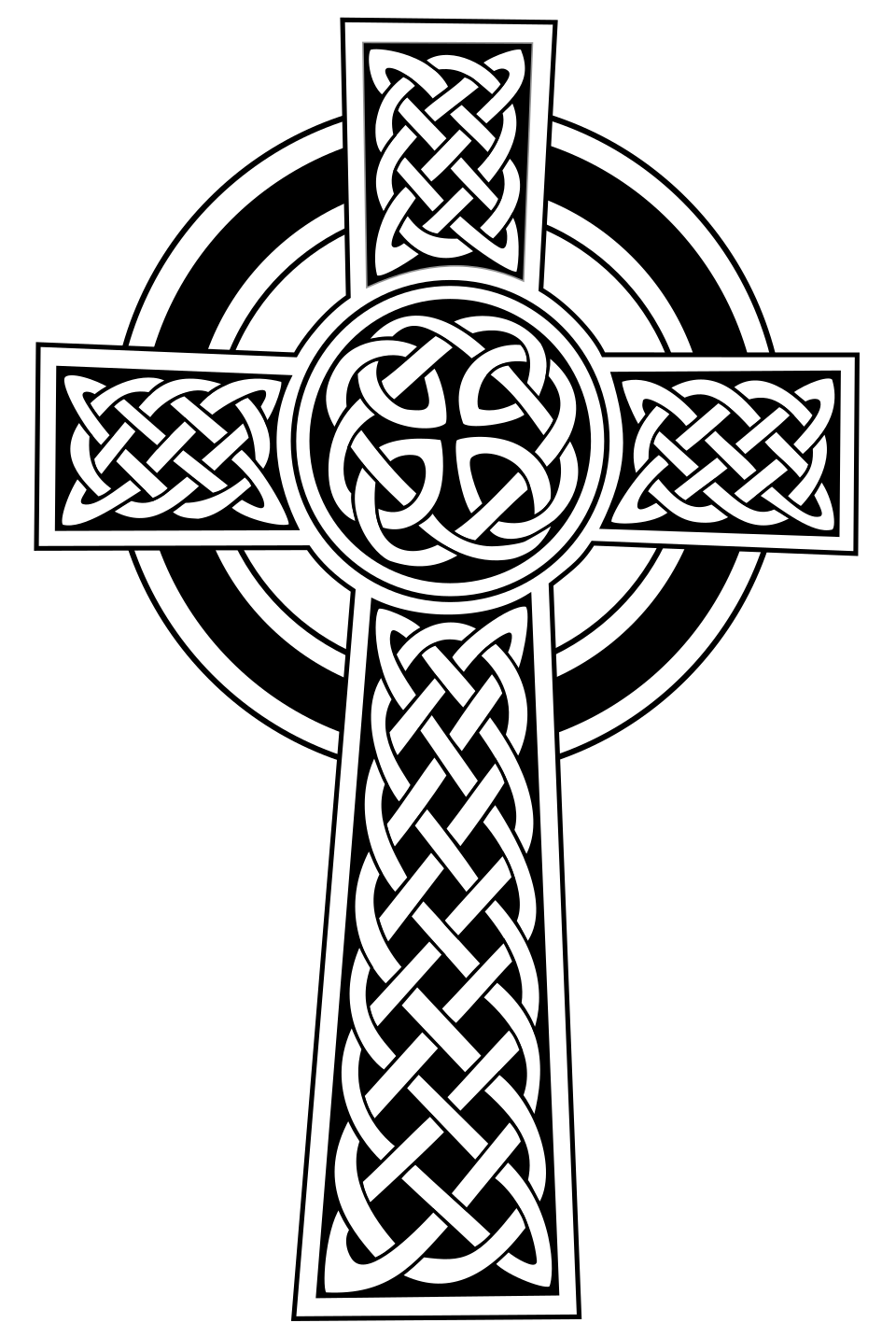

The Celts were a large group of Indo-European tribes in Europe. They first appeared in the early Iron Age, around 1200 B.C. in Austria. The name ‘Celt’ comes from the Greeks. The Romans called them “Gauls”. They came from the Hallstatt and La Tène cultures. Their culture spread through much of Europe, and by the time the Greeks and later the Romans started emerging, the British Isles and parts of western, southern and eastern Europe were Celtic - the most prominent Celtic tribes were in Gaul. The Celts spoke Celtic languages. Today, the Celtic languages that remain are the Breton, Cornish, Welsh and Gaelic languages.
Celtic society and technology, although not as advanced as the Romans, was far from being primitive for its time. The Celts lived a way of life based on ethical codes and honor codes and had developed a culture of their own, full of unique drawings, sculptures, jewellery, folklore, and building designs and techniques. They were also skilled in blacksmithing, farming and diplomacy.
Celtic warriors would wear war paint and try to scare their enemies by shouting war cries. Tribes had different dress standards for battle; some warriors wore chainmail and/or leather armor, some wore only clothes and some were known to fight fully naked. They also had their own type of sword that was very strong and a shield that was very protective.
When the Roman Republic started expanding, the Gauls and the Romans became very hostile towards each other and clashed on many occasions; however, the Romans were eventually able to defeat them and ended up conquering most of the Celtic tribes in Europe and ruled them until the fall of the Western Roman Empire. Celtic tribes also fought among each other. After winning a battle, the Celts would cut off the heads of their enemies and take them home.
During the fall of the Roman Empire most of the old Celtic land ended up being ruled by migrating Germanic tribes and they merged with Romano-Celtic stock (people with both Roman and Celtic ancestry) to eventually form several European nations of today e.g. Portugal, Spain, France, Belgium, Switzerland, Luxembourg as well as Southern and Western Germany. Territories that are still considered Celtic are Ireland, Wales, Scotland, Isle of Man, Cornwall and Brittany.
Written for younger readers
Celts, in simpler words
This version comes from Wikijunior, a set of books written for children aged 8 to 11. It is shorter and uses plainer language than the article above.
From Wikijunior: Ancient Civilizations
In around 400 BC, the Celts ranged from Britain and Ireland all the way across Europe to northern Turkey. Today, Celtic descendants live in Scotland, Wales, Cornwall and Northern Ireland in the United Kingdom, Brittany in France, the Isle of Man and the Republic of Ireland. Other Celtic people live in countries where their ancestors moved to.
Men wore a loose fitting tunic down to the knees and trousers called Bracae. Women wore long, loose fitting dresses. They made their clothes from linen woven from the flax that Celtic farmers grew. They were very concerned about their appearance and used dye from berries to colour their clothes. Both men and women also wore great cloaks when travelling, women used a decorative brooch to fasten their cloak at the neck. These cloaks were very heavy and often used as sleeping bags for the men when they were away hunting. The Celts used lime to bleach their hair, preferring light hair and both men and women wore their hair long.
Most Iron Age Celts in Britain lived in roundhouses; circular houses of wood or stone with thatched straw roofs shaped like a cone. Most roundhouses were made up of wooden posts, with the walls made out of “wattle and daub.” Wattle and daub consists of wooden sticks (wattles), covered with a mixed mud and clay plaster (daub).
In Scotland most roundhouses were built of stone rather than wood, yet retained the cone-shaped thatched roof. This type of roundhouse is called the Atlantic roundhouse.
Celtic houses in mainland Europe were rectangular.
The Celts in Ireland built many forts and settlements, the most popular design was the ringfort. Inside a ringfort wooden, circular houses were built using wattle and daub.
Celts also built fortified defensive structures, which can still be seen today, especially in the highlands and isles of Scotland, as well as Ireland.
Celts ate like most other Europeans, subsisting mostly on grains supplemented by meats, fruits, and vegetables. Exactly what they ate varied by area, and Celts grew local crops. Scottish highlanders were famous for supposedly subsisting almost entirely on oats, though this was not entirely true. However, oats remain the favorite grain of Scotland, and Scottish cuisine is full of them. Potatoes serve this role in Ireland, although they were not introduced until after Columbus reached the New World.
The Celts in Ireland farmed the land and reared cattle and sheep. In the spring, they would get milk, butter and cheese from the cattle, killing them later in the year for meat. Cattle were not only a means of food for Celts, the Celts wealth was measured in the amount of cattle they owned. One ancient Irish tale tells of Queen Maedhb (May-ev) and another rival king, and their battle over the Táin Bó Chuaille (a bull). This doesn’t just show the importance of cattle in Celtic society, but also the fact that they thoroughly accepted the idea of women as leaders, unlike other societies of that time.
The most famous example of food of any Celtic people is probably the Scottish haggis. Many people aren’t quite clear on what a haggis is, and one survey conducted in the United States found that over half of the people they surveyed thought that the haggis was a small rodent native to Scotland. In reality, a haggis usually consists of a sheep’s ‘pluck’ (heart, liver, windpipe and lungs), minced with onion, oatmeal, suet, spices, and salt, mixed with stock, which is traditionally boiled in the animal’s stomach for about an hour.
Celts took a great interest in their clothes when they could afford to do so. Many more modern Celts had colourful designs woven into their clothes called tartan, still shown in Scottish Kilts and Trews today.
Celts also had a great fondness for jewellery, and both men and women wore quite a bit, when they could afford it.
Finally, many warrior Celts wore their weapons (swords, more often than not) as normal attire. This became very complex during the late Middle Ages with Scottish highlanders, who were sometimes seen with a broadsword at their waist, dirk (long knife) on their belt, one or more pistols also attached to their belt, a long hunting rifle, and a small dagger in their sock, called a Sgian Dubh (Gaelic for “Black Dagger”).
Celts didn’t have a very high opinion of the written word. Instead, they recorded their history and culture in an oral tradition; that is, they recorded their past by telling stories. Early examples of Gaelic Celtic writing have been recovered in Europe, based on the Phoenician alphabet.
In Ireland, a different alphabet was used, primarily in Gaelic Celtic languages like Irish, Manx, and Scottish Gaelic. This alphabet was called Ogham, sometimes referred to as the “Celtic Tree Alphabet.” It developed as a way for Irish monks to write in stone.
After Christianity was spread throughout the Gaelic world, Ogham fell into disuse, in favor of the Latin alphabet (largely because Christian writings were all in the Latin alphabet).
Celts were polytheists; they believed in many gods and goddesses (deities). Unlike many other civilisations, different groups of Celts worshipped various deities, although there were some patterns. Beira was the name that Celts gave to Mother Earth, and some of them believed her to be the mother of all their deities.
Most Celts believed in an afterlife, we know this because archaeologists have found many grave goods within their burial tombs (Dolmens, Cairns). Many, though not all, Celts worshipped in sacred groves.
Yes! Today, the British Isles (along with Ireland) are probably regarded to be Celtic more than any other area in the world. No one is quite sure who lived there before them, and they were certainly well-established by the time the Romans came there in AD 43. After 20 years of Roman rule, the chieftain of the Icenii tribe, Prasutagus, died. Though by tradition, his wife Boudicca would have assumed leadership of the tribe, the Romans took Icenii land, brutally humiliating Boudicca and her two daughters. This enraged the Icenii people, and Boudicca raised an army to fight the Romans and liberate Britain. She gained support of many other Celtic tribes, and almost succeeded in toppling the Roman Empire in Britain. She is revered as a national hero in Britain.
The world-renowned Scottish poet, Robert Burns, was a Celt.
Many famous Celts are alive today. The famous Scottish actor, Sean Connery, is proud of his Celtic heritage.
Celts are alive and thriving today! Much of the population of Europe are seen as descendants of the Celts, and the nations of Scotland, Ireland, Wales, Cornwall, Brittany and Isle of Man are considered to be made up of primarily Celtic peoples. As well, the Celtic diaspora, the descendants of Celts around the world, is vast, being spread greatly through the British Empire. In particular, Nova Scotia, Canada, is a hotbed of modern Gaelic Celtic culture.
Where this page comes from
The article above is adapted from “Celts” on Simple English Wikipedia, by its contributors. We removed reference markers, navigation boxes and tables, expanded measurement templates into readable numbers, and kept the prose otherwise intact. The simpler version is adapted from Wikijunior on Wikibooks.
Both sources are published under CC BY-SA 4.0, so this page is published under the same licence. You may share and adapt it, including commercially, as long as you credit the original and keep the same licence.
Worksheets, answer keys and printable layouts elsewhere on K5Print are our own work and are not covered by this licence.